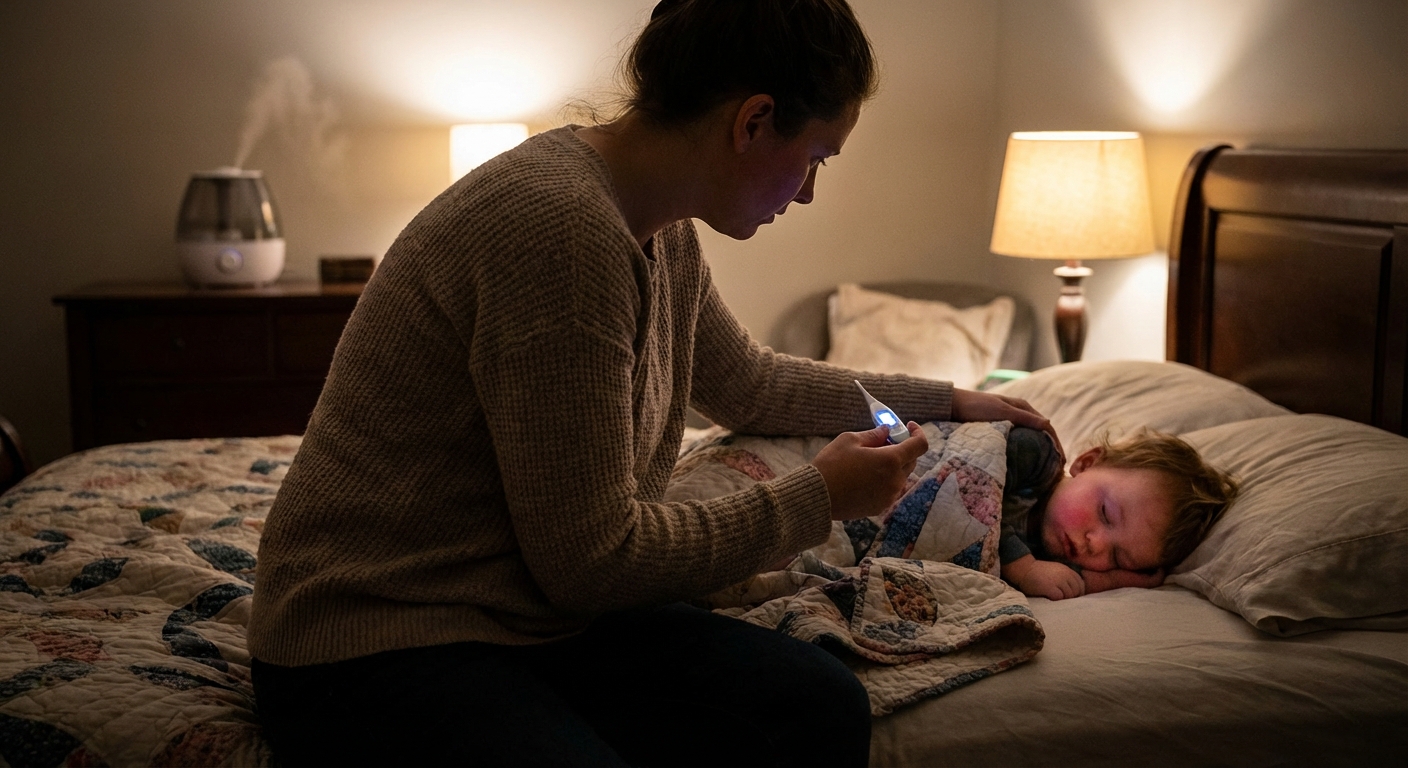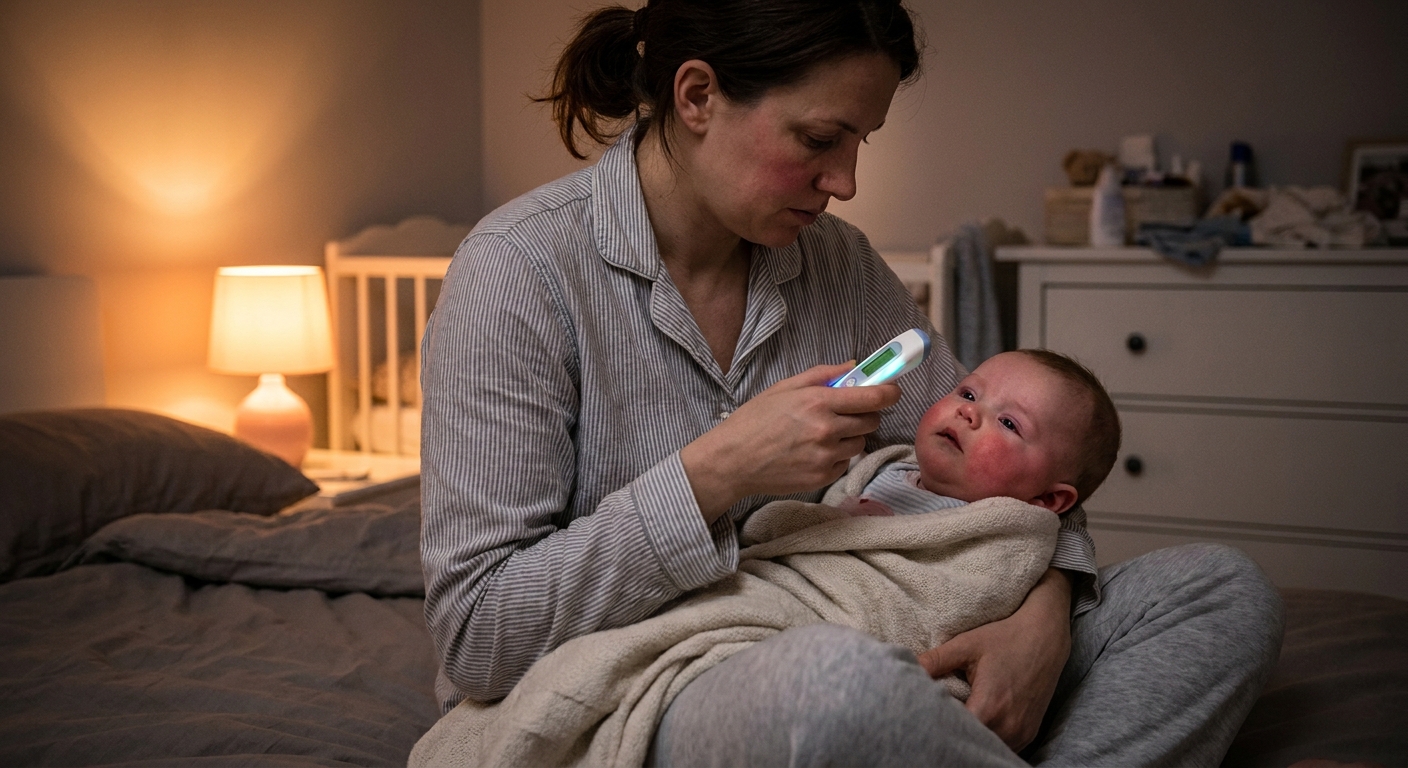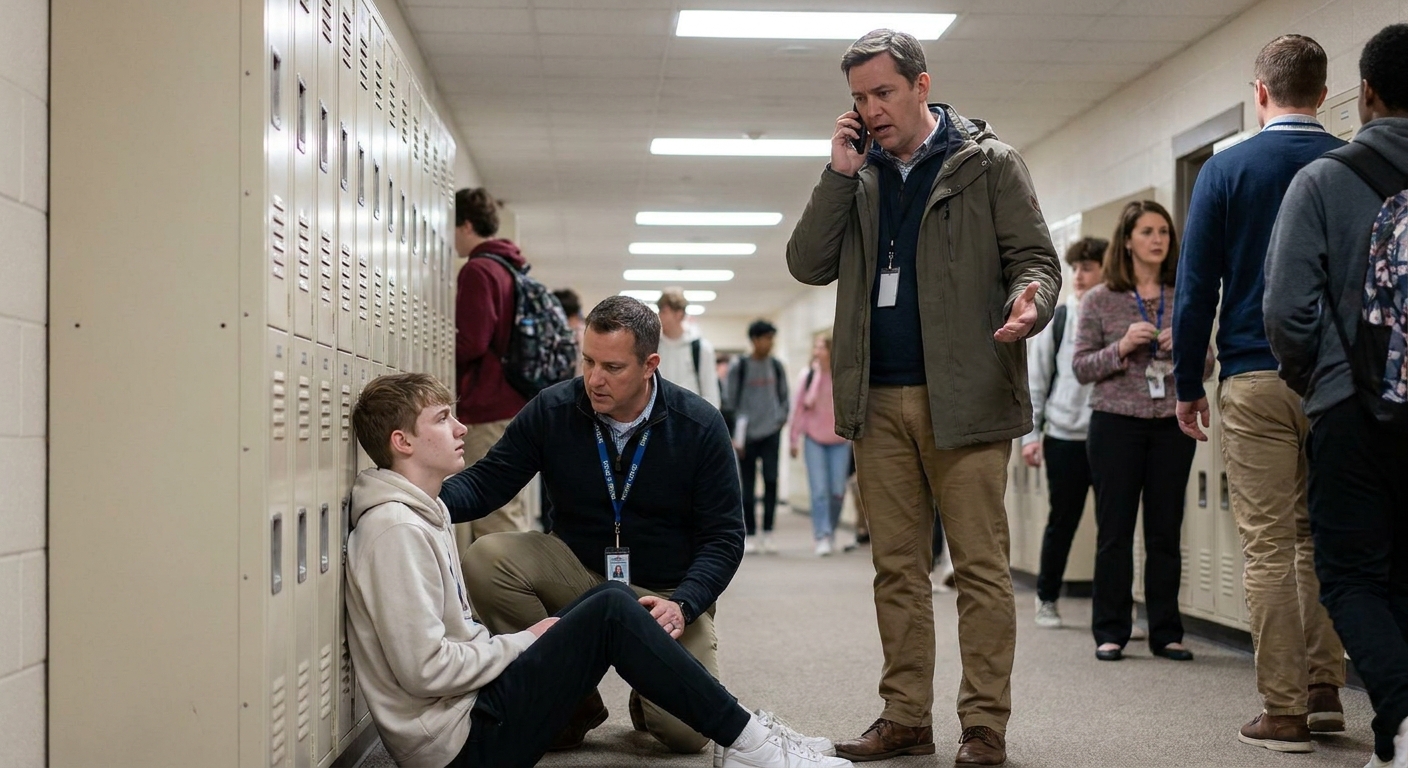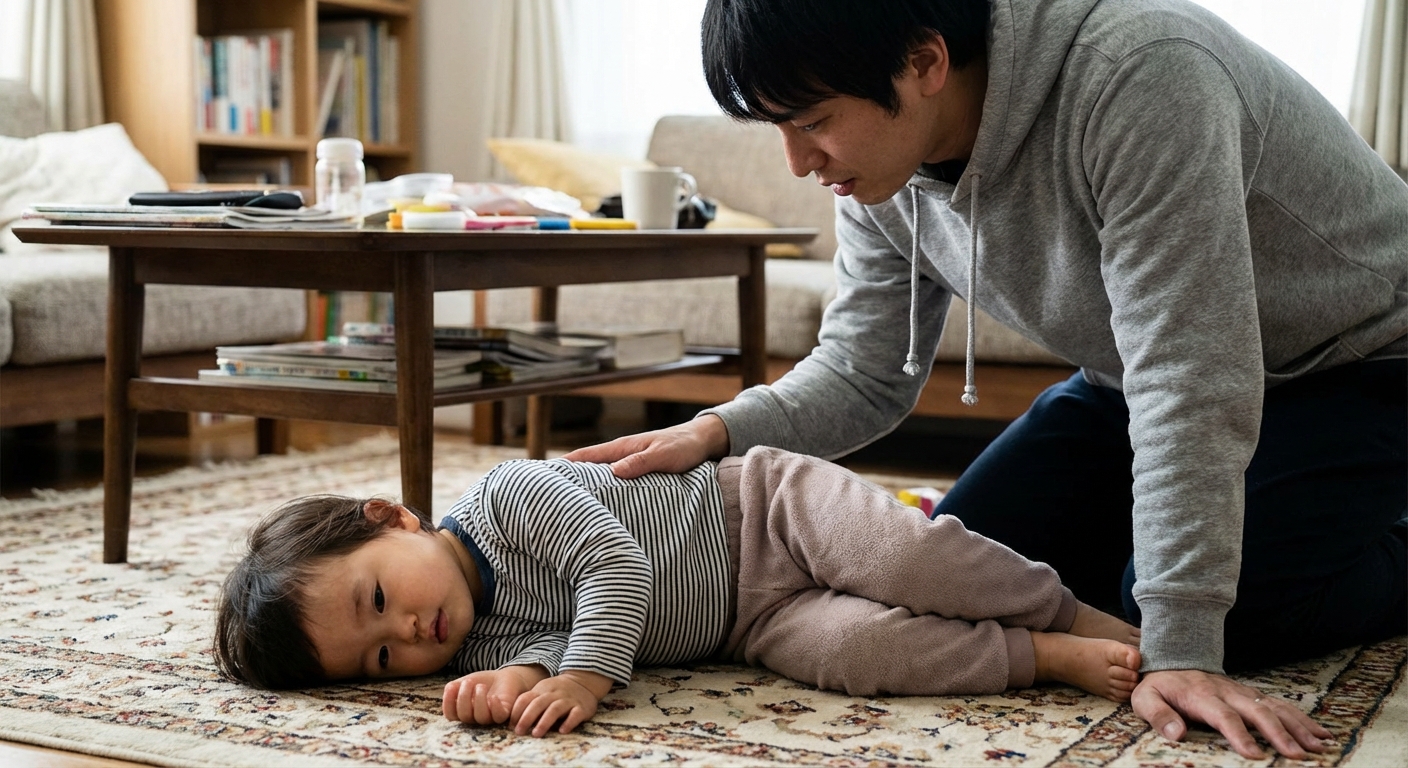
Afebrile seizures can look different from febrile seizures. Here is how to keep your toddler safe, what to track, and the red flags that need emergency help.
Staring Spells in Children: Absence Seizures vs Zoning Out

Sarah Mitchell
Sarah Mitchell is a Registered Pediatric Nurse and a mother of three who has spent over a decade helping families navigate the beautiful, chaotic early years of childhood. She combines evidence-based medical knowledge with real-world parenting experience to offer practical, compassionate advice. At Awesome Parent, Sarah's mission is to help exhausted parents find solutions, trust their instincts, and finally get some sleep.
There is a very specific kind of parent worry that hits when your child suddenly goes still, stares right through you, and then pops back like nothing happened. In clinic triage, I talked with so many families who felt silly bringing it up, but could not shake the feeling that something was off.
You are not silly. Brief staring spells can be completely normal, or they can be a type of seizure called an absence seizure. The tricky part is that both can look subtle from across the room.

Let’s walk through what absence seizures usually look like, what typical daydreaming looks like, what to write down (and record), and when it is reasonable to ask your child’s clinician about an EEG.
What is a staring spell?
Parents usually use staring spell to mean: “My child suddenly stops what they’re doing and stares, and I cannot get their attention for a few seconds.”
From a medical standpoint, that description could fit several things, including:
- Normal daydreaming or being deeply focused
- Absence seizures (a brief seizure with impaired awareness)
- Focal impaired-awareness seizures (often longer, may include confusion afterward)
- Tics, stereotypies, or other repetitive behaviors (awareness may be intact)
- Syncope or near-syncope (fainting or almost fainting, usually with pallor or dizziness)
- Other neurologic issues (less common, but sometimes migraines or other conditions can mimic “spacing out”)
- Behavioral or attention differences (some kids have “tuning out” moments when overwhelmed or tired)
This article focuses on distinguishing absence seizures vs ordinary zoning out, because that is the most common head-to-head question for school-age kids. And an important reminder: you cannot diagnose this at home. What you can do is capture patterns that help your child’s clinician decide the right next step.
Absence seizures: the classic pattern
Absence seizures (sometimes called “petit mal” seizures, an older term) are most common in school-age children. They often start in early elementary years, commonly around ages 4 to 10 (with a peak in the early school years), but there is some variability depending on the epilepsy syndrome.
They often look like:
- Sudden pause in activity mid-sentence or mid-action
- Blank stare
- Impaired awareness, often hard to interrupt, especially with voice
- Small automatic movements, such as eyelid fluttering, lip smacking, chewing motions, or subtle hand rubbing
- Very short duration, often around 5 to 20 seconds (sometimes just a few seconds)
- Fast return to normal with little to no awareness it happened
One detail that matters: absence seizures can happen many times per day. Families sometimes notice a pattern like “the teacher says she is spacing out constantly,” or “we see it at dinner, in the car, and during homework.”
Also, kids can miss information during these spells, which can look like attention issues, daydreaming, or learning problems.
Daydreaming: how it usually looks
Daydreaming and “checking out” are part of being a kid. I see it in my own house, especially during homework or long instructions that could have been one sentence, not fourteen.
Zoning out is more likely when:
- Your child is bored, tired, overstimulated, or staring at a screen
- The “stare” happens during low-demand moments (car rides, waiting rooms, long lectures)
- You can get their attention by moving closer, speaking more clearly, or using a gentle touch
- They can often tell you what they were thinking about, even if it is “nothing”
- The episode is less sudden, or it fades in and out
Daydreaming also tends to have context and variability. It is less likely to happen repeatedly in the same very similar way across lots of different situations.
Quick comparison
More concerning for absence seizures
- Very sudden start and sudden stop
- Hard to interrupt, often no response to name or waving
- Eyelid flutter or repetitive mouth movements
- Occurs many times a day
- Happens during active moments (talking, eating, walking)
- Your child resumes exactly where they left off, as if nothing happened
More consistent with zoning out
- Happens when bored, tired, or distracted
- Your child responds when you move closer, touch them, or repeat yourself
- Less “same every time” and more situation-dependent
- They may look dreamy but can usually be redirected
If you are stuck in the middle, that is normal. Many families cannot tell based on memory alone, which is why recording details (and sometimes video) is so helpful.
What to do in the moment
If your child has a brief staring spell:
- Stay calm and observe. Your goal is to notice what happens, not to “snap them out of it.”
- Try a simple cue. Say their name once. If they do not respond, try a gentle touch on the shoulder.
- Look for small movements. Eyelid flutter? Lip smacking? Chewing? Hand picking?
- Time it. Even a rough count, like “about 10 seconds,” helps.
- Make sure they are safe. If they were on stairs, in a bathtub, or near traffic, gently guide them away from danger.
Avoid putting anything in their mouth. For a brief staring episode, you usually do not need to do anything other than keep them safe and take notes.
One more safety note: do not try to provoke an episode at home (for example, by having your child hyperventilate) unless a clinician specifically instructs you to. In clinic, hyperventilation can be used in a controlled setting to help bring out absence seizures on EEG, but that is not a DIY test.
What to record for the pediatrician
As a former triage nurse, I can tell you the difference between “I think something weird happened” and “Here are three specific episodes with video” is enormous. It speeds up the right next step.
Write down
- Date and time
- What your child was doing right before (homework, eating, playing soccer, watching TV)
- What it looked like (staring, blinking, eyelids fluttering, mouth movements)
- How long it lasted
- Whether they responded to name, a wave, or gentle touch (and what it took to get their attention)
- How they acted afterward (immediately normal, confused, sleepy, irritable, headache)
- Possible triggers (sleep deprivation, stress, illness)
- Breathing patterns (absence seizures can be brought on by hyperventilation, which can happen during crying or intense laughing)
- Light sensitivity (flashing lights can trigger seizures in some children, but it is less specific for classic absence seizures)
- Frequency (once a week vs ten times a day)
Record video if you can
A short video can be incredibly helpful. If you can safely do so:
- Start recording as soon as you notice the spell.
- Try saying their name once on camera and then use a gentle touch on the shoulder.
- Keep the camera steady on their face and upper body.

When to ask about an EEG
An EEG (electroencephalogram) is a test that measures the brain’s electrical activity. It is painless, though some kids dislike the sticky paste, the setup, or the cleanup afterward. It uses stickers or a cap with electrodes on the scalp.
It is reasonable to ask your child’s clinician about an EEG when:
- Spells are recurrent and look stereotyped (very similar each time)
- Your child has brief episodes of impaired awareness, especially with eyelid fluttering or automatisms (lip smacking, chewing)
- Teachers report frequent “spacing out” that affects learning
- There is no clear situational trigger like boredom, screens, or fatigue
- You have video that concerns your pediatrician
Often the next step is a referral to pediatric neurology, but your pediatrician can guide you based on your child’s history.
When to get urgent help
Most brief staring episodes are not an emergency. But you should seek urgent medical care (or call emergency services) if:
- Your child has any episode of unresponsiveness or seizure activity lasting 5 minutes or you are unsure how long it has been going on
- Your child has trouble breathing, turns blue, or has severe color change
- There is a major injury or the spell happened in water
- Your child has repeated seizures back-to-back without returning to normal
- Afterward, your child is very confused, hard to wake, or acting significantly off
Trust your gut. If your child looks truly unwell, it is always okay to get help.
Not the same as other seizures
Because the internet loves to mash everything into one scary soup, I want to clearly separate a few different situations:
Infantile spasms
These happen in infants, typically under 1 year (often 3 to 8 months). They often look like clusters of brief body jerks or crunching movements, frequently around sleep. This is a different condition than staring spells in school-age kids.
Febrile seizures
Febrile seizures are convulsions associated with fever, usually in children around 6 months to 5 years. They often involve shaking, loss of consciousness, and a child who is sick with a temperature. Again, different from classic absence seizures, which are typically brief staring without fever.
If your child’s episodes are happening during a fever or illness, talk to your pediatrician right away so you get guidance that matches the situation.
If it is absence seizures
If your child is diagnosed with absence seizures, you will usually work with pediatric neurology on a plan. Treatment often includes daily antiseizure medication to reduce or stop episodes. Neurology may discuss options such as ethosuximide (commonly used for absence), or sometimes valproate or lamotrigine, depending on your child’s overall seizure pattern and EEG.
The goals are straightforward:
- Stop seizures so your child can learn, play, and stay safe
- Minimize side effects
- Support school with a plan if attention and missed instruction have been an issue
Many children do very well with treatment, and some outgrow absence seizures as they get older. Your child’s neurologist will talk you through what to expect based on the specific EEG findings and clinical picture.
School and teacher tips
If school is where the concern is showing up first, it helps to loop the teacher in early. Practical options include:
- Ask the teacher to note frequency and timing (for example, during instruction vs independent work).
- Ask what the spell looks like from their perspective and whether your child is hard to redirect.
- If your child is being evaluated, let the school know you are tracking episodes, so they can share observations with your clinician.
This is not about labeling your child. It is about getting good data from the place where missing 10 seconds matters.
FAQ
Can I test my child at home?
You can gently try to get their attention by calling their name and touching their shoulder. Avoid startling them aggressively or shaking them. If episodes are brief, sudden, and hard to interrupt, that is a strong reason to document them and talk to your pediatrician.
My child blinks a lot when they stare. Does that mean absence seizures?
Not automatically. Some kids blink when thinking, when anxious, or when their eyes are dry. But eyelid fluttering combined with impaired awareness and sudden pauses is more concerning for absence seizures than blinking alone.
Could absence seizures look like ADHD?
They can overlap in how they affect school performance. A child having many brief seizures per day can miss pieces of instruction and look inattentive. That is why it is important to evaluate frequent staring spells rather than assuming it is behavioral.
What if it only happens when my child is watching TV or a tablet?
Screens can make lots of kids look “zoned out,” and many children are harder to redirect when absorbed. If your child reliably responds when you touch them or speak close to them, that leans toward normal attention. If they are suddenly hard to interrupt with a quick return to normal, bring it up with your pediatrician.
A calm next step
If you suspect absence seizures, the best next step is also the simplest: capture details. A few timed notes and a short video can turn a vague worry into a clear plan.
And if you are reading this at 3 AM replaying that moment in your head, I want you to hear this: you are doing exactly what a good parent does. You noticed. You are asking. Now you just need the right evaluation, not a thousand scary rabbit holes.

Sarah Mitchell
Sarah Mitchell is a Registered Pediatric Nurse and a mother of three who has spent over a decade helping families navigate the beautiful, chaotic early years of childhood. She combines evidence-based medical knowledge with real-world parenting experience to offer practical, compassionate advice. At Awesome Parent, Sarah's mission is to help exhausted parents find solutions, trust their instincts, and finally get some sleep.