Warm soaks, proper nail trimming, and roomy shoes can help mild ingrown toenails. Here’s how to spot infection, when to seek care sooner, and what a simple i...
Thick or Crumbly Toenails in Kids: What It Means and What to Do

Sarah Mitchell
Sarah Mitchell is a Registered Pediatric Nurse and a mother of three who has spent over a decade helping families navigate the beautiful, chaotic early years of childhood. She combines evidence-based medical knowledge with real-world parenting experience to offer practical, compassionate advice. At Awesome Parent, Sarah's mission is to help exhausted parents find solutions, trust their instincts, and finally get some sleep.
The first time I noticed one of my kids’ toenails looking thicker and a little yellow, my nurse brain went straight to “fungus,” while my mom brain went straight to “How did this happen when I swear I clean these little feet?” If you are staring at a crumbly nail edge right now, take a breath. In kids, nail changes have a handful of common causes, and many of them are fixable or temporary.
This guide will walk you through what thick, discolored, or crumbly toenails can mean, how to tell nail fungus from an ingrown nail or from nail changes after hand, foot, and mouth disease, and when it is worth having a clinician confirm fungus before committing to months of treatment.

What it can look like
Parents describe this in a lot of different ways. The details matter, because the “pattern” often points to the cause.
- Thickened nail plate: the nail itself looks bulkier than the others and may be harder to trim.
- Discoloration: yellow, white, gray, or brown patches in the nail.
- Crumbly edges: the end of the nail flakes, chips, or breaks easily.
- Lifting from the nail bed: part of the nail looks separated, sometimes with debris underneath.
- One nail vs multiple: one affected nail often suggests trauma or an ingrown problem, while multiple nails can suggest fungus, psoriasis, eczema, or chronic rubbing from shoes.
Common causes in kids
1) Repeated trauma (the most overlooked cause)
Kids kick, run, stop short, ride scooters, climb, and smash their toes into furniture like it is their job. Tight shoes, cleats, dance shoes, or a sudden growth spurt can repeatedly bump the nail.
Clues it may be trauma: only one nail is affected, there is a history of a stubbed toe, the nail looks bruised (dark red or purple) at some point, or the nail grows out oddly after an injury.
2) Nail fungus (onychomycosis)
Toenail fungus is less common in young children than in adults, but it happens. It is more likely if your child has athlete’s foot, sweaty feet, spends time in damp shoes, swims a lot, uses shared locker rooms, or has a family member with toenail fungus.
Clues it may be fungus: yellow or white discoloration that slowly spreads, thickening over time, crumbly debris under the nail, and sometimes more than one nail involved. Skin between the toes may also be itchy, peeling, or cracked.
3) Eczema or psoriasis affecting nails
Some kids with eczema or psoriasis can have nail changes, including pitting (tiny dents), ridging, thickening, or separation of the nail from the nail bed.
Clues it may be eczema or psoriasis: your child also has chronic rash, scalp scale, or a history of eczema flares, and multiple nails can be involved.
4) An ingrown toenail (edge problem, not nail-plate fungus)
An ingrown toenail is when the nail edge digs into the skin, usually on the big toe. The nail itself may look normal, or it may look a little thicker if the toe is swollen or chronically irritated. But the hallmark is inflammation along the nail border.
Clues it is ingrown: redness, swelling, tenderness on one side of the nail, pain with shoes, or drainage. The nail edge looks like it is pressing into skin.
5) Nail changes after hand, foot, and mouth disease
Hand, foot, and mouth disease (HFMD) can cause a temporary interruption in nail growth. Weeks later, parents may notice a ridge, peeling, or even nails lifting and shedding. It looks dramatic, but it is usually self-limited.
Clues it is post-HFMD: it starts about 3 to 6 weeks after HFMD (sometimes longer), can involve fingernails and toenails, and you may see a horizontal groove across the nail or the nail lifting near the base as a new nail grows in underneath.
6) Other mimics worth knowing
Two other things I see confuse parents:
- Periungual warts or chronic irritation around the nail (paronychia): these can distort nail growth and make the nail look rough or thickened. Often there is irritation of the skin around the nail too.
- Benign nail growth variants: some kids simply develop ridges or roughness that is not fungus. If it is persistent, worsening, painful, or spreading to multiple nails, it is worth getting checked.

Tell the difference at home
Here is the quick mental checklist I use in triage style. It is not a diagnosis, but it helps you decide the next best step.
Think fungus when you see:
- Slowly spreading yellow or white discoloration
- Thickened nail that is harder to cut
- Crumbly nail tip or debris under the nail
- Possible athlete’s foot symptoms: peeling, itching, scaling between toes
- More than one nail affected, especially on the same foot
Think ingrown nail when you see:
- Pain and tenderness at the nail edge
- Redness or swelling along one side (or both sides) of the big-toe nail
- Drainage, crusting, or a small bump of overgrown skin
- The nail plate itself may look mostly normal
Think post-HFMD nail shedding when you see:
- A known HFMD illness in the past 1 to 2 months
- Multiple nails involved, often fingers and toes
- A horizontal line, groove, or peeling that seems to move forward as the nail grows
- Nail lifting closer to the base, with a new nail growing underneath
- Minimal pain and little to no redness of the surrounding skin
If you are stuck between possibilities, that is common. Toenails grow slowly, so early changes can be subtle and confusing.
When to get seen right away
Most nail issues are not emergencies, but there are times you should not wait it out.
- Severe pain, spreading redness, warmth, or swelling of the toe
- Pus or drainage, especially with fever
- Red streaking up the foot or toe
- Your child cannot comfortably walk or shoes are unbearable
- Diabetes, immune compromise, or poor circulation (these change the risk picture)
- Dark brown or black pigment that is not clearly a bruise and is not growing out with the nail
If you are unsure, call your pediatrician’s office. This is exactly what nurse triage is for.
Why confirming fungus matters
Antifungal nail treatment can be a long haul. Even when the fungus is truly the cause, nails can take many months to look “normal” because they have to grow out.
Here is the catch: not every thick or discolored nail is fungus. Trauma, eczema, psoriasis, warts, chronic irritation, and post-viral nail changes can mimic it. Treating for fungus when it is not fungus wastes time and money and can expose your child to unnecessary medication.
Ask about testing when:
- The nail change is not obvious, or only one nail is involved without athlete’s foot symptoms
- You are considering oral antifungal medicine (these require careful decision-making)
- Topical treatment has been attempted for weeks with no sign of improvement
- The diagnosis is uncertain based on appearance alone
In clinic, confirmation may involve clipping a small piece of nail or scraping debris from under the nail to look for fungus in the lab. It is quick, and it can save you from months of guessing.
If fungus is confirmed
What your clinician recommends depends on your child’s age, how many nails are involved, and how much of the nail is affected.
- Topicals: These tend to help skin more than nails, because nails are hard for medication to penetrate. Prescription nail solutions or lacquers are sometimes used, but they typically require consistent use for a long stretch of time.
- Oral antifungals: These can be more effective for true nail fungus, especially when a big portion of the nail is involved, but they are prescription-only and not a casual decision in kids. Your clinician will weigh benefits and risks and may recommend lab monitoring depending on the medication and your child’s situation.
Even with the right treatment, you are usually watching for healthy new nail growth from the base over time, not an overnight transformation.
What you can do at home
Whether this turns out to be fungus, trauma, or just an irritated toe, these basics help.
Foot hygiene that actually helps
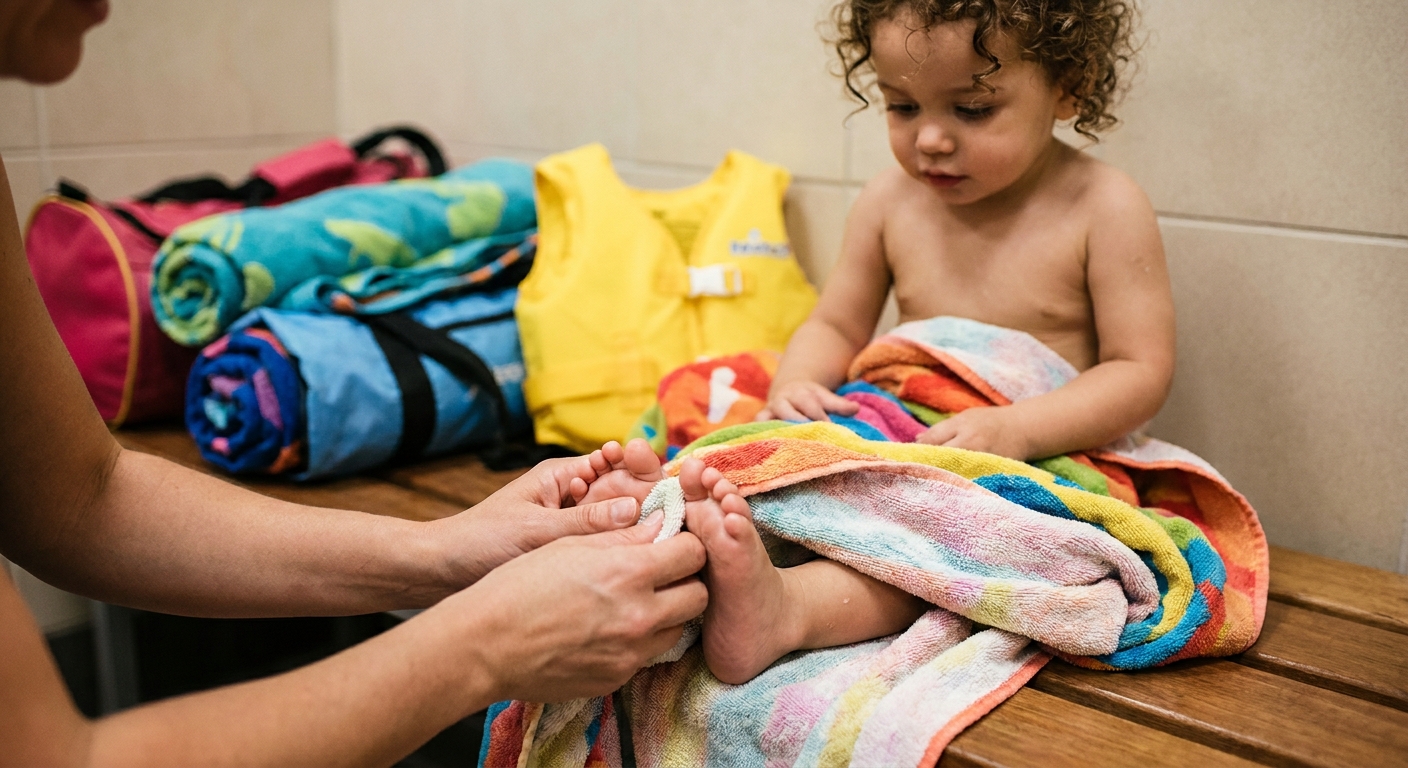
- Dry between the toes after baths and swims. Moisture helps fungus thrive.
- Sock reset: switch to dry socks after sports or sweaty play.
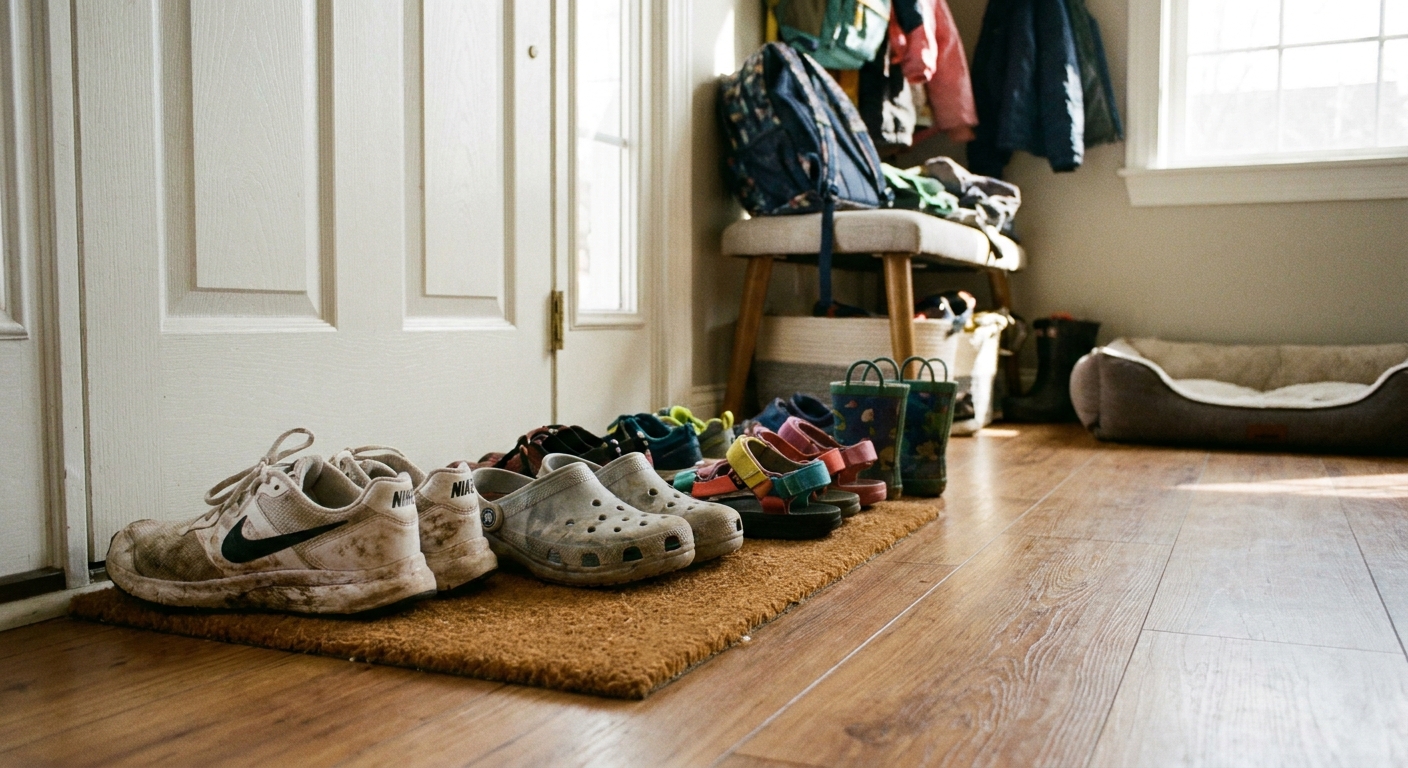
- Shoe rotation: alternate pairs so shoes can fully dry out.
- Breathable footwear when possible, especially in warm months.
Nail trimming tips
- Trim nails straight across, not rounded down at the corners.
- Do not dig under the nail with sharp tools.
- If a nail is very thick, trimming after a bath can be easier.
If athlete’s foot is present
Peeling or itchy skin between the toes can travel with nail fungus. Treating the skin matters because it reduces reinfection and spread. Your pediatrician can recommend an age-appropriate antifungal cream and a timeframe, especially for younger kids.
Simple prevention at home
- Do not share nail clippers, towels, shoes, or socks if fungus is suspected.
- If one family member has athlete’s foot, treat it. Otherwise it keeps cycling through the house.
- For older kids, flip-flops in communal locker room showers and on wet pool-deck surfaces can help.
What not to do
- Do not start oral antifungals without a clinician. These are prescription medications with important safety considerations.
- Do not share nail clippers between family members if fungus is suspected. If you must, disinfect them.
- Do not rip off a lifting nail. Keep it trimmed and protected while the new nail grows.
- Do not assume one week of cream will fix a nail. Skin improves faster than nails. Nails take time.
How long does it take?
This is the part parents deserve honest expectations about.
- Trauma: the nail can look odd until it fully grows out. Toenails often take 9 to 18 months to replace themselves (often longer for big toenails).
- Post-HFMD nail shedding: new nails usually grow in normally over the next few months. The shedding phase looks scary but is often temporary.
- Nail fungus: even with effective treatment, the nail has to grow out. Expect a months-long timeline. Your clinician can tell you what “progress” should look like for your child’s situation.
FAQ
Can my child get toenail fungus from a swimming pool?
Fungus prefers warm, damp environments. It is usually more about walking barefoot on wet communal surfaces like pool decks, locker room floors, and shared showers than the pool water itself. Wearing shower shoes in locker rooms and drying feet well after swimming can help.
Is a thick nail always fungus?
No. Thick nails in kids are commonly from trauma, chronic pressure from shoes, or underlying skin conditions. If the diagnosis is uncertain, it is reasonable to ask about confirmation testing before committing to long treatment.
My child’s nail is peeling off after a virus. Is that normal?
After HFMD, nail lifting or shedding can happen weeks later. If your child is otherwise well and the skin around the nail is not red, hot, swollen, or draining, it is often a temporary growth interruption. Still, check in with your pediatrician if you are unsure or if there are signs of infection.
Can I use over-the-counter antifungal creams on a toenail?
OTC antifungal creams are often more helpful for athlete’s foot skin than for nails, because nails are harder for topical medicine to penetrate. It is fine to ask your pediatrician what is appropriate for your child’s age and symptoms, and whether testing or prescription options make more sense.
The bottom line
Thick, discolored, or crumbly toenails can be fungus, but in kids they can also be trauma, irritation from shoes, eczema or psoriasis changes, warts or chronic irritation around the nail, or the delayed after-effect of hand, foot, and mouth disease. Focus first on the pattern: is it the nail plate itself, the nail edge digging in, or a post-viral shedding timeline?
And if you are looking at a treatment plan that will last for months, it is completely reasonable to ask your clinician to confirm fungus first. You deserve a plan that fits the problem, not just a guess.
Sarah Mitchell
Sarah Mitchell is a Registered Pediatric Nurse and a mother of three who has spent over a decade helping families navigate the beautiful, chaotic early years of childhood. She combines evidence-based medical knowledge with real-world parenting experience to offer practical, compassionate advice. At Awesome Parent, Sarah's mission is to help exhausted parents find solutions, trust their instincts, and finally get some sleep.