Walking practice, separation anxiety, and two-nap pressure can derail sleep at 14 months. Get flexible wake windows, nap protection without new habits, early...
13-Month Sleep Regression: Cruising Skills and Nap Shifts

Sarah Mitchell
Sarah Mitchell is a Registered Pediatric Nurse and a mother of three who has spent over a decade helping families navigate the beautiful, chaotic early years of childhood. She combines evidence-based medical knowledge with real-world parenting experience to offer practical, compassionate advice. At Awesome Parent, Sarah's mission is to help exhausted parents find solutions, trust their instincts, and finally get some sleep.
If your 13-month-old has recently discovered the joy of pulling up, cruising along the couch, and practicing brand-new ways to protest bedtime, you are not imagining things. Sleep often wobbles around this age. In clinic I used to call it the “my body can do something new so my brain must practice it at 2 AM” phase. At home, I called it “please just lie down, tiny acrobat.”
The good news: most 13-month sleep regressions are temporary and fixable with a few schedule tweaks, some boundary-loving reassurance, and a quick check that we are not actually dealing with an ear infection or teething pain.

Why sleep gets rocky at 13 months
There is rarely one single cause. At 13 months, sleep can unravel because several normal developmental leaps pile up at once.
Pulling up and cruising: the midnight practice session
When babies learn a new motor skill, they want to rehearse it. You might see:
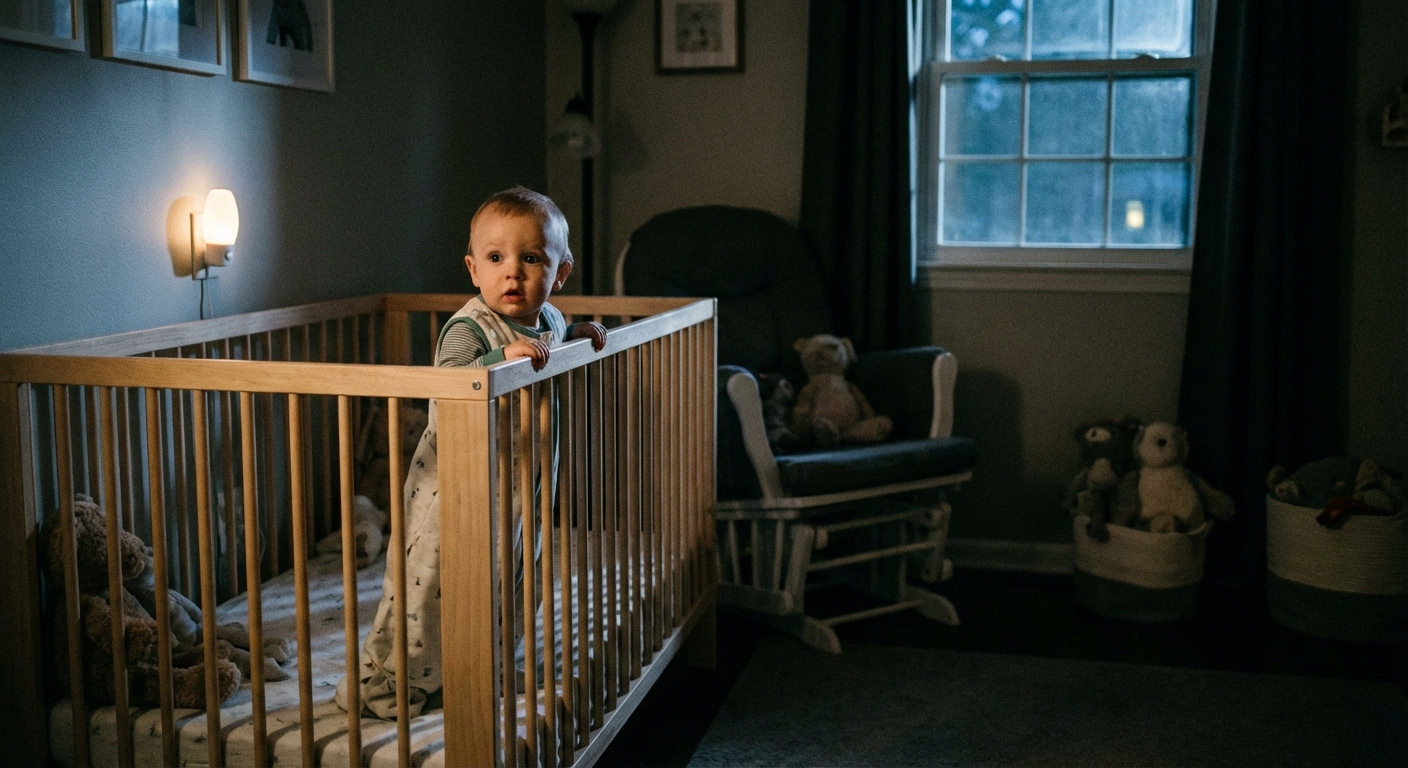
- Standing in the crib and crying because they cannot (or will not) lie back down
- More night wakings
- Short naps because they pop up the moment they stir
This is developmental, not “bad habits.” But we can absolutely coach it.
Separation anxiety and big feelings
Around 12 to 15 months, separation anxiety can spike. Your toddler now understands you leave, and they have opinions about it. That can look like:
- Crying at bedtime even with a previously smooth routine
- Waking and calling for you more often
- Nap refusal at daycare or with the non-preferred caregiver
Early pressure to drop to one nap
Some toddlers start resisting one of their two naps around this time. It is tempting to assume “they are ready for one nap,” but many 13-month-olds are not quite there yet.
What often happens is an awkward middle stage: they fight the second nap, stay up too long, then become overtired. Overtired toddlers tend to wake more at night and pop up early in the morning.
Teething, minor illness, and schedule drift
This age comes with molars on the horizon. Some children start getting first molars in this window, others much later. Add daycare colds and a lot of “we were out running errands and the nap happened in the car” days, and a few off days can snowball into a pattern.
What a typical 13-month sleep schedule looks like
Every child is different, but many 13-month-olds land around 11 to 14 hours of total sleep in 24 hours (including naps). Different organizations publish slightly different ranges, so think “about” rather than “exact.”
As a general starting point, many toddlers this age do best with:
- Two naps most days
- 2.5- to 4-hour wake windows , depending on the time of day and the child
Realistic wake windows (common starting points)
- Morning wake window: 3 to 3.5 hours (some toddlers still need closer to 2.5 to 3)
- Before nap two: 3.25 to 3.75 hours
- Before bed: 3.5 to 4.25 hours
If you read a schedule online that looks like it was written for a robot, take a deep breath. Your toddler is not a robot. Use wake windows as guardrails, not handcuffs.

How to protect two naps
If naps are suddenly a battle, your goal is to reduce overtiredness and keep the day predictable while the regression passes.
1) Anchor the first nap
When everything feels wobbly, protect nap one. It sets the tone for the day.
- If your toddler wakes at 6:00 AM, aim for nap one around 9:00 to 9:30 AM.
- If they wake at 7:00 AM, aim for nap one around 10:00 to 10:30 AM.
If they are fighting nap one, try moving it earlier by 15 minutes for a few days. Many toddlers who “seem not tired” are actually overtired and wired.
2) Cap nap one if nap two keeps failing
If nap one is long (90 minutes to 2 hours), there may not be enough sleep pressure for nap two. Consider:
- Capping nap one at 60 to 75 minutes
- Keeping nap two shorter, around 45 to 60 minutes
This is a temporary strategy to keep bedtime from creeping too late.
3) Use a rescue nap when needed
If nap two is falling apart, a short rescue nap can prevent a meltdown of a bedtime:
- Try a 15 to 20 minute stroller or car nap in the late afternoon.
- Keep it brief and end it by about 4:30 PM for most kids (earlier if bedtime is early).
Yes, it is not “perfect sleep hygiene.” It is also real life. Sometimes we pick the least chaotic option.
4) Avoid the too-early one-nap switch
Many toddlers who drop to one nap at 13 months start having:
- Early morning wakes (before 6:00 AM)
- Frequent night waking
- Short, cranky afternoons
If that is your current picture, it is often worth returning to two naps for a bit longer, even if nap two is short.
Bedtime fixes for the cruising phase
Teach “down” during the day
If your toddler stands in the crib and cries, practice during playtime:
- At the couch or coffee table, help them bend their knees and sit down
- Use a simple phrase like “bend and sit” or “bum down”
- Cheer like they just won an Olympic medal (because to them, they did)
Then, at night, you can cue the same phrase from the doorway.
Keep the sleep space safe for a standing toddler
- Lower the crib mattress to the lowest setting
- Remove pillows, stuffed animals used for climbing, and bumpers
- Make sure sleep sacks fit correctly and are not too long
If they keep standing: a simple plan
If your toddler pops up again and again, try this:
- Pause for a moment. Some toddlers sit back down on their own once the novelty wears off.
- Verbal cue first. From the doorway, use your consistent phrase: “Bum down. Time for sleep.”
- One quick reset if needed. If they are truly stuck (or escalating), go in once, keep it boring, help them lie down or sit, then leave.
- Back to verbal + brief check-ins. Repeatedly laying them down can turn into a game for some kids, so keep your response consistent and low-energy.
Use boring, consistent check-ins
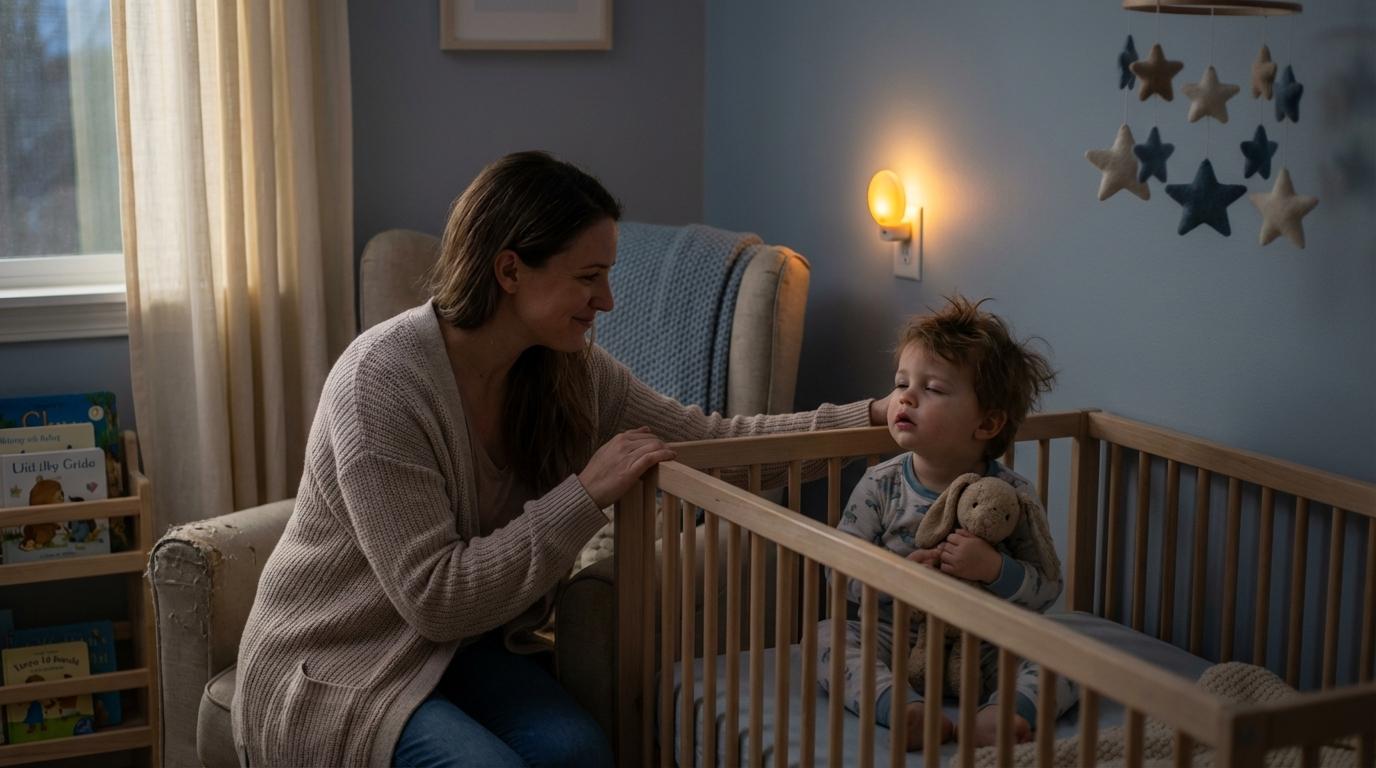
If your toddler is upset, you can reassure without turning bedtime into a party:
- Wait a short moment to see if they resettle
- Go in, keep lights dim, use a calm voice
- Pat, shush, or briefly rub their back for 20 to 60 seconds
- Leave while they are calm or almost calm
Consistency matters more than the exact method. Pick something you can repeat at 2 AM without bargaining with yourself.
Watch the overtired loop
If naps have been short, bedtime may need to move earlier for a few days. For many 13-month-olds, an overtired bedtime can look like:
- More crying at bedtime
- More waking 45 to 90 minutes after falling asleep
- Early morning waking
An earlier bedtime is not “giving in.” It is often the quickest way out of the regression.
Separation anxiety: soothing that does not backfire
You do not need to choose between “cry it out” and “never leave the room again.” Most families land in the middle: warm reassurance plus predictable boundaries.
Strengthen your routine, not the negotiations
A good 13-month bedtime routine is short and repeatable:
- Bath or wipe-down
- Pajamas and sleep sack
- Milk or snack (teeth brushed after)
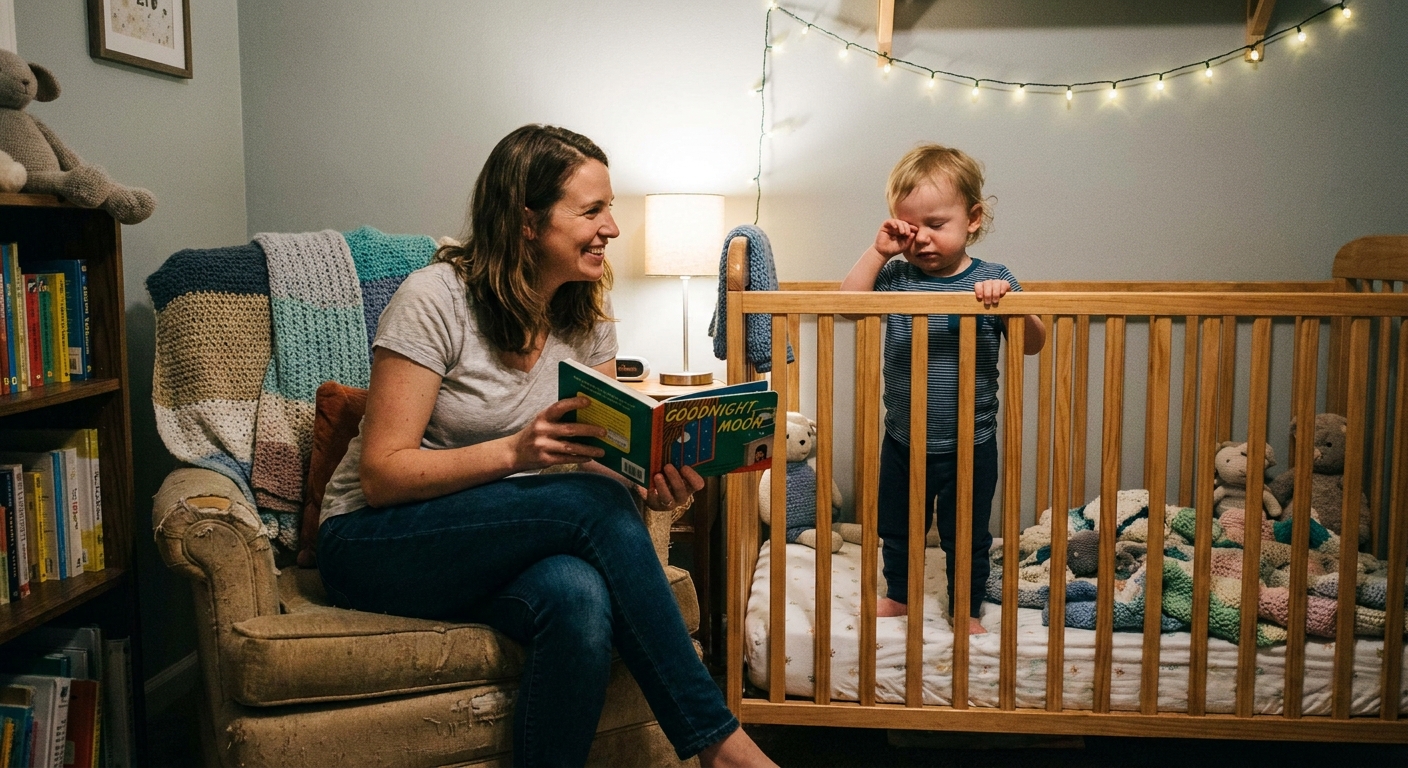
- Two books
- Song, cuddle, into crib awake but drowsy
If your toddler cries when you stand up, try a consistent phrase: “I love you. It is time for sleep. I will check on you.” Then follow through.
Give connection earlier in the day
Separation anxiety eases when toddlers feel “filled up” with connection:
- 10 minutes of phone-free floor time after daycare
- Let them choose the bedtime book
- A special goodbye ritual for naps
Comfort objects can help (keep it small)
At 13 months, a small lovey can be soothing if your child already uses one safely and it is allowed in your sleep setup. If you introduce one, keep it small and breathable. Keep the sleep space free of loose bedding and follow your pediatrician’s guidance for your specific situation.
Are they ready for one nap?
Some toddlers truly are. Many are not. Here is a practical way to tell the difference.
Signs one nap might be appropriate
- They consistently refuse one nap for two weeks or more
- They can handle a 4.5 to 5 hour wake window before a midday nap without melting down
- The single nap is at least 2 hours most days
- Night sleep stays solid (no new early wakes or frequent wakings)
Signs it is too soon
- The one nap is short (under 90 minutes) and they are miserable by late afternoon
- Bedtime becomes very early (before 6:00 PM) and nights get choppy
- Early morning wakes become the new normal
If daycare pushes one nap
This is common. If daycare is on one nap and home is on two, you can split the difference:
- Daycare days: one nap, early bedtime
- Home days: two naps when possible to catch up
It is not perfect, but it is often the most realistic way to protect total sleep.
Easy wins: sleep environment basics
When sleep is messy, I like easy wins that do not require negotiating with a tiny human:
- Dark room: blackout curtains can help, especially for early mornings.
- White noise: steady and consistent can mask household sounds.
- Comfortable temperature: cool and consistent tends to work best for many kids.
- Morning light: bright light after your desired wake time helps set the body clock.
Early morning wakes
If your toddler is starting the day at 4:45 or 5:15 AM, you are in good company. Early wakes are common during regressions and nap transitions.
- Protect bedtime. Overtired often equals early wake, which is unfair but true.
- Keep the room dark until your “okay to start the day” time. If you can, treat anything before that as a night waking: brief, boring, low light.
- Check the schedule. Too-long wake windows or a too-early switch to one nap can trigger early mornings.
- Use light strategically. Once it is morning, open curtains and go bright. Save dim light for night.
Illness and pain: red flags that mimic a regression
As a triage nurse, this is the part I never skip. Sleep changes are often behavioral, but sometimes they are your child’s way of saying “something hurts.” This is general education, not medical advice. If you are concerned, contact your pediatrician for guidance.
Possible ear infection
- Waking suddenly crying and hard to soothe
- More discomfort when lying flat
- Fever, recent cold, ear tugging (not always present and not specific)
- Drainage from the ear
Breathing concerns
- Fast or labored breathing
- Wheezing or persistent barking cough
- Lips or face turning bluish or gray
Those breathing signs are urgent. Seek immediate medical care.
Dehydration or poor intake
- Significantly fewer wet diapers than usual
- Very dry mouth, no tears when crying
- Extreme lethargy
High fever or fever plus concerning symptoms
Call your pediatrician for guidance if your child has a fever and seems unusually sleepy, inconsolable, develops a new rash, has a stiff neck, or you are worried. You know your child best.
Teething pain that disrupts sleep
Teething can absolutely wake toddlers. If you suspect pain, talk with your pediatrician about appropriate comfort measures for your child’s age and medical history. Avoid topical numbing gels unless specifically directed by a clinician.
A 7-day reset plan
If you are in the thick of it, try this for one week before you overhaul everything.
- Days 1 to 2: Prioritize early bedtime, even if naps were messy.
- Days 3 to 4: Anchor nap one with a 3 to 3.5 hour wake window. Cap it if nap two keeps failing.
- Days 5 to 7: Keep the bedtime routine consistent. Use the same check-in approach overnight. Practice “down” during the day.
Most regressions improve when your toddler catches up on sleep and the novelty of cruising wears off.
Quick FAQ
How long does this last?
Often one to three weeks, and many families see improvement within a couple of weeks once sleep catches up and the schedule stabilizes. If things are steadily worsening over a month, look closely at schedule, sleep associations, and possible illness.
Should I stop going in at night?
You do not have to. Many families do well with brief, boring reassurance. The key is consistency and not accidentally creating a brand-new middle-of-the-night hangout session.
My toddler stands and screams. Do I lay them back down?
Some toddlers get more upset with repeated laying down. If that is your child, try coaching “down” with your voice first and use brief check-ins. If you do lay them down, keep it calm and minimal, then step back.
When to get extra help
If you are dealing with intense sleep disruption, postpartum anxiety, or you are so tired you feel unsafe driving or caring for your child, please reach out for support. Call your pediatrician, enlist a partner or friend for a shift, and consider working with a pediatric sleep specialist if you want a structured plan.
You are not failing. You are parenting a 13-month-old who just discovered that standing is thrilling and sleep is optional. We will get you back to sleep again.
Sarah Mitchell
Sarah Mitchell is a Registered Pediatric Nurse and a mother of three who has spent over a decade helping families navigate the beautiful, chaotic early years of childhood. She combines evidence-based medical knowledge with real-world parenting experience to offer practical, compassionate advice. At Awesome Parent, Sarah's mission is to help exhausted parents find solutions, trust their instincts, and finally get some sleep.