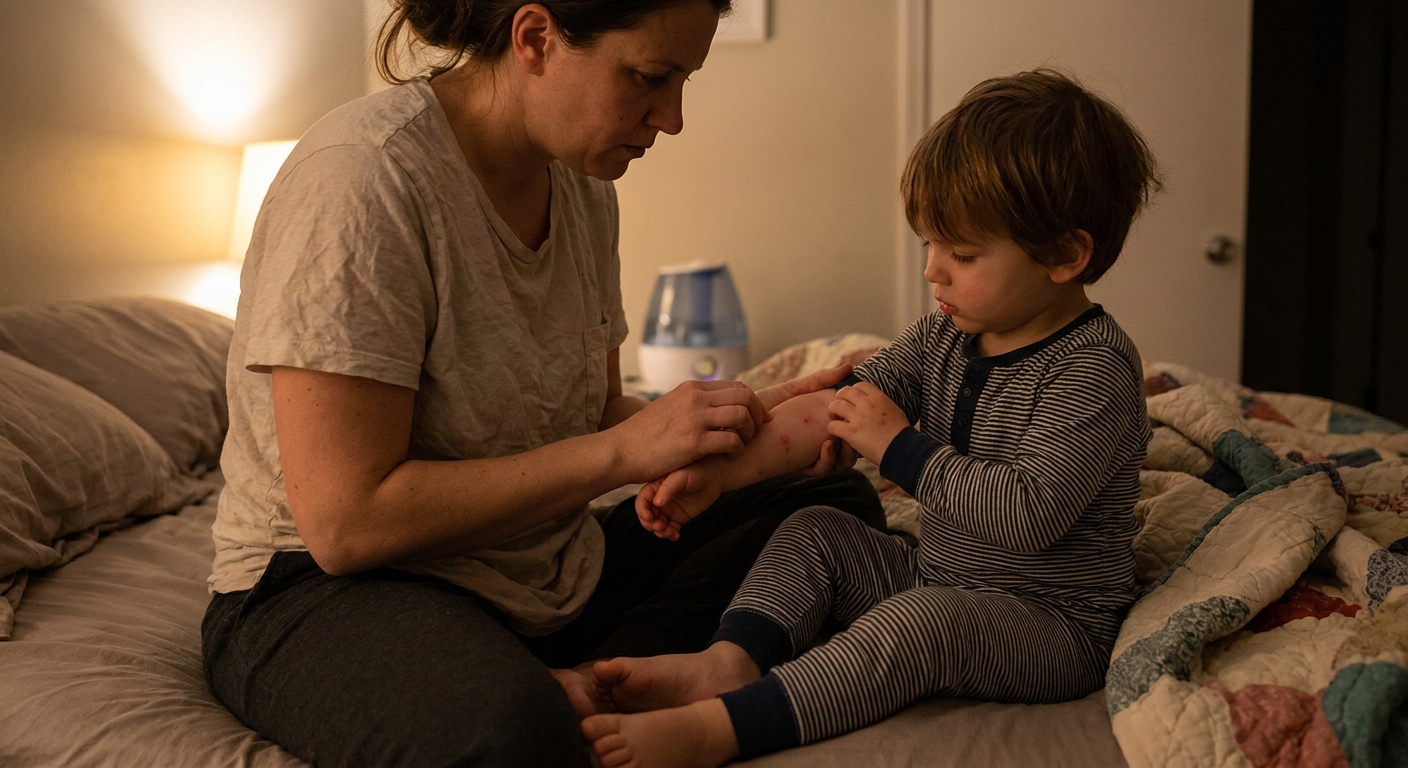
Bites noticed after sleep, showing up in clusters, and returning in crops? Here’s how to recognize bed bug bites, calm the itch, prevent infection, and tak...
Bed Bugs in Kids’ Rooms: Step-by-Step Home Treatment

Sarah Mitchell
Sarah Mitchell is a Registered Pediatric Nurse and a mother of three who has spent over a decade helping families navigate the beautiful, chaotic early years of childhood. She combines evidence-based medical knowledge with real-world parenting experience to offer practical, compassionate advice. At Awesome Parent, Sarah's mission is to help exhausted parents find solutions, trust their instincts, and finally get some sleep.
Finding bed bugs in your child’s room can make even the most level-headed parent feel like their skin is crawling. Take a breath. Bed bugs are not a sign of a dirty home, and you did not “cause” this. They can show up anywhere. They are hitchhikers, and clutter simply gives them more places to hide and makes treatment harder.
As a pediatric nurse and a mom who has triaged plenty of panicked late-night “Is this a bed bug?” calls, here’s what I want you to know: you can handle the first steps safely, even with babies and toddlers in the house. The key is confirming bed bugs (not just guessing from bites), then doing a focused, chemical-cautious plan that targets the bug’s life cycle.
At a glance: Confirm evidence → make the bed an island + interceptors → hot-dry laundry → vacuum + steam → encase → monitor weekly.
First: confirm bed bugs (bites alone are not proof)
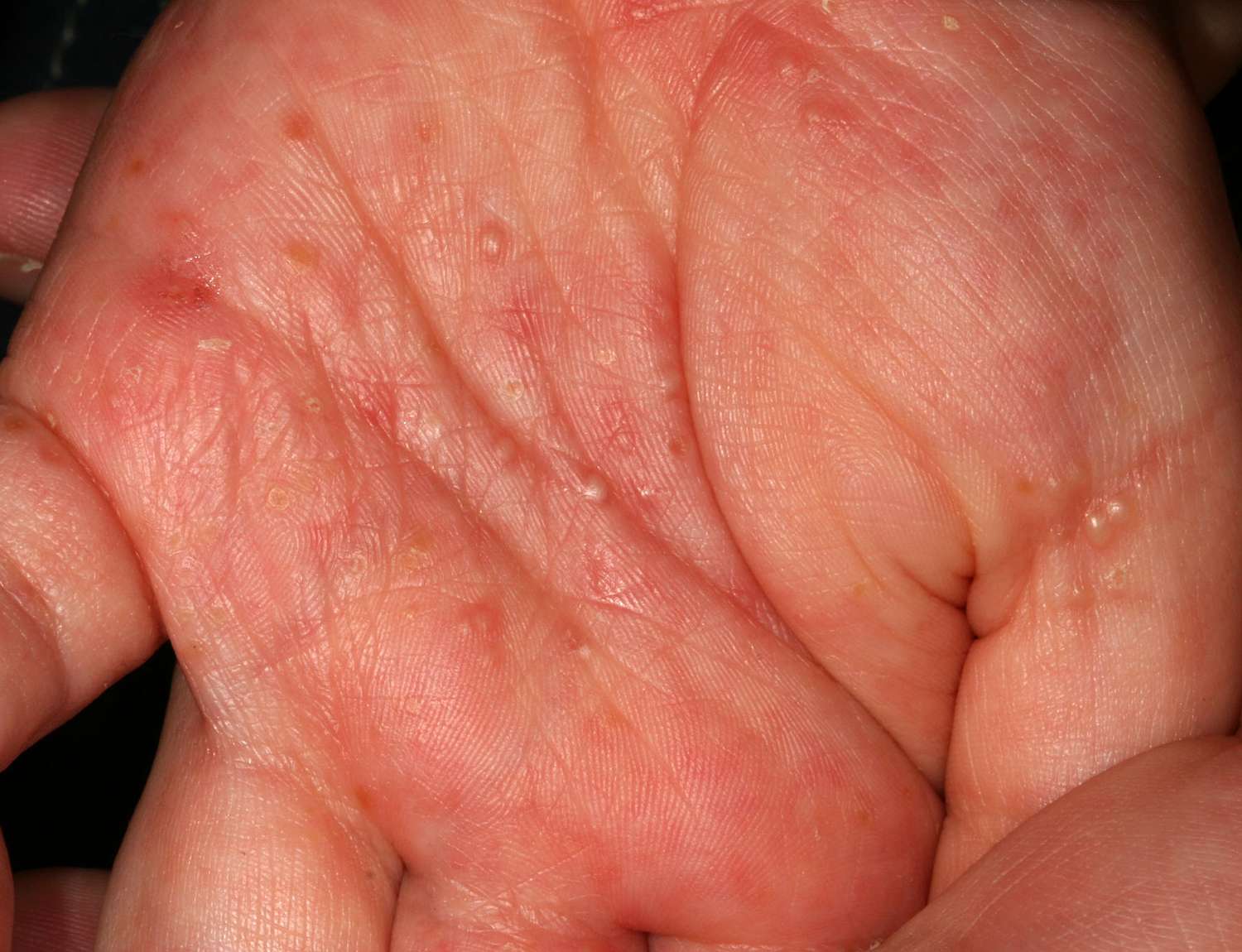
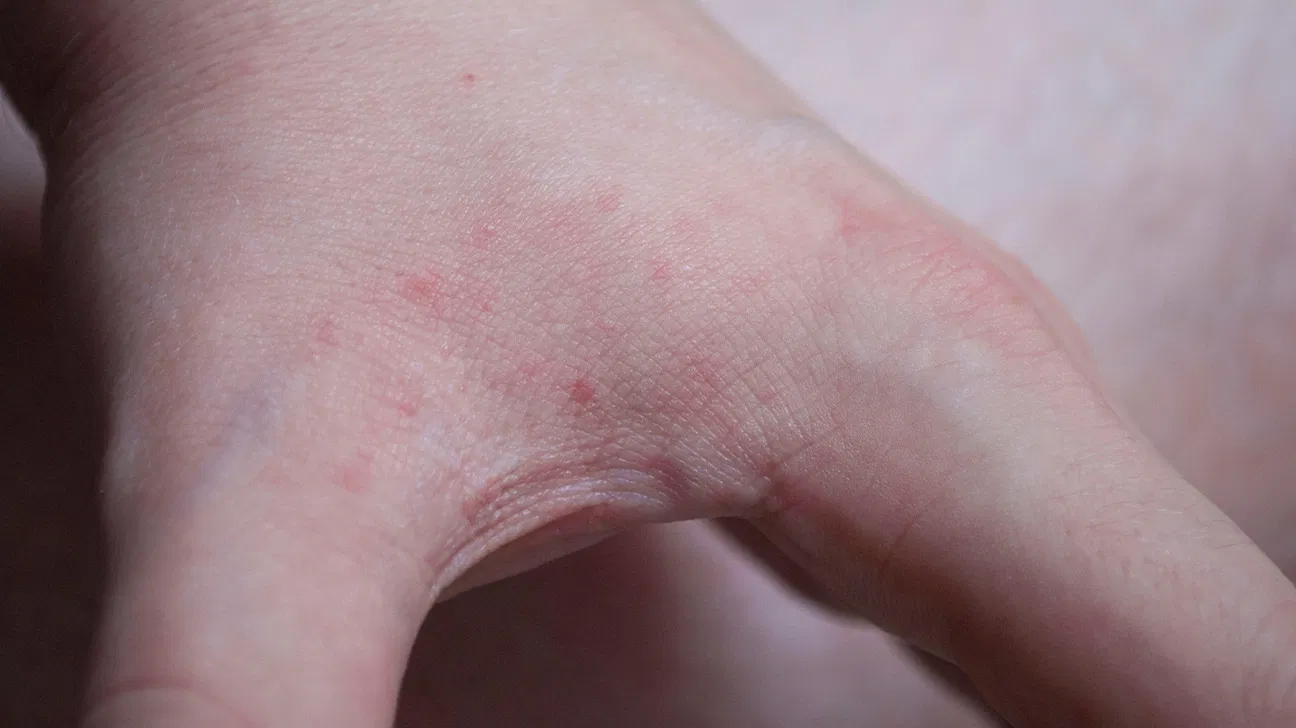
Bed bug bites can look like mosquito bites, eczema flares, hives, or even a random “what is that?” rash. Some kids react strongly, some barely react at all. So please do not let bite photos on the internet be the deciding factor.
What to look for in the room
- Live bugs: small, flat, oval insects, reddish-brown. Adults are about the size of an apple seed. Nymphs can be tiny and pale.
- Black dots like marker ink: fecal spots on sheets, mattress seams, bed frame joints, or baseboards.
- Rusty or reddish smears: crushed bugs or blood spots on bedding.
- Cast skins: translucent “shells” from molting, often near hiding spots.
- Eggs: tiny, pearly white, often tucked into seams and cracks.
Bed bug lookalikes
Identification matters because some “bed bug” sightings are actually other insects. A few common mix-ups:
- Carpet beetles: adults are rounded, patterned, and do not look like a flat “apple seed.” Their larvae can cause skin irritation from hairs, but they do not bite like bed bugs.
- Bat bugs: very similar to bed bugs. If you have bats in an attic or chimney, the source and solution can be different.
If you are not sure, trap a specimen with clear tape or in a small sealed container and confirm with a licensed pest professional or a reputable local extension service. Correct identification saves time, money, and your sanity.
Where to inspect (in order of highest yield)
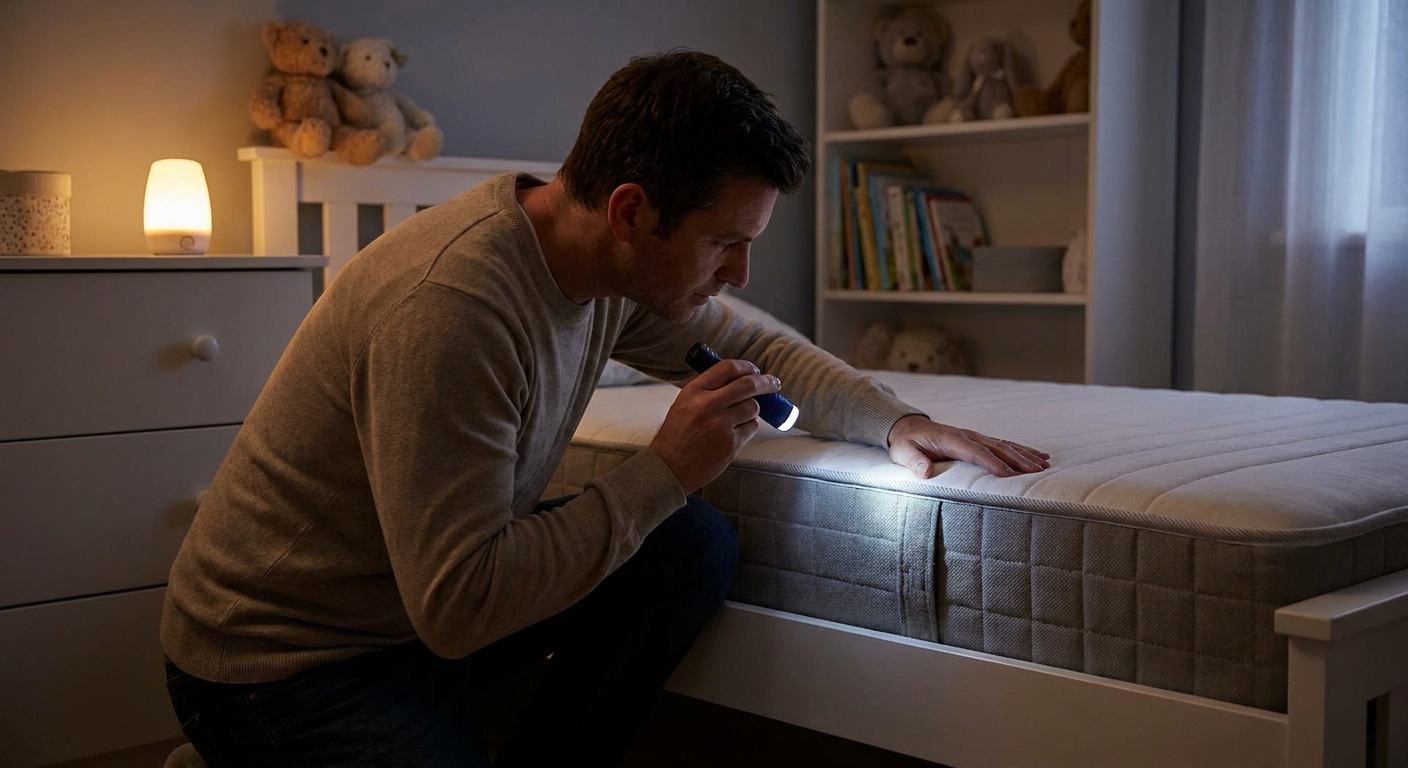
- Mattress seams, piping, and tags
- Box spring edges and the fabric underside (they love this)
- Bed frame joints and screw holes
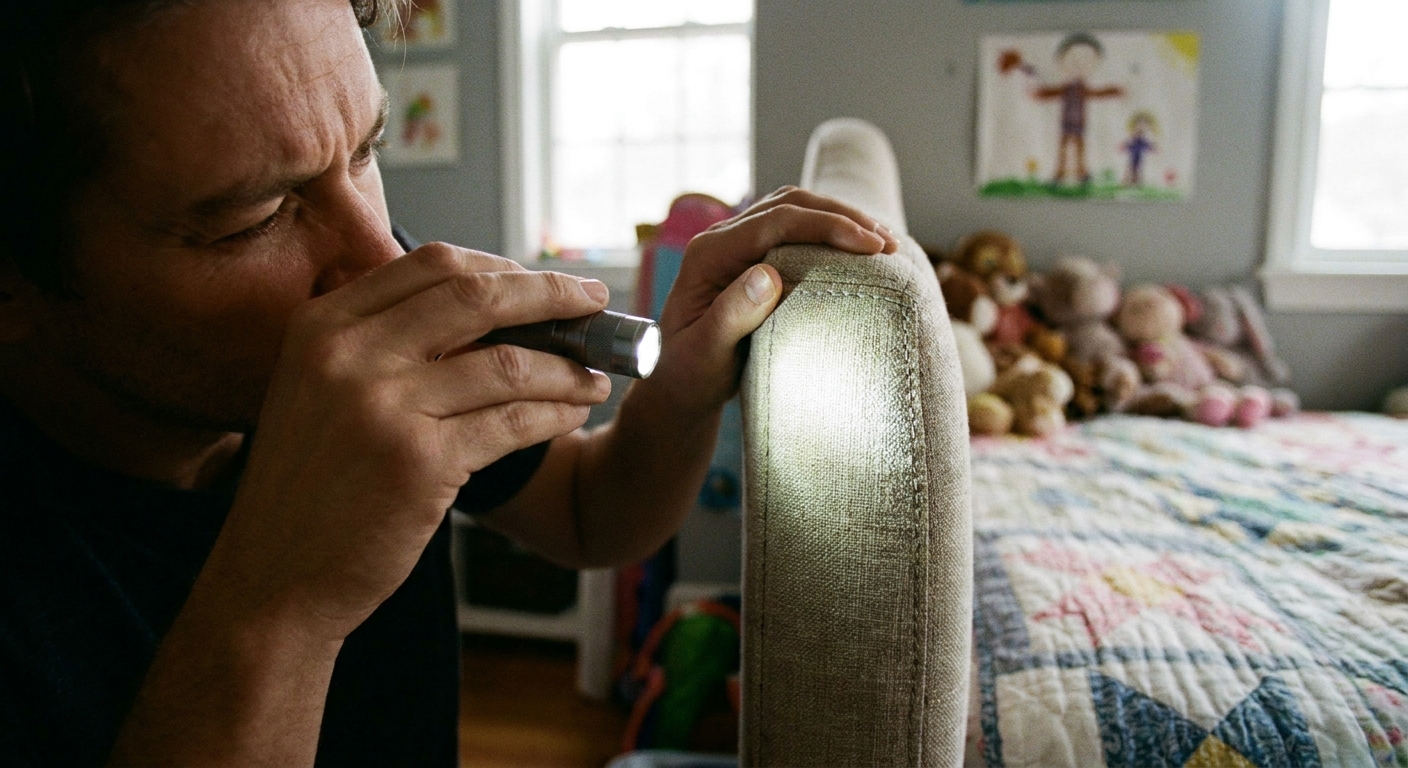
- Headboard cracks (especially upholstered)
- Behind and under nightstands
- Baseboards near the bed, curtain hems, and around outlet covers
Electrical note: Many families should avoid opening outlets. Instead, inspect around the cover edges with a flashlight. If you suspect bugs in an outlet or wall void, let a professional handle it.
Quick check (not a perfect test): Put a white sheet on the bed and use a flashlight at night to inspect seams and edges. Bed bugs tend to be more active in the dark, and the contrast can help you spot evidence. Do not be discouraged if you do not see movement. Absence of sightings is not proof they are not there. Interceptors (below) are a more reliable monitor over time.
Immediate bite reduction while you treat
You can start reducing bites tonight, even before you have the whole plan in motion.
Make the bed an island
- Pull the bed 6 to 12 inches away from the wall.
- Make sure blankets do not drape onto the floor.
- Clear items stored under the bed.
Use bed bug interceptors (kid-safe)
Interceptors are small cups that go under each bed leg to trap bugs climbing up or down. They are a low-chemical, high-impact tool and also help you monitor progress.
- Maintenance matters: wipe interceptors clean every week or two. Dust can give bugs enough traction to climb out.
- Bed type note: Interceptors work best with beds that have legs. Platform beds often need a different approach (a professional monitor, bed isolation tweaks, or an alternate frame).
Consider temporary sleep arrangements carefully
I know the urge is to move your child to the couch or your bed. The problem is that bed bugs can hitchhike with blankets and pajamas, and now you have multiple rooms involved. If possible, keep your child sleeping in the same room while you treat, but make the bed an island and start interceptors.
Infants and toddlers: focus on barriers, not sprays
For babies and toddlers who mouth everything, prioritize laundering, vacuuming, steam, encasements, and interceptors over any pesticide approach. If you use any product at all, it should be clearly labeled for indoor bed bug use, and applied only in cracks and crevices when children and pets are out of the room.
Step-by-step home treatment plan (family-safe order)
Bed bug control works best when you do several methods together. No single step is magic. Here is a practical sequence that families can actually do.
Step 1: Declutter without spreading bugs
Clutter gives bed bugs infinite hiding spots. The goal is to reduce hiding places while preventing hitchhiking.
- Bring in heavy-duty trash bags or dissolvable laundry bags.
- Work in one room at a time, starting with the child’s room.
- Bag soft items immediately (stuffed animals, extra bedding, throw pillows).
- Seal bags before moving them through the house.
Tip from real life: Put a “clean zone” and “dirty zone” on opposite sides of the room so you do not lose track late at night when everyone is tired.
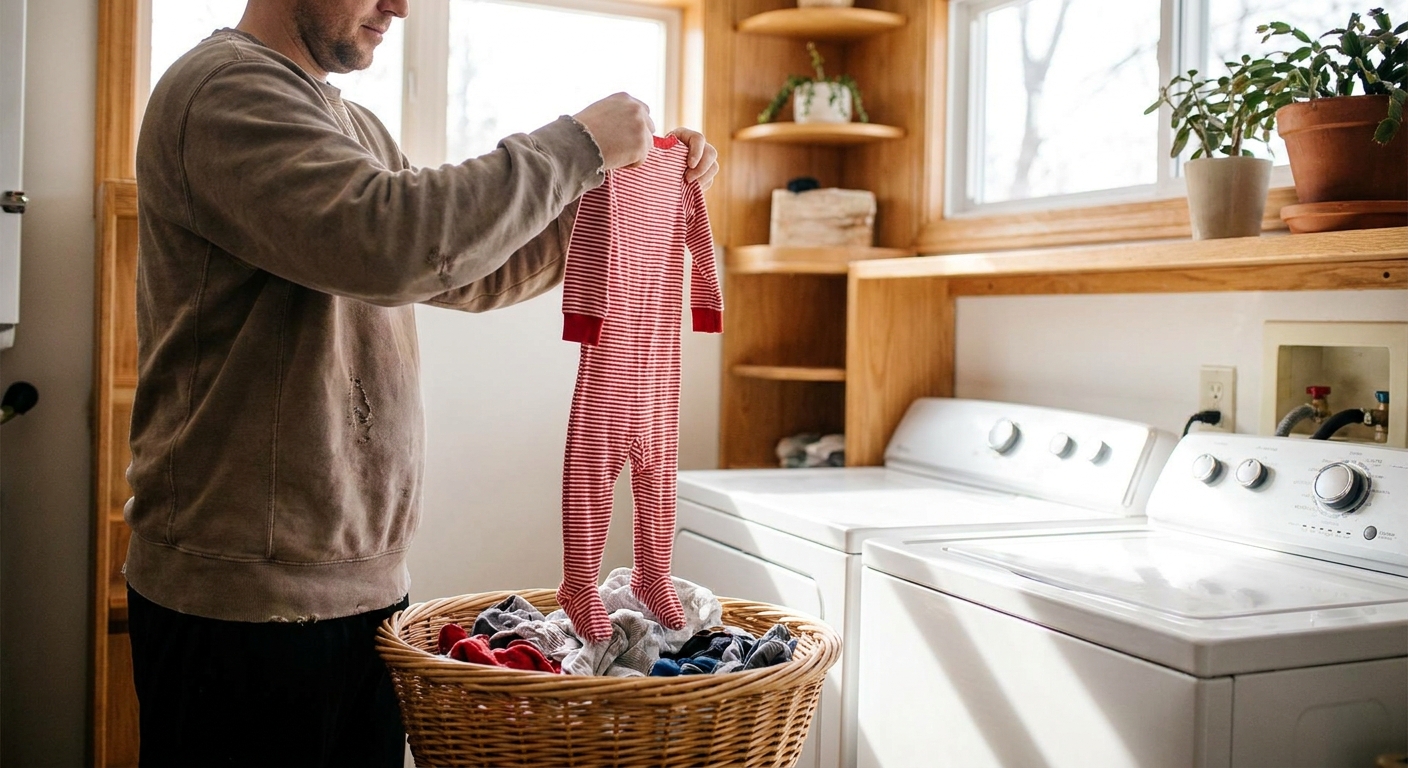
Step 2: Laundry that actually kills bed bugs
Heat is your best friend. Washing helps, but the dryer is what most reliably kills bed bugs and eggs.
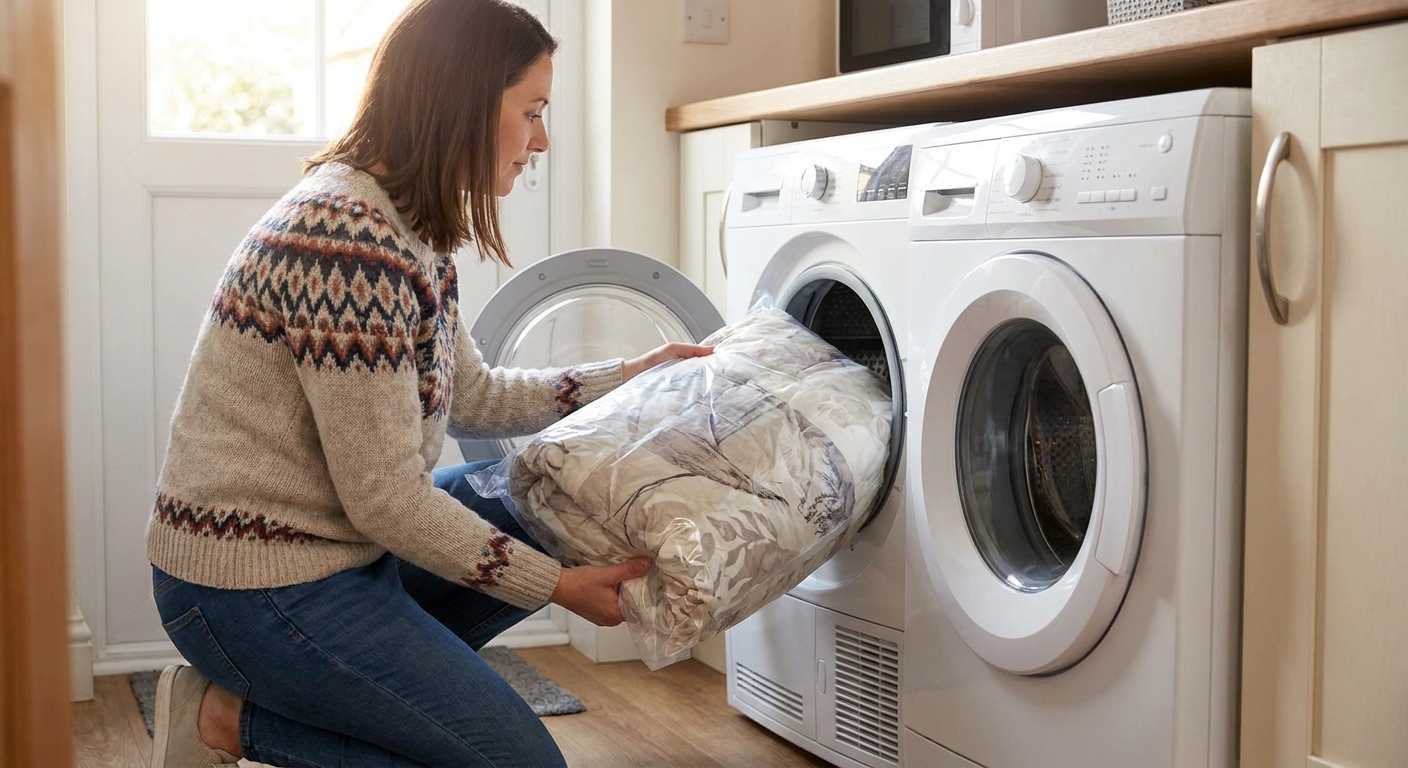
- Transport items to the laundry in sealed bags.
- Empty bags directly into the washer or dryer. Discard single-use bags outside right away.
- Dry on high heat when the fabric allows. Aim for 30 to 60 minutes once items are fully hot and dry. Thicker items and full loads may need longer depending on your dryer.
- After drying, place items into fresh, clean bags or clean lidded bins and keep them sealed until treatment is under control.
For items that cannot be washed: run them in the dryer on appropriate heat if safe, or seal them in a bag or bin. Bed bugs can survive for a long time without feeding, so storage is not a quick fix, but it can help you stop active spread.
Step 3: Vacuum and physical removal
Vacuuming does not solve bed bugs by itself, but it removes live bugs, skins, and debris and improves the effectiveness of everything else.
How to vacuum safely and effectively
- Use a vacuum with strong suction and a crevice tool.
- Go slowly along mattress seams, tufts, and edges of carpet near the bed.
- Vacuum the bed frame joints, baseboards, and around furniture feet.
- Immediately after vacuuming, empty the canister into a bag, seal it, and take it outside. If using a bagged vacuum, remove the bag, seal, and discard outdoors.
Do not use your child’s room vacuum for the whole house unless you are meticulous with bag disposal. We want fewer hitchhikers, not a whole-house tour.
Step 4: Steam (powerful and chemical-free)
If you want one DIY tool that is both effective and low-chemical, this is it. High-heat steam can kill bed bugs and eggs on contact in seams and cracks.
Where steam helps most
- Mattress seams and tufts (slow passes)
- Bed frame joints and screw holes
- Crib joints and slats (see crib safety notes below)
- Baseboards and carpet edges near the bed
- Upholstered seams on chairs and headboards
Steam safety and technique
- Use a steamer designed to produce hot, dry steam (not a clothing iron).
- Move slowly. A quick swipe does not heat the surface enough.
- Avoid blasting so much moisture that you soak mattresses, wood, or drywall. Moisture can cause mold and damage.
- Keep kids and pets away while steaming and until surfaces are fully dry. Steam burns happen fast.
Step 5: Mattress, box spring, and crib
This is where parents understandably want to throw everything away. Sometimes that is necessary, but often you can treat and contain effectively.
Mattress and box spring encasements
Use certified bed bug-proof encasements that fully zip and have reinforced seams. Encase the mattress and box spring. This traps anything inside and removes many hiding places on the outside.
- Choose encasements labeled for bed bugs (not just “waterproof”).
- Keep encasements on for at least a year (often 12 to 18 months), or per manufacturer or professional guidance. Trapped bugs can survive for months.
Cribs and toddler beds
For infants and toddlers, I am extra cautious:
- Avoid applying pesticides to crib mattresses or any sleep surface.
- SIDS and suffocation safety: Only use a cover that is manufacturer-approved for that crib mattress, extremely tight-fitting, and does not change firmness or create loose material. If a product is not specifically designed for infant sleep safety, skip it and ask your pediatrician or a certified safe-sleep resource.
- Keep the crib pulled away from walls, curtains, and furniture.
- Use interceptors only if the crib has stable legs that can safely sit in them without wobbling.
If you suspect bed bugs in a crib, consider bringing in a professional sooner rather than later. Babies have more skin exposure and cannot tell you what is happening.
Should you throw out the mattress?
Sometimes. Not always. Consider replacing if:
- The mattress is heavily infested and cannot be safely encased (torn seams, damage).
- You cannot stop bites despite encasement and interceptors.
- You are moving and cannot risk transporting infested items.
If you do discard furniture, destroy or mark it so no one else brings it home. Wrap it before moving it through the house to avoid dropping bugs along the way.
Step 6: Furniture options
Bed bugs love seams, staples, and hidden wood joints. Upholstered headboards and plush chairs are frequent culprits in kids’ rooms.
Best DIY approach
- Inspect and vacuum seams and crevices.
- Steam seams and joints where safe for the material.
- Reduce hiding spots by removing unnecessary upholstered items from the room if possible.
- Use interceptors and keep furniture slightly away from walls during treatment.
When to consider replacing furniture
- Upholstered headboards with deep tufting and lots of seams
- Storage beds with many joints and fabric undersides
- Items that cannot be thoroughly inspected or treated without spreading bugs
About chemicals: kid-focused guidance
In pediatrics, “safe” always means “safe for this specific child in this specific situation.” Infants, toddlers, and children with asthma are more vulnerable to fumes and residues.
What to avoid (especially with babies and toddlers)
- Bug bombs or foggers: they are often ineffective for bed bugs and may drive them deeper into wall voids and furniture. They can also leave pesticide residues on toys and surfaces.
- Outdoor-use pesticides indoors: never appropriate.
- Essential oil sprays as a primary treatment: they are not reliably effective and can irritate lungs and skin. Some are unsafe if ingested.
- DIY mixes from the internet: please do not. I have seen kids come into clinic with chemical burns from “natural” remedies.
Lower-risk tools that can help
- Physical control: laundering, drying, vacuuming, steam, encasements, interceptors.
- Targeted dusts: Some families use silica gel or diatomaceous earth products labeled for bed bugs. These can be effective, but they are also a lung irritant. Use only EPA-registered products specifically labeled for indoor bed bug control. Never use pool-grade diatomaceous earth. If you use dusts at all, keep application minimal, in cracks and crevices only, and away from where children crawl, play, or sleep.
If you choose any pesticide product: use only products labeled for indoor bed bug control, follow label directions exactly, and keep kids and pets out of the room until surfaces are fully dry and the space is well ventilated. When in doubt, call your pediatrician or poison control for guidance about exposures. For many families, the EPA and CDC bed bug guidance pages are also helpful references.
DIY vs pest control
DIY can work for small, early infestations, especially if you caught it quickly and can be very consistent for several weeks.
DIY is reasonable when
- You have confirmed bed bugs but sightings are limited to one bed or one piece of furniture.
- You can do high-heat laundry and keep clean items sealed.
- You can encase mattress and box spring and use interceptors.
- You can commit to repeat inspections weekly and continue steps for 6 to 8 weeks.
Call a professional sooner if
- You see bed bugs in multiple rooms, or bites continue despite encasements and interceptors.
- Your child is an infant, medically fragile, or has poorly controlled asthma.
- You live in a multi-unit building (apartments, condos). Infestations can move between units. Notify your landlord or property manager early and ask about coordinated treatment for adjacent units.
- You have significant clutter that makes thorough treatment unrealistic.
- You cannot identify the bug confidently.
What to ask a pest control company
- Do you have specific experience with bed bugs?
- What methods do you use (heat treatment, targeted residuals, combination)?
- How many visits are included, and what is the follow-up schedule?
- What prep is required, and what is optional?
- What products will be applied, and are they labeled for indoor use around children? How long should kids be out of treated rooms?
A good company will explain, not pressure. If someone recommends foggers or a one-and-done visit, keep calling.
Preventing spread during treatment
Bed bugs are stubborn because eggs hatch over time. Expect this to be a multi-week project, even with professional help.
Weekly routine that moves the needle
- Keep the bed isolated and interceptors in place. Clean interceptors regularly.
- Wash and hot-dry bedding weekly, then store extras sealed.
- Vacuum bedroom edges and bed frame weekly (dispose of vacuum contents outdoors).
- Steam seams and cracks weekly where it makes sense and materials allow.
- Reduce “bed travel”: limit moving blankets, stuffed animals, and pillows from room to room.
Backpacks, diaper bags, coats, and car seats
In real family life, the biggest hitchhikers are the things that go everywhere.
- Keep backpacks and diaper bags off beds.
- When you come home from travel, school, or a sleepover: put clothes straight into the dryer on high heat if the fabric allows.
- Inspect and vacuum bags and the car seat area regularly. If the cover is removable and care instructions allow, hot-dry it.
Stuffed animals and comfort items
Yes, your child will want their favorite plush friend. Here is a compromise that works in many homes:
- Choose 1 to 2 comfort items to keep in rotation.
- Hot-dry them regularly if the fabric allows.
- Keep the rest sealed temporarily so you are not laundering a mountain of stuffed animals every night.
Common mistakes exhausted parents make
- Chasing bites instead of evidence: bites are not a reliable tracking tool.
- Moving sleep locations nightly: it can spread bed bugs to new rooms.
- Throwing away items without sealing them: bugs drop off during transport.
- Overusing chemicals: more product is not better, especially around kids.
- Stopping too soon: things look better, then eggs hatch, and you are back at square one.
When to call the pediatrician
Most bed bug bites are more annoying than dangerous, but kids can get secondary infections from scratching.
Call your pediatrician if your child has:
- Spreading redness, warmth, swelling, pus, or increasing pain
- Fever or your child seems unusually ill
- Significant facial swelling or hives
- Any trouble breathing (call emergency services)
- Itching so intense your child cannot sleep despite basic measures
If you suspect a chemical exposure from sprays, foggers, or powders, contact Poison Control right away (in the US: 1-800-222-1222).
A calm checklist for tonight
- Confirm evidence on the mattress seams, box spring, and bed frame.
- Pull bed away from walls and keep bedding off the floor.
- Bag bedding and pajamas, then hot-dry and seal clean items.
- Vacuum seams and room edges, then discard vacuum contents outside.
- Steam seams and cracks you can safely access.
- Add interceptors under bed legs and wipe them clean regularly.
- Plan for encasements and a weekly routine.
- If a baby is involved, multiple rooms are affected, or you live in an apartment or condo, schedule a pest control evaluation and notify management early.
You do not have to do everything perfectly. You just have to do the next right step, then the next. Bed bugs are beatable, and you and your kids will sleep normally again.
Sarah Mitchell
Sarah Mitchell is a Registered Pediatric Nurse and a mother of three who has spent over a decade helping families navigate the beautiful, chaotic early years of childhood. She combines evidence-based medical knowledge with real-world parenting experience to offer practical, compassionate advice. At Awesome Parent, Sarah's mission is to help exhausted parents find solutions, trust their instincts, and finally get some sleep.