A parent-friendly guide to common bites and stings, normal vs allergic reactions, tick removal, home treatment, antihistamines, prevention tips, and emergenc...
Flea Bites on Kids: How to Spot Them and Stop the Itch

Sarah Mitchell
Sarah Mitchell is a Registered Pediatric Nurse and a mother of three who has spent over a decade helping families navigate the beautiful, chaotic early years of childhood. She combines evidence-based medical knowledge with real-world parenting experience to offer practical, compassionate advice. At Awesome Parent, Sarah's mission is to help exhausted parents find solutions, trust their instincts, and finally get some sleep.
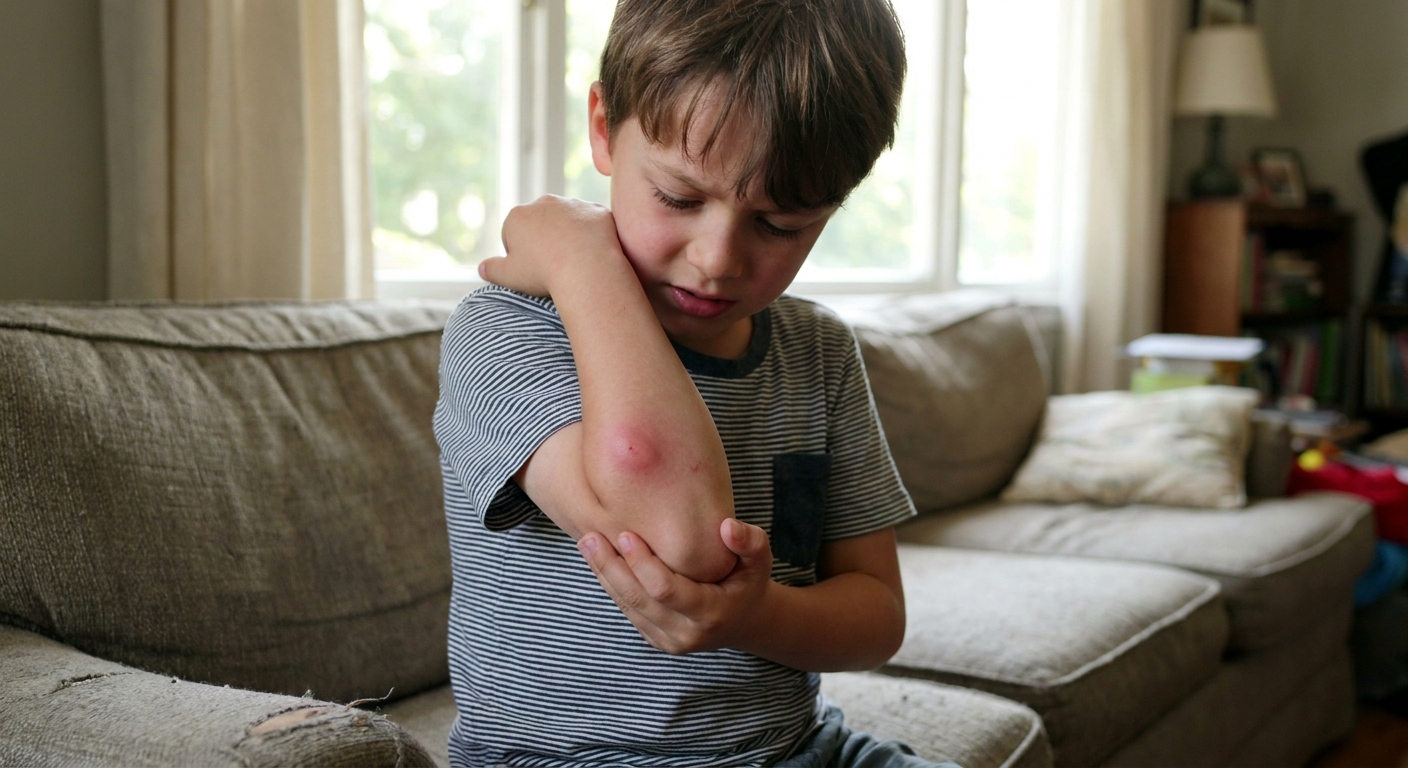
If your child suddenly has tiny, intensely itchy bumps, especially around the ankles or lower legs, fleas deserve a spot on your suspect list. As a pediatric nurse and a mom who has personally done the 2 a.m. “Is this a rash or a bug?” spiral, I promise you’re not alone.
The good news: flea bites are usually more annoying than dangerous. The key is recognizing the pattern, soothing the itch safely, and stopping the bites at the source, which is usually a pet, a carpet, or a sneaky outdoor critter visiting your yard.
Quick reality check: lots of rashes can mimic bug bites. If the pattern doesn’t fit, your child seems sick, or your gut says “this is weird,” it’s worth checking in with your pediatrician.
What flea bites look like on kids
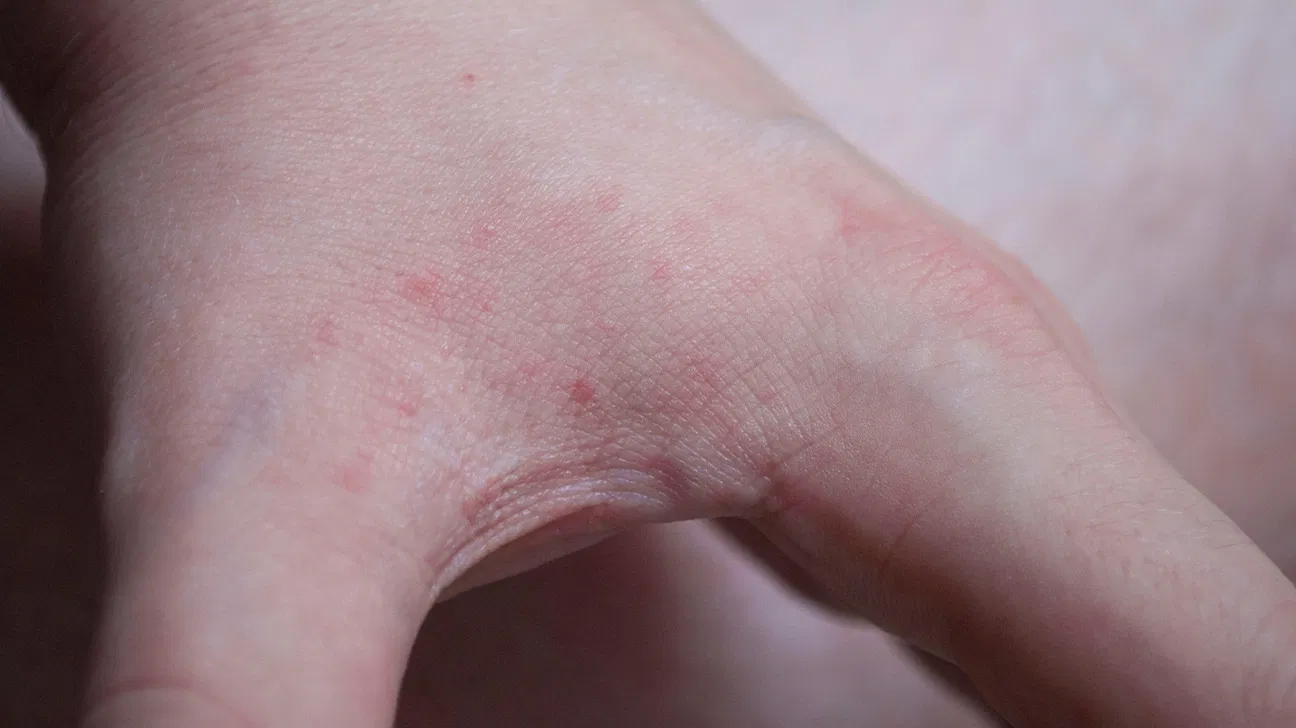
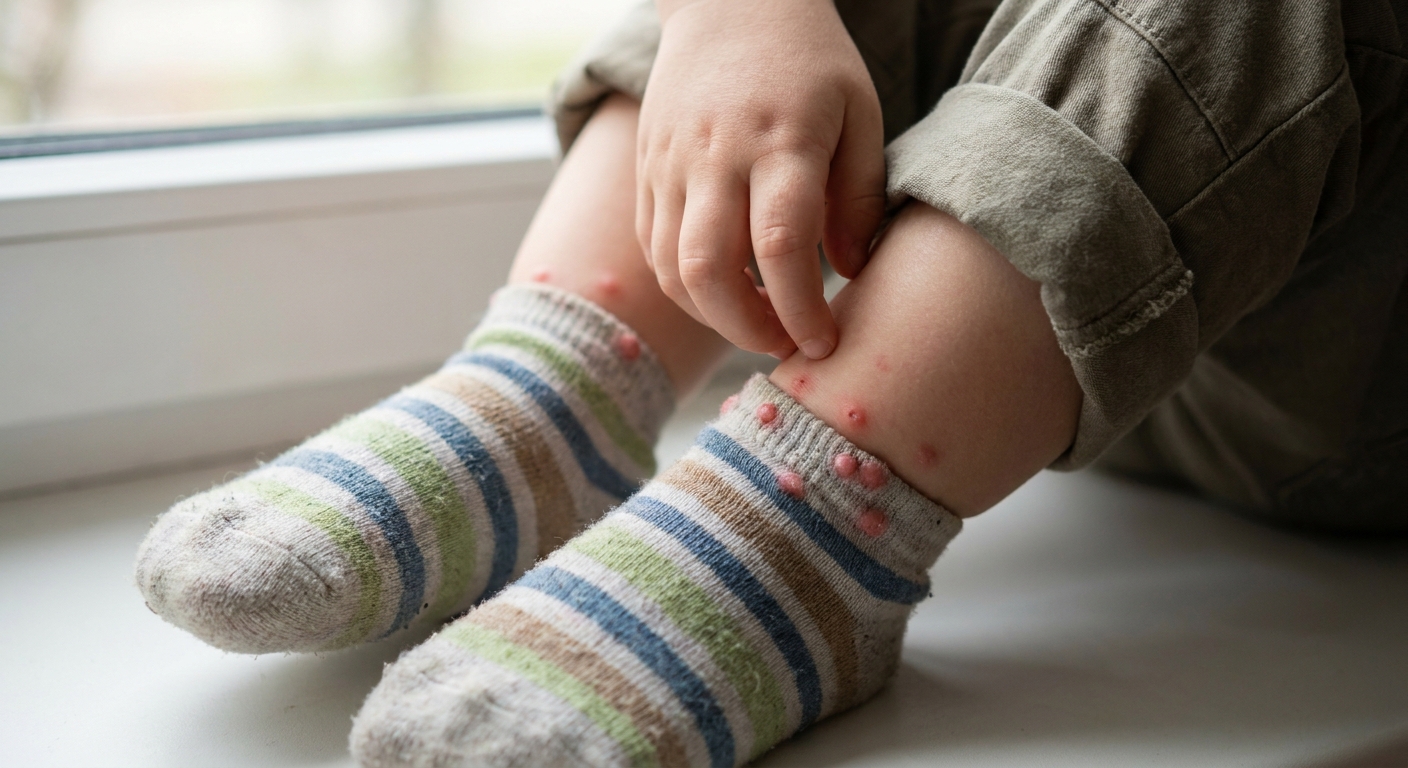
Flea bites tend to be small (pinpoint to a few millimeters), red bumps that are very itchy. On kids, they often appear in:
- Ankle and lower leg clusters, especially right at the sock line
- Groups of 2 to 5 bumps close together
- A tiny central dot in the middle of the bump (where the flea bit)
- Occasional lines of bites (this can happen, but it’s not specific to fleas and can also be seen with other insects)
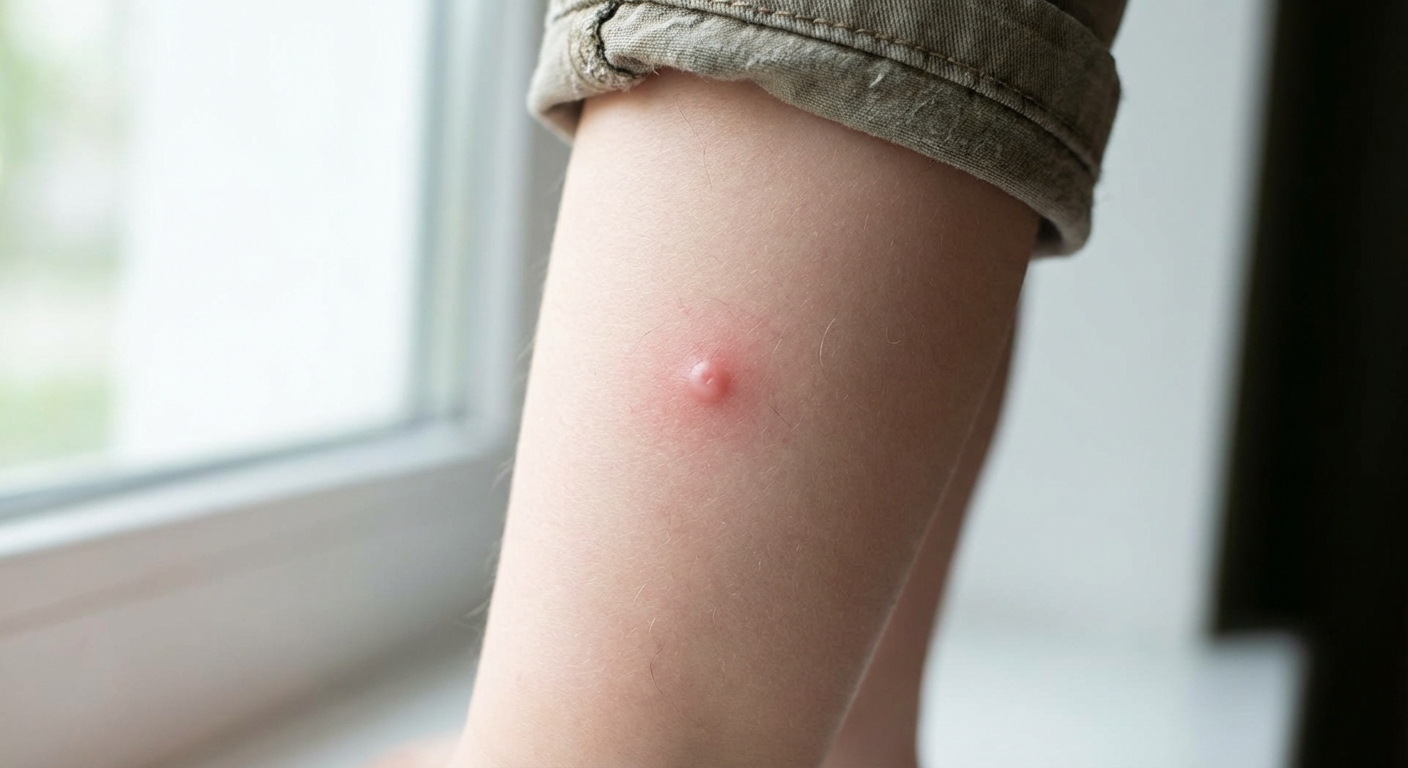
Some children get a larger reaction that looks more like a raised welt. Others barely react at all. (This is one reason siblings can share a room and only one looks like a snack platter.)
Common places to check
- Lower legs and ankles
- Feet (especially if your child goes barefoot at home)
- Behind the knees
- Waistline or under elastic (pajama waistband)
- Armpits or groin creases (less common, but possible)
Tip: fleas like to hang out close to the ground. If bites are mostly on the face and arms, fleas are less likely.
Flea bites vs. mosquito bites, bed bugs, and eczema
When you’re staring at bumps on your child’s skin, everything can look the same. Here are some practical clues.
Flea bites vs. mosquito bites
- Size: mosquito bites are often larger, puffy welts. Flea bites are usually smaller bumps.
- Location: mosquitoes commonly bite exposed areas like face, arms, and neck. Fleas often bite ankles and lower legs.
- Pattern: flea bites often cluster tightly. Mosquito bites are more spaced out.
Flea bites vs. bed bug bites
- Timing: bed bugs often bite overnight. Fleas can bite any time, but you may notice them after playing on carpets, cuddling pets, or being in pet-heavy spaces.
- Location: bed bugs bite exposed skin during sleep, like arms, shoulders, neck, and face. Fleas skew lower body.
- Pattern: bed bug bites can show up in lines or clusters too. Lines are not a guarantee of either one, so use location and exposure clues as well.
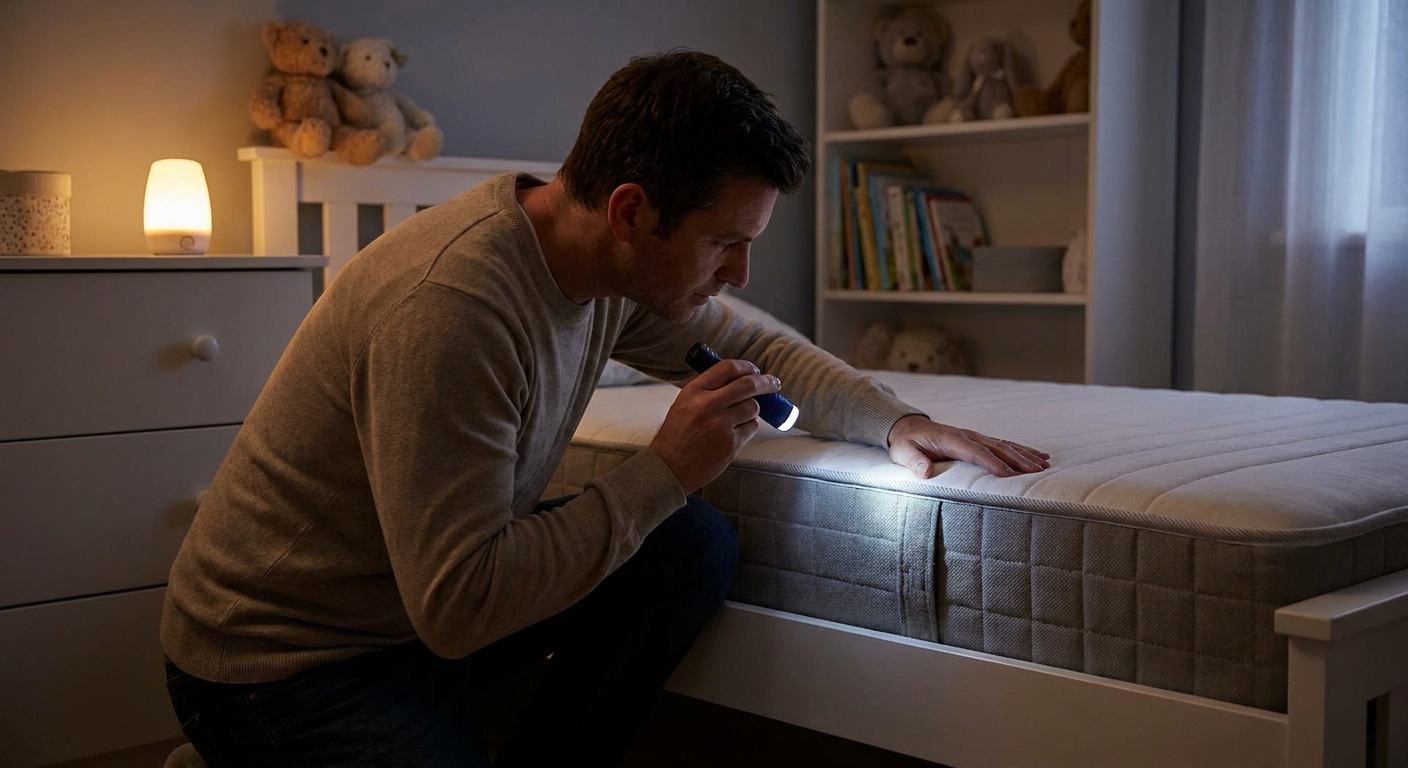
If you suspect bed bugs, check mattress seams and bed frame crevices for small dark spots or shed skins. For fleas, you’re more likely to find evidence where pets sleep and in carpets.
Flea bites vs. eczema
- Feel and look: eczema usually creates dry, rough, scaly patches, sometimes with cracking. Flea bites are distinct bumps.
- Chronic vs. sudden: eczema tends to be ongoing with flares. Flea bites often show up suddenly, especially after a new exposure.
- Where it shows up: eczema is common in elbow and knee creases, cheeks (babies), and hands. Flea bites love ankles.
Quick “pattern check” you can do tonight
Ask yourself:
- Are the bumps mostly below the knees?
- Are they in tight clusters near socks?
- Do you have pets or has your child been around pets recently?
If yes to all three, fleas move up the list.
How to stop the itch safely (by age)
The itch is not just miserable. It also increases the risk of skin infection because kids scratch in their sleep and don’t exactly use “gentle fingertips.” The goal is to calm inflammation and protect the skin.
For all ages: first steps
- Wash the area with mild soap and water.
- Use a cool compress for 10 minutes (a clean washcloth with cool water).
- Trim nails and consider socks or pajamas that cover the bites overnight.
- Avoid hot baths, which can ramp up itching.
Babies and toddlers (under 2)
For this age group, keep it simple and safe:
- Use cool compresses several times a day.
- Apply plain fragrance-free moisturizer to support the skin barrier.
- Try an oatmeal bath (colloidal oatmeal) if it helps your child, but keep water lukewarm.
Medication note: ask your pediatrician before using topical hydrocortisone or oral antihistamines in children under 2. In clinic, we tailor advice based on your child’s age, weight, and skin condition.
Kids 2 and up
- 1% hydrocortisone cream: apply a thin layer 1 to 2 times daily for a few days to reduce inflammation and itch. Avoid broken skin, avoid the face unless your pediatrician says it’s okay, and don’t use longer than 7 days unless you’re told to. Avoid using under diapers or tight occlusion.
- Oral antihistamine: may help with itching, especially at night. Many families use a non-sedating option like cetirizine or loratadine during the day and reserve diphenhydramine (Benadryl) for nighttime if recommended. Dosing depends on age and weight, so follow the package directions carefully and ask your pediatrician if you’re unsure.
- Calamine: can help some kids, but it can also be drying. If eczema is in the picture, moisturize too.
What to avoid
- Topical numbing creams with benzocaine or lidocaine unless your clinician specifically recommends them
- Topical antihistamines (like Benadryl or diphenhydramine cream or gel). They can cause contact dermatitis and can be risky if used on broken skin or used along with an oral antihistamine.
- Essential oils directly on skin (common irritant, especially in little kids)
- Scratching “tools” like rough washcloths or brushes
3 a.m. mom tip: if your child is scratching in their sleep, put clean cotton socks on their hands for the night. It may look silly. It works.
Protect the skin if it’s scratched open
If your child has scratched a bite raw, gently clean it, then consider a thin layer of plain petroleum jelly and a small bandage to protect it. This won’t treat the bite itself, but it can help prevent infection while things calm down.
Finding the source: pets, home, and yard basics
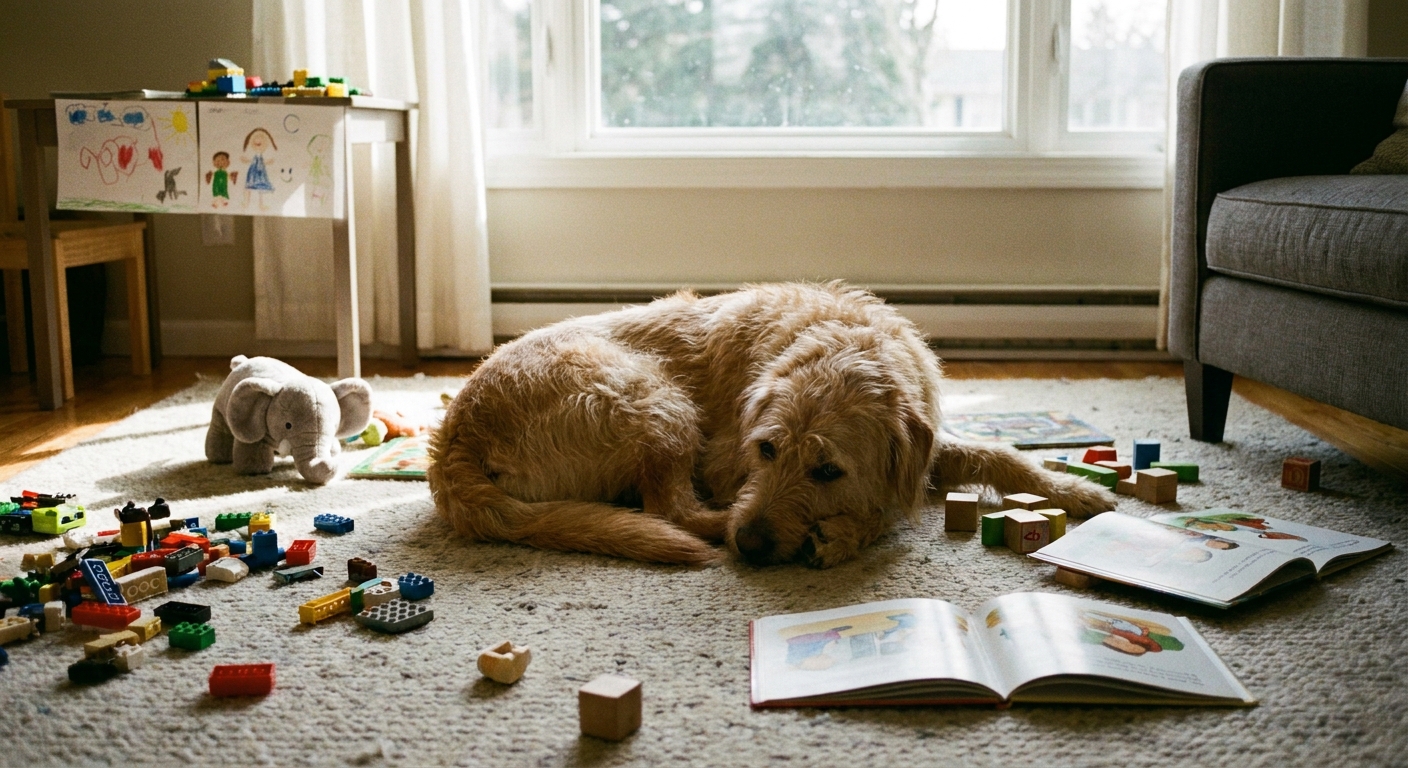
If you only treat the bites, you’ll be right back here in two days. Fleas have a life cycle, and many stages live in your environment, not just on your pet.
Step 1: Check pets (even indoor-only pets)
Signs of fleas on pets include frequent scratching, “flea dirt” (tiny black specks), and hair loss patches.
- Use a fine-tooth flea comb and comb around the neck and tail base.
- If you see black specks, place them on a wet paper towel. If it turns reddish-brown, it may be flea dirt (digested blood).
Important: use vet-recommended flea prevention. Many over-the-counter products are less effective, and some can be unsafe if used incorrectly. If you have a cat, never use dog flea products on them.
One expectation-setting note: if your pet is on an oral flea medication (a chewable), fleas often have to bite the pet to die. So you might still see live fleas briefly while the medication does its job and you tackle eggs and larvae in the environment.

Step 2: Treat the home environment
- Vacuum carpets, rugs, upholstered furniture, and baseboards frequently. Daily for at least 1 to 2 weeks is a good start, and keep going until you’ve had 1 to 2 weeks with no new bites. Empty the canister outside or seal the bag right away.
- Wash bedding, pet bedding, and favorite blankets in hot water if fabric allows, then dry on high heat.
- Limit access to heavily carpeted rooms until bites stop if possible.
If infestation is significant, consider a licensed pest professional. Ask what products they use and how long children and pets should stay out of treated areas.
Step 3: Yard and outdoor considerations
Fleas can come from wildlife (raccoons, squirrels, stray cats) and can live in shaded, humid spots.
- Keep grass trimmed.
- Discourage wildlife near the home (secure trash, avoid leaving pet food outside).
- If your child plays in a specific shady patch that seems to trigger bites, take a break from that area while you address the problem.
Prevention going forward
- Keep all pets in the home on consistent, vet-recommended flea prevention.
- Treat all pets at the same time (not just the one you think is the “source”).
- Be cautious with “natural” flea remedies. Some are ineffective, and some are unsafe for pets or irritating to kids’ skin.
How long do flea bites last?
Most flea bites improve within a few days, but the itch can linger up to 1 to 2 weeks in kids who have stronger reactions or who keep scratching.
If new bites keep appearing every day, assume there is still exposure somewhere in your home or around a pet.
Infection warning signs (and what to do)
The biggest medical issue we see from bug bites is skin infection from scratching, including impetigo (a common superficial infection that can cause honey-colored crusting). Call your pediatrician if you notice any of the following:
- Increasing redness, warmth, swelling, or pain around a bite
- Pus, yellow crusting, or a draining spot
- Red streaks spreading outward
- Fever or your child seems significantly unwell
- A bite that is getting bigger and angrier after 48 hours instead of calming down
Until you’re seen, gently clean the area and keep nails short. Don’t squeeze or “pop” anything.
When to call the pediatrician
Most flea bites can be managed at home, but you should check in with your child’s clinician if:
- Your child is under 12 weeks old and has any rash you’re unsure about
- Itching is severe and disrupting sleep for more than a night or two
- The rash looks unusual for bites (widespread hives, bruising, or blistering)
- There are signs of infection (listed above)
- Your child has a history of significant allergic reactions
- You can’t control ongoing bites despite treating pets and the home
Get urgent help now if
- Your child has trouble breathing, facial or lip swelling, or repeated vomiting after a bite
- Your child seems lethargic, has a stiff neck, or you’re worried they are seriously ill
Severe allergic reactions to flea bites are uncommon, but any breathing or swelling symptoms should be treated as urgent.
Rare risks to know about
In most households, flea bites are a miserable itch problem, not a dangerous one. That said, fleas can rarely play a role in spreading infections in certain regions or situations (for example, murine typhus in some areas) or contribute to issues like tapeworm if a child accidentally ingests an infected flea. This is not meant to scare you, just a reminder to take ongoing flea exposure seriously and call your pediatrician if your child develops fever or seems unwell along with a “bite” rash.
Fast checklist: what to do today
- Clean the bites, use a cool compress, and prevent scratching.
- Use age-appropriate itch relief (and ask your pediatrician if your child is under 2).
- Check pets and start vet-recommended flea prevention.
- Vacuum and wash bedding, including pet bedding.
- Watch for infection signs over the next 48 hours.
If you want to sanity-check what you’re seeing, take a clear photo in natural light and send it to your pediatrician’s portal. Triage nurses love a good photo, especially when it saves you a late-night worry spiral.
Sarah Mitchell
Sarah Mitchell is a Registered Pediatric Nurse and a mother of three who has spent over a decade helping families navigate the beautiful, chaotic early years of childhood. She combines evidence-based medical knowledge with real-world parenting experience to offer practical, compassionate advice. At Awesome Parent, Sarah's mission is to help exhausted parents find solutions, trust their instincts, and finally get some sleep.