A calm, evidence-based way to check a medicine while breastfeeding, plus what to watch for in your baby and when to call your clinician.
Breastfeeding After Surgery or Anesthesia

Sarah Mitchell
Sarah Mitchell is a Registered Pediatric Nurse and a mother of three who has spent over a decade helping families navigate the beautiful, chaotic early years of childhood. She combines evidence-based medical knowledge with real-world parenting experience to offer practical, compassionate advice. At Awesome Parent, Sarah's mission is to help exhausted parents find solutions, trust their instincts, and finally get some sleep.
If you are reading this at an odd hour while staring at a pre-op checklist, I want to start with the sentence I said over and over as a pediatric triage nurse: most breastfeeding parents do not need to wean because of anesthesia or a procedure. In many cases, you can nurse as soon as you are awake enough to safely hold and feed your baby.
This is also in line with guidance from major anesthesia organizations, including the American Society of Anesthesiologists, which notes that “pump and dump” is not usually necessary after anesthesia.
Of course, “most” is not the same as “all.” Your specific surgery, your health, what your care team uses for pain control and sedation, and your baby’s age and medical situation matter. The goal of this article is to help you walk into that pre-op call with calm, clear questions so you can protect your feeding relationship and recover comfortably.

The quick answer: do you usually have to pump and dump?
In general, no. For most routine procedures and typical single dose anesthesia or sedation, breast milk levels of anesthetic medications are very low. Many of these medicines are also cleared quickly from a parent’s bloodstream. That means many parents can breastfeed once they are alert enough to safely feed and respond to their baby.
A practical rule many anesthesia teams use is: if you are awake, stable, and coordinated enough to safely hold your baby, you can usually breastfeed. You do not typically need to discard milk just because you had anesthesia.
There are exceptions, and we will cover them below, but I do not want you to default to weaning or days of pumping and dumping without a reason.
A quick checklist for anxious brains
- Say it early: “I am breastfeeding and I want to continue.”
- Ask for the plan in writing: Put it in the discharge instructions.
- Plan for separation: bring your pump and aim to remove milk on your usual schedule.
- Safety first: if you are too sleepy to hold baby securely, have another adult help and use expressed milk.
Before your procedure: what to tell the surgical and anesthesia team
Do not wait until you are in a gown and your baby is crying in the parking lot. If you can, bring this up during your pre-op phone call or at your pre-op appointment.
Say these words clearly
- “I am breastfeeding and I want to continue.”
- “I need a plan for pain control that is compatible with nursing.”
- “Please document in my chart that I am lactating.”
Ask these questions
- When can I breastfeed after anesthesia? Ask for a clear, written instruction in your discharge summary so you can follow it at home.
- What type of anesthesia are you using? General anesthesia, deep sedation, regional anesthesia (like spinal or epidural), or local anesthetic can come with different recovery timelines.
- What is the pain plan for the first 24 to 72 hours? This is often the part that affects breastfeeding the most, not the anesthesia itself.
- Will I receive long acting sedatives or higher dose opioids? If yes, ask what monitoring or temporary precautions are recommended, especially if you have a newborn or a premature baby at home.
- Can we choose breastfeeding friendly options when there are equivalent choices? Often there is flexibility.
- Do you have a lactation consultant available? Many hospitals do, and they can help with pumping access and timing.
If you have specific questions about individual medications, Awesome Parent covers that on our Medications While Breastfeeding page. For surgery planning, what you need most is a coordinated plan, not a long list of drug names.
Plan for separation: protecting your milk supply
If your baby cannot be with you for a stretch of time, the biggest risk is not “anesthesia in milk.” The biggest risk is missed milk removal, which can lead to engorgement, clogged ducts, and a dip in supply.
Simple planning that helps a lot
- Feed or pump right before you leave for the hospital if you are allowed to. This buys you comfort time.
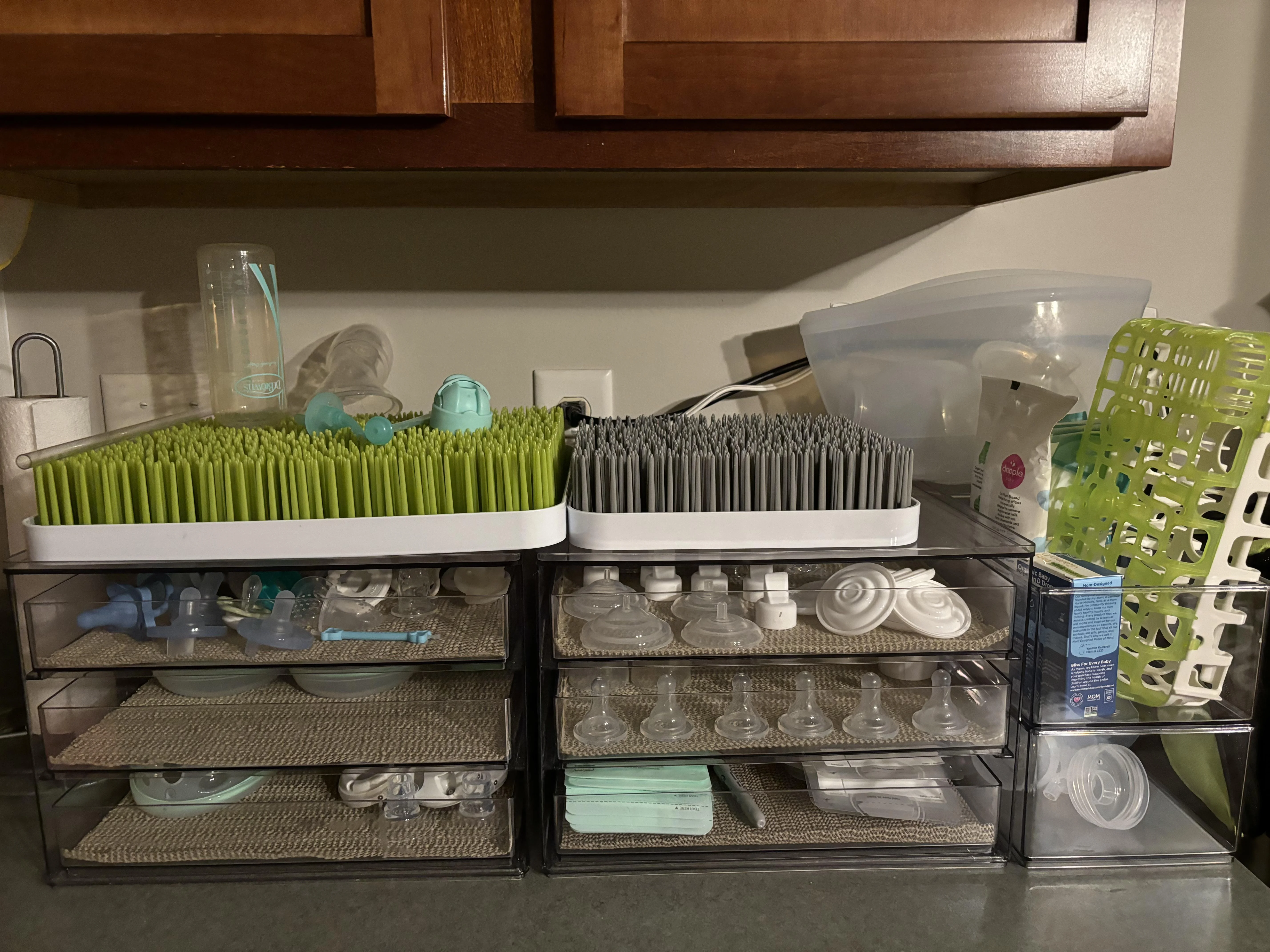
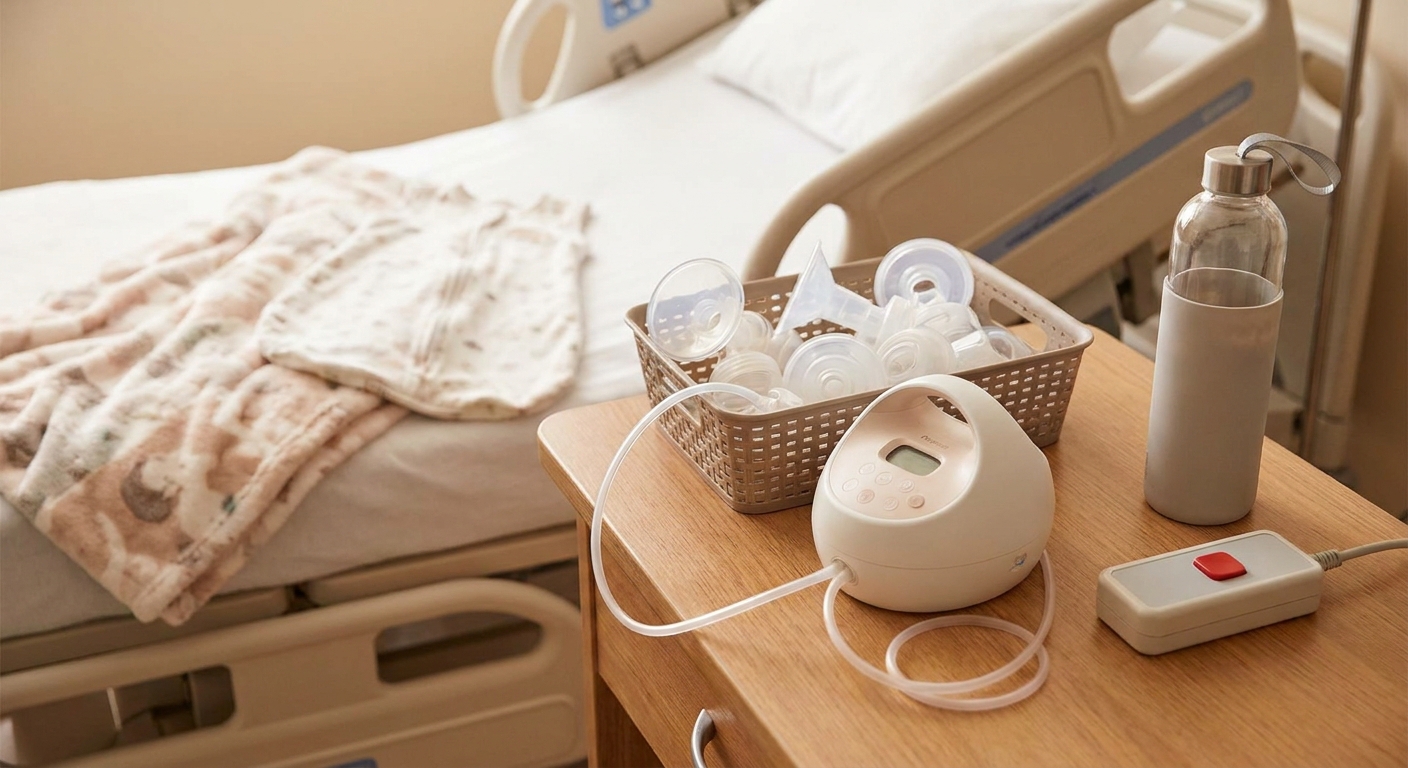
- Bring your pump and parts, even if you are not sure you will need it. Pack a charger or batteries.
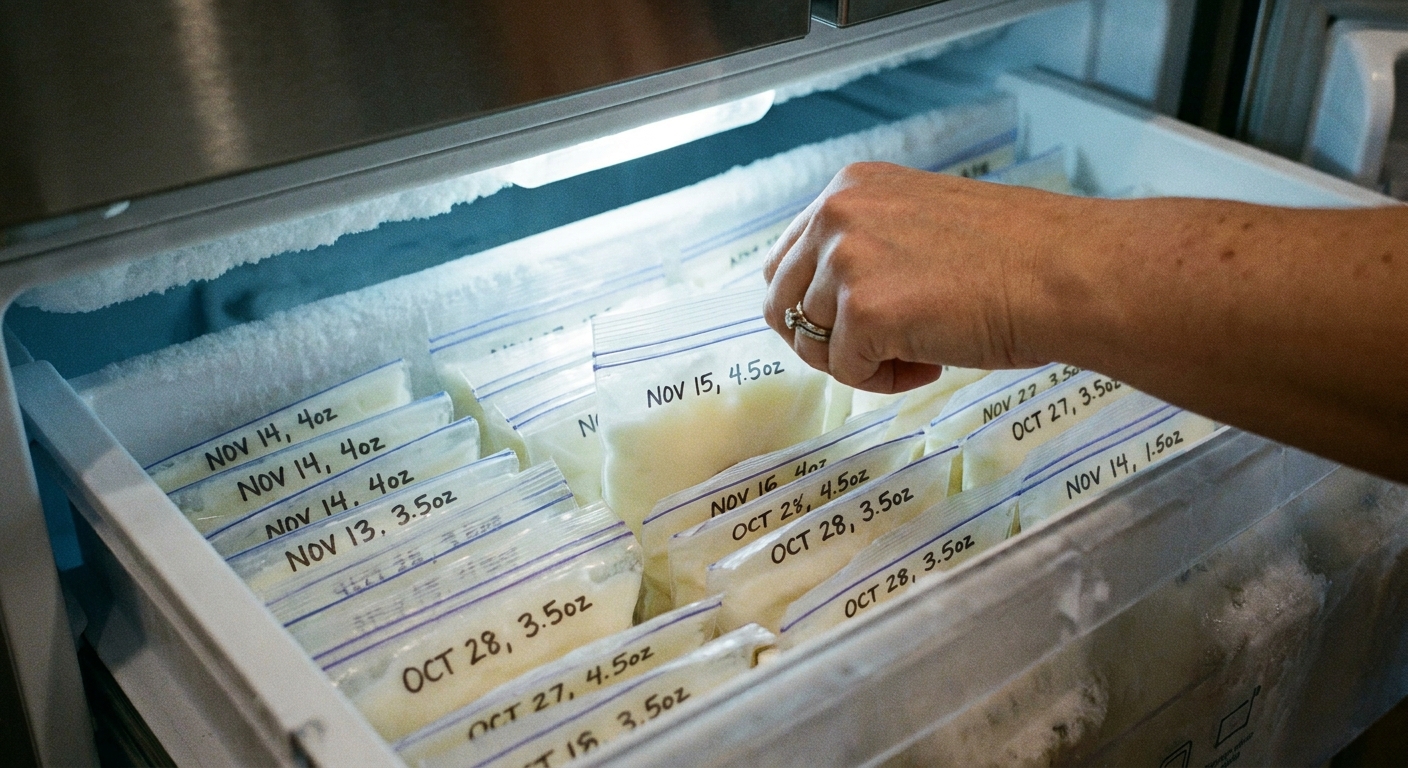
- Bring a cooler bag and ice packs if you expect to pump and go, especially for day surgery.
- Ask about pumping access in recovery. Some units can accommodate a pump quickly, others need advance notice.
- Say it out loud to every new nurse that you are breastfeeding. Chart documentation helps, but a verbal reminder helps busy humans act on it.
- If you are admitted, ask about a hospital grade pump and where you can safely wash and store parts.
When to pump after surgery (and when you do not need to)
You may need to pump for two main reasons: comfort and maintaining supply during separation.
Pump for comfort if you feel full
If you are engorged or uncomfortable, pump just enough to soften your breasts. You do not have to “empty” if you do not want to stimulate extra production during a time when you are already sore and tired.
Pump on your usual schedule if you will miss feeds
If your baby normally feeds every 2 to 4 hours and you will be apart for most of the day, aim to pump at roughly the same frequency to protect supply.
You may not need to pump at all if
- Your baby can nurse normally soon after you wake up.
- Your procedure is short and you are reunited quickly.
- You are comfortable and not overly full.
One important safety note: if you are groggy, dizzy, or have limited arm movement, ask a support person or nurse for help setting up pumping or positioning a baby at the breast.
Getting back to nursing: what “safe” looks like in real life
Parents are often told a vague line like “wait 24 hours.” Sometimes that is a blanket policy, and in many routine cases it is more cautious than necessary. Still, do not ignore a 24 hour instruction without asking why. Occasionally, that longer wait is individualized for a real reason (like specific sedatives, unusually high doses, or certain nuclear medicine tests).
What actually matters is your ability to safely feed, the type of medications used, and your baby’s vulnerability (newborns and premature babies are more sensitive to sedation).
Green lights
- You are awake and oriented.
- You can sit up and hold your baby securely.
- You are not falling asleep mid-sentence.
- Your nurse or anesthesia team has cleared you to eat, drink, and take oral meds.
Use extra support if you feel sleepy
Some pain medications can make you drowsy. If you are sleepy, it can still be possible to breastfeed, but do it with another adult present and choose safer positioning. Avoid nursing in a place where you could fall asleep and drop the baby. A firm chair with arm support is often better than a bed during that first day.

Rare situations when a temporary pause may be recommended
Most of the time, you can continue breastfeeding. The uncommon situations that may lead your team to recommend a short pause usually fall into one of these buckets:
You are too sedated to safely feed
If you cannot stay awake or cannot hold your baby securely, you may need to pump and have someone bottle-feed expressed milk until you are more alert. This is a safety issue, not a milk safety issue.
You need unusually high dose or prolonged sedation
Long, complex surgeries and ICU-level sedation can change the plan. In those cases, your team may advise pumping and discarding for a period, or pumping and saving depending on what was used and how long you were on it. This is individualized.
You receive certain specialized treatments
Some procedures involve medications or therapies where breastfeeding guidance is very different. Chemotherapy is a common example where breastfeeding is often not compatible. Nuclear medicine tests that use radiopharmaceuticals can require a temporary interruption, depending on the exact isotope and dose. External-beam radiation does not usually make breast milk radioactive, but treatment plans vary, especially if the breast itself is being treated. If your surgeon mentions nuclear medicine, radiopharmaceuticals, or chemotherapy, ask directly for lactation-specific instructions and a timeline.
Your baby has special medical vulnerability
Very premature infants, medically fragile newborns, or babies with breathing issues may need a more cautious plan if you are taking sedating medications post-op. Sometimes the safest option is for another adult to feed expressed milk while you recover from the drowsiest window.
If anyone advises a pause, ask for the specific reason and the exact duration, plus what to do with your milk during that time to protect supply.
Post-op pain control: what matters most for breastfeeding success
From a parenting perspective, the hardest part is often the days after surgery. Pain, limited mobility, nausea, and fatigue can make nursing feel like a marathon you did not train for.
What to ask for
- A clear, stepwise pain plan that starts with the least sedating options and escalates only if needed.
- Help managing nausea and constipation, because both can make eating and hydrating harder, which affects how you feel while nursing.
- Practical positioning ideas based on your incision site. For abdominal surgery, side-lying or a “football hold” can reduce pressure. For breast or chest procedures, you may need lactation support and careful follow-up.
Common medication cautions to discuss
Your surgeon and anesthesiologist should tailor this to you, but these are the practical flags I want breastfeeding parents to know about:
- Prefer non-opioid options when appropriate (often acetaminophen and ibuprofen are part of the foundation), and use the lowest effective opioid dose for the shortest time if opioids are needed.
- Avoid codeine and tramadol while breastfeeding unless a clinician with breastfeeding expertise specifically recommends them. These have more variability in how parents metabolize them, which can raise the risk of infant sedation.
- Use extra caution with sedatives (for example, benzodiazepines) and higher dose opioids, especially if your baby is under 2 months, premature, or has medical complexity. Ask what to watch for in your baby and when to call.
For specific medication questions at home, use our Medications While Breastfeeding resource and confirm your exact prescription list with your clinician, since dosing and combinations matter.
Tips that make the first 48 hours easier
- Line up help for at least the first day: lifting baby, diaper changes, getting water and snacks, and bringing the baby to you.
- Hydrate like it is your job. Anesthesia and pain meds can leave you dry and headachy.
- Eat small, protein-containing snacks if nausea is an issue.
- Use pillows generously to protect sore areas and reduce strain on your arms and shoulders.
- Go easy on yourself. A day or two of more frequent comfort nursing, shorter feeds, or extra bottles of expressed milk can be part of a normal recovery plan.
Call your doctor or seek urgent care if
After surgery, some symptoms are normal. Some are not. Get medical help right away if you have:
- Difficulty breathing, swelling of lips or face, or severe hives
- Chest pain, fainting, or confusion
- Uncontrolled vomiting or inability to keep fluids down
- High fever or worsening incision redness, warmth, drainage, or severe pain
- Signs of breast infection: fever with a painful, red, wedge-shaped area on the breast
- A baby who is unusually sleepy, hard to wake for feeds, breathing oddly, or not feeding well, especially if you are taking sedating pain medication
If you are unsure, call your surgeon’s on-call line, your pediatrician, or your local nurse advice line. I would always rather talk a parent down from worry than miss something important.
FAQ
Can I breastfeed after general anesthesia?
Often, yes. Many parents can breastfeed once they are awake, stable, and able to safely hold their baby. Confirm your personal plan with your anesthesia team.
Do I need to pump and dump after anesthesia?
Usually not. Pumping and dumping is typically only recommended in specific, individualized situations. More often, pumping is used for comfort or to maintain supply during separation.
What if I cannot have my baby with me at the hospital?
Bring your pump, ask about a private space, and aim to pump about as often as your baby normally feeds. If pumping is not possible right away, pump as soon as you are able to prevent engorgement.
My nurse told me to wait 24 hours. Is that always necessary?
Not always. Some facilities use blanket policies out of caution. Ask to speak directly with anesthesia and request guidance based on what you received and how you are recovering. If they are recommending 24 hours for a specific medication or test, ask them to name the reason and document it in your discharge instructions.
Will surgery reduce my milk supply?
It can temporarily, especially if you are separated from your baby, dehydrated, not eating well, or missing milk removals. Protect supply by nursing or pumping as close to your normal rhythm as you can, and ask for help early if you notice a significant drop.
A final, very real-life reminder
You do not earn extra points for suffering through recovery without support. If continuing breastfeeding matters to you, say so clearly and early. Your medical team can usually work with you, but they need to know your priorities.
And if your feeding plan needs to flex for a day or two while you heal, that is not failure. That is you doing two hard things at once: recovering and caring for your baby. That counts.
Sarah Mitchell
Sarah Mitchell is a Registered Pediatric Nurse and a mother of three who has spent over a decade helping families navigate the beautiful, chaotic early years of childhood. She combines evidence-based medical knowledge with real-world parenting experience to offer practical, compassionate advice. At Awesome Parent, Sarah's mission is to help exhausted parents find solutions, trust their instincts, and finally get some sleep.