Worried about a rash and sore throat? Learn how scarlet fever relates to strep, what the rash can look and feel like, how long kids are contagious, and when ...
Can a Child Get Scarlet Fever More Than Once?

Sarah Mitchell
Sarah Mitchell is a Registered Pediatric Nurse and a mother of three who has spent over a decade helping families navigate the beautiful, chaotic early years of childhood. She combines evidence-based medical knowledge with real-world parenting experience to offer practical, compassionate advice. At Awesome Parent, Sarah's mission is to help exhausted parents find solutions, trust their instincts, and finally get some sleep.
As a pediatric triage nurse, I used to hear this question all the time: “My kid already had scarlet fever… can they really get it again?” And as a mom, I get why it’s so unsettling. You finally finish the antibiotics, the rash fades, everyone exhales… and then a few weeks later your child has a scratchy throat or a new rash and you’re right back in that anxious spiral.
Yes, a child can get scarlet fever more than once. The tricky part is separating a new strep infection from the very normal skin peeling that can linger after the first one.
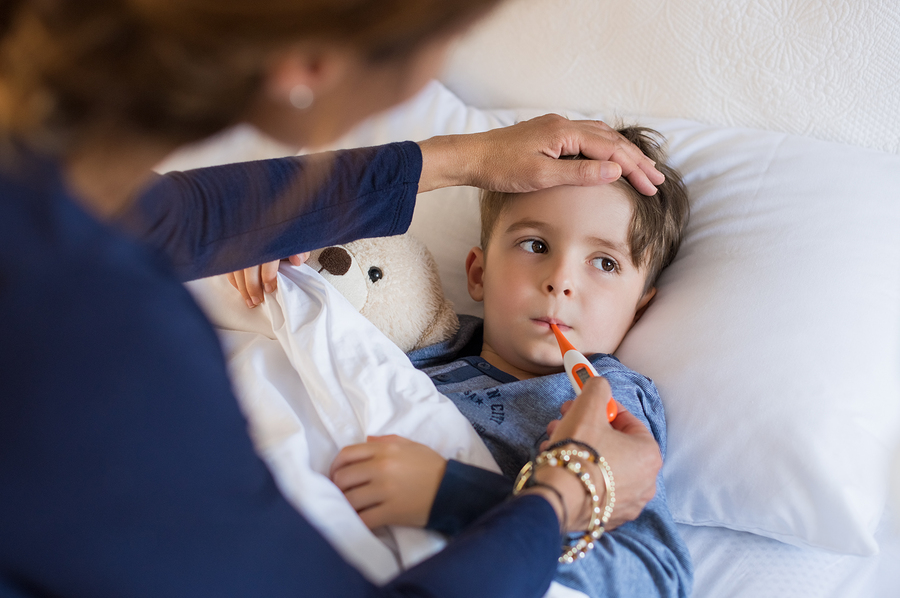
Can kids get scarlet fever twice?
Yes. Scarlet fever is caused by group A strep (the same bacteria that causes strep throat). Some strains produce toxins that trigger the classic “sandpaper” rash and strawberry tongue that we call scarlet fever.
After an infection, kids may develop some immunity, but it is not reliable enough to protect them long term. Repeat episodes are often related to a new exposure and can involve a different strain. A child can get scarlet fever again if they catch:
- A different strain of group A strep that produces similar toxins
- Group A strep again after another exposure, even if it feels like it is “the same thing” coming back
So if your child has a new sore throat with fever and a rash months later, it is absolutely worth considering scarlet fever again.
Why it can come back
When scarlet fever is treated with the right antibiotic, the goal is to clear the strep bacteria from the throat and prevent complications. Most kids improve quickly, but treatment does not create a “never again” shield.
Another important point: we treat strep not just to help kids feel better, but also to reduce spread and to help prevent rare but serious complications like rheumatic fever.
Common reasons it returns
- New exposure at school or daycare: Strep spreads easily through respiratory droplets and close contact.
- Different strep strain: Group A strep has multiple strains. A different strain can cause strep throat and trigger the toxin-related rash again.
- Missed doses or stopping antibiotics early: If the course is not completed, the bacteria may not fully clear. (This does not mean you did anything “wrong.” Real life with kids is messy. It just means call your clinician.)
- Reinfection from a close contact: Sometimes a sibling, parent, or caregiver is an asymptomatic carrier or gets strep repeatedly.
If you suspect scarlet fever is back, the next step is simple: test for strep again rather than assuming it is leftover from the first illness.
Peeling after scarlet fever
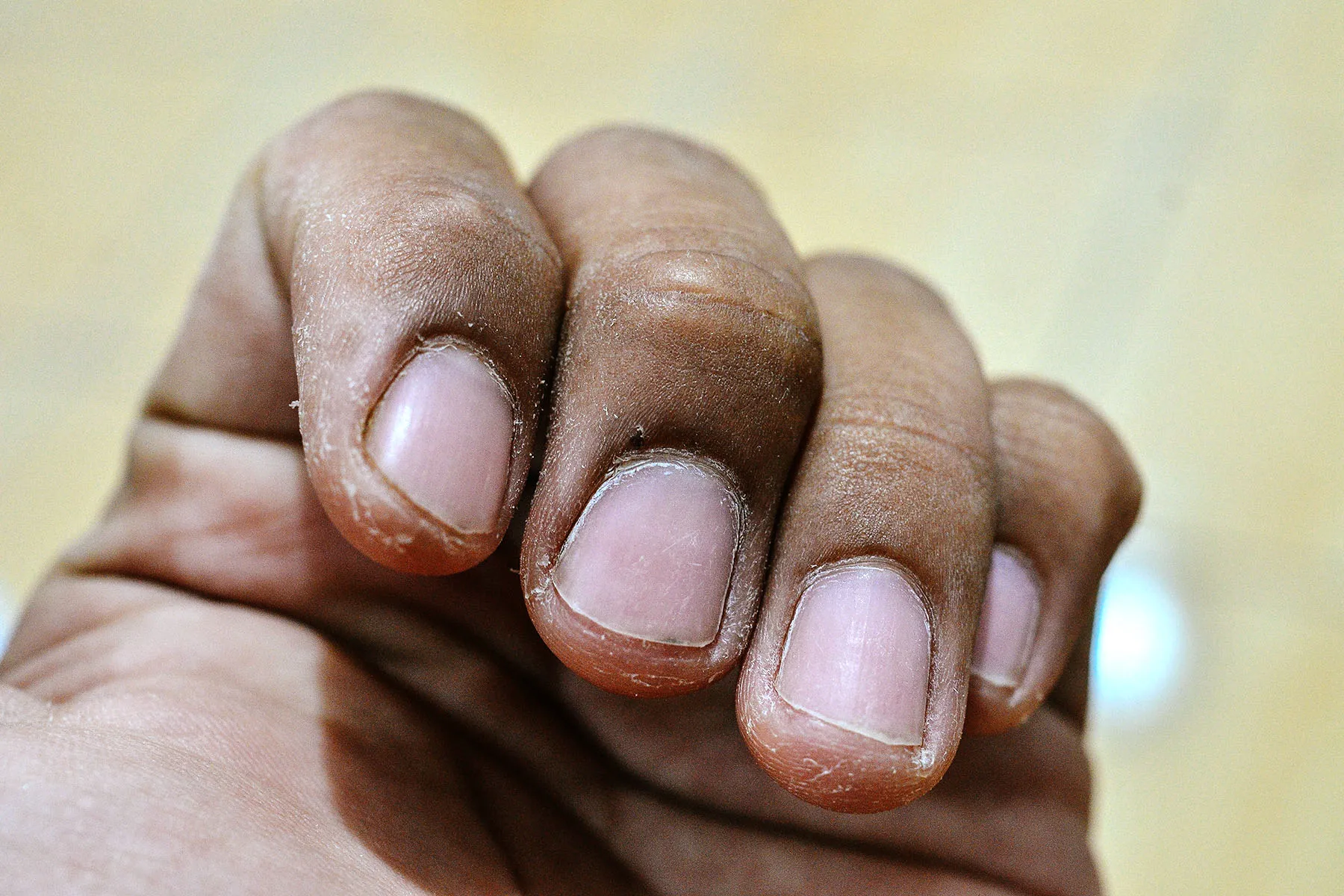
This is the part that causes a lot of confusion. After scarlet fever, it is common for the skin to peel, especially on the fingertips, palms, toes, and soles.
In triage, parents would say, “The rash is back,” but when we asked a few key questions, it often turned out to be post-scarlet fever peeling, not a new infection.
What normal peeling looks like
- Starts after your child otherwise seems better
- Often begins 1 to 3 weeks after the rash started
- Can last days to a few weeks
- More peeling and flaking than redness
- Usually no new fever
- Child may feel fine, with normal energy and appetite
Peeling can look dramatic, but by itself it is not a sign that antibiotics failed.
What helps: gentle moisturizer, fragrance-free lotion, and avoiding harsh soaps. Peeling skin does not require antibiotics.
Second illness or leftover peeling?
Here is my practical, parent-friendly rule: peeling alone can be normal. A new combination of fever plus sore throat plus a new rash should be treated like a new illness until proven otherwise.
More likely leftover
- No fever
- No new sore throat
- Child is acting mostly normal
- Skin is flaking or peeling, especially hands and feet
More likely a new strep infection
- New fever (a fever is generally 100.4°F or 38°C or higher, but the number alone does not always mean an emergency)
- Sore throat, pain with swallowing, or refusal to eat due to throat pain
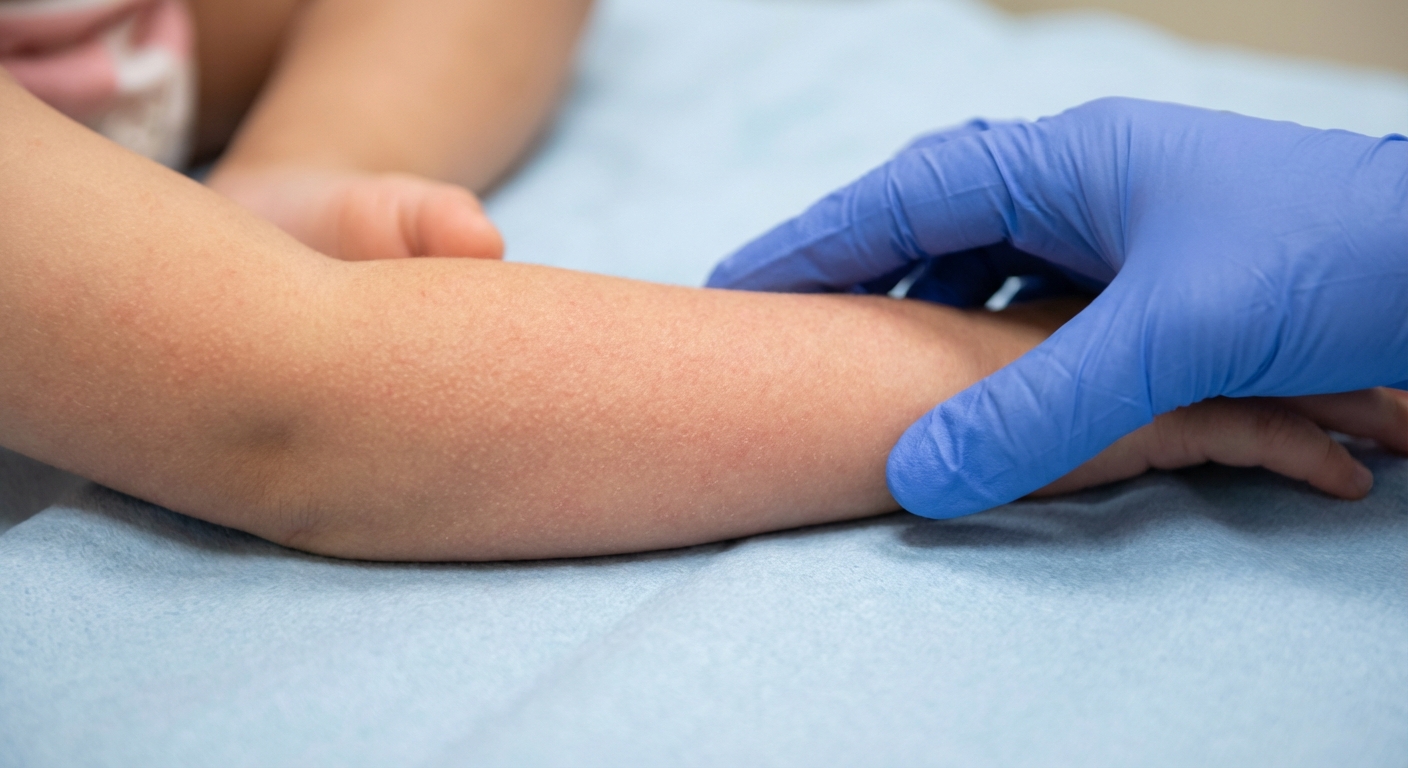
- New “sandpaper” rash that feels rough to the touch
- Red face with a paler area around the mouth
- Strawberry tongue
- Tender swollen neck glands
If these symptoms show up, do not guess. Get a strep test.
Testing and what it means
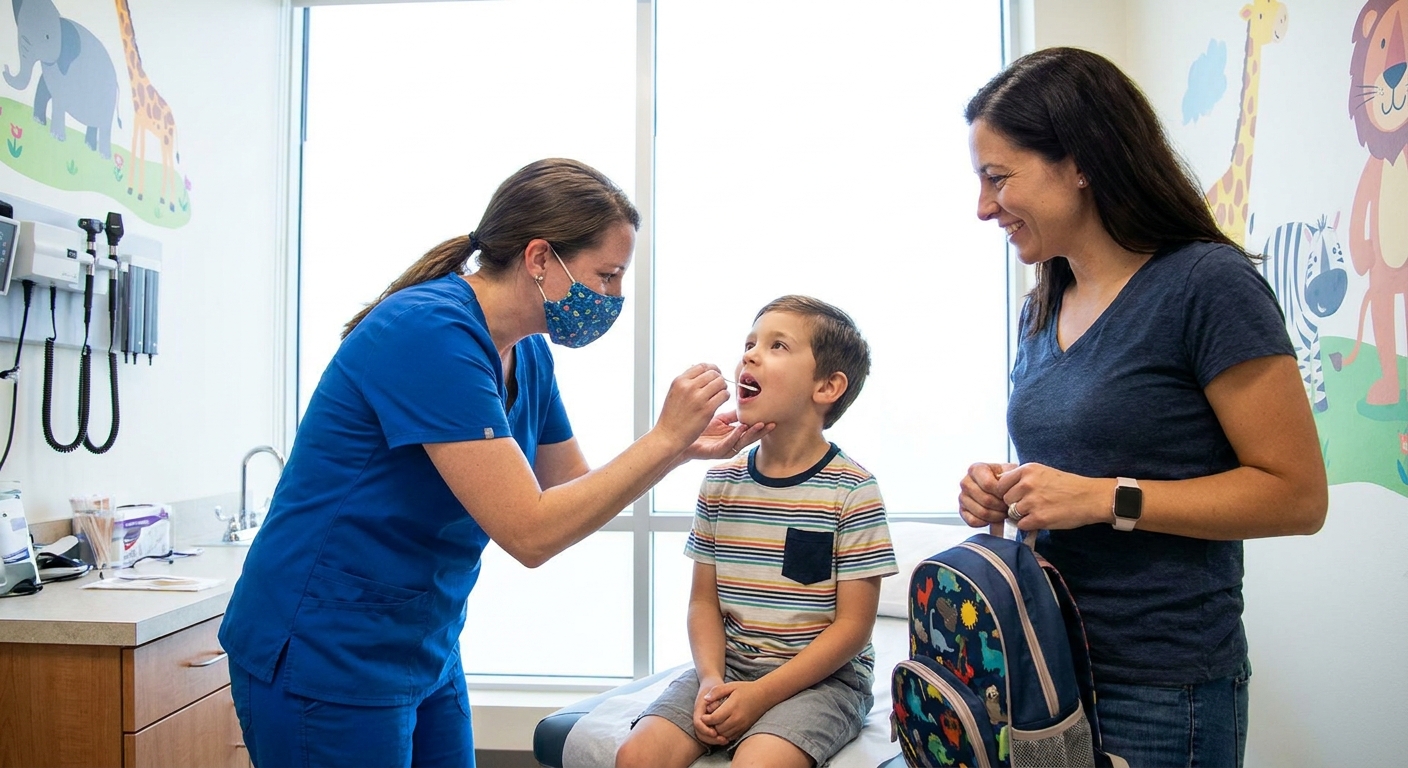
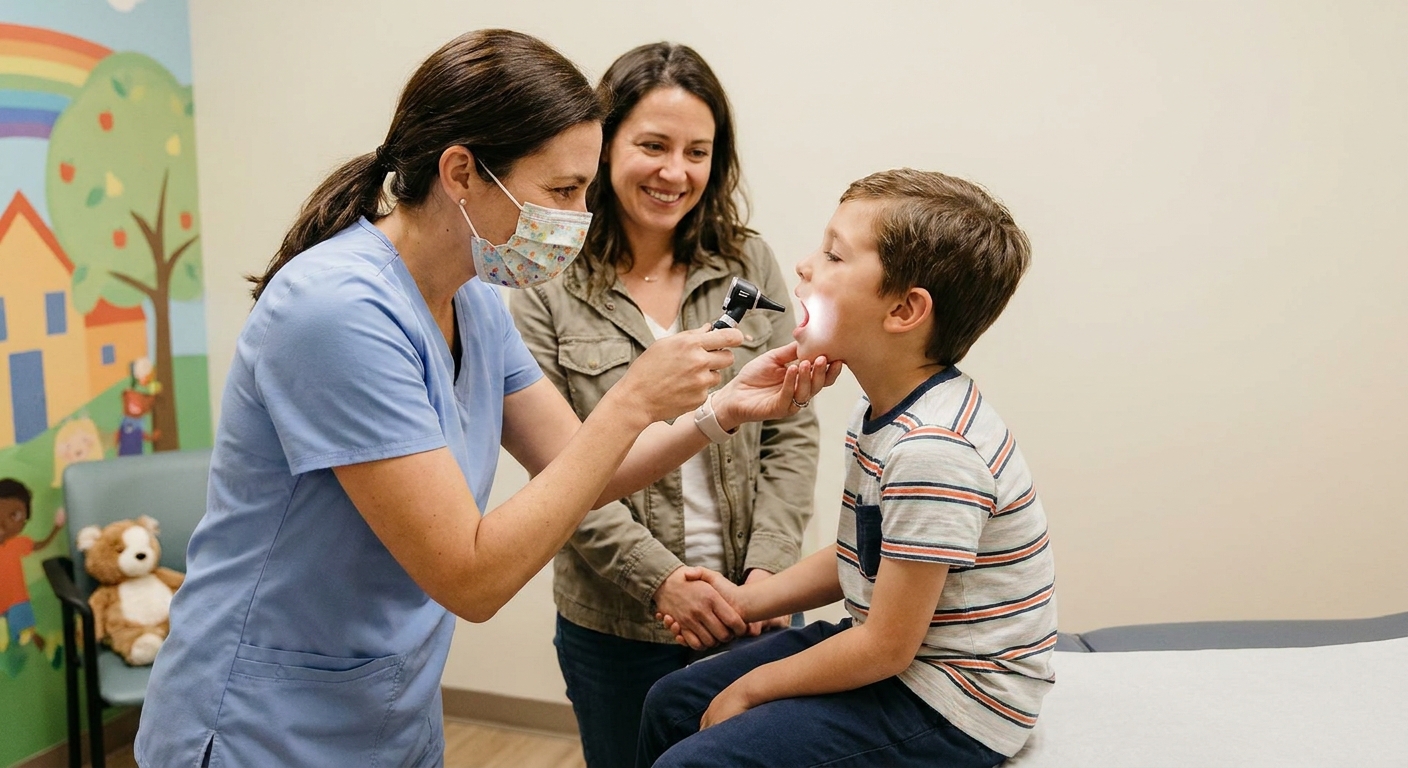
Testing is straightforward. Many clinics do a rapid strep test, and if it is negative but suspicion is high, they may send a throat culture for confirmation.
One nuance that comes up sometimes: some kids can be strep carriers. That means the test can be positive even when the main issue is something else, like a virus. Your clinician will interpret the result based on symptoms, exam, and what is going around.
Symptoms back after antibiotics?
If symptoms come back during treatment or within a few days of finishing antibiotics, call your child’s clinician. Possibilities include:
- Reinfection from a close contact
- Incomplete clearance of the bacteria
- A different illness starting right on top of recovery
Do not restart leftover antibiotics and do not use someone else’s prescription. Your clinician may want to re-test and, if positive, choose an antibiotic based on factors like allergies, tolerability, adherence issues, and whether this looks like a true reinfection versus a carrier situation. (Penicillin and amoxicillin still work very well for strep. Resistance concerns are more relevant when we use alternatives like macrolides in kids with penicillin allergies.)
When to seek urgent care
Most cases of scarlet fever are treatable and improve with antibiotics, but some symptoms should be checked urgently.
- Trouble breathing or noisy breathing
- Drooling or inability to swallow
- Signs of dehydration (very dry mouth, no urine for 8 hours, very sleepy)
- Severe headache with stiff neck
- Rash with purple spots or bruising-like marks
- Fever in a baby under 3 months
- Your child looks very ill, unusually lethargic, or you cannot wake them normally
If your gut says, “This is not my kid’s normal sick,” trust that instinct and get seen.
FAQ
Can scarlet fever happen without strep throat symptoms?
Usually scarlet fever shows up with strep throat symptoms, but some kids mainly complain of headache, belly pain, or just “feeling yucky.” The rash can sometimes be what gets everyone’s attention first. A test is still the best way to know.
Is peeling skin contagious?
No. The peeling itself is not contagious. The contagious part is the strep infection. After starting appropriate antibiotics, kids are generally considered much less contagious after about 24 hours, especially if the fever is improving. Follow your clinician’s guidance and school policies.
Could a new rash be something else?
Yes. Many viral illnesses cause rashes, and kids can catch those even soon after scarlet fever. That is exactly why I recommend testing for strep when there is a new fever and sore throat, rather than assuming you already know what it is.
If my child had scarlet fever once, should siblings be tested?
Not automatically. We typically test siblings if they have symptoms. If strep is ripping through the household repeatedly, talk with your pediatrician about the best plan for your family.
Bottom line
A child can get scarlet fever more than once, even after being treated correctly. The most common reason is a new strep infection, often after another exposure and sometimes involving a different strain. Meanwhile, peeling hands and feet weeks after scarlet fever is often just the body finishing its cleanup, not a sign the infection is back.
If your child develops a new fever, especially with a sore throat and a new rash, it is worth getting a strep test rather than guessing. You do not need to solve the mystery alone at 3 AM. That is what your pediatric team is there for.
Sarah Mitchell
Sarah Mitchell is a Registered Pediatric Nurse and a mother of three who has spent over a decade helping families navigate the beautiful, chaotic early years of childhood. She combines evidence-based medical knowledge with real-world parenting experience to offer practical, compassionate advice. At Awesome Parent, Sarah's mission is to help exhausted parents find solutions, trust their instincts, and finally get some sleep.