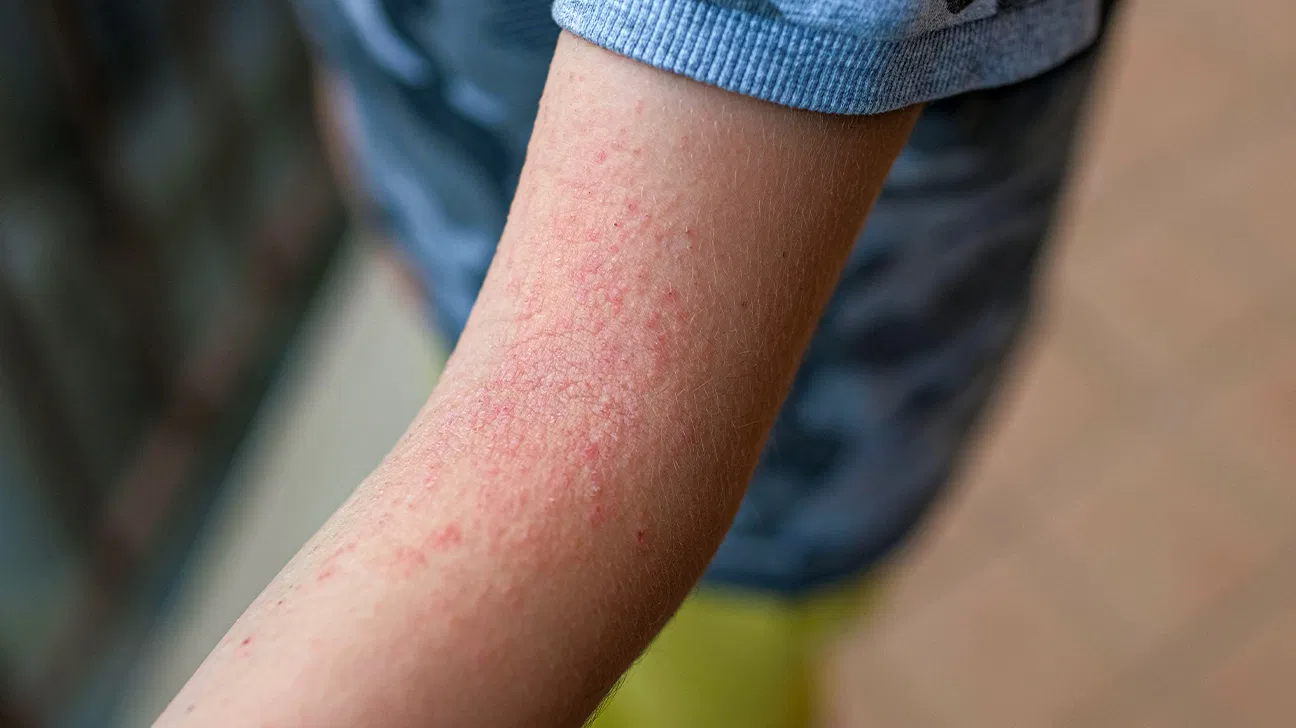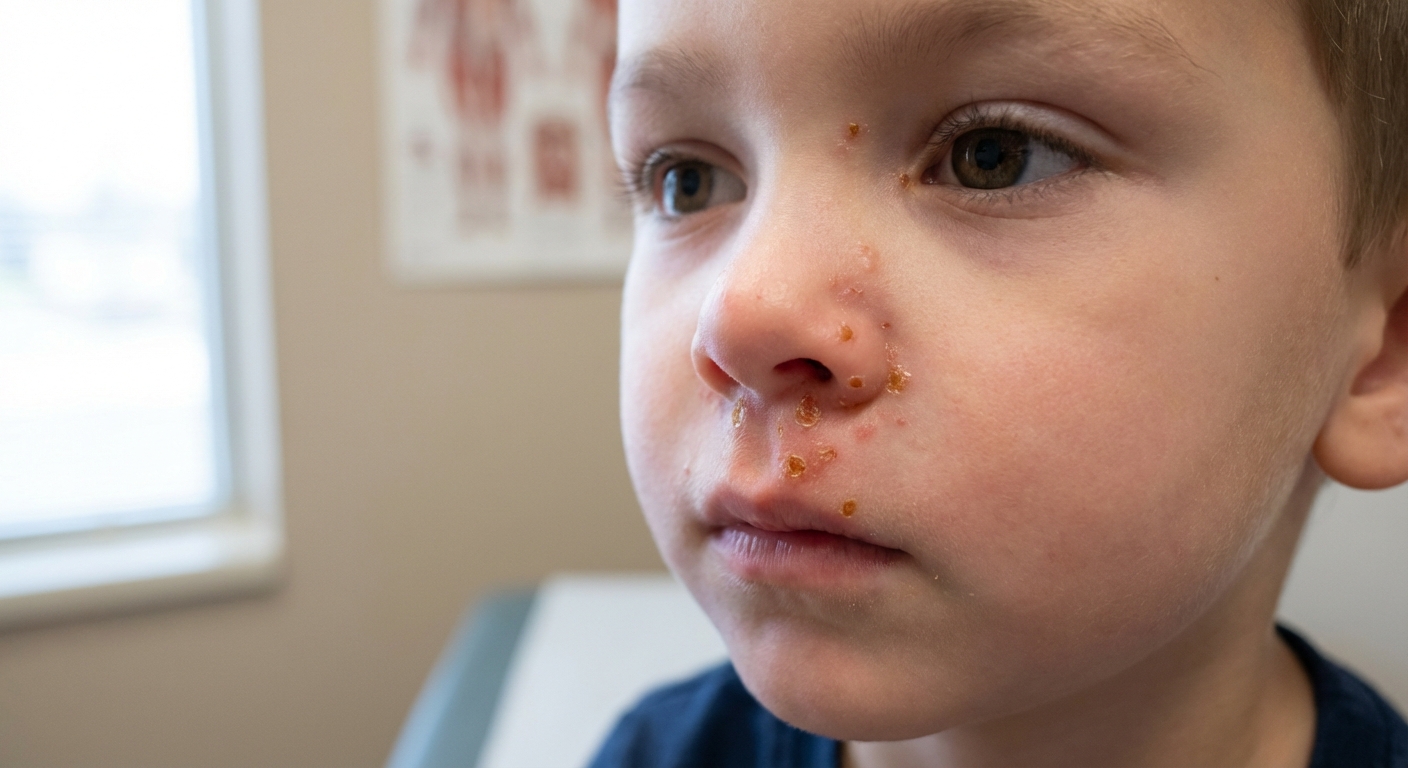
Honey-crusted sores, quick spread, and lots of parent worry. Here’s how to recognize impetigo, treat it safely, prevent reinfection, and know when it’s okay ...
Can a Child With Impetigo Go Swimming?

Sarah Mitchell
Sarah Mitchell is a Registered Pediatric Nurse and a mother of three who has spent over a decade helping families navigate the beautiful, chaotic early years of childhood. She combines evidence-based medical knowledge with real-world parenting experience to offer practical, compassionate advice. At Awesome Parent, Sarah's mission is to help exhausted parents find solutions, trust their instincts, and finally get some sleep.
I have had more than one parent ask me some version of: “My kid finally feels okay… can we still go to the pool?” As a pediatric nurse and a mom of three, I get it. Swimming is the rare activity that wears kids out and makes bedtime feel possible.
The tricky part is that impetigo spreads easily through direct skin contact and through shared items. Water activities add a perfect storm: lots of exposed skin, lots of touching, and lots of shared surfaces and towels. So the answer is not “never,” but it is often “not yet.”
Quick answer: when to stay out
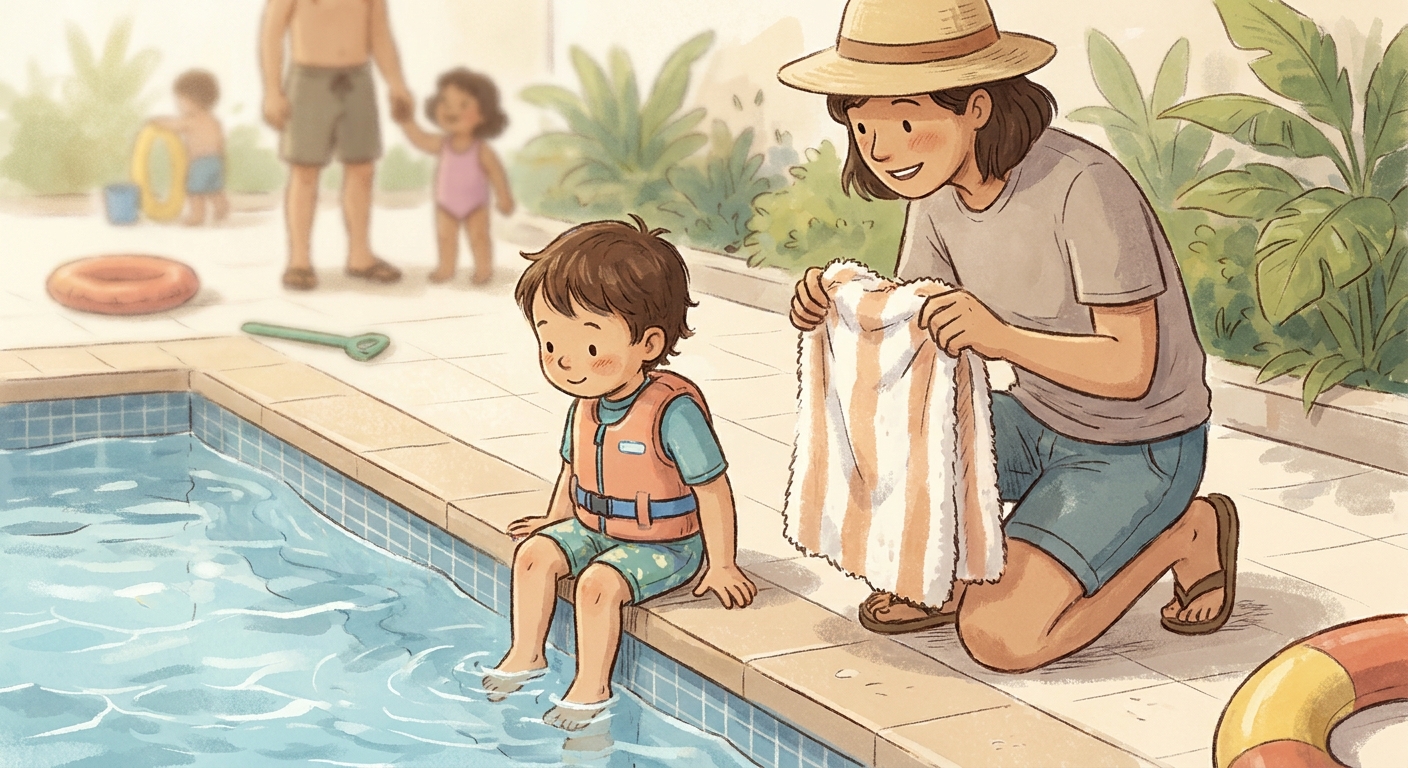
Skip swimming pools, splash pads, water parks, and lakes if your child has any of the following:
- Open, oozing, or weeping sores
- New spots appearing or areas that are clearly spreading
- Sores you cannot reliably cover (for example: near the mouth, on the scalp, or scattered over large areas)
- Fever, feeling unwell, or low energy that is not their normal self
- Rapidly spreading redness, increasing warmth, swelling, or significant pain around a sore
- Streaking redness moving away from the area
If your child has fever or rapidly spreading redness, that is a “pause and be seen” situation. Call your pediatrician or urgent care for guidance.
Treatment and contagiousness
Most kids with impetigo are treated with either a topical antibiotic (for smaller, limited spots) or an oral antibiotic (for more widespread cases), plus gentle cleansing as directed by your clinician.
Many children start to look noticeably better within 48 to 72 hours of effective treatment. That said, keep going exactly as prescribed. Stopping early can let it flare back up.
Contagiousness usually drops once effective antibiotics are on board, but “how fast” depends on the child, the medication, and how well spots can be kept clean and covered.
A common benchmark used by many (not all) school and daycare policies is that children can often return after about 24 hours on effective antibiotics if they are feeling well and the lesions can be covered and are improving. Policies vary by location and setting, so your childcare rules, your local guidance, and your pediatrician get the final say.
For swimming, I am usually more conservative, not because pool water is the main issue, but because it is so hard to keep lesions truly covered and hands off in a wet, high contact setting.
School vs swimming
This one surprises families: the rules for class and the rules for swimming are not always the same.
In many classrooms, kids can sometimes return after they have started appropriate treatment and the lesions can be covered, depending on local policies. It is not zero risk, but it is usually easier to manage with covering, hand hygiene, and not sharing personal items.
Swimming is different because:
- Bandages loosen when wet and can peel off.
- Kids touch each other constantly in the water.
- Changing areas and pool decks are high contact zones.
- Many impetigo spots are on the face, arms, or legs, which are hard to keep protected in water.
So even if your child is cleared to go back to class, it can still be smart to wait longer before swimming.

Pool vs splash pad vs lake
Swimming pools
Assuming a pool is properly chlorinated and maintained, chlorine helps reduce germs in the water. But with impetigo, the bigger risk is often not the pool water itself. It is close contact, wet or loosening bandages, and shared items like towels or toys.
If lesions are still open or hard to cover, I recommend sitting out.
Splash pads and water parks
Splash pads are basically “touch everything” zones. Kids climb, slide, sit, and lean on shared surfaces with lots of skin contact. The water may be recirculated or treated differently depending on the facility design and maintenance, and kids tend to fall and scrape, which creates little openings in the skin.
If your child has active impetigo sores, I would avoid splash pads and water parks until the skin is clearly healing.
Lakes, rivers, and the ocean
Natural bodies of water bring a different issue: they are not disinfected, and water quality varies a lot by location. Any open skin infection or break in the skin can be a portal for other germs, including bacteria, so swimming with open sores can increase your child’s risk of a secondary infection. The risk depends on local conditions and how intact your child’s skin is that day.
If sores are open or crusting heavily, I would avoid lakes and rivers until the skin is clearly healing and closed.
Does covering make it safe?
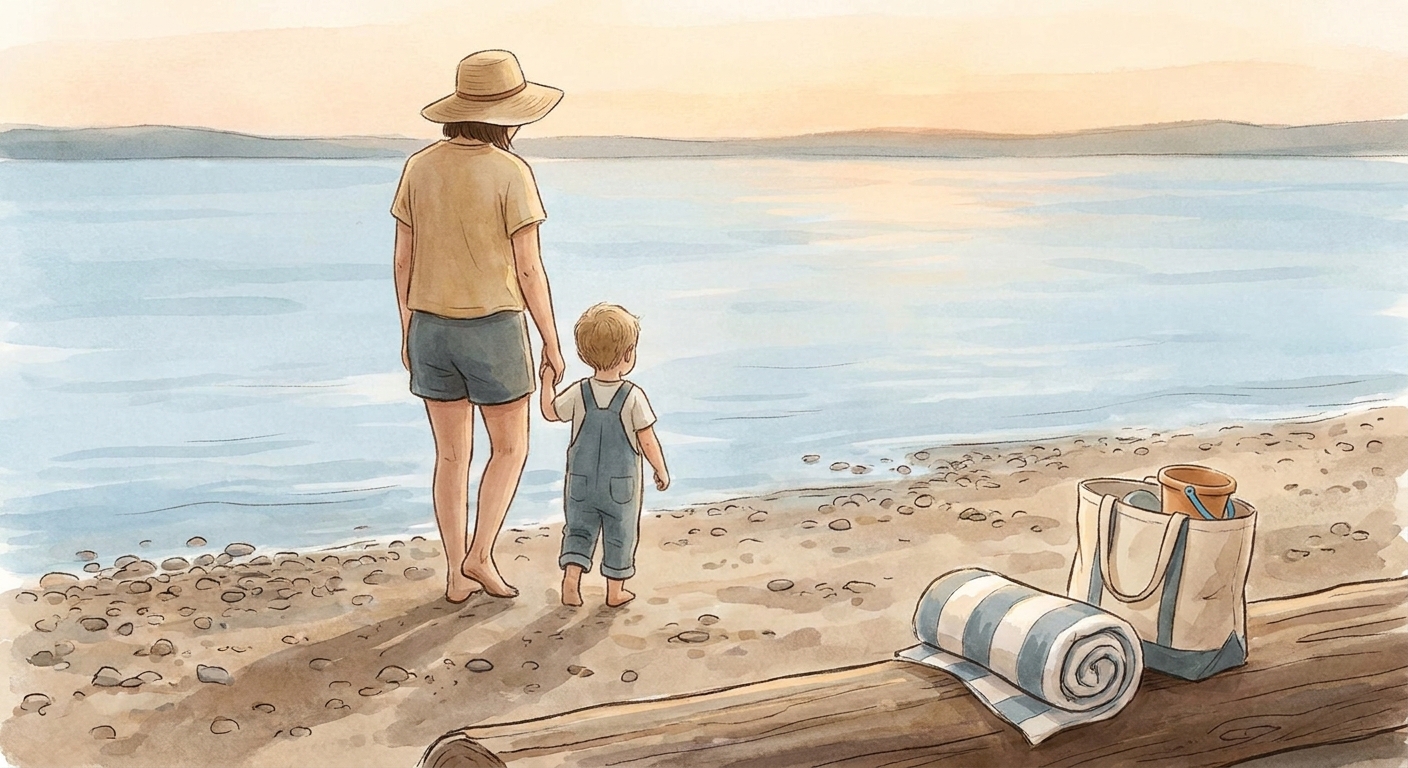
Covering helps, but it does not magically make swimming “safe.” Here is what I tell families in triage terms: a wet bandage is an unreliable bandage.
What covering can do
- Reduce direct skin to skin contact with the sore
- Help keep your child from touching or scratching lesions
- Make it easier to participate in lower contact activities (like school) when allowed
What covering does not do
- Guarantee the sore stays sealed once wet
- Prevent your child from touching the bandage and then touching other people or shared surfaces
- Make face lesions, scalp lesions, or multiple scattered spots realistically contained in the water
If you are thinking, “But I can put a waterproof bandage on it,” remember: waterproof does not mean kid proof. Chlorine, sunscreen, sand, friction, and constant movement can make even good dressings peel.
When they can swim again
Because impetigo is contagious and water activities make control hard, the safest approach is to wait until:
- Your child has started treatment recommended by a clinician and you are seeing clear improvement
- No new lesions are appearing
- All lesions are dry and healing, ideally closed over and no longer weeping or draining
- The area is not worsening (for example: not getting more tender, painful, red, or swollen)
- Any remaining spots can be securely covered and the covering will realistically stay on through the activity
If you already saw your pediatrician, you can also call and ask a very practical question: “With how the spots look today, is it reasonable for them to return to swimming?” It is exactly the kind of question triage nurses answer all day.
If you must be near water
Sometimes you cannot undo the birthday party, the family reunion, or the week you booked months ago. If you have to attend, I would still try to keep your child out of the water until they meet the “swim again” checklist above. But you can lower risk by doing the basics well:
- Keep lesions covered with clean, dry dressings and bring extras to replace any that loosen.
- Bring your own towel and do not share it, even with siblings.
- Use your own chair cover or a dedicated towel for sitting.
- Avoid group lessons and close contact play where kids are grabbing each other.
- Hand hygiene before snacks and after bathroom breaks, and after touching any dressings.
- Shower after and change into clean, dry clothes.
This is not a perfect substitute for staying out, but it is better than going in with no plan.
Red flags: call your pediatrician
Impetigo is usually straightforward, but sometimes a skin infection is doing more than “just being annoying.” Get medical advice promptly if you notice:
- Fever
- Rapidly spreading redness or redness expanding over hours
- Swelling, warmth, increasing tenderness, or significant pain
- Red streaks moving away from the area
- Lesions near the eye or new eye swelling
- Your child seems ill, unusually sleepy, or not drinking well
- No improvement after treatment has been started, or it is getting worse
If the infection looks deeper, is more painful than you would expect, or is not responding the way your clinician expects, ask about evaluation for ecthyma, a deeper form of impetigo that needs prompt medical care. This is not something to diagnose or treat at home.
Not sure it is impetigo?
If you are not confident about the diagnosis, get it checked before you plan swim time. Rashes like hand, foot, and mouth disease, ringworm, eczema flares, and even bug bites can look similar at first, but the advice about swimming and treatment can be different.
If you skip swimming: stop spread at home
I know the real life problem is this: you skip the pool, and now everyone is trapped inside together. If you are dealing with impetigo, these steps help protect siblings and speed healing:
- Separate towels and washcloths, and do not share bath towels.
- Change pillowcases frequently if lesions are on the face or scalp.
- Keep nails short and consider socks on little hands at night if scratching is a big issue.
- Cover lesions with clean, dry dressings as advised by your clinician.
- Do not share swim goggles, kickboards, pool toys that touch faces, hairbrushes, hats, or helmets.
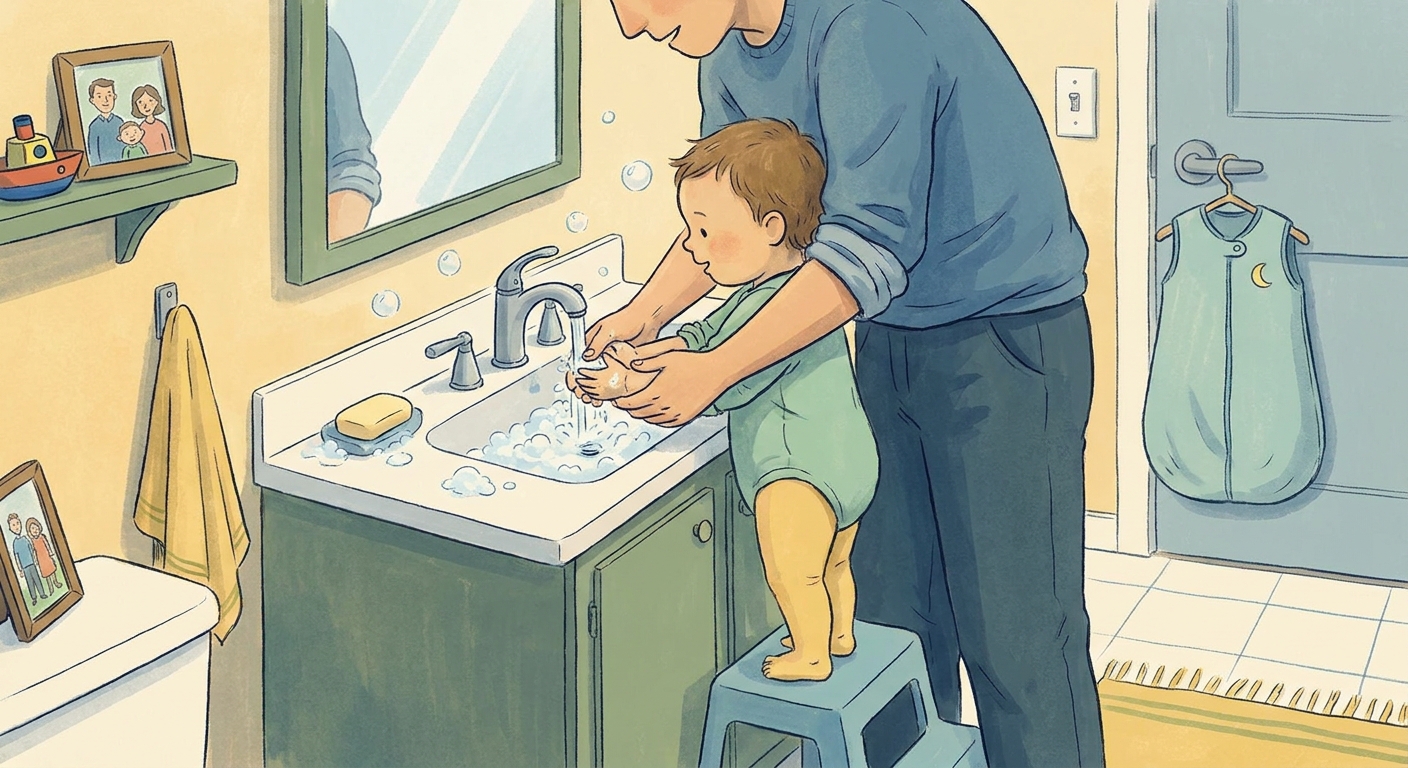
- Handwashing for everyone, especially after touching dressings or applying prescribed medication.
Common questions
“What if it is just one small spot?”
One small spot is still contagious if it is active, especially if it is weepy or your child keeps touching it. In practice, I would avoid swimming until it is clearly drying up and healing and you can keep it covered securely.
“Will chlorine kill impetigo?”
Pool chemicals can reduce germs in properly maintained water, but they do not control the big drivers of spread: skin contact and shared items. So chlorine is not a green light.
“Can they sit by the pool but not get in?”
Usually yes, as long as they are feeling well, lesions are covered, and you are strict about their towel being their towel, their chair being their chair, and good hand hygiene. The moment kids start climbing all over shared wet surfaces, the risk climbs.
“What about swim lessons we already paid for?”
I have been that parent, staring at the calendar and the receipt. Still, it is better to miss a week than to spread impetigo to a whole class and possibly prolong your own child’s infection. Many programs have make up policies if you explain it is a contagious skin infection.
Bottom line
If your child has active impetigo sores, especially if they are open, oozing, spreading, or hard to cover, skip swimming for now. Pools, splash pads, and lakes are just too good at turning a small infection into a bigger household and community problem.
And if there is fever or rapidly spreading redness, do not try to “wait it out.” Get your child checked so you can treat it appropriately and get back to normal life sooner.
Sarah Mitchell
Sarah Mitchell is a Registered Pediatric Nurse and a mother of three who has spent over a decade helping families navigate the beautiful, chaotic early years of childhood. She combines evidence-based medical knowledge with real-world parenting experience to offer practical, compassionate advice. At Awesome Parent, Sarah's mission is to help exhausted parents find solutions, trust their instincts, and finally get some sleep.