When can your child go back to school after strep? Here’s a day-by-day contagiousness timeline, sibling exposure tips, and what to do if symptoms return.
Can Parents Catch Scarlet Fever From Their Child?

Sarah Mitchell
Sarah Mitchell is a Registered Pediatric Nurse and a mother of three who has spent over a decade helping families navigate the beautiful, chaotic early years of childhood. She combines evidence-based medical knowledge with real-world parenting experience to offer practical, compassionate advice. At Awesome Parent, Sarah's mission is to help exhausted parents find solutions, trust their instincts, and finally get some sleep.
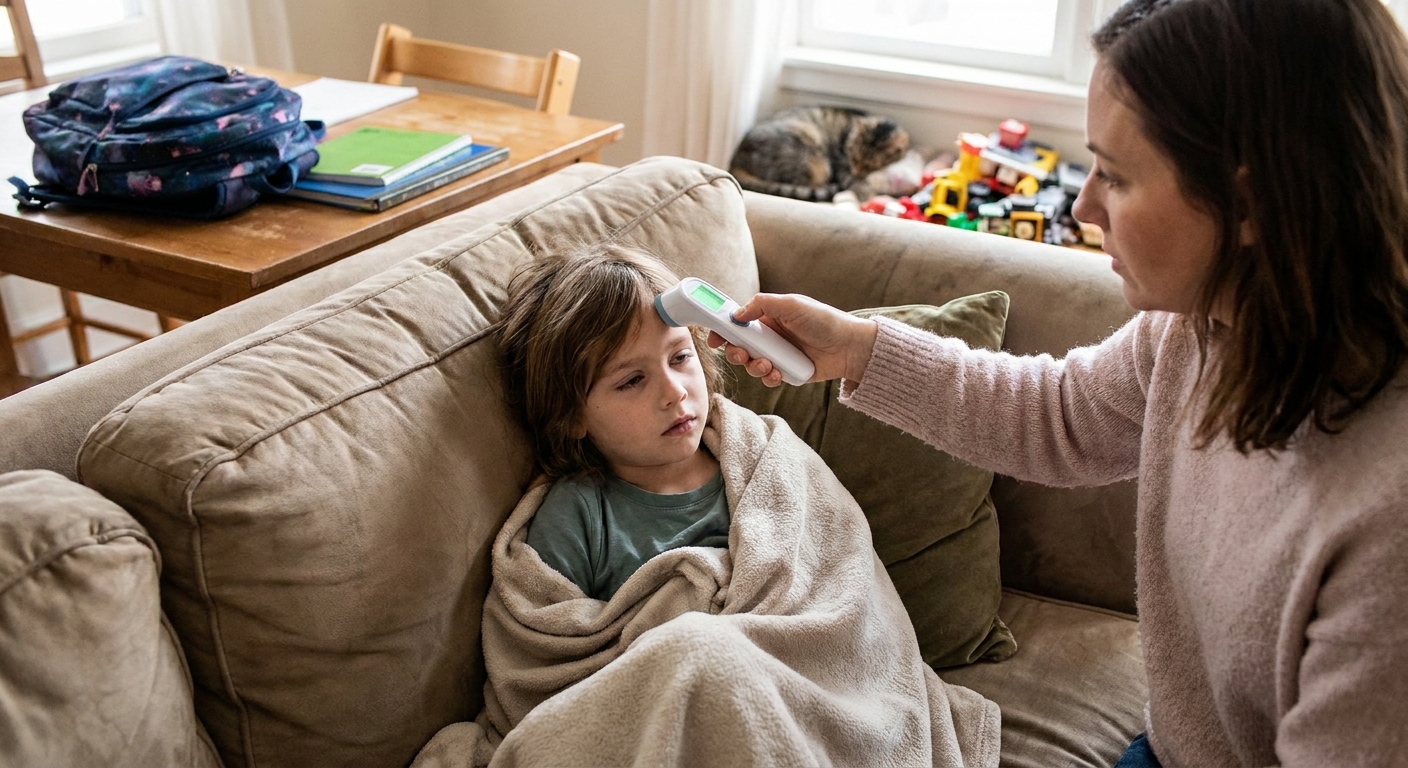
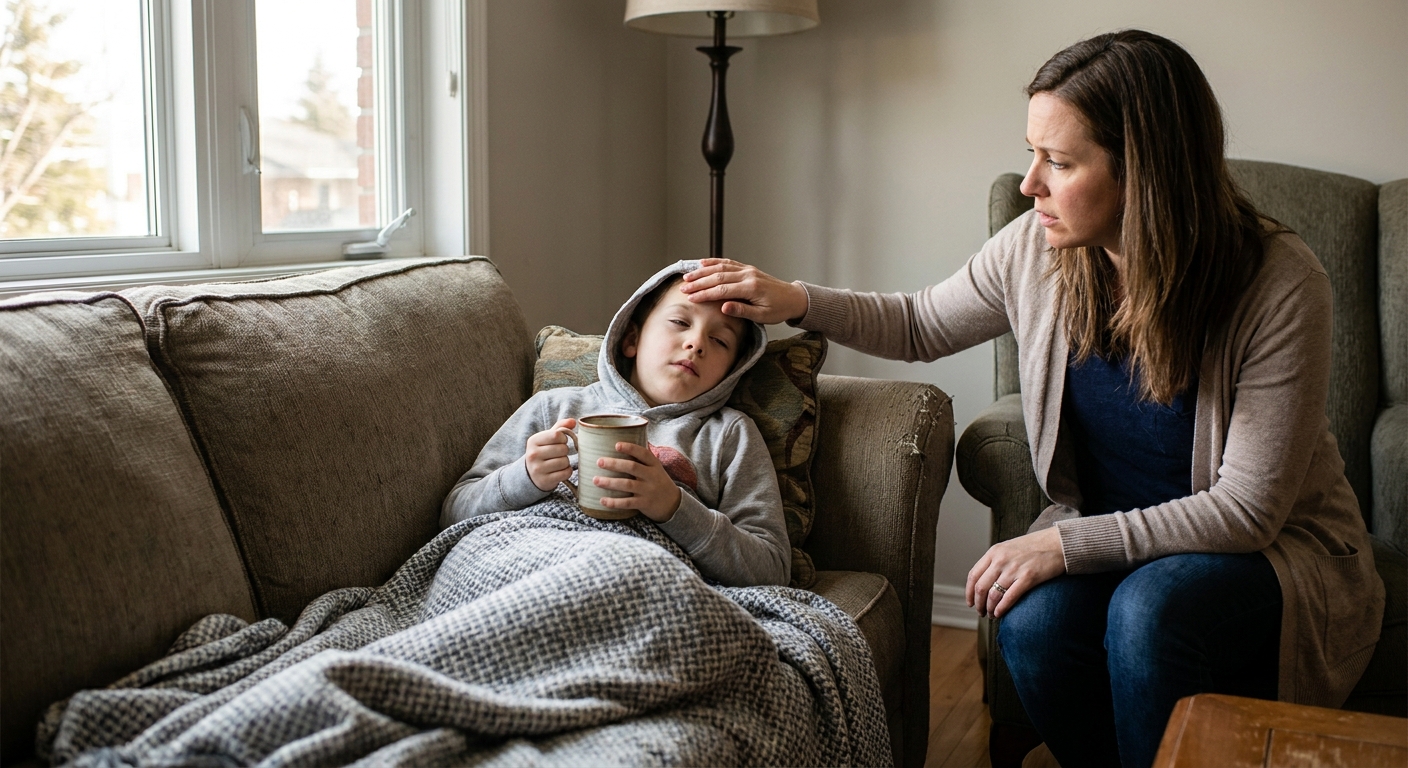
When your child gets scarlet fever, it can feel like your whole house is holding its breath. As a pediatric triage nurse, I talked to a lot of parents who started the call with: “Okay, my kid has strep and a rash… am I next?” And as a mom of three, I can confirm that nothing makes your own throat start feeling “scratchy” quite like hearing the words Group A strep.
The good news: scarlet fever is treatable, and there are practical steps you can take to lower your odds of catching it. The honest news: yes, adults can absolutely catch the same infection from a sick child.
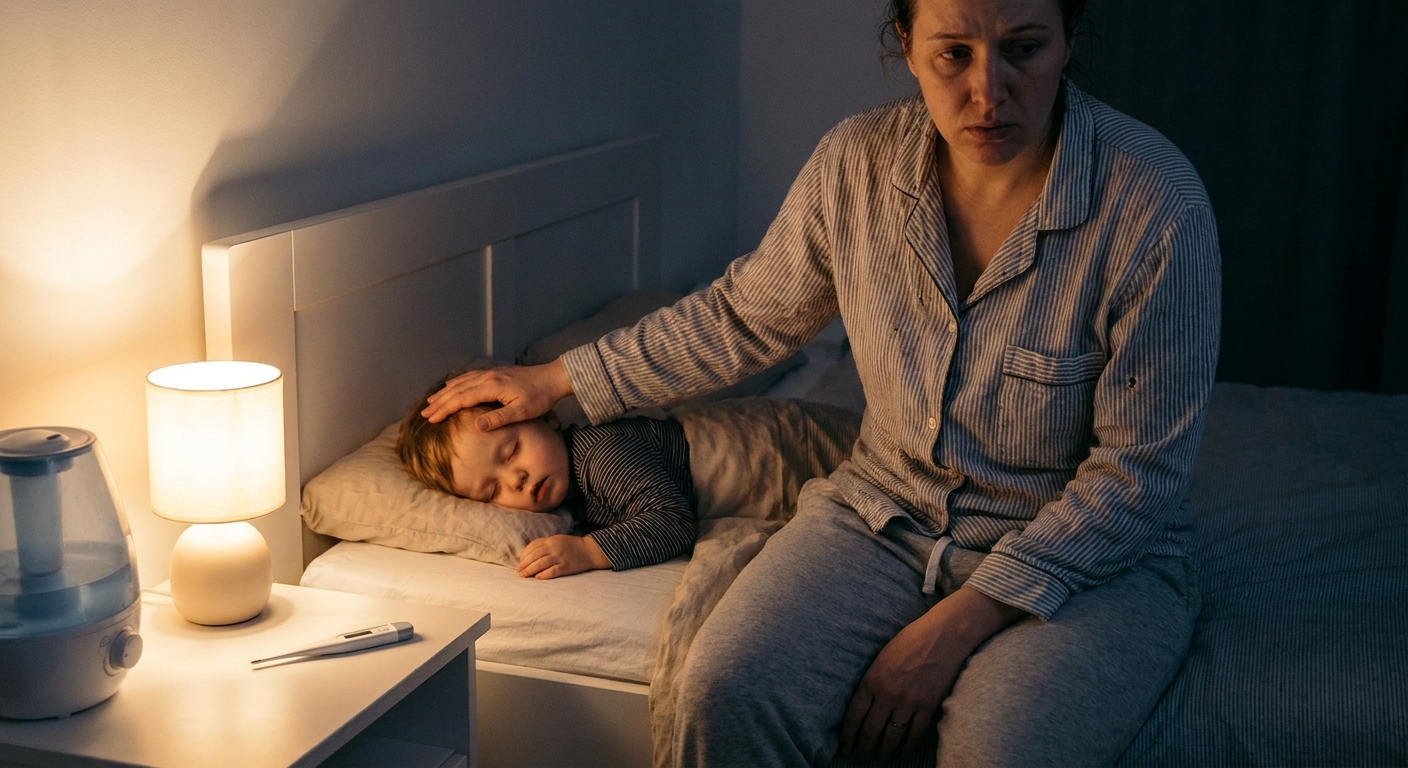
Yes, parents can catch strep and scarlet fever
Scarlet fever is not a separate germ. It is most often strep throat (a Group A strep infection) that produces toxins that trigger the classic rash. Less commonly, a Group A strep skin infection (like impetigo) can be the source.
If your child has scarlet fever, they have a contagious Group A strep infection, and it can spread to other people in the home.
Adults exposed to a child with scarlet fever might develop:
- Strep throat (most common)
- No rash at all, just throat symptoms
- A rash that is milder or looks different than a child’s
- Less classic symptoms that feel like a generic “bug” at first
So the short answer is yes. The longer answer is: you might catch the strep bacteria, but you may not get the full scarlet fever picture your child has.
How it spreads at home
Group A strep spreads mainly through respiratory droplets and close contact. At home, that often means:
- Sharing drinks, utensils, straws, or toothbrush storage cups
- Coughing or sneezing near others
- Kissing goodnight while your child is still contagious
- Touching tissues, doorknobs, phones, remote controls, or toys and then touching your mouth or nose
With appropriate antibiotics, people are typically much less contagious after about 24 hours and when symptoms are improving. Without antibiotics, strep can stay contagious for longer, which is one reason testing and treatment matter.
When symptoms show up
For strep throat, the incubation period is commonly about 2 to 5 days after exposure. In parent terms, if one child tests positive today, that does not guarantee you will feel sick tomorrow, but it is smart to be on alert for the next several days.
What it can look like in adults
Parents often expect the “sandpaper rash” they saw on their child. Adults do not always get it, and when they do, it may not be as obvious.
Common adult symptoms
- Sore throat, often sudden and significant
- Fever and chills
- Pain with swallowing
- Headache and body aches
- Swollen, tender lymph nodes in the neck
- Nausea or stomach discomfort (less common in adults than kids, but it happens)
Rash differences you might notice
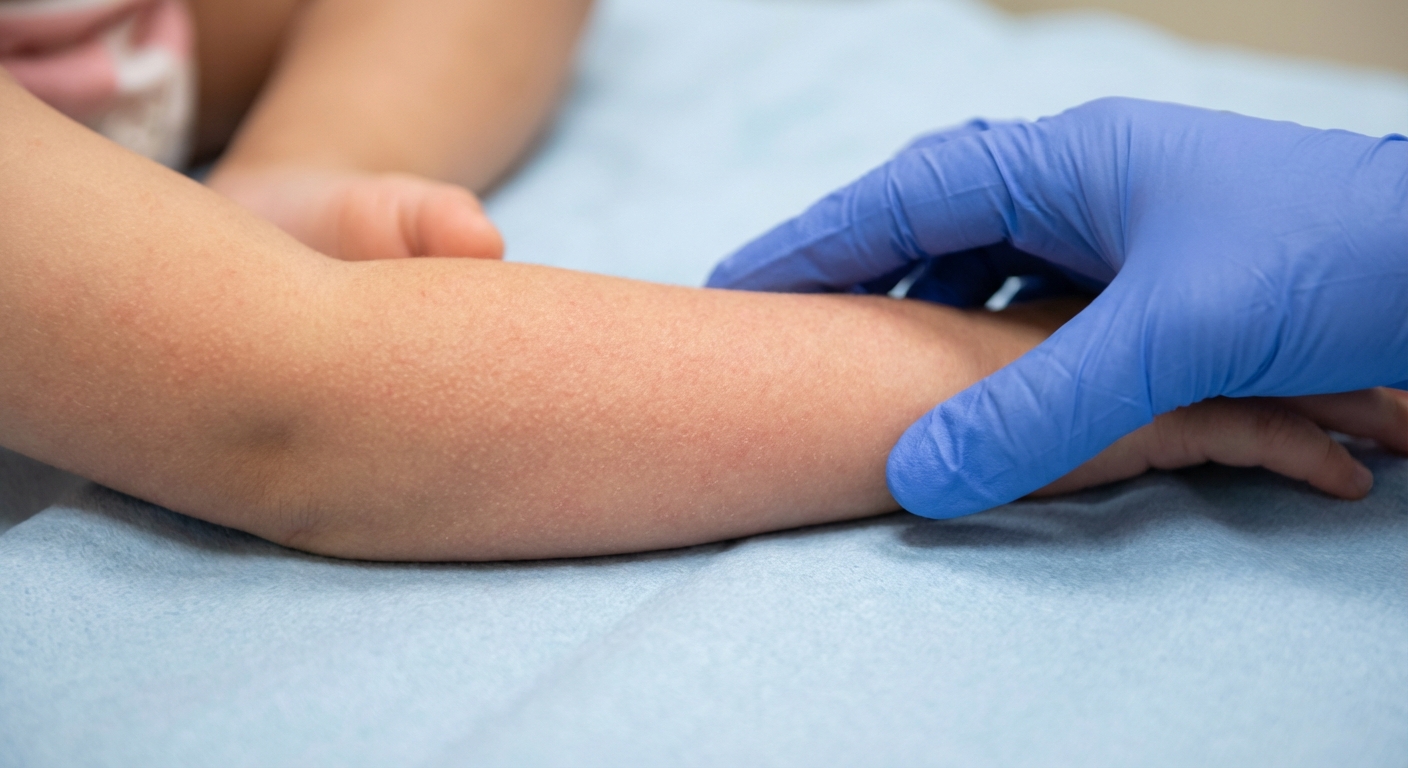
In kids, the rash often spreads across the trunk and feels like fine sandpaper, sometimes with brighter red areas in skin creases. In adults, if a rash shows up, it may be:
- Patchier
- Less rough to the touch
- Easy to mistake for dry skin, heat rash, eczema flare, or irritation
And some adults only get flushing or a faint pink rash, or none at all.
If you want a full rundown of the classic kid presentation, testing, and treatment, you can read our main guide here: Scarlet Fever in Kids: Rash, Symptoms, and Treatment.

When a parent should get a strep test
If your child has confirmed strep or scarlet fever and you develop symptoms, you do not need to “wait it out” for days hoping it is something else. Testing is quick, and treatment can help you feel better, reduce spread to others, and lower the risk of complications like acute rheumatic fever.
One important reminder from the triage side of my brain: exposure alone is not a diagnosis. Plenty of sore throats are viral, especially when cough and runny nose are the main event. Still, exposure plus classic symptoms is a good reason to test.
Call your healthcare provider about testing if you have:
- Sore throat plus fever
- Sore throat without a cough (strep is less likely when cough and runny nose are the main event)
- White patches or pus on the tonsils
- Swollen, tender neck glands
- A new rash along with throat symptoms
- Known exposure to strep in the home and you feel truly unwell
Many clinics will do a rapid strep test and sometimes a throat culture depending on the situation. If you are strep-positive, antibiotics are typically recommended.
What if your symptoms are mild?
Mild symptoms can still be strep, especially when it is actively circulating in your house. If your throat is steadily worsening, you have a fever, or you feel that “this is not my normal cold” sensation, it is reasonable to ask for a test.
Should adults take antibiotics just in case?
Usually, no. In most households, we do not treat adults (or kids) preventively unless a clinician has a specific reason. Antibiotics are used when strep is confirmed or strongly suspected based on evaluation.
If you have significant symptoms, get tested. If you feel fine, focus on prevention.
What about the well sibling?
This comes up constantly, especially when one kid is positive and another is acting completely normal.
We keep that question on its own page so you can get a straight answer without scrolling: Does a Well Sibling Need a Strep Test After Scarlet Fever?.
Preventing spread at home
In a perfect world, everyone would isolate in separate rooms and disinfect like they are preparing for surgery. In the real world, you have school drop-off, work, and a sick kid who wants you close. Here is what actually makes a difference:
- Start antibiotics promptly if prescribed, and keep your child home until they have been on antibiotics about 24 hours, are improving, and fever is gone.
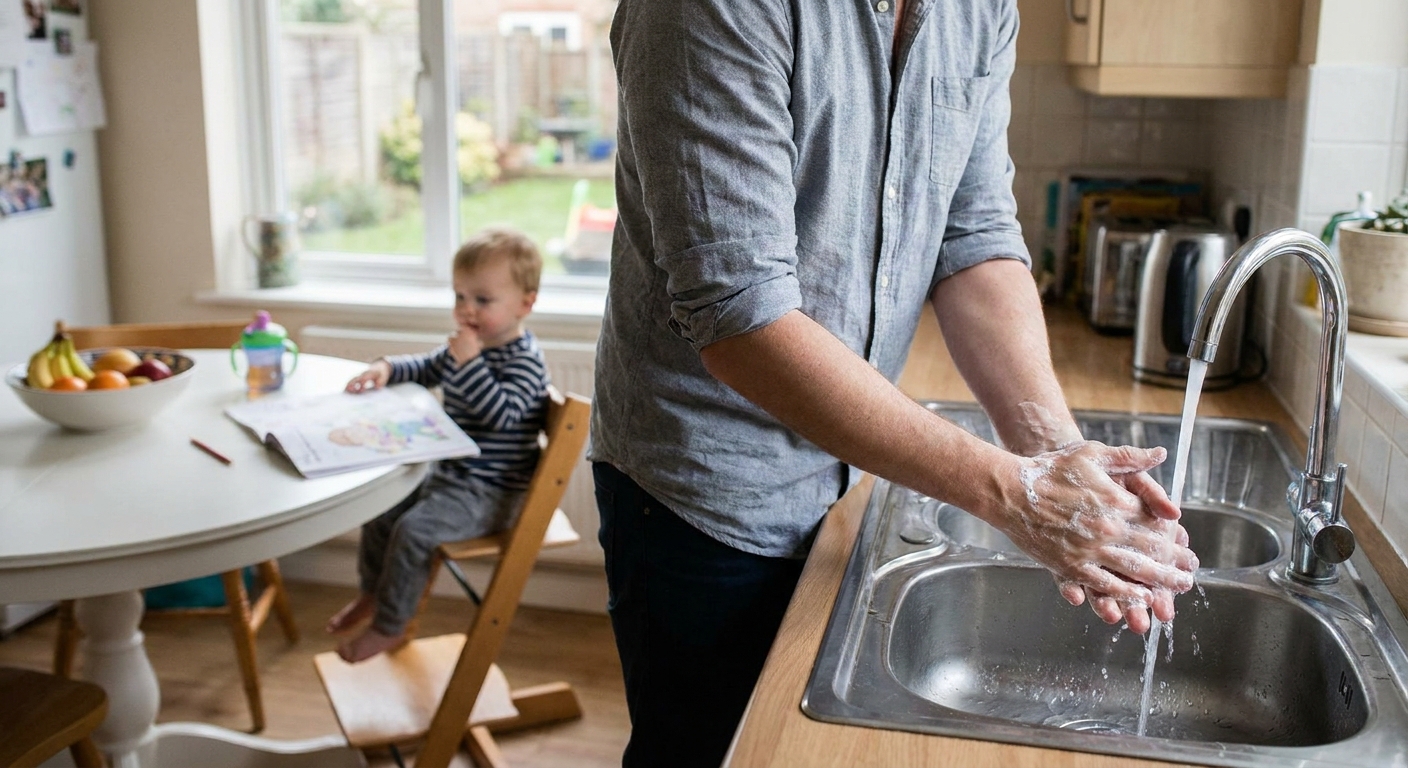
- Hand hygiene: soap and water or sanitizer after wiping noses, before eating, and after handling dishes.
- Separate cups and utensils, and do not share food or drinks.
- Toothbrush swap (optional): consider replacing the infected person’s toothbrush after about 24 hours on antibiotics. Evidence is mixed, but it is a low-effort, low-risk step some clinicians recommend to reduce re-exposure. Also store brushes so they are not touching.
- Wipe high-touch surfaces once daily during the contagious window: faucets, doorknobs, fridge handle, light switches, phones.
- Ventilation helps: crack a window if weather allows, especially in the room where your child is resting.
Return to work or school
If you test positive for strep, the general rule is similar: once you have been on appropriate antibiotics for about 24 hours, your fever is gone, and you are improving, you are typically considered much less contagious. If your job involves close contact with kids or medically vulnerable people, ask your clinician for guidance.
Peeling skin after scarlet fever
Parents also ask about skin peeling, especially on fingertips and toes, after the rash fades. That is common with scarlet fever and can look dramatic even when your child is otherwise improving.
We cover that in a separate deep dive here: Scarlet Fever Peeling Skin.
If you are pregnant and exposed
If you are pregnant and your child has strep or scarlet fever, it is understandable to worry. Most exposures do not lead to serious problems, but pregnancy is a time to be extra cautious about fever, dehydration, and getting appropriate evaluation.
If you develop symptoms, get evaluated and tested. When strep is confirmed, the antibiotics commonly used for it are generally considered safe in pregnancy when prescribed by your clinician.
We keep the pregnancy-specific guidance here: Scarlet Fever During Pregnancy.
When to seek urgent care
Most strep infections can be handled through your primary care office or an urgent care visit. But get urgent medical help if you (or your child) have:
- Trouble breathing or drooling with inability to swallow
- Signs of dehydration (very dry mouth, dizziness, not peeing much)
- Severe neck swelling or stiffness, or neck pain with limited range of motion
- Severe one-sided throat pain, muffled “hot potato” voice, or trouble opening the mouth
- Rash with blistering or skin that looks purple or bruised
- High fever that is not coming down or is accompanied by severe weakness
And if you are being treated for strep but are not improving after 48 hours on antibiotics, check back in with your clinician.
Quick household checklist
- Yes, parents can catch strep from a child with scarlet fever.
- Adults may not get the classic sandpaper rash, even if they do have strep.
- Symptoms often show up about 2 to 5 days after exposure.
- If you develop a sore throat with fever, swollen neck glands, or rash, ask for a strep test.
- People are typically much less contagious after about 24 hours of appropriate antibiotics and improving.
- Hand washing, separate cups, and wiping high-touch surfaces go a long way.
If you are in the thick of it right now, take a breath. You do not have to disinfect your entire life. Focus on the big levers, watch for symptoms in yourself, and reach out for testing if your body is waving a red flag.
Sarah Mitchell
Sarah Mitchell is a Registered Pediatric Nurse and a mother of three who has spent over a decade helping families navigate the beautiful, chaotic early years of childhood. She combines evidence-based medical knowledge with real-world parenting experience to offer practical, compassionate advice. At Awesome Parent, Sarah's mission is to help exhausted parents find solutions, trust their instincts, and finally get some sleep.