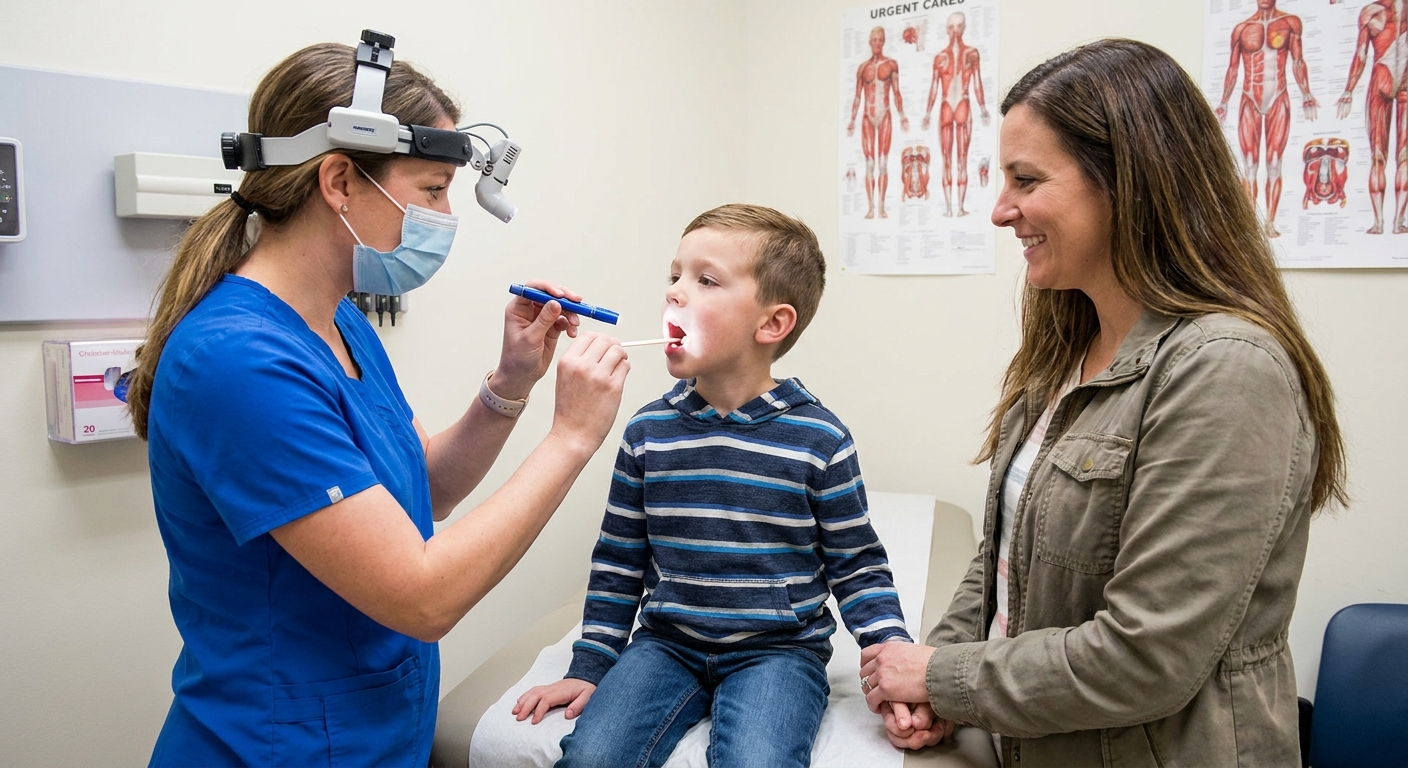
Worried about a rash and sore throat? Learn how scarlet fever relates to strep, what the rash can look and feel like, how long kids are contagious, and when ...
Scarlet Fever Symptoms After Two Days of Antibiotics

Sarah Mitchell
Sarah Mitchell is a Registered Pediatric Nurse and a mother of three who has spent over a decade helping families navigate the beautiful, chaotic early years of childhood. She combines evidence-based medical knowledge with real-world parenting experience to offer practical, compassionate advice. At Awesome Parent, Sarah's mission is to help exhausted parents find solutions, trust their instincts, and finally get some sleep.
There are few parenting feelings worse than giving the first doses of an antibiotic, doing everything “right,” and then looking at your child 48 hours later and thinking… why are we not turning the corner?
With scarlet fever (strep throat plus the classic sandpapery rash), many kids start to improve within about 24 to 48 hours of an effective antibiotic. But “start” is the key word. Some symptoms fade quickly, others take longer, and occasionally a child needs a recheck because something about the diagnosis or the medication plan is not lining up.
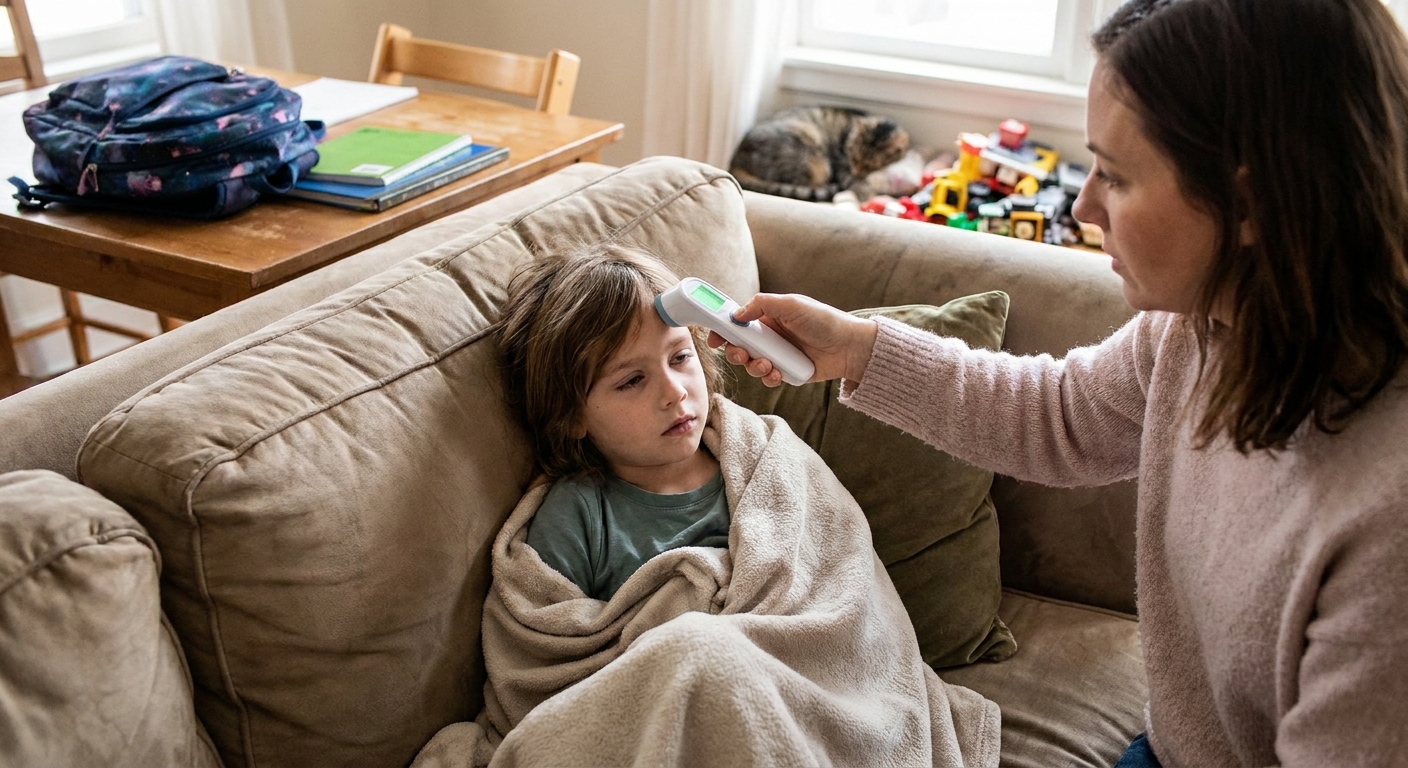
This article is specifically about what it means when your child still has fever, rash, or throat pain after about two days of antibiotics, what clinicians typically reassess, and which symptoms warrant urgent care now. If you are worried, trust that instinct. You are not overreacting.
What should improve by 48 hours
Every kid is a little different, but these are common patterns we see after starting antibiotics for scarlet fever.
Fever
Often improves first. Many children have a noticeably lower fever, longer stretches without fever, or fever that responds better to medication by the 48-hour mark. For reference, a fever is generally 100.4°F (38°C) or higher.
Still possible at 48 hours: a low-grade fever or one lingering fever spike, especially if your child is also dehydrated, not sleeping well, or has significant throat inflammation. What I want to see, in general, is that the fever is trending down over time, not staying the same or climbing.
Throat pain
Usually improving, but not always gone. The bacteria start to clear with antibiotics, but the throat tissue can stay inflamed and painful for several days.
Still possible at 48 hours: pain with swallowing, decreased appetite, and “my throat still hurts” complaints, especially first thing in the morning.
Rash
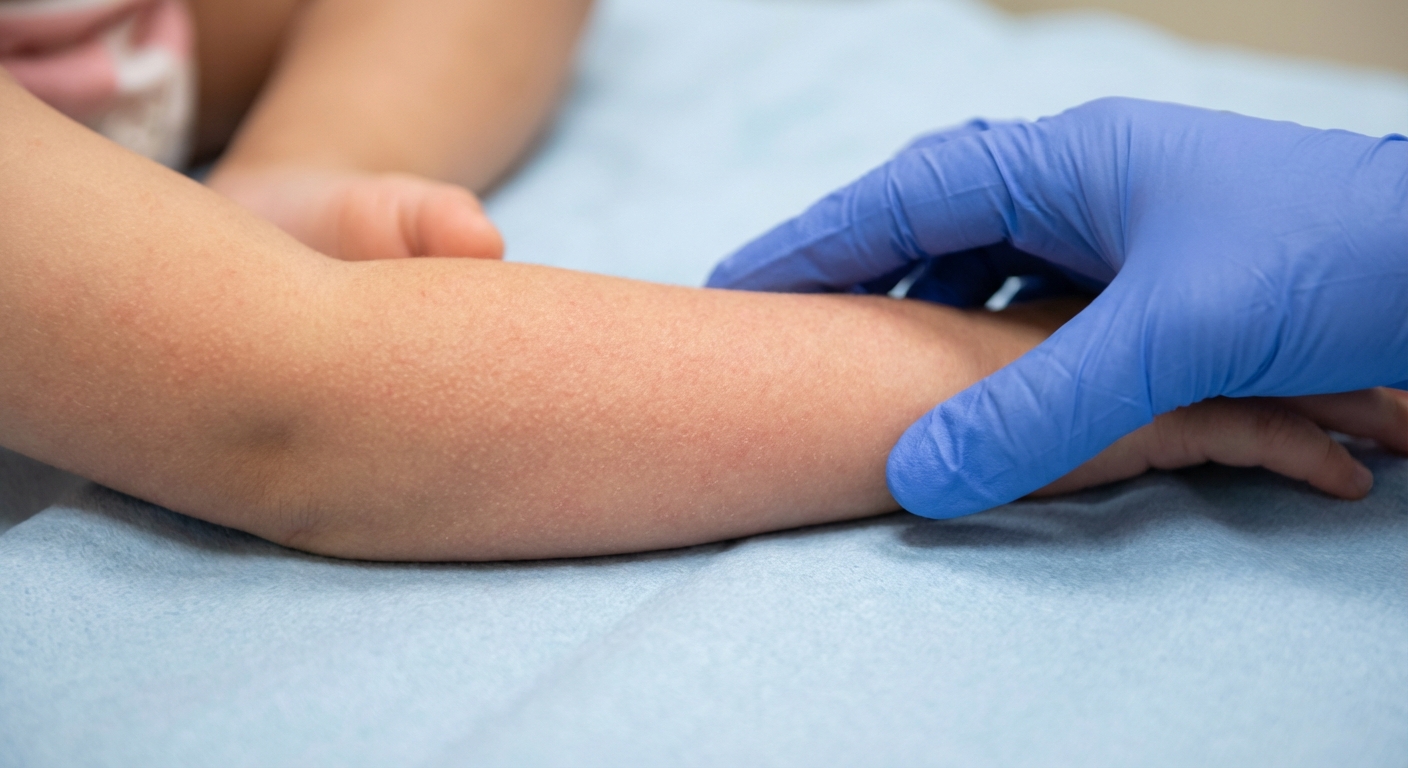
The rash can be stubborn. Scarlet fever rash often takes longer to fade than the fever. It may look the same for a couple days, then gradually lighten.
Still possible at 48 hours: rash that is still widespread, itchy, or rough to the touch. Some kids look redder after a warm bath or when they are running around.
Energy and appetite
Usually slowly returning. You may see brief windows of playfulness.
Still possible at 48 hours: crankiness, fatigue, and picky eating. Throat pain alone can make kids act like they are still very sick.
My triage nurse rule of thumb: by about two days on antibiotics, I like to hear at least one meaningful sign of progress, even if it is small (lower fever, drinking more, longer breaks between pain meds, or a bit more energy). If everything is exactly the same or worse, a recheck is smart. And if fever is persisting beyond about 48 hours on antibiotics, that is a “call the clinician” moment in most clinics.
Why symptoms may persist
When a family called our pediatric clinic saying “we are two days in and nothing is better,” these are the most common explanations clinicians consider. This is not a list to self-diagnose. It is to help you understand what your child’s doctor is thinking as they decide next steps.
1) The antibiotic is not being absorbed or taken consistently
This is incredibly common with kids, and it is not a parenting failure. It happens because:
- Vomiting shortly after doses
- Spitting out medication (or “cheeking” it)
- Dosing errors (wrong measurement, missed doses, incorrect schedule)
- Mixing with a full bottle/cup so they do not finish the whole dose
If you suspect this, tell your clinician plainly. They can help troubleshoot, adjust timing, switch formulations, or choose a different medication.
2) The diagnosis needs a second look
Not every sore throat with a rash is scarlet fever. After 48 hours without improvement, clinicians may reassess whether this is truly group A strep, or whether something else is going on at the same time.
Common considerations include:
- A viral illness that is causing ongoing fever or throat pain
- Another source of fever like an ear infection
- Skin irritation or another rash trigger that is persisting even as strep improves
3) The antibiotic choice needs adjustment
Most cases respond well to first-line antibiotics. But if your child is not improving, the clinician may consider:
- Whether the bacteria may not be responding as expected
- Whether your child needs a different option due to intolerance, vomiting, or taste issues
- Whether the medication and dose match your child’s current weight and age
4) A complication is developing right now
Most scarlet fever cases do not develop complications, especially when treated. But persistent or worsening symptoms can occasionally signal a problem that needs urgent evaluation, like a deepening throat infection or swelling affecting the airway.
Examples clinicians worry about in the first few days include peritonsillar abscess or retropharyngeal abscess, which can cause severe throat pain, muffled voice, drooling, neck stiffness, or trouble opening the mouth.
What clinicians recheck
If you bring your child in (or call), here is what many pediatric clinicians re-evaluate.
Medication details
- The exact antibiotic name and strength
- How much is given per dose, and how often
- How many doses were missed or vomited
- Any trouble getting doses in
- New symptoms since starting the medication
Hydration and breathing
- How much your child is drinking and peeing
- Whether they are drooling or refusing all fluids
- Breathing effort and oxygen level (if in clinic)
Throat and neck exam
- Degree of tonsil swelling and redness
- Whether one side looks worse than the other
- Presence of muffled “hot potato” voice
- Ability to open the mouth normally
- Neck tenderness, swollen lymph nodes, or neck stiffness
Rash assessment
- Whether the rash still looks like classic scarlet fever
- Whether it is becoming hive-like (which can suggest an allergic-type reaction)
- Any peeling areas or skin pain
Repeat testing if needed
Depending on the original testing and how your child looks, a clinician may repeat a throat test, send a culture, or look for another source of infection. They may also review whether anyone else at home has strep symptoms.
When to get urgent care
If any of the following are present, do not wait for the next routine appointment window. Seek urgent care or emergency evaluation based on severity.
Breathing trouble or airway concerns
- Struggling to breathe, breathing faster than usual, or working hard to breathe
- Noisy breathing at rest
- Drooling because swallowing is too painful
- Unable to swallow fluids or refusing all liquids
- Lips or face turning bluish or gray
Concerning neck swelling
- Rapidly enlarging neck swelling
- Severe one-sided neck or throat pain
- Neck stiffness that limits turning the head
- Muffled voice or difficulty opening the mouth
Dark or bloody urine
Call urgently if your child has cola-colored or tea-colored urine, red or brown urine, or significantly decreased urination.
Dark urine can come from dehydration, but it can also be a sign of blood in the urine. Classic post-strep kidney inflammation typically shows up 1 to 3 weeks after a strep infection, not usually on day two. Still, dark or bloody urine is urgent anytime, regardless of timing.
Dehydration or a child who is “not acting right”
- Very dry mouth, no tears when crying
- Not peeing for 8 to 10 hours (or fewer wet diapers than usual)
- Extreme sleepiness, hard to wake, or unusually confused
- Persistent vomiting
Possible severe medication reaction
- Hives or rapidly spreading itchy welts
- Facial swelling, especially lips or around eyes
- Wheezing or trouble breathing after a dose
If you are on the fence, call your pediatrician’s after-hours line. This is exactly what it is for.
What you can do at home
Supportive care matters a lot during this middle stretch. It will not replace a recheck if your child is not improving, but it can help them feel better and stay hydrated.
Focus on fluids first
Cold or cool liquids are often best for throat pain. Aim for frequent small sips.
- Water, diluted juice, oral rehydration solution
- Popsicles or ice chips for older kids
- Warm tea with honey for children over age 1 (never honey under 1)
Make swallowing less miserable
- Soft foods like yogurt, applesauce, smoothies, mashed potatoes
- Avoid acidic or scratchy foods (orange juice, chips, toast) until the throat improves
Use fever and pain medicine safely
Use acetaminophen or ibuprofen if your child can take them, and dose based on your child’s current weight using the package directions or your clinician’s guidance. If your child is vomiting a lot or not well-hydrated, ask your clinician before using ibuprofen. Avoid giving multiple combination cold medicines that can accidentally double-dose ingredients.
Do a quick dose audit
Before you call, take 60 seconds to check:
- When the antibiotic was started (date and time)
- How many doses have been given
- Whether any were missed or vomited
- Your child’s current weight (if you know it)
Having this info ready speeds up care and reduces the back and forth when you are already tired.
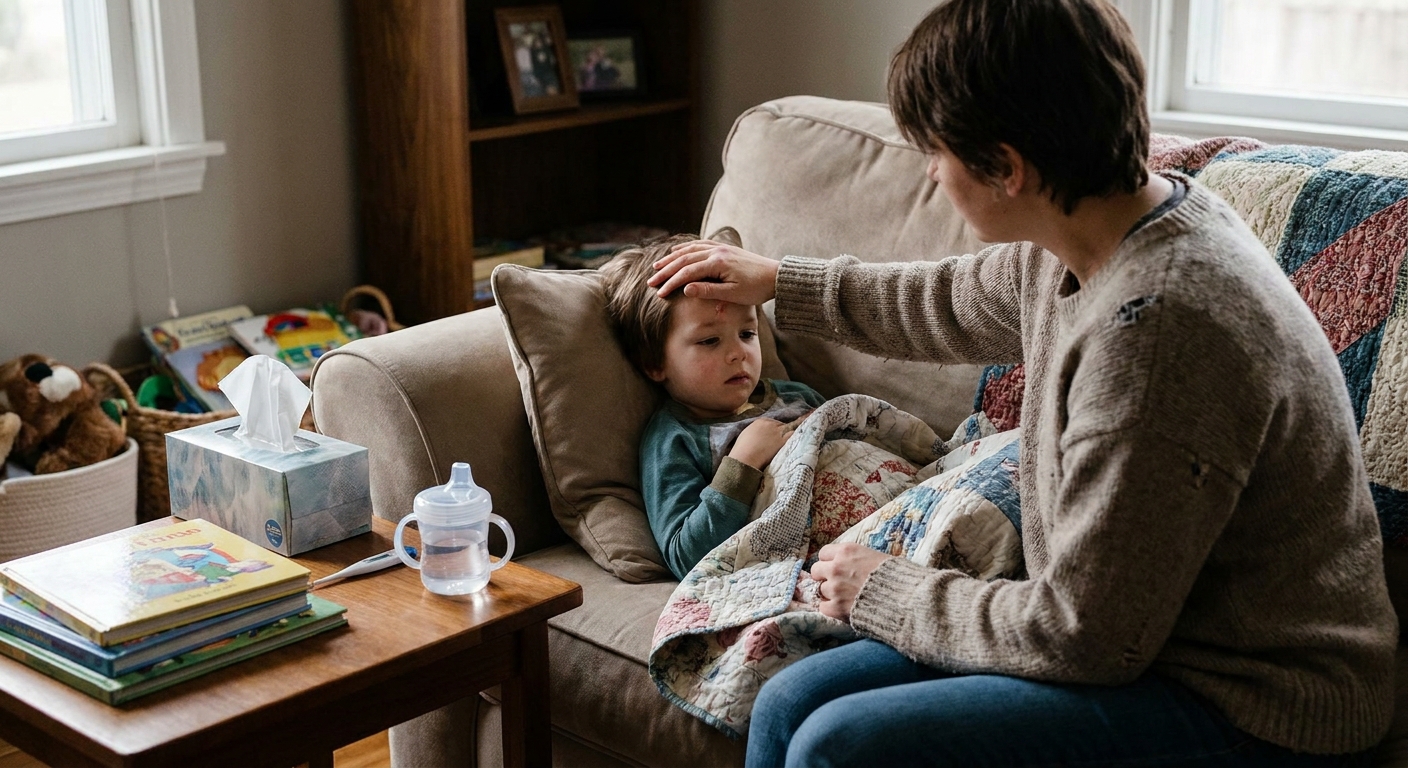
When to call at 48 hours
Call the same day if:
- Fever is still present and not trending down
- Throat pain is severe enough that your child is not drinking
- The rash is spreading, becoming painful, or looks more like hives
- Your child seems worse overall, not just “still sick”
- You are unsure whether doses were kept down or measured correctly
If your child is improving but still uncomfortable, it is also reasonable to message or call for reassurance. Sometimes parents just need confirmation that what they are seeing is within the expected range.
FAQ
Is it normal for the rash to still be there after two days of antibiotics?
Yes. The rash often lingers even after fever improves. It may fade gradually over several days. What is less typical is a rash that becomes hive-like, significantly painful, or rapidly worse, especially with facial swelling or breathing symptoms.
When can my child go back to school or daycare?
Many schools and childcare centers use a rule like: at least 24 hours on antibiotics and fever-free (without fever-reducing medicine), and feeling well enough to participate. Local policies vary, so follow your program’s guidance. If symptoms are not improving as expected, focus less on the clock and more on getting a recheck.
Is my child still contagious after 48 hours?
With strep, children are generally considered much less likely to be contagious after about 24 hours of appropriate antibiotics, especially if fever is improving. If your child is not improving, check in with your clinician because lack of improvement can mean the infection is not adequately controlled.
Could the antibiotic be causing the rash?
It is possible to develop a medication-related rash. Scarlet fever rash is usually rough and sandpapery. Hives tend to be raised, very itchy welts that move around. Any rash with facial swelling, wheezing, or trouble breathing needs urgent care.
Will my child’s skin peel later?
It can. Some kids have peeling (often on the fingertips, toes, or groin area) as they recover, sometimes 1 to 3 weeks later. Peeling alone can be part of the normal scarlet fever course, but peeling with skin pain, blisters, or a very ill-appearing child should be evaluated.
What if my child refuses the antibiotic?
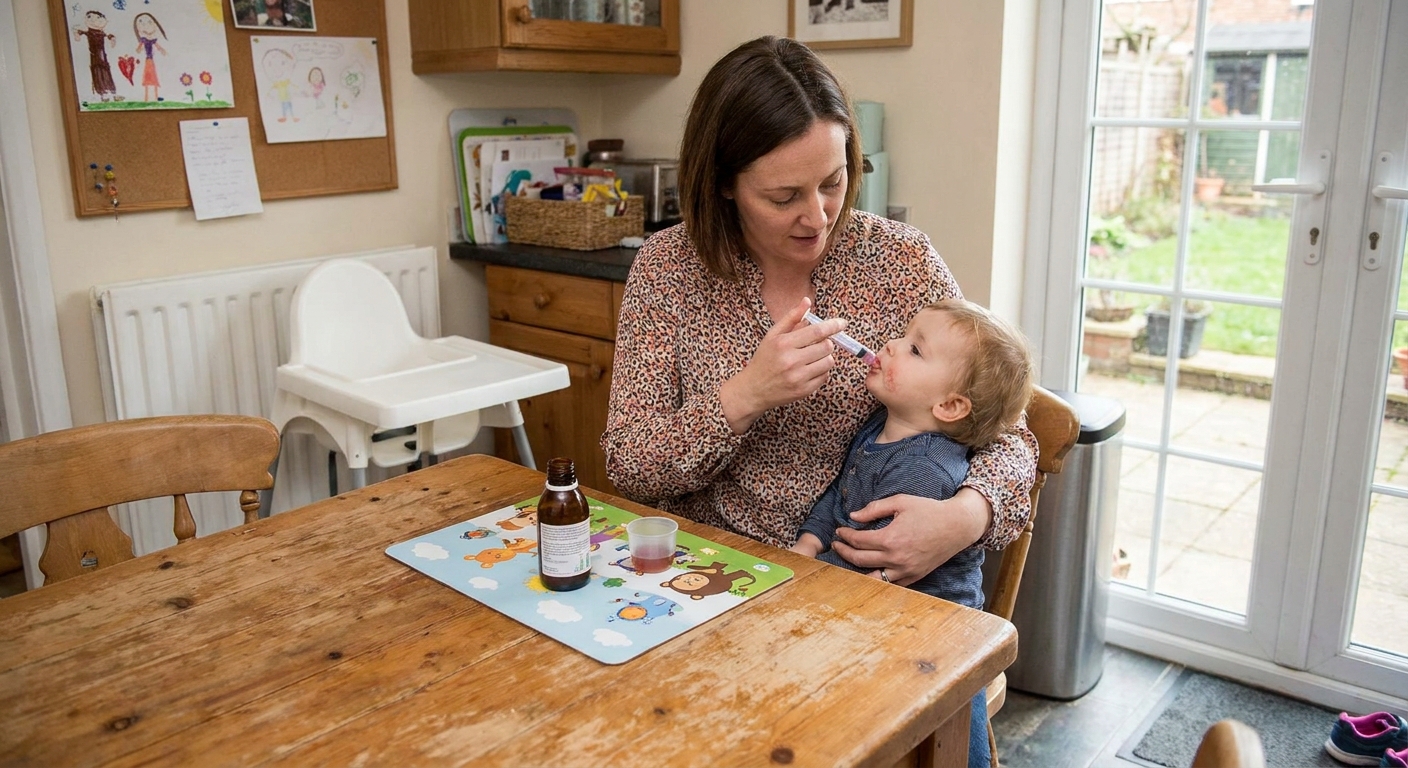
You are not alone. Ask your pharmacist about flavoring, and ask your pediatrician whether a different formulation is appropriate. In the meantime, giving small amounts slowly with a syringe (aimed toward the inside of the cheek) can help, and following with a favorite drink or popsicle can make it more tolerable.
The bottom line
By about 48 hours on antibiotics for scarlet fever, many kids show at least a small sign that they are turning the corner, especially with fever. A rash and sore throat can lag behind. But if your child is not improving at all, is getting worse, has significant neck swelling, breathing trouble, or dark or bloody urine, they deserve a prompt medical recheck.
And from one tired parent to another: if your gut says “this does not feel right,” listen to it and call. That instinct has saved many kids a longer, harder illness.
Sarah Mitchell
Sarah Mitchell is a Registered Pediatric Nurse and a mother of three who has spent over a decade helping families navigate the beautiful, chaotic early years of childhood. She combines evidence-based medical knowledge with real-world parenting experience to offer practical, compassionate advice. At Awesome Parent, Sarah's mission is to help exhausted parents find solutions, trust their instincts, and finally get some sleep.