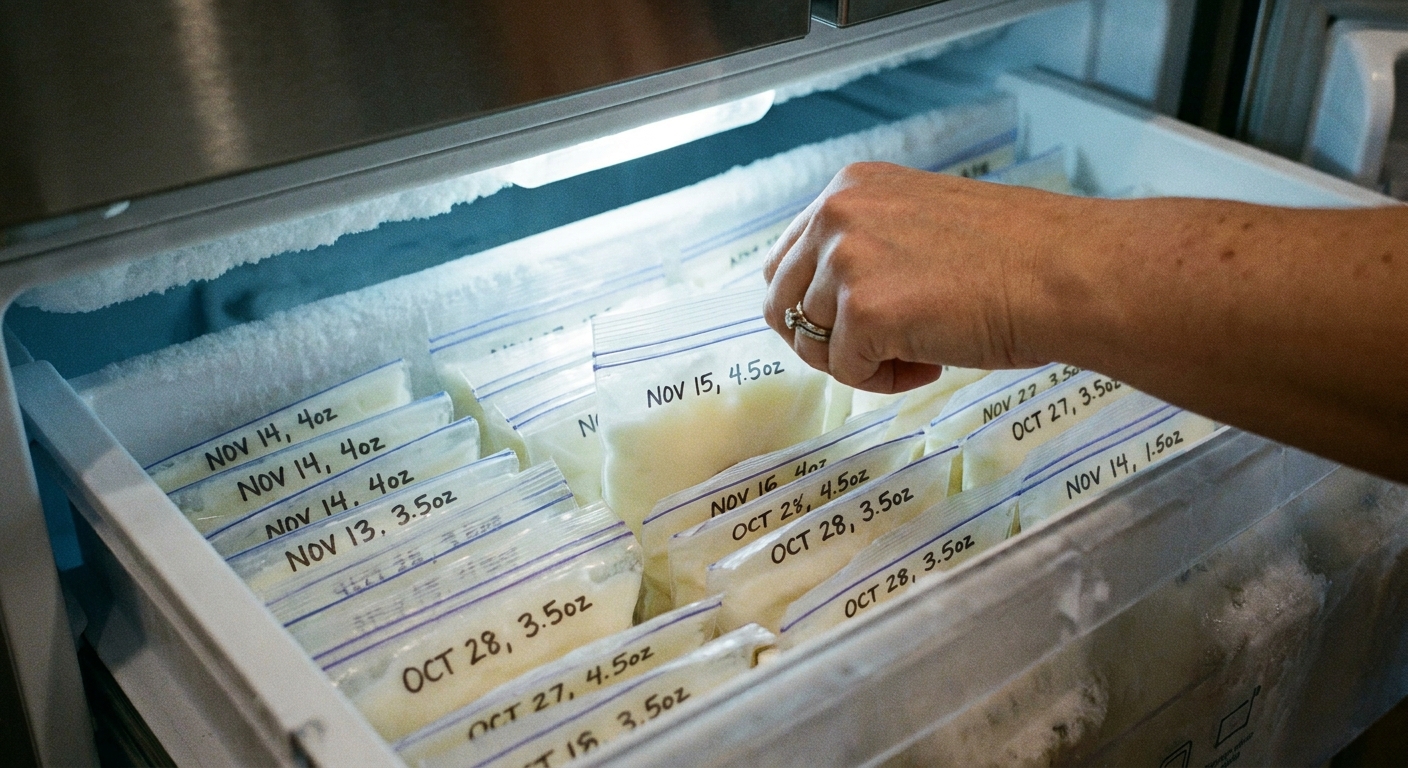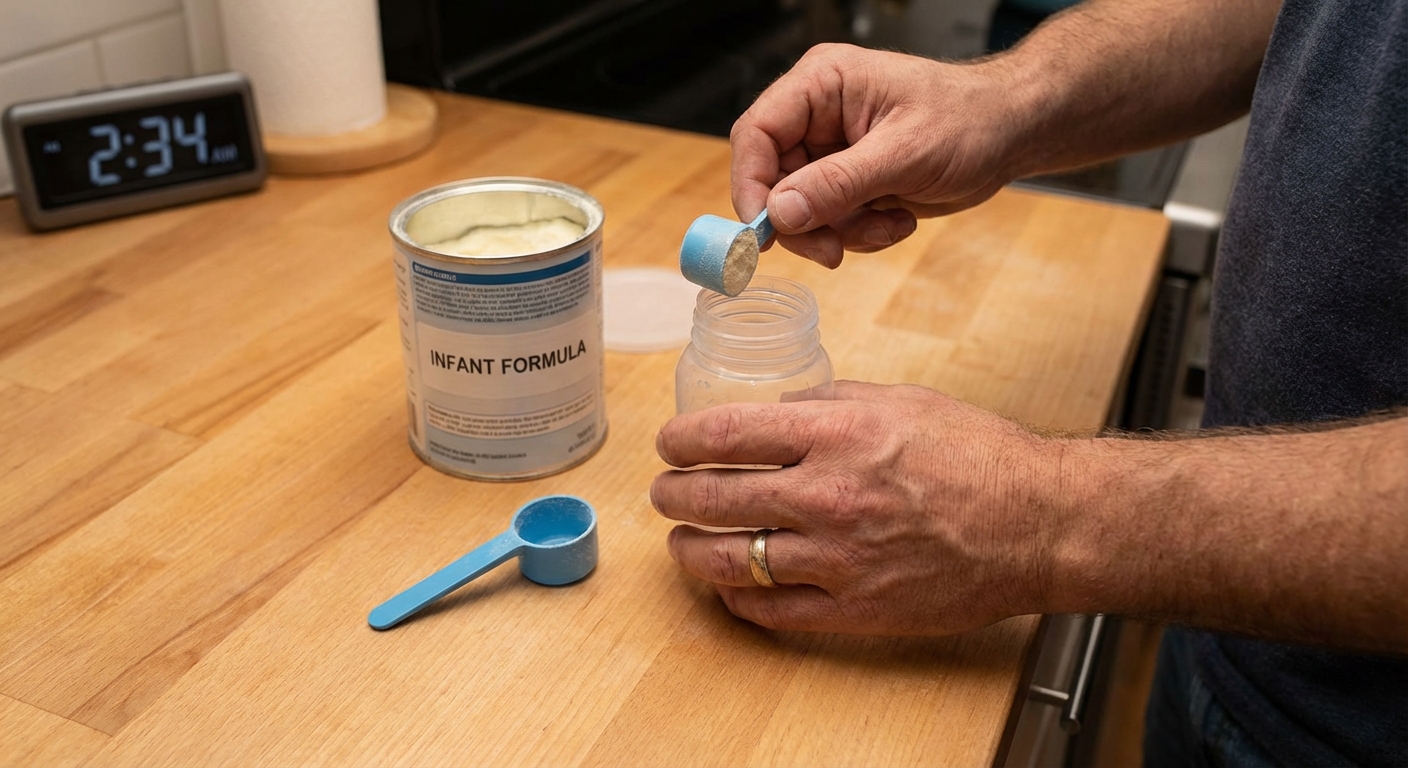
Learn how to combine nursing and formula bottles without ending breastfeeding. Includes paced bottle feeding steps, supply-protection strategies, safe mixing...
Can You Mix Breast Milk and Formula in the Same Bottle?

Sarah Mitchell
Sarah Mitchell is a Registered Pediatric Nurse and a mother of three who has spent over a decade helping families navigate the beautiful, chaotic early years of childhood. She combines evidence-based medical knowledge with real-world parenting experience to offer practical, compassionate advice. At Awesome Parent, Sarah's mission is to help exhausted parents find solutions, trust their instincts, and finally get some sleep.
If you are combination feeding, you have probably stared into the fridge at 2 a.m. thinking, Can I just pour these together and be done with it? I get it. I worked pediatric triage for years and now I am a mom of three, and I still appreciate any feeding shortcut that is both safe and realistic.
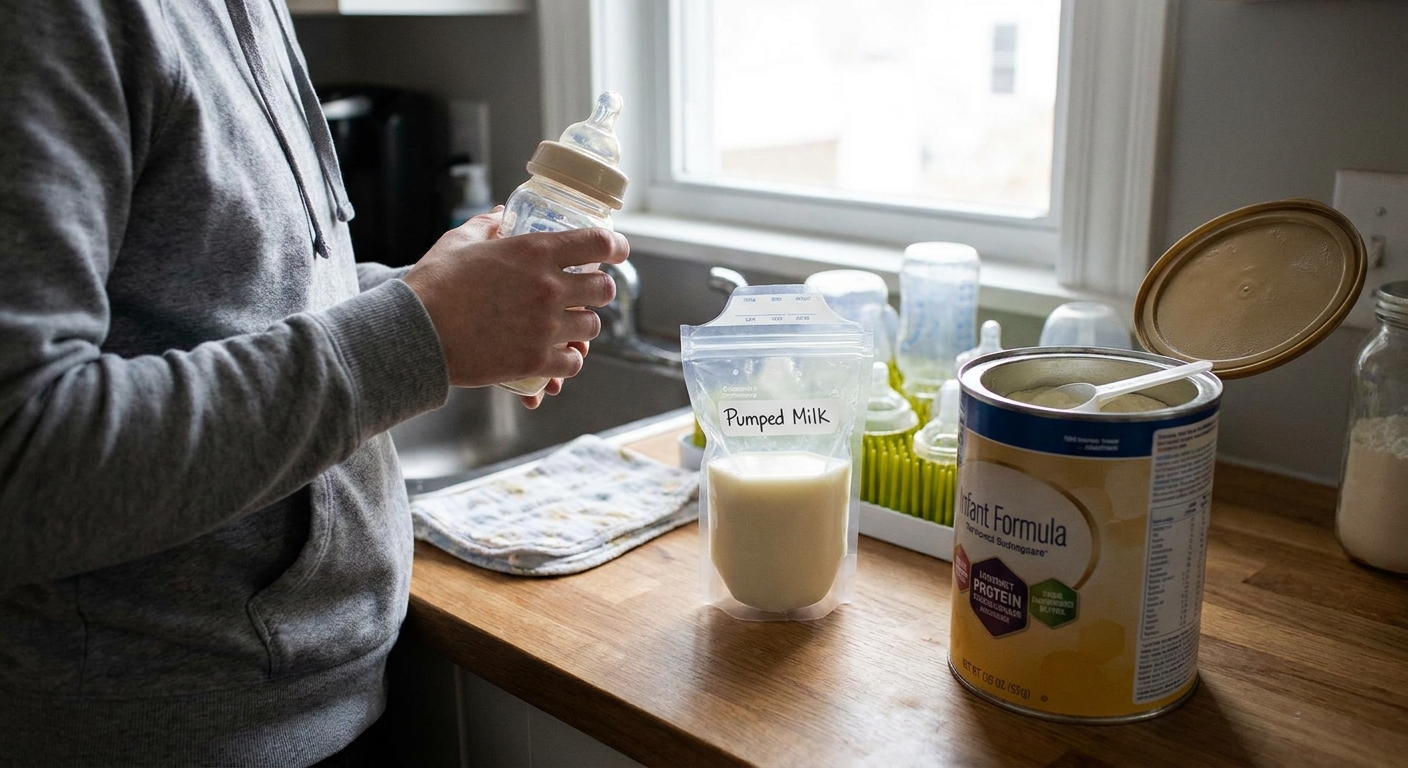
The good news: in most cases, yes, you can mix breast milk and prepared formula in the same bottle. The more important question is whether you should for that particular feed, because it can change storage rules and can accidentally waste hard-earned breast milk.
Is it safe to mix breast milk and formula?
Generally, yes, for healthy full-term babies, as long as the formula is prepared correctly and you follow the stricter storage rules that apply once formula is in the bottle.
That said, there are a few situations where you should get individualized guidance first:
- Premature babies or babies with complex medical needs
- Babies with immune problems
- Babies on thickened feeds or special metabolic formulas
- Any baby with poor weight gain where precise intake matters
- Young infants (especially under 2 months), because powdered formula is not sterile and may require extra precautions
If any of those apply, ask your pediatrician or lactation consultant about the best approach for your baby. In some cases, they may recommend ready-to-feed formula or specific preparation steps to reduce infection risk.
The biggest downside: mixing can waste breast milk
Here is the part many exhausted parents do not hear clearly: if your baby does not finish a bottle, you may need to throw the rest away. When breast milk is in that bottle with formula, your breast milk is “along for the ride,” meaning you discard the whole bottle on the formula timeline.
Why this matters: prepared formula supports bacterial growth differently than breast milk. Once your baby starts drinking, saliva gets into the bottle and bacteria can multiply quickly.
So if you mix breast milk and formula together and your baby takes a few sips and decides they are done, you potentially lose breast milk you pumped and cannot get back.
My triage-nurse tip: If you are unsure how much your baby will take, do not mix at first. Offer breast milk first (or a small bottle of formula first), then top off with a second bottle if needed. For example, if your baby usually takes 2 to 3 ounces, start with 2 ounces of breast milk, then offer 1 ounce of formula if they are still showing hunger cues.

If you do mix: the safest way
Rule 1: Mix formula with water first
Do not use breast milk in place of water to mix powdered or concentrated formula unless your pediatrician specifically instructs you to. Formula is designed to be mixed to a specific concentration. Swapping water for breast milk can create an unsafe concentration and put extra strain on a baby’s system, especially in young infants.
Do this instead:
- Make the formula exactly as the label instructs using safe water.
- Then add the expressed breast milk to the prepared formula.
Rule 2: Follow the stricter clock
Once formula is in the bottle, follow formula handling rules, which are usually less forgiving than breast milk rules. Exact timing varies by product and setting, so always check your formula label and your pediatrician’s guidance.
- If baby has started drinking from the bottle: many pediatric offices use the 1 hour rule, meaning use within 1 hour, then discard what is left.
- If the mixed bottle is prepared and not yet used: refrigerate right away and use within 24 hours if it was prepared from powder and cooled promptly, or sooner if your formula brand says otherwise.
One more timing detail that helps: if you are using previously refrigerated breast milk, treat the mixed bottle as expiring based on whichever ingredient is closer to its limit. In real life, that usually means labeling the bottle with the time you combined it and not stretching it past what either component would allow.
Rule 3: Chill smart and warm smart
Temperature mixing is usually not the main safety issue. You can combine cold breast milk with cooled, prepared formula, then refrigerate promptly. If you warm bottles, warm gently and avoid microwaving (hot spots can burn).
Also, do not re-refrigerate a warmed bottle. If it has been warmed for feeding, treat it as “in use” and follow the shorter timeline.
Why storage rules change with formula
Breast milk has natural components that can help slow bacterial growth. Still, breast milk is not bacteria-proof and it still needs careful handling. Formula does not have the same protective factors, and powdered formula is not sterile. That is why:
- Prepared formula has a shorter refrigerator window than breast milk alone.
- Once a baby drinks from the bottle, leftovers have a short life.
Mixing does not automatically make a bottle unsafe. It just means you should handle it like formula for timing and storage.
Often better: keep feeds separate
If your main reason for mixing is to “stretch” breast milk, I usually recommend a different plan that protects your supply and prevents waste.
Option A: Breast milk first, then top off
This is my go-to for babies who sometimes finish bottles and sometimes do not.
- Offer a bottle of expressed breast milk first (often a smaller amount if you are unsure).
- If baby still seems hungry, offer a small formula bottle after.
This way, if baby does not finish the formula, you are not throwing away pumped milk too.
Option B: Alternate bottles
Some families find it simpler to alternate: one feed breast milk, the next feed formula, depending on what is available and what time of day it is.
Option C: Nurse, then supplement
If you are breastfeeding directly, you can nurse first and then offer a small amount of formula as a supplement. If you are supplementing regularly, consider working with a lactation consultant to make sure your pumping or nursing plan matches your goals.
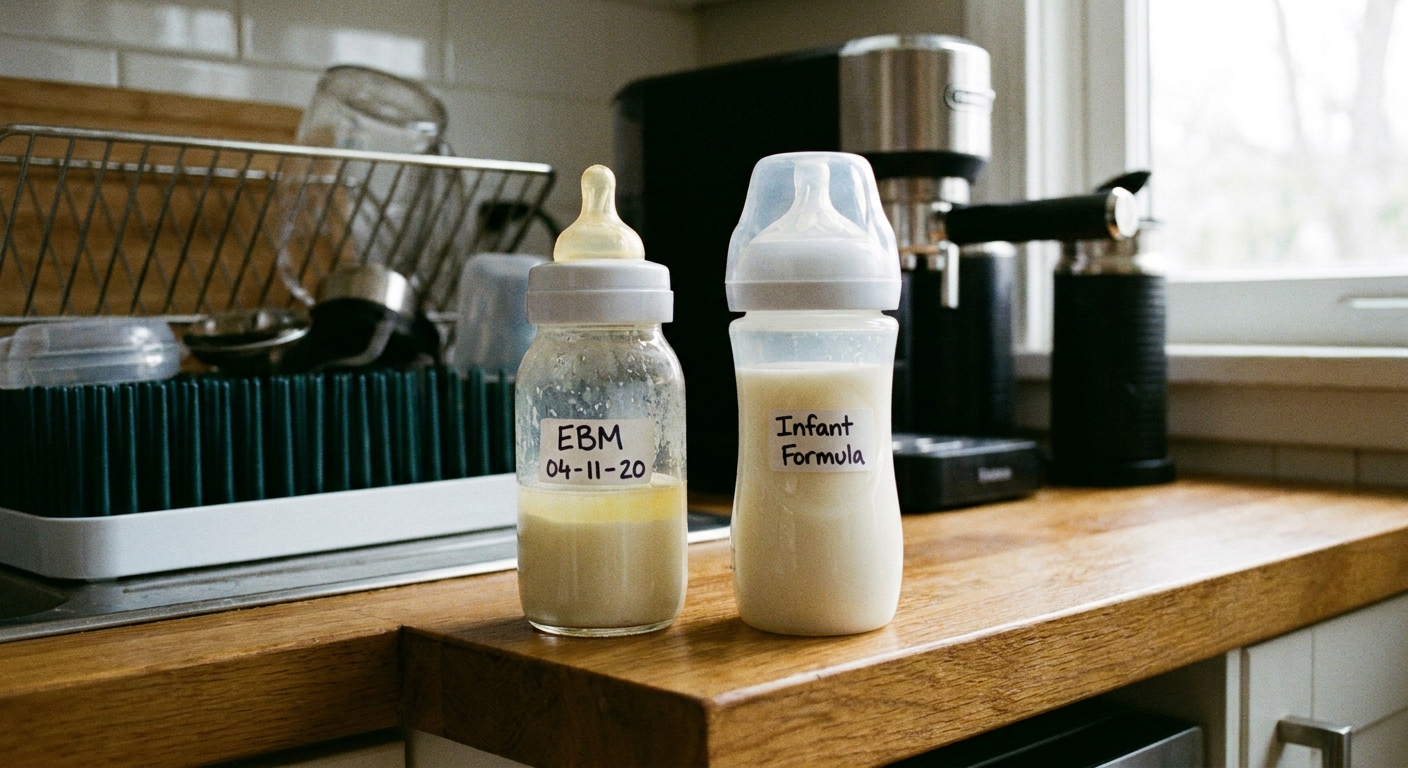
Quick combo-feeding checklist
- Wash hands and use clean bottles and nipples.
- Prepare formula exactly as directed with water first, then add breast milk.
- Label the bottle if it is going into the fridge, so you know when it was made.
- Refrigerate promptly if not feeding right away.
- Use started bottles on a short timeline, often 1 hour, then discard leftovers.
- Do not save it for later once a baby has drunk from it.
- Do not re-refrigerate warmed milk.
Common questions
Can I mix warm breast milk with cold formula?
Temperature is usually not the safety issue. The bigger issue is timing and storage. If you combine milks, treat the bottle like formula for how long it can sit out and how long it can stay in the fridge.
Can I add formula powder directly to breast milk?
In general, no. Powdered formula should be mixed with the correct amount of water per the label. Adding powder to breast milk can change the concentration in a way that is not intended, unless you are doing it under medical guidance for a specific reason.
Can I mix ready-to-feed formula with breast milk?
Usually yes, because ready-to-feed formula is already properly prepared. Still, once combined, follow the stricter handling rules and discard leftovers on the short timeline after feeding starts.
Does mixing cause stomach upset?
Some babies do fine, some are sensitive. If your baby seems gassy or fussy, it may be the formula type, the bottle nipple flow, how fast they are eating, or just normal baby digestion. If symptoms are significant (vomiting, blood in stool, poor weight gain, dehydration), call your pediatrician.
When to call the pediatrician
Reach out if you notice:
- Signs of dehydration (fewer wet diapers, very sleepy, dry mouth)
- Persistent vomiting, especially green vomit
- Blood in stool
- Fever in a young infant
- Poor weight gain or consistently low intake
You are not overreacting. Feeding questions are some of the most common reasons families call, and you deserve clear answers.
Bottom line
You can mix breast milk and formula in the same bottle as long as the formula is prepared correctly with water first and you follow formula handling rules. But if your baby often leaves bottles unfinished, mixing can lead to wasted breast milk.
For many families, the simplest, least wasteful routine is breast milk first, then a small formula top-off if needed. Practical, safe, and kinder to your pumping time.
Sarah Mitchell
Sarah Mitchell is a Registered Pediatric Nurse and a mother of three who has spent over a decade helping families navigate the beautiful, chaotic early years of childhood. She combines evidence-based medical knowledge with real-world parenting experience to offer practical, compassionate advice. At Awesome Parent, Sarah's mission is to help exhausted parents find solutions, trust their instincts, and finally get some sleep.