Learn how to combine nursing and formula bottles without ending breastfeeding. Includes paced bottle feeding steps, supply-protection strategies, safe mixing...
Powdered Infant Formula Safety: Cronobacter and Water Temperature

Sarah Mitchell
Sarah Mitchell is a Registered Pediatric Nurse and a mother of three who has spent over a decade helping families navigate the beautiful, chaotic early years of childhood. She combines evidence-based medical knowledge with real-world parenting experience to offer practical, compassionate advice. At Awesome Parent, Sarah's mission is to help exhausted parents find solutions, trust their instincts, and finally get some sleep.
At 3 a.m., the last thing you need is a science project. You need a safe bottle, fast, with as little second guessing as possible. In the pediatric clinic, I spent years talking parents through feeding questions, and one topic that deserves a clear, non-scary explanation is Cronobacter and why water temperature and storage rules matter when you use powdered infant formula.
This article stays tightly focused on contamination risk, the hot-water step, cooling, and how long prepared formula can sit. No brand debates. No guilt. Just safer steps you can actually follow when you are exhausted.

Why Cronobacter matters
Powdered infant formula is not sterile. That surprises a lot of parents, especially because the can is sealed and looks so “medical.” Rarely, powdered formula can contain a germ called Cronobacter sakazakii (you will often see it shortened to Cronobacter).
Most babies who are exposed will not get sick. But when infections happen, they can be very serious, especially in the first weeks and months of life. Cronobacter can cause bloodstream infections and, more rarely, meningitis. Outbreaks and investigations have linked illness to powdered formula and to contamination during preparation or handling.
Babies at highest risk
Extra caution is recommended if your baby is:
- Under 2 months old
- Born premature
- Immunocompromised or has certain medical conditions
If your baby fits one of these groups, talk with your pediatrician about the safest feeding plan for your situation. In many cases, the recommendation is to use a sterile liquid option when possible.
When ready-to-feed is preferred
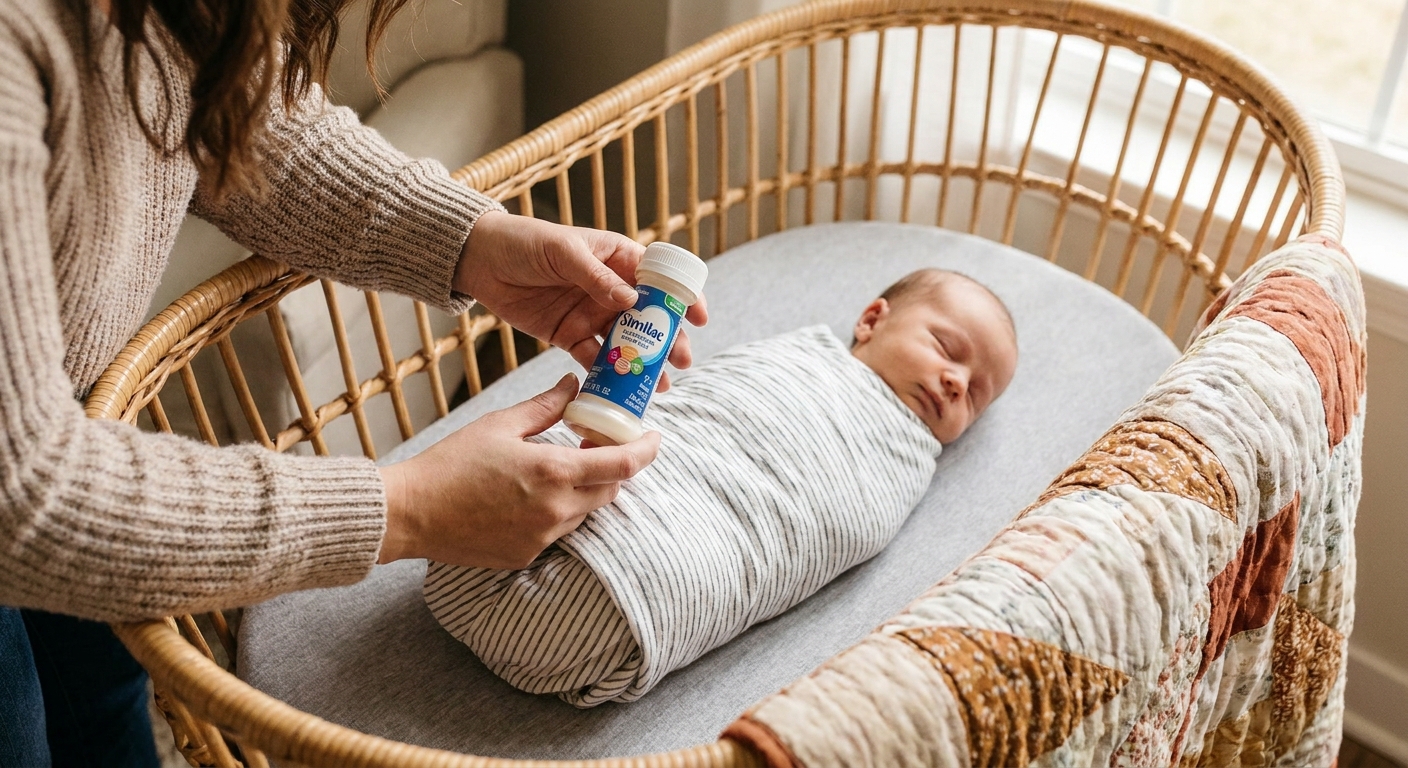
Ready-to-feed (RTF) formula is commercially sterile when unopened, which is a big reason it is often preferred for higher-risk babies, especially:
- Newborns and young infants, particularly under 2 months
- Preterm infants
- Babies with weakened immune systems
Once a container is opened, contamination risk depends on handling and storage. Follow your product label for refrigeration and “use within” timing after opening.
RTF can also be a helpful short-term safety strategy even if you plan to use powdered formula later. The tradeoff is cost and convenience, but from a contamination standpoint, sterile liquid is the simplest route.
The hot-water step
If you are using powdered formula for a higher-risk baby, many public health agencies recommend a specific approach: mix the powder with hot water that is at least 70°C (158°F). The goal is to reduce the chance that any Cronobacter present in the powder survives.
Guidance can vary by country and sometimes by product. Always follow your formula label and your local public health advice. If your baby is high-risk, your pediatrician may have a specific recommendation for your situation.
How to do it safely
- Wash your hands well with soap and water and dry with a clean towel.
- Clean and sanitize bottles, nipples, rings, and mixing tools. (A dishwasher with a sanitize cycle works for many families. Boiling is another option, especially for younger babies.)
- Boil water, then let it cool a little. A common practical cue is about 5 minutes off the boil, but timing varies by kettle, pot, room temperature, and volume. The safest approach is to check with a thermometer if you can.
- Measure the hot water into the bottle first (follow the formula label for the exact amount).
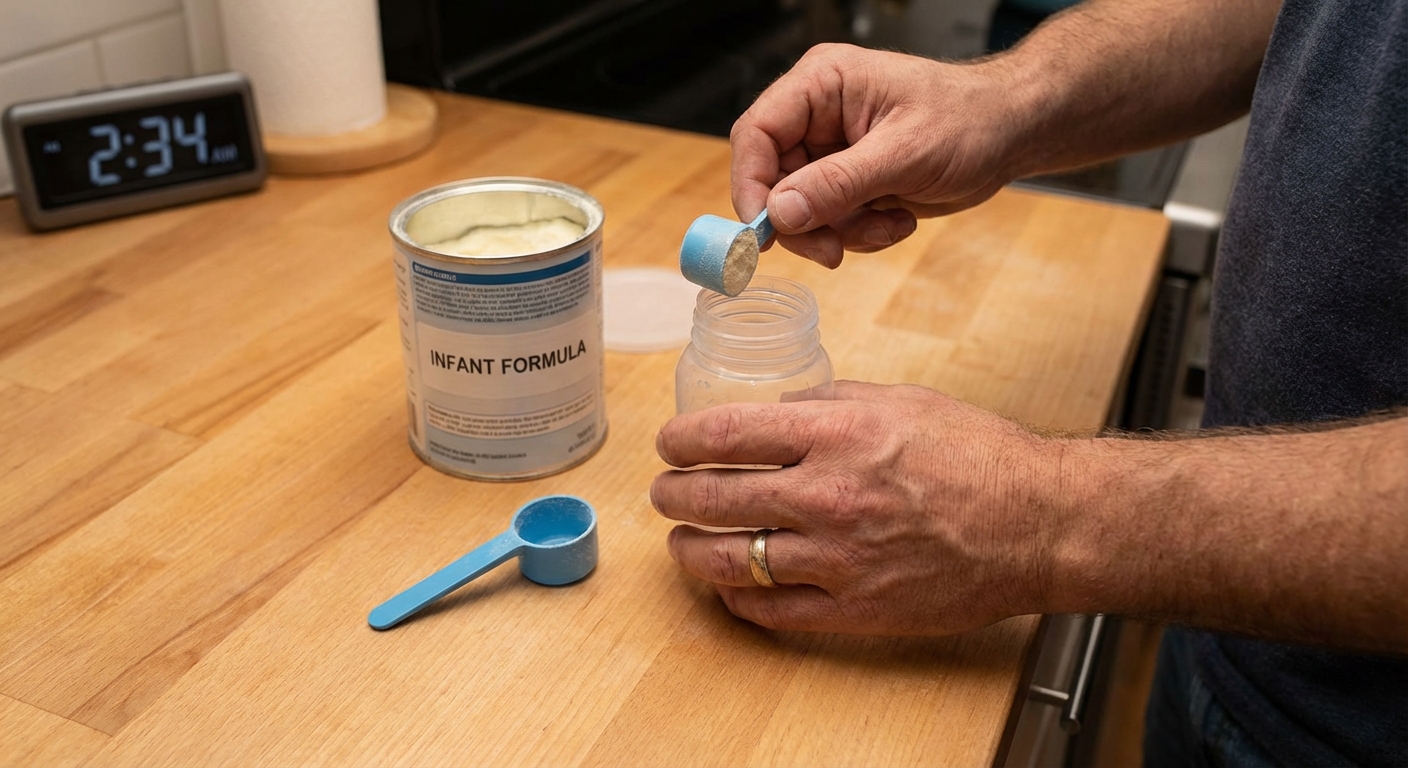
- Add the powder using the scoop that came with the container. Level it, do not pack it.
- Cap and mix by gently swirling or rolling, and make sure the powder fully dissolves.
Important: Do not try to “sterilize” the powder by microwaving the bottle. Microwaves heat unevenly and can create dangerous hot spots.
Do I need a thermometer?
A thermometer can reduce stress because you are not guessing. If your baby is in a high-risk group, a thermometer is a smart, inexpensive helper for confirming you are at or above 70°C (158°F) when you mix.
Water questions parents ask
Is filtered water enough?
Filtering can improve taste and reduce some contaminants, but it does not reliably remove germs. For the hot-water method, you are using boiled water and then mixing while it is still hot enough (at least 70°C/158°F) to reduce Cronobacter risk in the powder.
What about well water or boil advisories?
If you use well water, are under a boil-water advisory, or have any concerns about your tap water, ask your pediatrician or local health department what they recommend in your area. When in doubt, using boiled water and following the hot-water method can add a layer of safety.
Cooling the bottle
Once you have mixed powdered formula with hot water, you must cool it to a safe feeding temperature before giving it to your baby.
Fast, safe cooling method
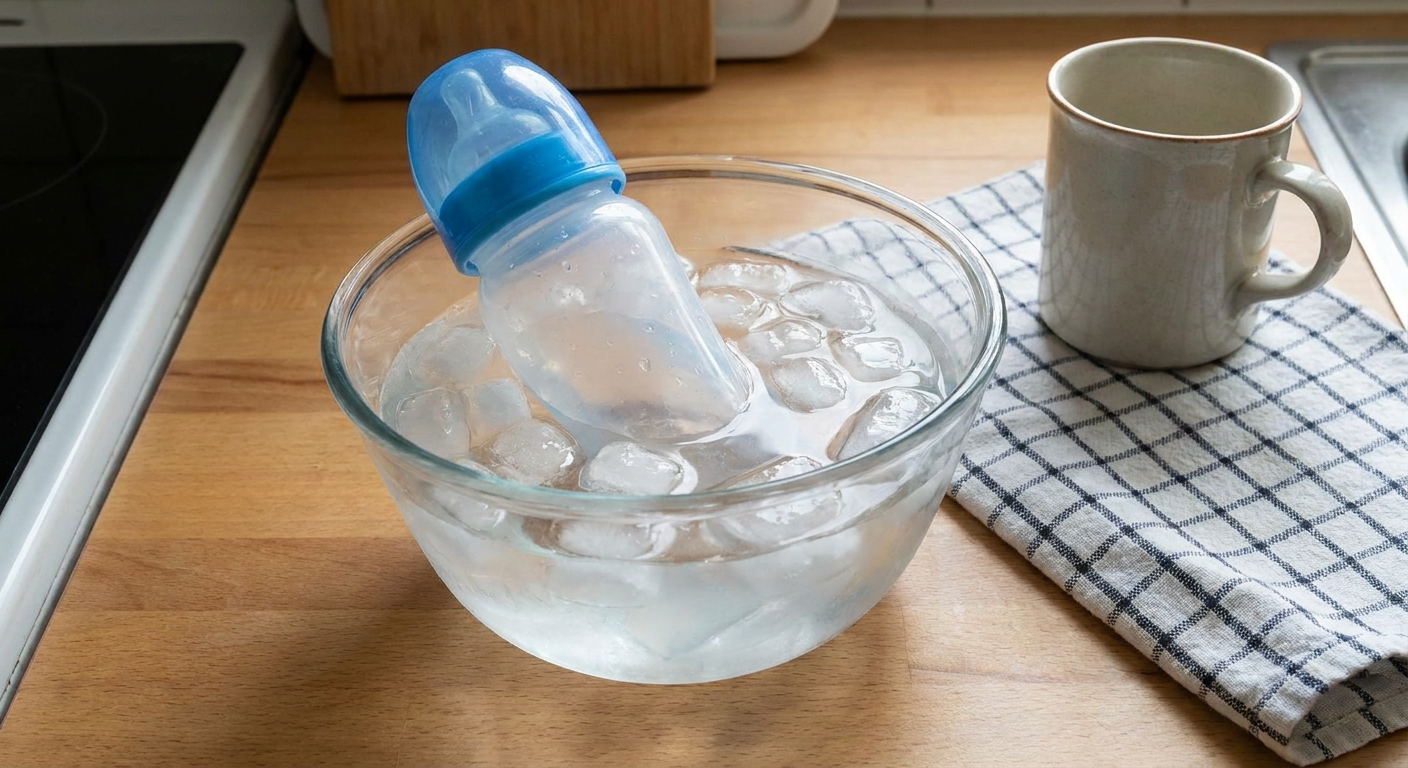
- Place the capped bottle under running cold water, or set it in a bowl of ice water.
- Keep the water line below the bottle cap so you do not accidentally contaminate the nipple area.
- Swirl occasionally to cool evenly.
- Test temperature by dripping a few drops on the inside of your wrist. It should feel lukewarm, not hot.
If you are prepping a bottle for later, cool it quickly and then refrigerate it right away.
How long prepared formula lasts
These time limits matter because bacteria can multiply quickly in prepared formula, especially at room temperature.
Key storage rules
- Prepared formula at room temperature: Use within 2 hours of preparation.
- If your baby has started drinking from the bottle: Use within 1 hour, then discard what is left.
- Prepared formula in the refrigerator: If made and cooled properly and stored promptly, use within 24 hours, or sooner if your formula label says otherwise.
If you are ever unsure how long a bottle has been out, treat it like chicken from a picnic. When in doubt, toss it. I know it feels wasteful, but it is much less painful than a sick baby.
Can I rewarm a bottle?
Yes. Warm it gently (for example, in a bowl of warm water) and avoid microwaving. Once warmed and offered, the 1-hour rule still applies after your baby starts drinking.
Clean hands and clean gear
The hot-water step is only one piece of reducing contamination risk. In real life, one common way germs get into bottles is through everyday handling.
- Wash hands before every prep.
- Use a clean, dry scoop and keep the container lid closed.
- Clean and sanitize bottles and parts, especially for infants under 2 months.
- Wipe down the prep area. Kitchens are busy and surfaces collect germs fast.
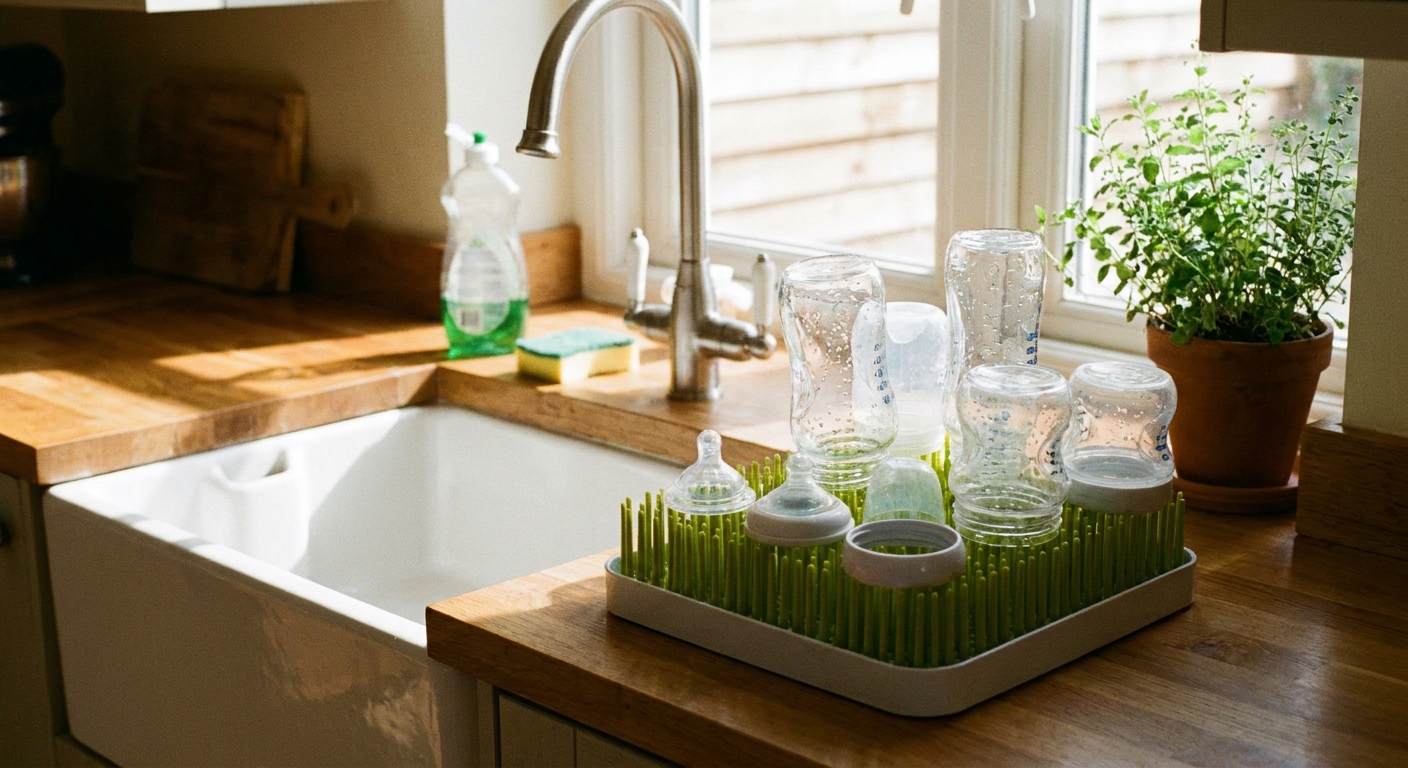
One tiny habit that helps: after washing bottle parts, let them air-dry fully on a clean rack. Damp environments are where bacteria love to hang out.
Quick safety FAQ
Is it unsafe to use powdered formula?
For most healthy, full-term babies, powdered formula is commonly used and can be prepared safely. The extra precautions in this article matter most for babies under 2 months, preterm infants, and babies with certain health conditions.
If I use the hot-water method, does that change the nutrition?
Using hot water as recommended is intended for safety. Always follow the formula label for mixing ratios, and talk to your pediatrician if you have questions about your specific formula type or your baby’s medical needs.
Can I make a day’s worth of bottles at once?
You can, as long as you cool the formula quickly and refrigerate promptly, then use within 24 hours (or sooner if your label says otherwise). For the youngest or highest-risk infants, some families prefer making bottles one at a time to simplify timing and reduce handling.
What about opened ready-to-feed or liquid concentrate?
Once opened, refrigerate as directed and use within the time listed on the package. Those limits vary by product, so the label is your best guide.
What symptoms should make me call the doctor right away?
For any young infant, call your pediatrician urgently if you notice fever, unusual sleepiness, poor feeding, marked irritability, breathing trouble, or your baby just seems “not right.” Trust that instinct. You are not overreacting.
The bottom line
If your baby is very young or medically fragile, ready-to-feed formula is often preferred because it is commercially sterile when unopened. If you use powdered formula in those early weeks, the hot-water step (at least 70°C/158°F) is an evidence-based way used by many public health agencies to lower Cronobacter risk. Then cool the bottle quickly, feed safely, and stick to the 2-hour room temperature and 24-hour refrigerated limits, unless your formula label is stricter.
You do not need to do everything perfectly. You just need a routine that is safe and repeatable, even when you are half awake.
Sarah Mitchell
Sarah Mitchell is a Registered Pediatric Nurse and a mother of three who has spent over a decade helping families navigate the beautiful, chaotic early years of childhood. She combines evidence-based medical knowledge with real-world parenting experience to offer practical, compassionate advice. At Awesome Parent, Sarah's mission is to help exhausted parents find solutions, trust their instincts, and finally get some sleep.