
Nicotine can reach breast milk, but breastfeeding can often continue. Here’s how exposure happens, realistic ways to reduce it, and red flags that need a cli...
Cannabis and Breastfeeding: What Passes Into Milk

Sarah Mitchell
Sarah Mitchell is a Registered Pediatric Nurse and a mother of three who has spent over a decade helping families navigate the beautiful, chaotic early years of childhood. She combines evidence-based medical knowledge with real-world parenting experience to offer practical, compassionate advice. At Awesome Parent, Sarah's mission is to help exhausted parents find solutions, trust their instincts, and finally get some sleep.
It’s 2:47 a.m., you are holding a sleepy baby, and your brain is doing that fun thing where it turns one question into fourteen. One of the most common questions I heard as a pediatric triage nurse (and one I have been asked quietly by fellow parents) is some version of: If cannabis is in my system, does it get into breast milk?
Yes, cannabis compounds can pass into breast milk. And unlike alcohol, THC (the main psychoactive compound in cannabis) is fat-loving, which means it can linger and be detectable for longer. That difference matters because it changes how helpful timing strategies are, and it is why a quick “pump and dump” is not a reliable reset.
In plain language, major medical organizations like the CDC, the American Academy of Pediatrics (AAP), and the American College of Obstetricians and Gynecologists (ACOG) generally advise avoiding cannabis while breastfeeding because THC can get into milk and we still have unanswered questions about infant effects.

Does cannabis pass into breast milk?
Yes. Compounds in cannabis can move from a parent’s bloodstream into breast milk. The best-known compound is THC, but cannabis contains multiple cannabinoids and other substances that can also be present in the body after use.
Breast milk is not made once and stored away forever. Your body is constantly producing milk using what is circulating in your system. That is why exposures that are in the blood can show up in milk.
Why cannabis can linger in milk
A lot of parents have heard practical guidance about alcohol and breastfeeding, like waiting a certain amount of time, or feeding the baby first and then having a drink. Cannabis is different.
Alcohol behaves in a fairly predictable way in the body. It rises and falls as it is metabolized, and it does not tend to hang around for long once the body clears it.
THC is lipophilic, meaning it can be stored in body fat and released over time. Because breast milk contains fat, THC can be present in milk and may stay detectable longer than alcohol would after drinking.
Important nuance: how long THC is detectable, and how much gets into milk, can vary a lot based on dose, frequency of use, potency, route (smoking, vaping, edibles), and individual metabolism. Also, “detectable” does not automatically mean “harmful dose,” but with infants, we tend to aim for caution because their brains and bodies are still developing.
Why “pump and dump” is not a reset
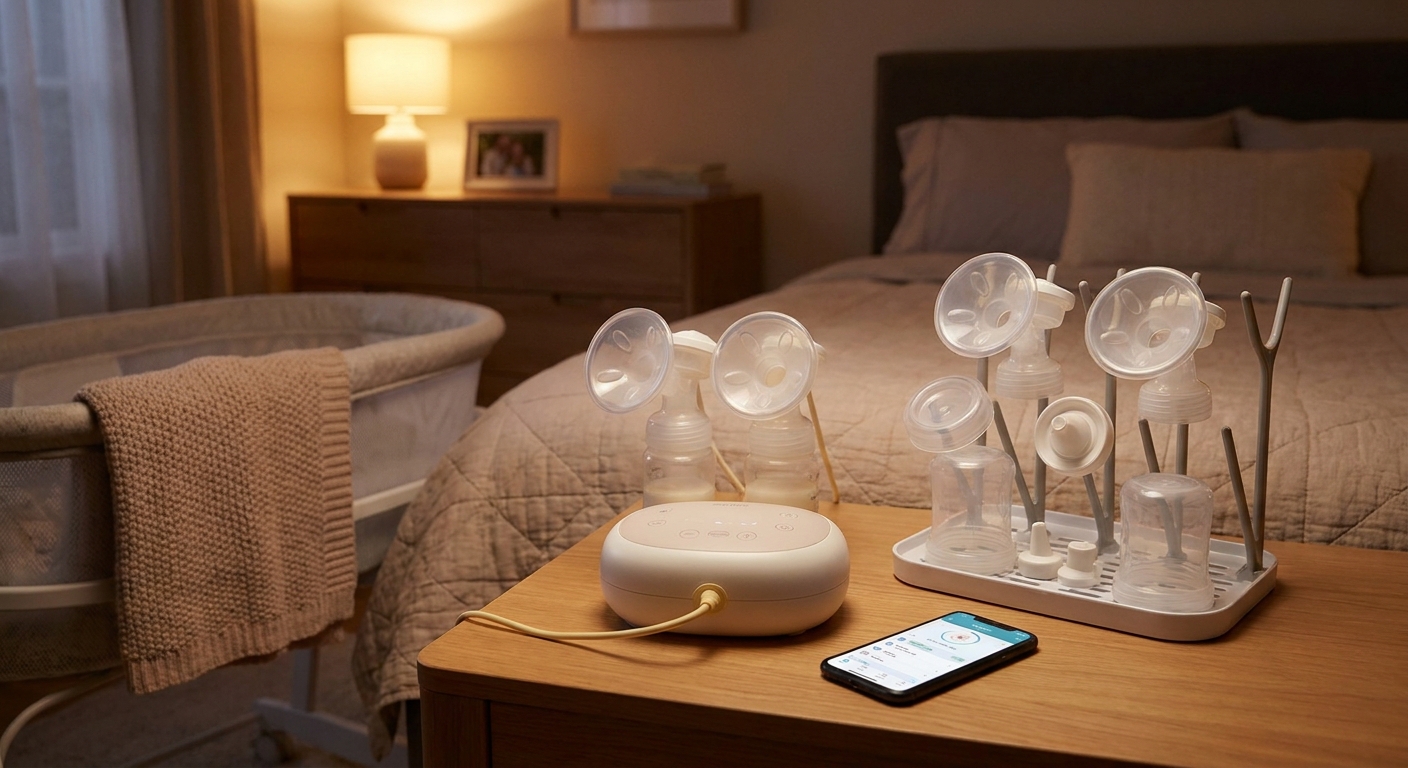
In the clinic, I used to say this as gently as possible because I know how much work pumping is: pumping and dumping one session does not reliably clear THC from breast milk.
Here is the key idea: pumping removes milk, but it does not remove what is in your bloodstream and body tissues. If THC is still being released back into the bloodstream, newly produced milk can still contain it.
That said, discarding milk produced soon after cannabis use may reduce exposure in some situations. It just does not work the way people hope it works, like flipping a switch back to “safe.” If you are making a real-time feeding decision after exposure, it is more useful to talk with your baby’s clinician than to rely on dumping a single pumped feed as a safety step.
What it could mean for your baby
Babies are not just small adults. Their brains are rapidly developing, and their bodies process substances differently than ours. That is why pediatric and breastfeeding organizations generally urge caution with cannabis exposure during breastfeeding.
Researchers are still working to fully understand the short- and long-term effects of cannabis exposure through breast milk. What we do know is that cannabinoids can reach the baby, and uncertainty is not the kind of thing that helps you sleep at night.
Also important: cannabis exposure is not only about milk. If cannabis is used around the baby, secondhand smoke or vapor and residue on hands, clothing, couches, and blankets can also expose infants. If you are reading this, you are already doing the right thing by thinking beyond just the feeding itself.
What changes risk and timing
When parents ask me “How long?” I always want to ask a few questions back, because details matter.
- How often: occasional use is different from daily or near-daily use.
- How much and how strong: higher doses and higher potency products may mean more THC in your system for longer.
- Route: edibles can have longer, less predictable effects than inhaled products.
- Your baby’s age and health: newborns, preterm infants, and medically fragile babies have less wiggle room.
If you will use anyway
I am going to say this with my triage-nurse voice and my parent voice at the same time: the safest choice during breastfeeding is to avoid cannabis. But if you are going to use anyway, focus on harm reduction around your baby.
- Do not smoke or vape around the baby, and avoid using in the same enclosed space.
- Wash hands and consider changing clothes before holding or feeding your baby, especially after smoking.
- Avoid bed-sharing if you are impaired or sleepy. Impairment and exhaustion are a dangerous combination.
- Have another unimpaired adult available to help with feeding, soothing, and safe sleep setup.
- Store products securely, well out of reach. Edibles can look like normal candy.
Tell your baby’s clinician about exposure
I know this is the part that can make a parent’s stomach drop. Please hear me clearly: your baby’s clinician needs accurate information to give safe advice.
If there has been cannabis exposure during breastfeeding, tell your baby’s pediatrician or primary clinician, even if it feels awkward. In triage, we are not keeping score. We are trying to assess risk and help you choose the safest next step.
It can help to be specific about the timing of possible exposure (without getting pulled into overexplaining). You do not need to have the perfect words. A simple, calm statement is enough: “There may have been cannabis exposure while breastfeeding and I want guidance on what to do next.”
If you are worried about legal or reporting issues where you live, you can ask your clinician directly what the local policies are. Do not let fear keep you from getting medical guidance when your baby is involved.
If you are deciding whether to pause
Sometimes this question comes up because a parent is already thinking about taking a break or weaning, and they are wondering if cannabis exposure changes the plan.
Because THC can linger in breast milk and “pump and dump” is not a reliable reset, decisions about pausing or continuing are best made with your baby’s clinician. They can weigh factors like your baby’s age, medical history, feeding options, and any concerns about growth or development.
If you are struggling with feeding, supply, or the emotional side of all of this, ask for help early. Lactation consultants, pediatric clinicians, and postpartum mental health providers can be an excellent team when you feel stuck.

When to seek urgent help
If you are worried your baby may be affected right now, trust your gut. Seek urgent medical advice if your baby has any sudden concerning symptoms, including:
- trouble staying awake or is unusually hard to wake
- poor feeding, weak sucking, or significantly fewer wet diapers than usual
- breathing that seems slow, labored, or just not right
- blue or gray color around lips or face
- seizure-like activity
If your baby is in immediate danger, call emergency services. Otherwise, call your pediatrician’s after-hours line or your local nurse advice line for next steps.
Quick takeaways
- Cannabis compounds can pass into breast milk.
- THC may linger in milk longer than alcohol, and timing is not straightforward.
- “Pump and dump” is not a reliable reset because it does not clear THC from your body.
- How long it lasts varies by dose, frequency, route, and your baby’s age and health.
- Tell your baby’s clinician about any exposure so you can get guidance tailored to your baby.
Sarah Mitchell
Sarah Mitchell is a Registered Pediatric Nurse and a mother of three who has spent over a decade helping families navigate the beautiful, chaotic early years of childhood. She combines evidence-based medical knowledge with real-world parenting experience to offer practical, compassionate advice. At Awesome Parent, Sarah's mission is to help exhausted parents find solutions, trust their instincts, and finally get some sleep.