Infant COVID can look different than in older kids. Here’s what to watch for (feeds, diapers, breathing), how to care for your baby at home, and when to call...
COVID-19 vs RSV in Babies Under 1

Sarah Mitchell
Sarah Mitchell is a Registered Pediatric Nurse and a mother of three who has spent over a decade helping families navigate the beautiful, chaotic early years of childhood. She combines evidence-based medical knowledge with real-world parenting experience to offer practical, compassionate advice. At Awesome Parent, Sarah's mission is to help exhausted parents find solutions, trust their instincts, and finally get some sleep.
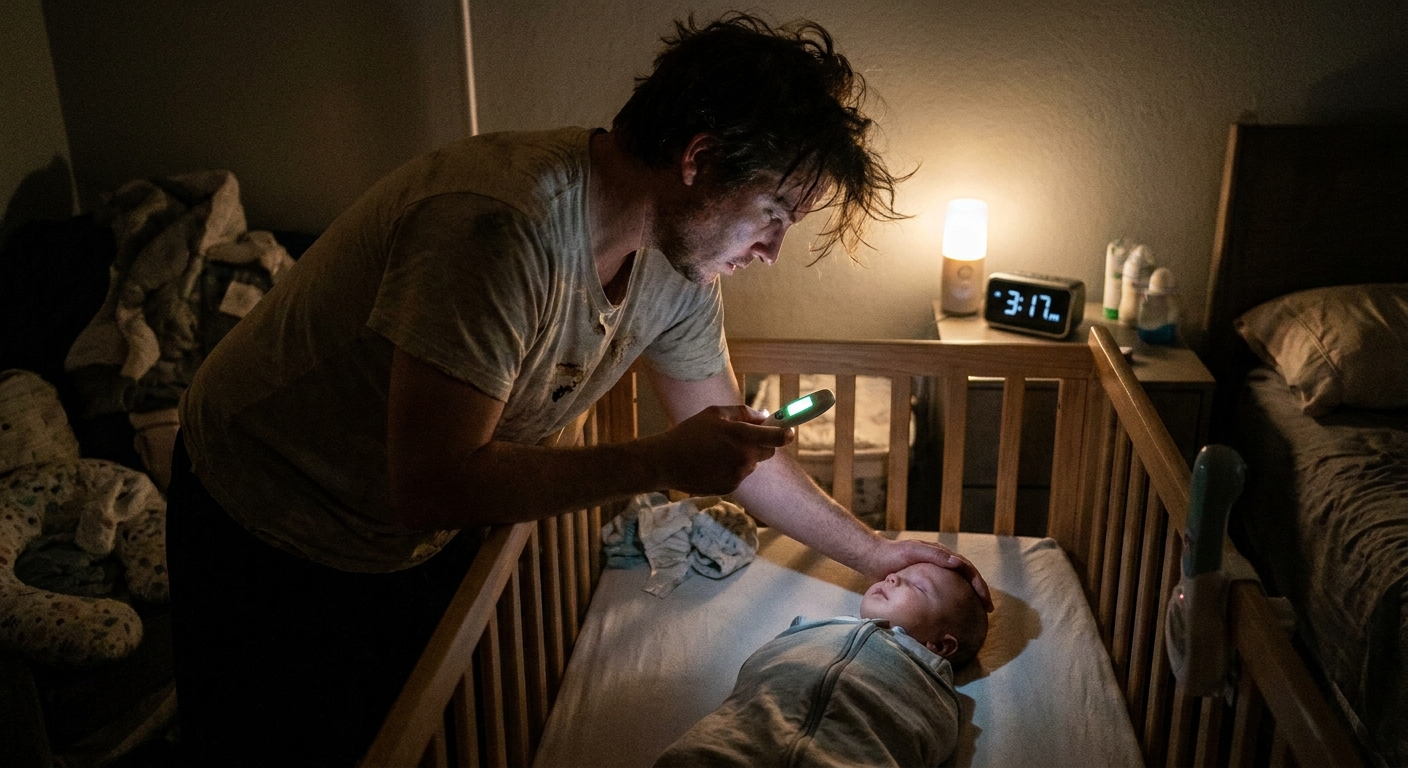
If you are staring at your baby at 2 a.m. thinking, is this COVID or RSV? you are not alone. I used to do pediatric triage for years, and now as a mom of three I can tell you: these viruses can look frustratingly similar in infants, especially in the first day or two.
This guide will help you understand the patterns we commonly see with COVID-19 versus RSV in babies under 1, what testing can change, and how isolation guidance tends to differ. We will keep home care high level and focus on what matters most: feeding, wet diapers, and breathing.
COVID-19 vs RSV: a reality check
COVID-19 and RSV are both contagious respiratory viruses. In babies, both can start as what looks like a basic cold: runny nose, cough, and fussiness. One reason RSV gets so much attention in infants is that RSV is more likely to move into the lower airways (bronchiolitis) in young babies, which can affect breathing and feeding.
That said, a baby can also have a hard time with COVID-19, and babies can get more than one virus at once. When in doubt, I always tell families to focus less on the label and more on how the baby is doing: breathing effort, hydration, alertness, and color.
How symptoms often look
RSV in babies: often wet and chesty
RSV commonly starts with a runny nose and mild cough, then can worsen over a few days as inflammation builds in the small airways. In babies under 1, RSV often has a chesty, congested feel.
- Runny or stuffy nose, sometimes a lot of mucus
- Cough that may sound wet or persistent
- Wheezing or a whistling sound with breathing
- Faster breathing than usual
- Trouble feeding because babies cannot coordinate breathing and eating when congested
- Fever can happen, but not always
In very young babies (especially under 2 to 3 months), RSV can sometimes show up as poor feeding, sleepiness, or pauses in breathing rather than an obvious big cough right away. Any pause in breathing in a young infant is a reason to seek urgent medical advice.
COVID-19 in babies: often cold-like
COVID-19 in infants can look like a cold too, and many babies have mild illness. Compared with classic RSV bronchiolitis, COVID-19 can be less associated with wheezing, but wheeze can happen with COVID and with lots of other viruses too. It is not a reliable at-home clue.
- Fever (or feeling warm, acting unwell)
- Runny nose and congestion
- Cough
- Fatigue or extra sleepiness
- Poor feeding (often because of congestion or feeling sick)
- Vomiting or diarrhea can happen in some babies with COVID-19
Bottom line: symptoms overlap. The pattern that makes clinicians think bronchiolitis is when a baby is getting more chest involvement: wheeze, retractions, fast breathing, and feeding that drops off because breathing is hard work.
Timing: when it changes fast
One of the most helpful clues is the course over several days:
- RSV often ramps up over days 3 to 5, sometimes peaking a little later, with cough and breathing symptoms at their worst. Parents often tell me day 1 looked like a mild cold, then day 3 felt like a different illness. Even after the peak, the cough can linger for a couple of weeks (sometimes longer).
- COVID-19 can also worsen over time, but many infants have a steadier cold-like course. Some have a prominent fever early, then lingering congestion and cough.
No timeline is perfect, but if your baby is showing steadily increasing work of breathing as the days go on, bronchiolitis becomes more likely and it is worth calling your pediatrician.
Testing: what changes
When families ask, “Should we test?” I think about two things: does it change what we do and does it change who we might expose.
At-home COVID tests
At-home antigen tests can be helpful, especially if your baby has symptoms and you need to make decisions about visitors, childcare, travel, or protecting high-risk relatives. Two big caveats:
- A negative test does not always mean no COVID, especially early in illness.
- Swabbing a squirmy baby is challenging. Follow the test instructions for age and sample collection, and do not swab deeply. If you are unsure, ask your pediatrician what they recommend.
RSV testing
Most families do not have an at-home RSV test. RSV testing is usually done in a clinic, urgent care, or hospital setting. In many cases, clinicians do not need an RSV test to treat the baby because care is mainly supportive. But testing can matter when:
- Your baby is very young or higher risk, and the clinician is deciding how closely to monitor.
- There is a question of co-infections (more than one virus).
- Results affect hospital infection control or return-to-setting rules.
Multiplex PCR panels
Some clinics and hospitals use PCR tests that look for multiple viruses at once (often including COVID-19, RSV, and flu). These tests can be more sensitive, but knowing the name of the virus still does not replace watching the baby’s breathing and hydration.
If your baby is struggling to breathe or cannot keep fluids down, do not wait on a test result to seek care.
Staying home and spreading risk
This is where it gets tricky, because guidance can vary by country, by local public health recommendations, and by your baby’s setting (daycare rules are often stricter than medical guidance).
COVID-19: follow current guidance plus setting rules
In many places, COVID-19 has shifted into broader respiratory virus guidance. In practical terms for families, that often means:
- Stay home while your baby is feverish or too sick to participate in normal routines.
- Be extra cautious around newborns, elderly relatives, and medically fragile family members.
- Follow your pediatrician’s advice and any childcare return policies.
If an adult or sibling in the home has COVID-19, try to reduce baby’s exposure when possible, but I also want to be realistic: with infants, perfect separation is rarely doable. Hand hygiene and avoiding face-to-face coughing are the best high-yield moves.
RSV: similar approach, and daycare rules still apply
RSV spreads easily through droplets and on hands and surfaces. Families do not always track a formal isolation period the way they do with COVID, but many daycares and some healthcare settings still have exclusion policies (often based on fever, breathing, and whether symptoms are improving). A practical approach at home:
- Keep baby home while symptoms are significant, especially with lots of coughing and heavy runny nose.
- Avoid close contact with very young babies (especially under 2 months) and high-risk people.
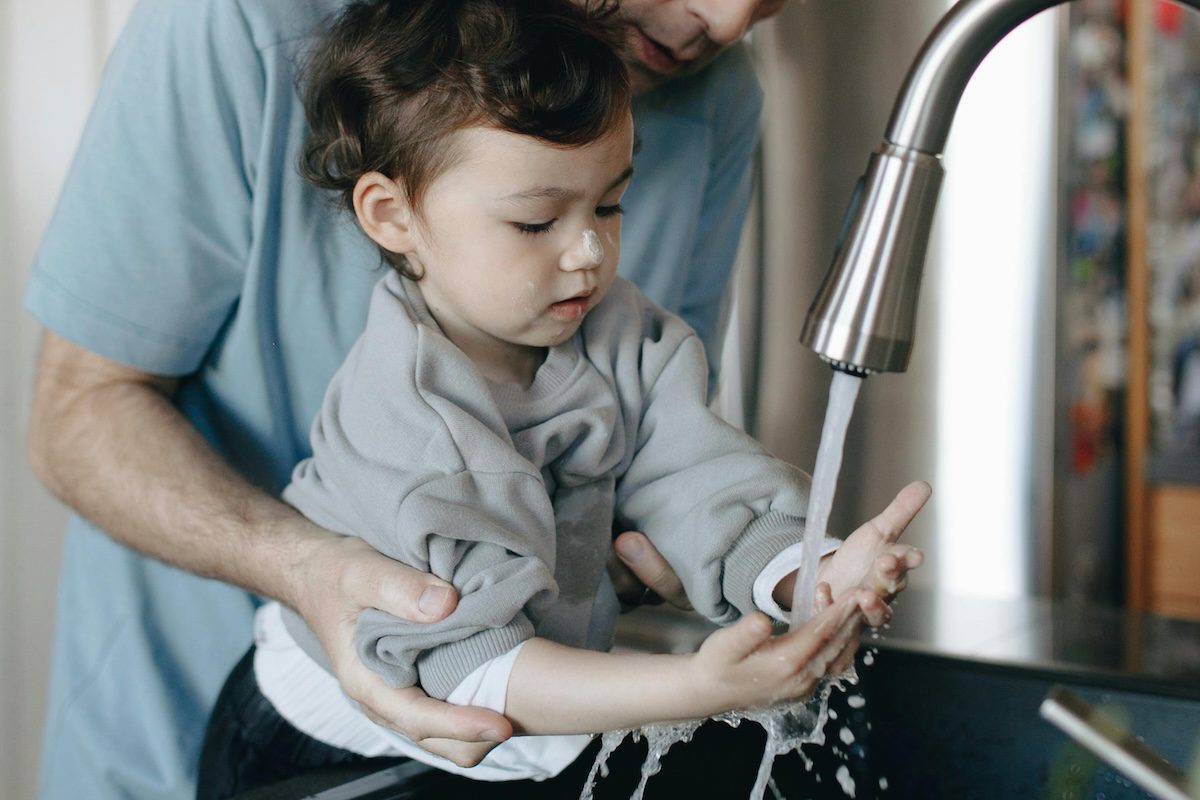
- Focus on hand washing, cleaning high-touch surfaces, and limiting kisses when someone is sick.
One key difference is emotional, not scientific: parents often underestimate RSV because it is “just RSV.” In infants, RSV can be a big deal, so treat it with respect.
Home care basics
Whether it is COVID-19 or RSV, the day-to-day basics are the same. When I am triaging families, I come back to three questions: Is baby breathing comfortably? Are they hydrated? Are they alert enough?
Feeding: smaller and more often
Congestion makes feeding harder. Babies may take less per feed. As long as your baby is breathing comfortably enough to feed and is making wet diapers, frequent smaller feeds can get you through the rough patch.
Noses: clear enough to eat
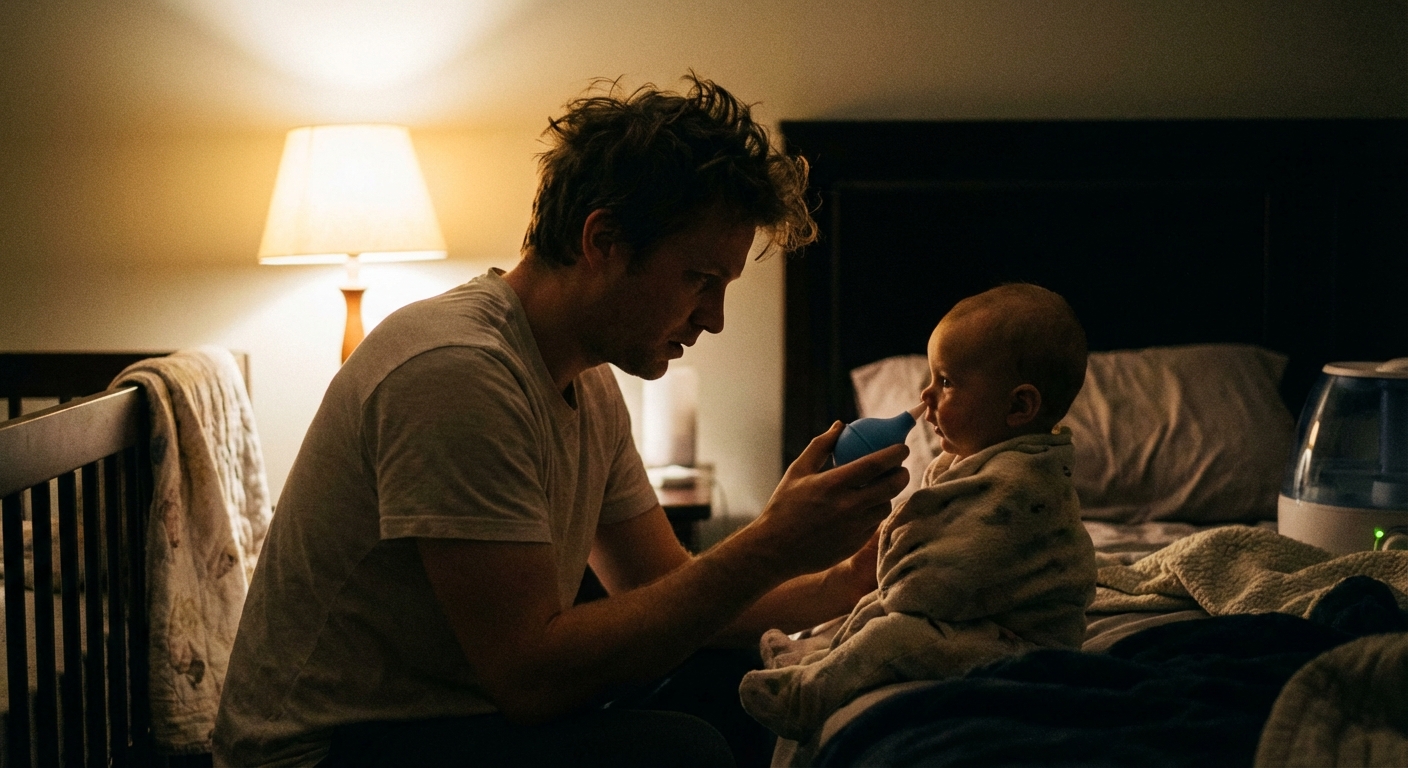
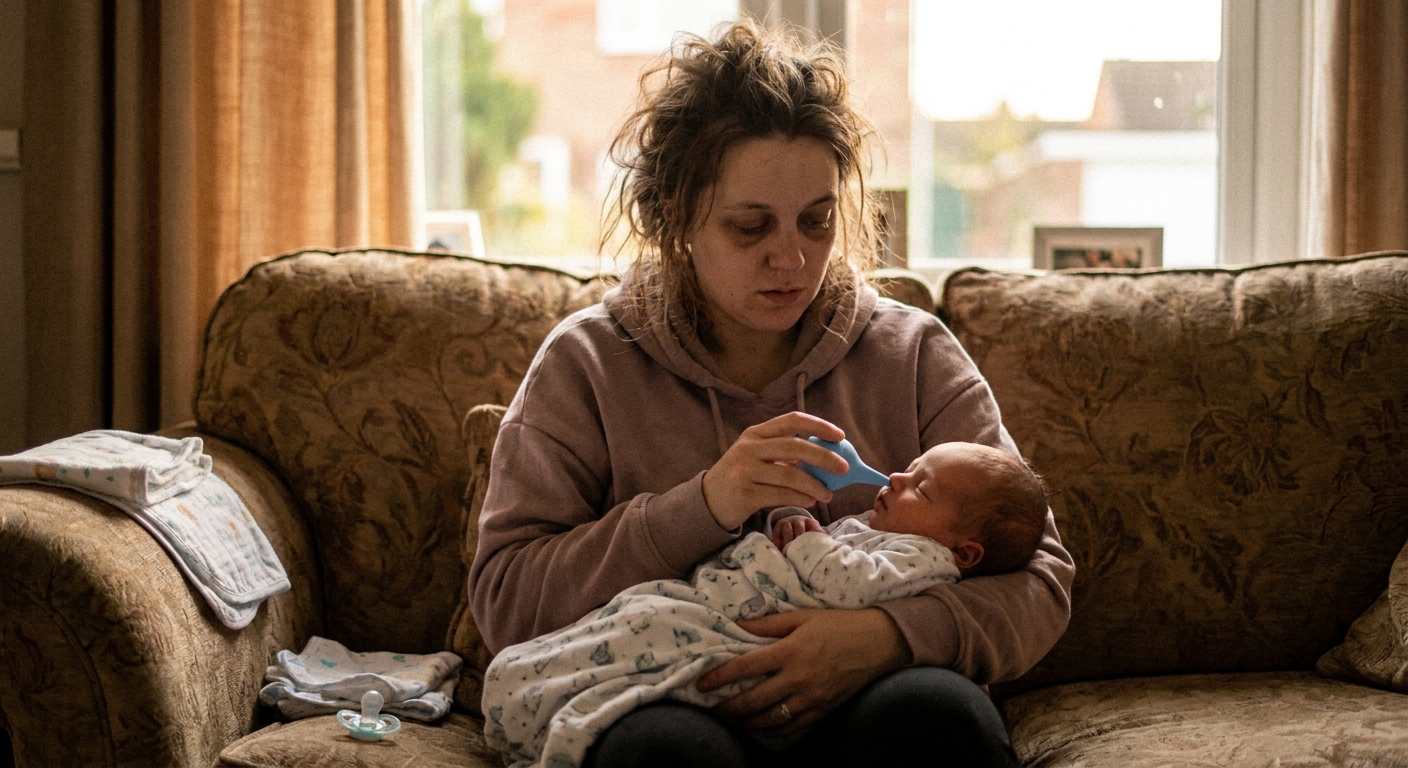
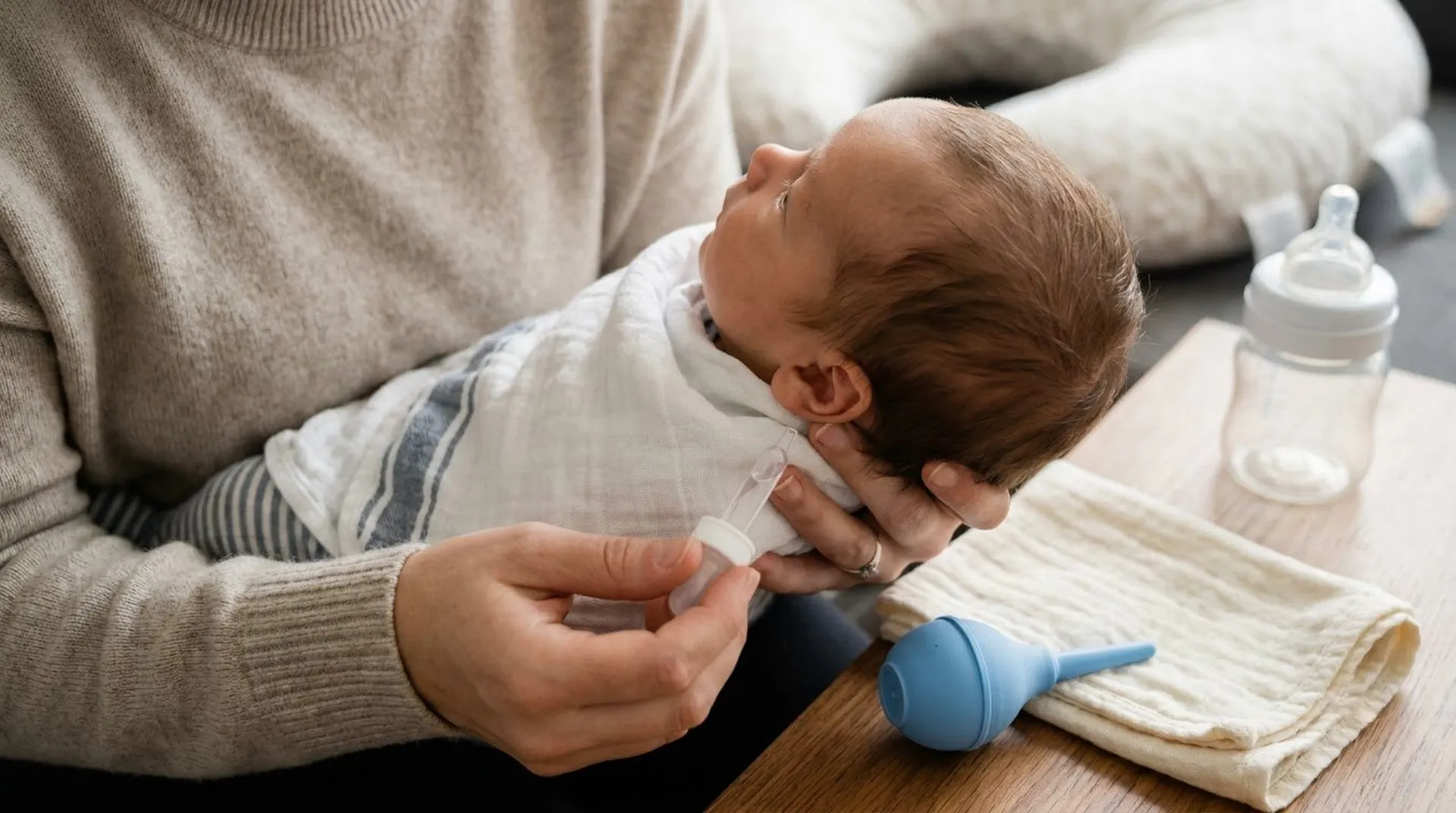
This is as practical as it sounds. Saline drops or spray plus gentle suctioning (especially before feeds and sleep) can make a meaningful difference for some babies. You do not need to “get it perfect.” The goal is to help your baby breathe well enough to eat.
Wet diapers: your quick hydration check
In general, you want to see regular wet diapers across the day. A noticeable drop in wet diapers, very dark urine, a dry mouth, or a baby who is too sleepy to feed can be dehydration warning signs.
Breathing: effort matters most
Parents are often told to watch breathing rate, and counting breaths can be useful if your pediatrician shows you how. But what matters most at home is how hard your baby is working to breathe. A baby can breathe fast from fever or crying. What worries us is increased effort.
Medication safety basics
Avoid over-the-counter cough and cold medicines in babies unless your pediatrician specifically tells you to use something. If your baby has a fever and seems uncomfortable, ask your pediatrician about the right fever medicine and dose for your baby’s age and weight. In general, ibuprofen is typically not used under 6 months unless your clinician advises it.
Breathing red flags
If you see any of the signs below, it is time to call your pediatrician urgently, go to urgent care, or seek emergency care depending on severity and your local options:
- Color change: lips or face looking bluish, gray, or very pale
- Struggling to breathe: pulling in under the ribs or at the base of the neck, flaring nostrils, head bobbing
- Grunting with each breath
- Wheezing with distress: wheeze plus increased effort, poor feeding, or your baby looks uncomfortable or panicky
- Pauses in breathing, or baby seems limp or unusually hard to wake (especially urgent in very young infants)
- Cannot feed because breathing is too difficult, or repeatedly stops to catch breath
If your gut says, “This is not my baby’s normal,” trust that. You are not overreacting. You are parenting.
Dehydration red flags
Dehydration risk is driven by poor intake, fever, vomiting, and the extra work of breathing, so it can happen with either virus. It is common in bronchiolitis simply because congested, fast-breathing babies struggle to eat.
Call your pediatrician promptly if you notice:
- Fewer wet diapers than usual, or no wet diaper for a long stretch
- Very sleepy and hard to wake for feeds
- Dry mouth, no tears when crying
- Persistent vomiting or cannot keep feeds down
In real life, the most common story I hear is: “The nose is so stuffed my baby cannot eat.” That is a hydration problem waiting to happen, so it is worth addressing early with your pediatrician’s advice.
When to call the pediatrician
Call sooner rather than later if your baby is under 3 months, was born prematurely, has underlying heart or lung disease, or if you are seeing symptoms that are escalating.
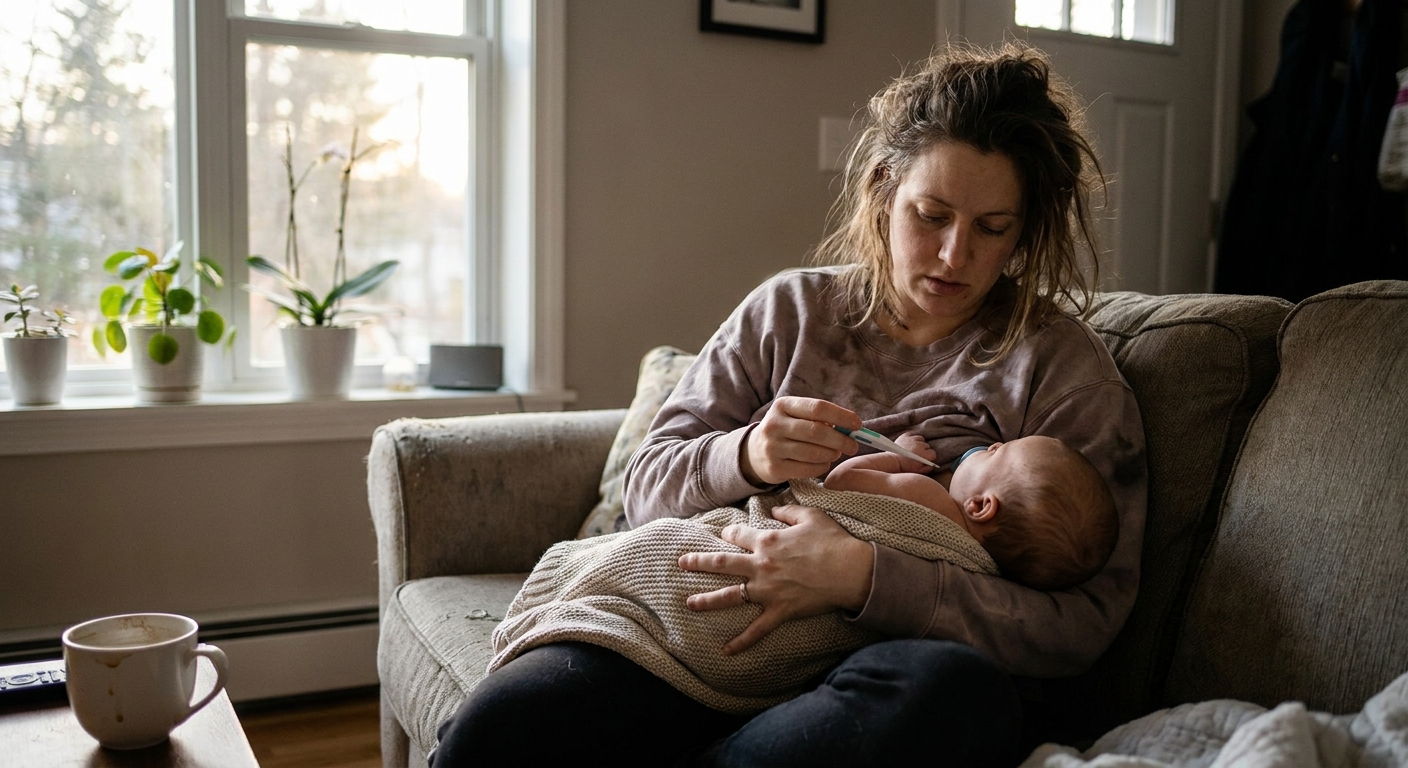
Important under-3-month note: In many pediatric practices, a rectal temperature of 100.4°F (38°C) or higher in a baby under 3 months is treated as urgent and needs prompt medical advice, even if your baby seems okay. Follow your pediatrician’s guidance for your baby and your local recommendations.
For any age under 1, I want you to call if:
- Fever plus a baby who is not feeding well
- Cough that is worsening with new breathing effort
- You are unsure whether your baby’s breathing is normal
- Your baby’s intake drops and diaper output drops
Sometimes the best outcome of a call is simple reassurance and a plan for what to watch overnight. Sleep matters, and so does your peace of mind.
Prevention notes
If you are pregnant, have a newborn, or have a higher-risk infant, ask your pediatrician about current RSV prevention options. Depending on your baby’s age, season, and risk factors, that might include a long-acting RSV antibody for babies and some toddlers, or (during pregnancy) maternal RSV vaccination to help protect newborns early on. These tools do not replace common-sense hygiene, but they can reduce the risk of severe RSV disease.
FAQ
Can I tell RSV vs COVID just by the sound of the cough?
Not reliably. RSV can sound wetter or more chesty, and COVID can be more of a dry cough, but babies do not read the rulebook. The more useful clue is whether your baby is developing wheeze or increased work of breathing.
If my baby tests positive for COVID, could it still be RSV?
Yes. Babies can have co-infections. Also, a positive COVID test does not automatically explain every symptom, so still monitor breathing and hydration closely.
Does RSV always cause fever?
No. RSV can come with fever, but some babies never spike a temperature and still have significant congestion and breathing symptoms.
Which is worse for babies under 1?
Either virus can be hard on an infant, and most babies recover well with supportive care. RSV is particularly known for causing bronchiolitis in young infants, which can affect breathing and feeding. The worse illness is the one causing breathing trouble or dehydration.
The calm takeaway
If you remember nothing else: in babies under 1, RSV and COVID can look similar at first. Testing can help with decisions about exposure and setting rules, but the most important job at home is monitoring breathing effort and hydration.
And if you are reading this with one eye open in the dark, I will say what I used to tell parents on the phone: you are doing a good job. If something feels off, call. That is exactly what we are here for.
Sarah Mitchell
Sarah Mitchell is a Registered Pediatric Nurse and a mother of three who has spent over a decade helping families navigate the beautiful, chaotic early years of childhood. She combines evidence-based medical knowledge with real-world parenting experience to offer practical, compassionate advice. At Awesome Parent, Sarah's mission is to help exhausted parents find solutions, trust their instincts, and finally get some sleep.