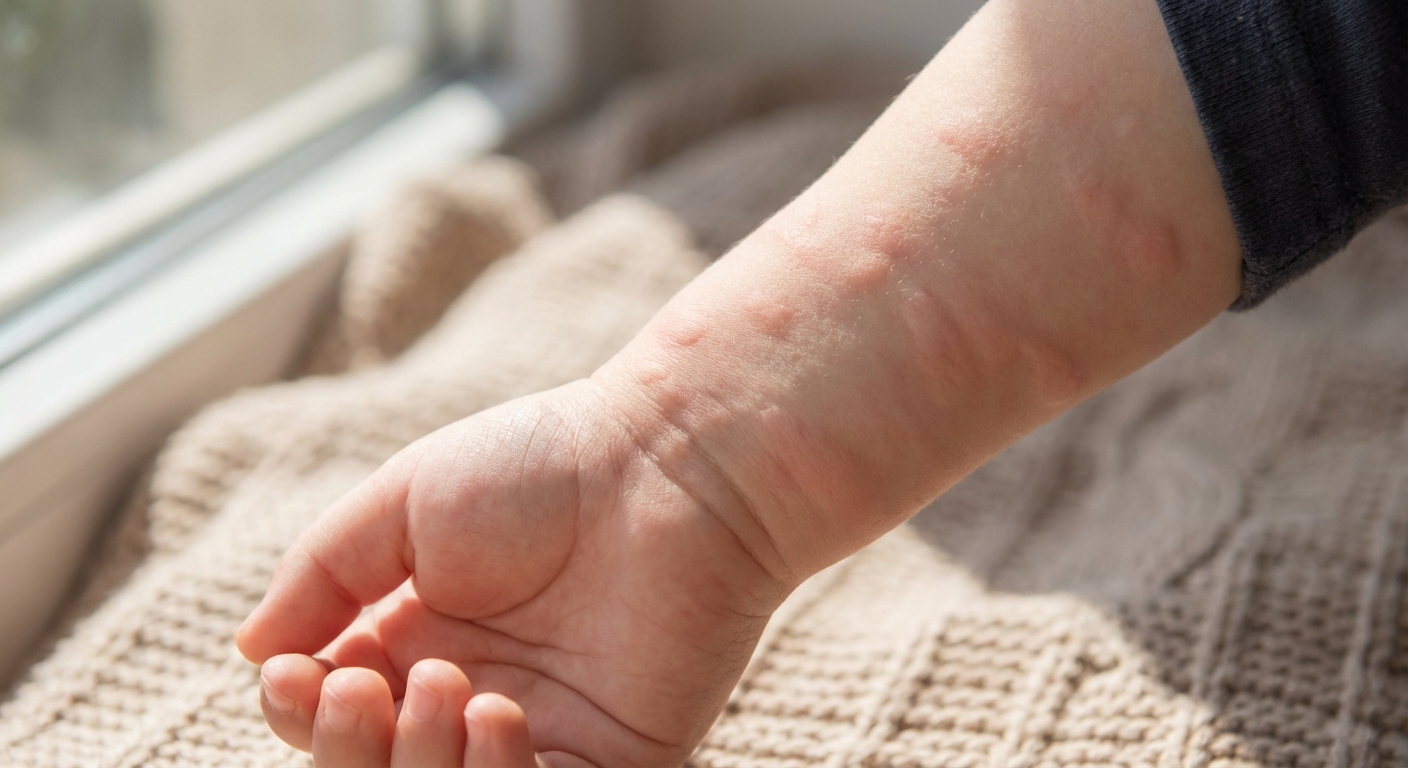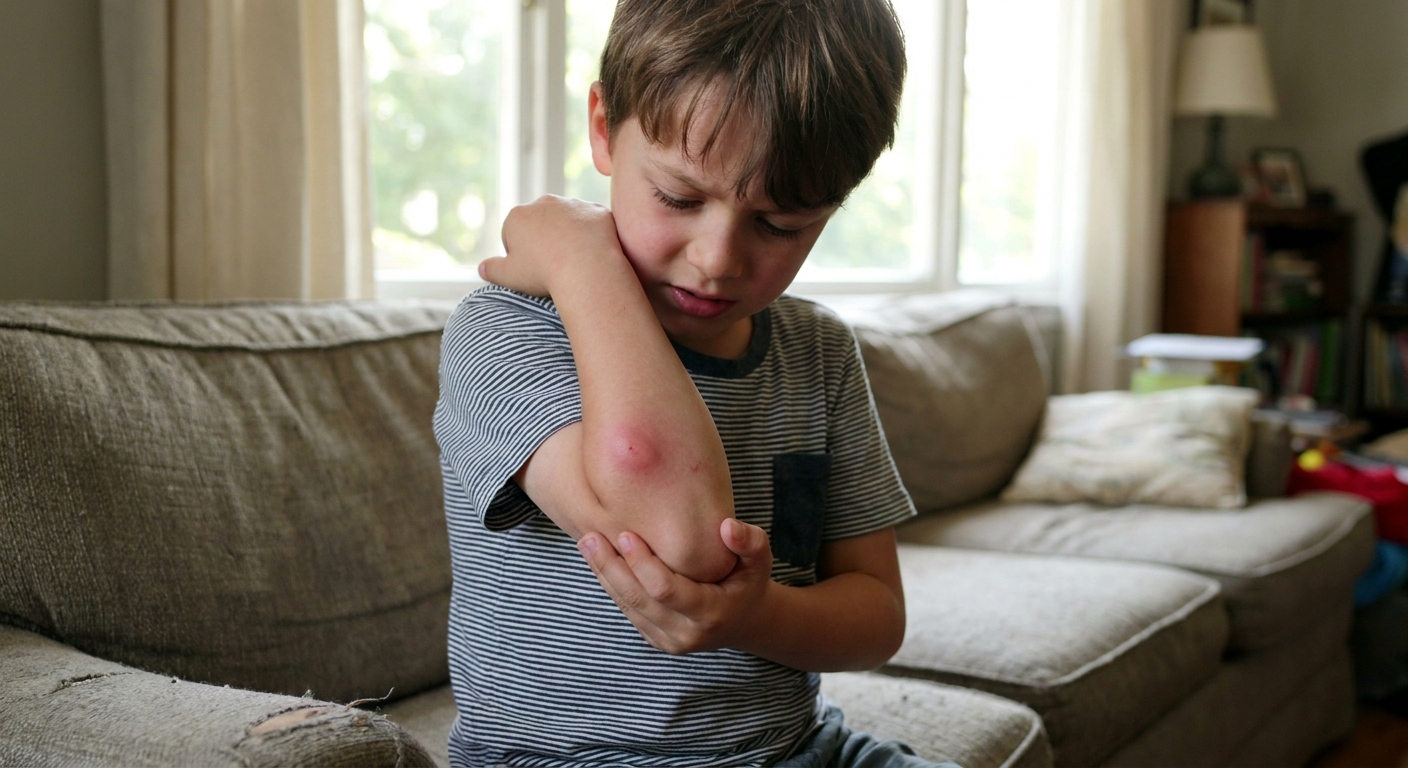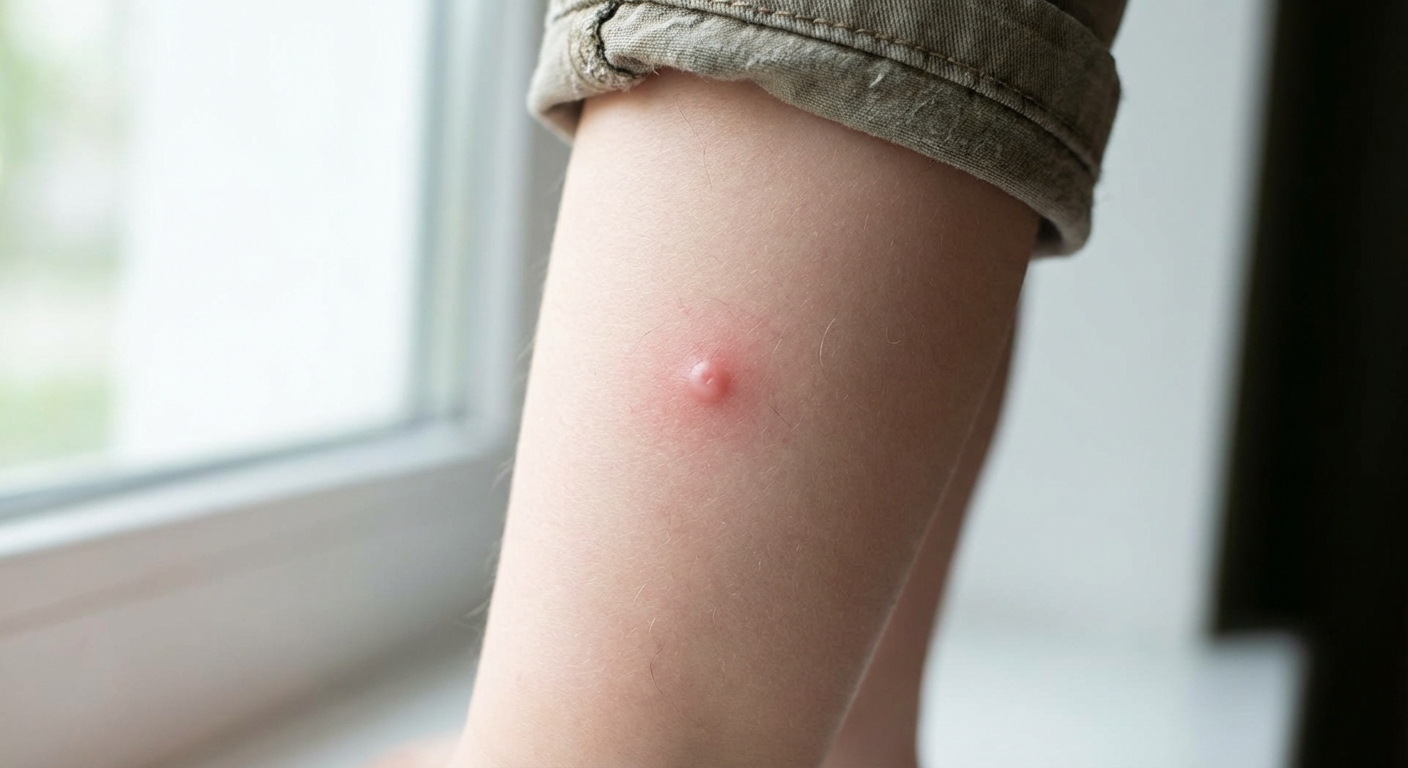
A parent-friendly guide to common bites and stings, normal vs allergic reactions, tick removal, home treatment, antihistamines, prevention tips, and emergenc...
Fire Ant Bites on Kids: Swelling, Allergic Reactions, and First Aid

Sarah Mitchell
Sarah Mitchell is a Registered Pediatric Nurse and a mother of three who has spent over a decade helping families navigate the beautiful, chaotic early years of childhood. She combines evidence-based medical knowledge with real-world parenting experience to offer practical, compassionate advice. At Awesome Parent, Sarah's mission is to help exhausted parents find solutions, trust their instincts, and finally get some sleep.
Fire ant stings are one of those parenting surprises that go from “We were just playing outside” to “Why is my child suddenly covered in angry bumps?” in about 30 seconds. If you live in an area where fire ants are common, you will probably deal with this at least once.
The good news is that most fire ant stings look dramatic but can be treated safely at home. The important part is knowing what is normal (pain, itching, swelling, and those weird little white bumps) and what is not (trouble breathing, widespread hives, swelling of the lips or face, or vomiting).
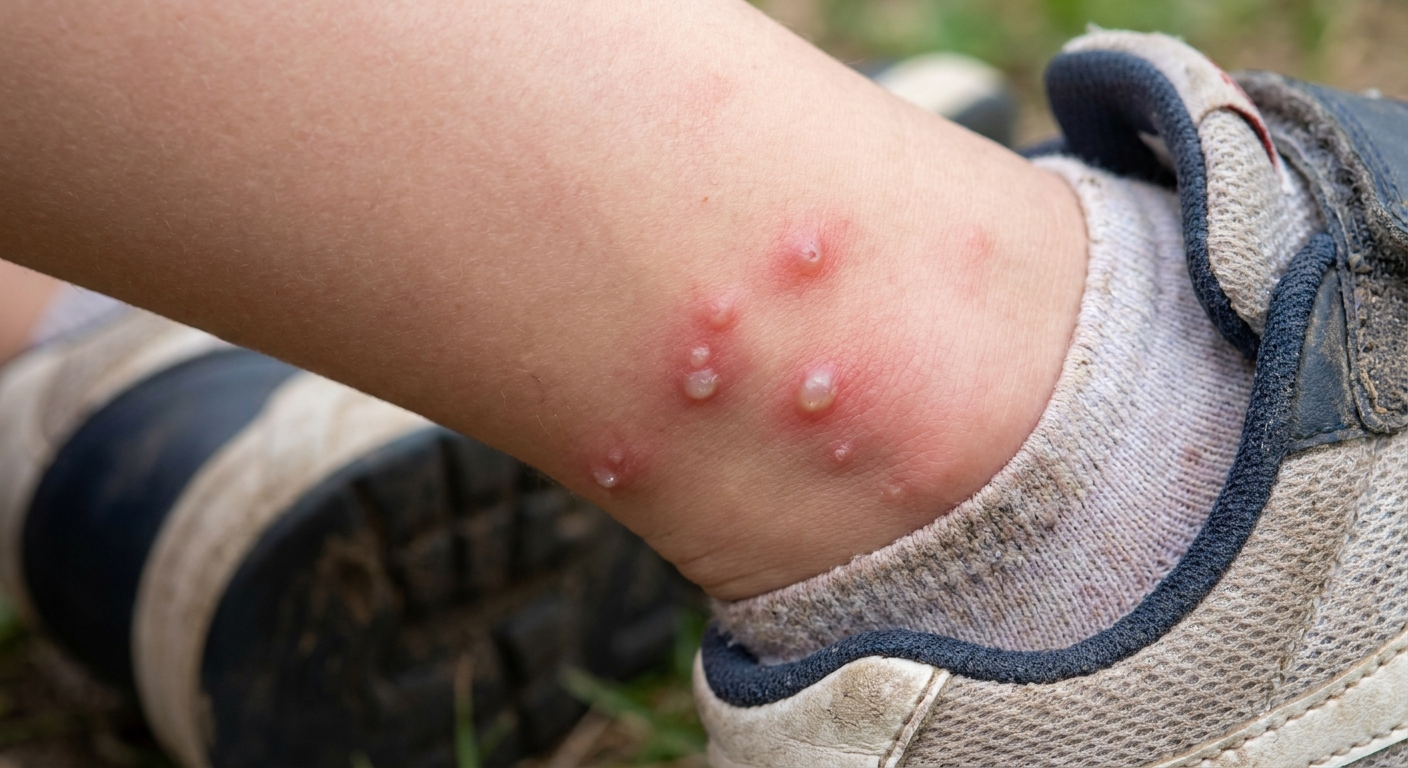
What fire ant stings look like on kids
Fire ants often do not sting once and wander away. When a child steps near a mound, ants can swarm and sting repeatedly, often in the same general area. They also tend to bite (to anchor with their jaws) and then sting, which is part of why they can be so persistent.
Common patterns
- Clusters or lines of stings on feet, ankles, lower legs, or hands.
- Sudden burning pain right away. Many kids describe it as “hot” or “stinging.”
- Red bumps that itch over the next few hours.
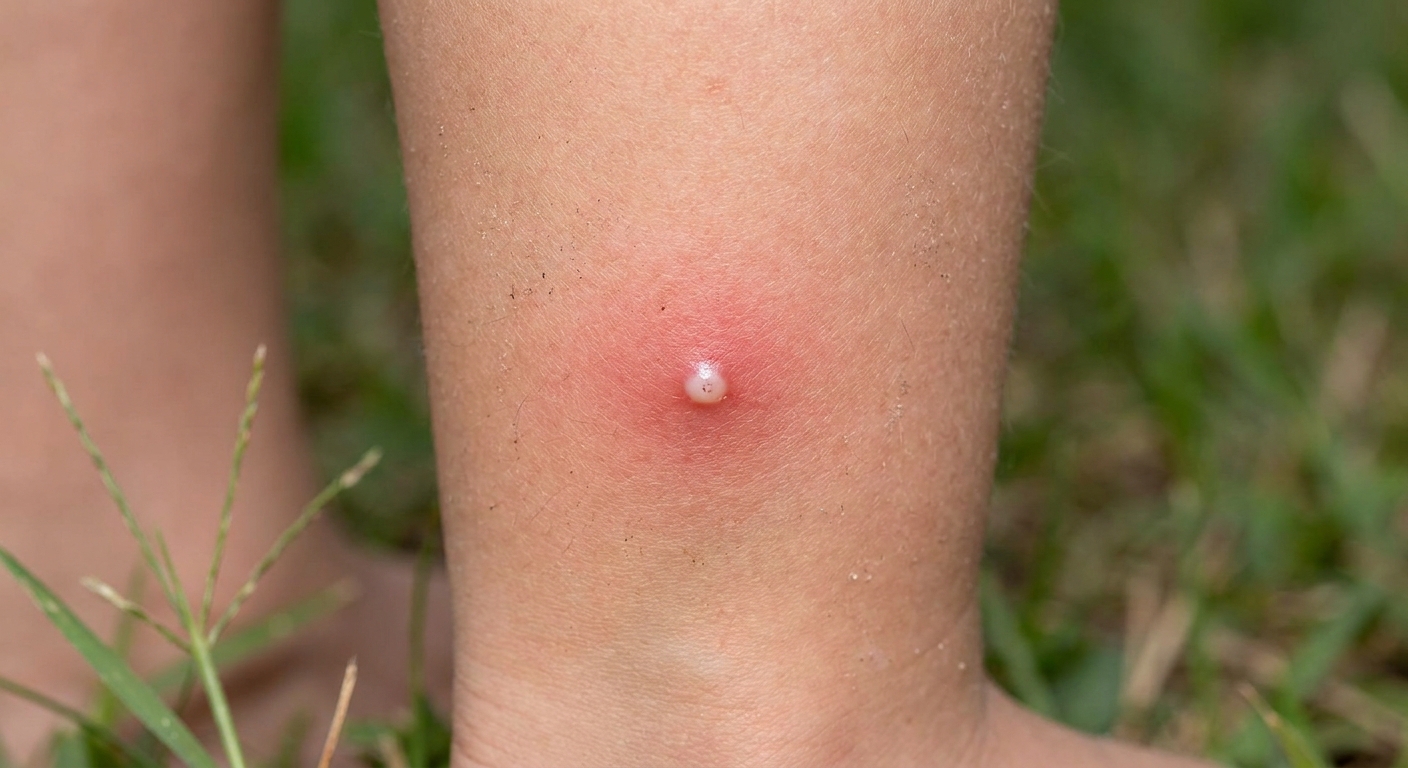
The white pustules (the part that freaks everyone out)
Within about 6 to 24 hours, many fire ant stings form a small white or yellowish pustule in the center. This is very typical for fire ants.
- These pustules are often initially sterile, meaning they are not automatically an infection at first.
- They can last several days, sometimes up to a week.
- The biggest risk is secondary infection from scratching or popping.
Try hard not to pop them. I know they look like pimples. They are not a fun DIY project.
How to tell fire ants from other bites
If you did not see the ants, these clues can help:
- Fire ants: burning pain, stings in clusters, and the classic white pustules within a day.
- Mosquito bites: puffy itchy welts, usually no pustule, and often more scattered.
- Fleas: small itchy bites in lines or clusters, commonly around ankles, typically no pustules.
- Chiggers: intense itch with clusters around sock or waistband lines, typically no pustules.
- Impetigo or skin infection: spreading redness, tenderness, honey-colored crusting, or drainage that is getting worse day by day.
Normal swelling vs allergic reaction
Swelling is expected after a sting. Kids can get surprisingly puffy, especially on the feet, hands, eyelids, and around joints. The key is whether the reaction stays local or becomes whole-body.
Normal local reaction (usually safe to treat at home)
- Redness, warmth, itching, and pain at the sting sites
- Swelling limited to the area of the stings
- White pustules developing within 1 day
- Mild irritability or trouble sleeping from itching
Large local reaction (still usually not anaphylaxis)
Some kids develop swelling that spreads beyond the sting spots, like an ankle that swells up to the calf. This can look intense, but if your child is breathing normally and otherwise acting okay, it is often a large local reaction, not a dangerous allergy.
Call your pediatrician if swelling is rapidly expanding, very painful, or limiting movement. Sometimes clinicians recommend different dosing guidance, a different antihistamine plan, or other prescription medication.
Signs of an allergic reaction (medical help needed)
Allergic reactions can happen even if your child was fine with stings in the past. Watch for symptoms away from the sting area or involving breathing, circulation, or the gut.
- Hives or widespread itchy welts beyond the sting sites
- Swelling of lips, tongue, face, or around the eyes that is not limited to where they were stung
- Wheezing, coughing, hoarse voice, trouble breathing, or fast noisy breathing
- Throat tightness or trouble swallowing or drooling
- Vomiting, diarrhea, severe belly pain soon after stings
- Dizziness, fainting, extreme sleepiness, pale or clammy skin
Fire ant sting first aid
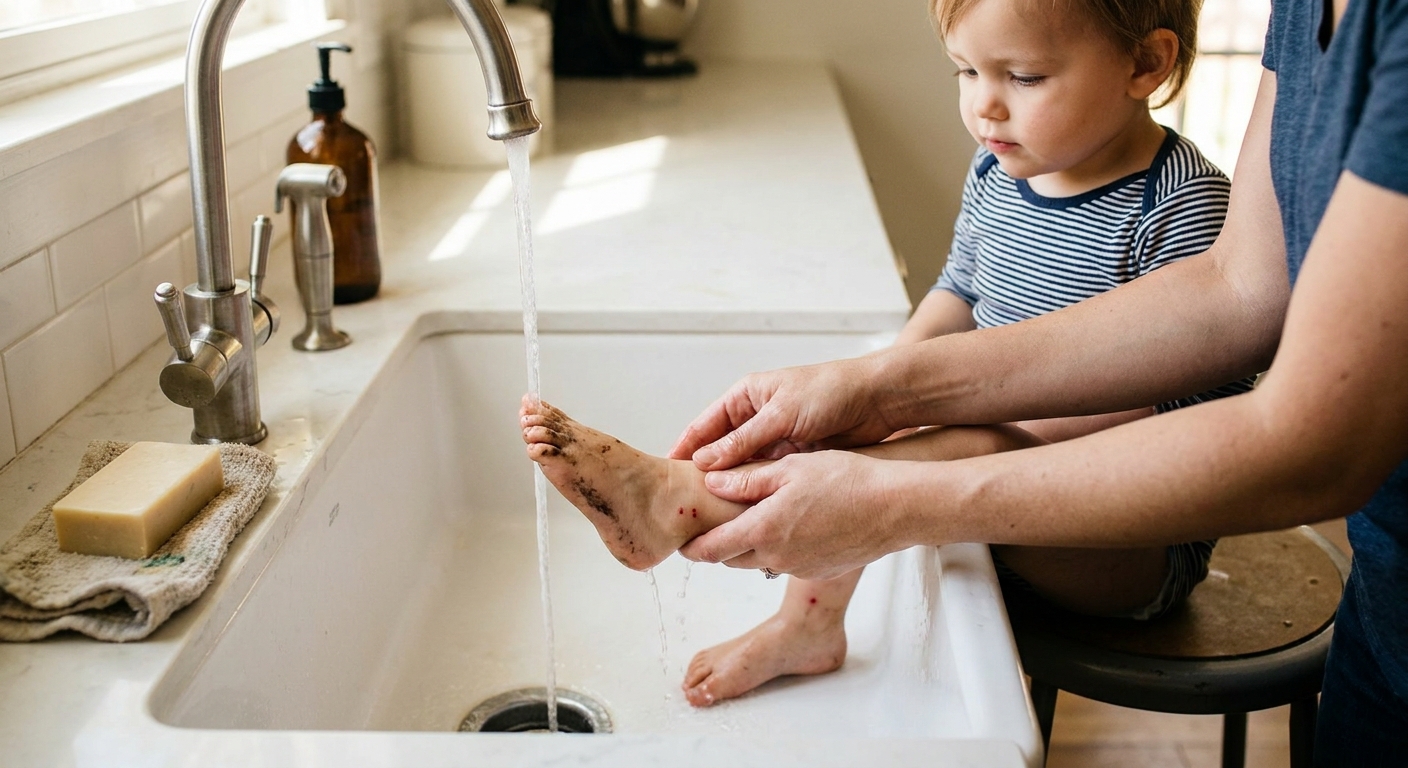
If you suspect fire ants, your first goal is to stop the stinging and gently clean the skin.
Step-by-step
- Move your child away from the area quickly.
- Brush ants off briskly with a cloth or your hand. Fire ants can latch on before stinging, so do not spend time flicking them one by one.
- Remove shoes and socks if stings are on the feet. Ants can hide in clothing.
- Wash the skin with soap and water.
- Cold compress for 10 minutes on, 10 minutes off to reduce pain and swelling.
- Keep nails short and consider covering the area with loose clothing to reduce scratching.
What not to do
- Do not pop the white pustules.
- Do not use harsh home remedies that burn or irritate skin (straight vinegar, bleach, essential oils, gasoline, and so on).
- Avoid topical numbing products on young kids or large areas unless your pediatrician specifically recommends them.
Relief at home
Most kids are not bothered by the bump itself. They are bothered by the itch. The itch is what leads to scratching, broken skin, and infection.
Cold, elevation, and comfort
- Cold packs help with both pain and itch. Wrap in a thin towel.
- Elevate an arm or leg if swelling is significant.
- Oatmeal bath can be soothing if there are many stings.
Topical options
- 1% hydrocortisone cream can reduce itching and inflammation. Apply a thin layer 1 to 2 times daily for a short period. Avoid broken skin and avoid the eye area.
- Calamine lotion can help with itch, especially if the skin is intact.
If your child is under 2 or has eczema-prone skin, check with your pediatrician before using topical steroids for more than a day or two.
Antihistamines by age (general guidance)
Antihistamines can be very helpful for itch and large local swelling. Dosing varies by weight and product, so always follow your pediatrician’s instructions or the package directions for your child’s age and weight.
- Under 2 years: Call your pediatrician before giving an oral antihistamine. In this age group we want weight-based dosing guidance and a safety check.
- Ages 2 to 5 years: Many children can use a non-drowsy antihistamine (like cetirizine or loratadine) per label directions. Some families use diphenhydramine at night for itch, but it can cause sedation or, in some kids, the opposite effect.
- Ages 6 and up: Non-drowsy antihistamines are often a good first choice during the day, with careful use of a sedating option at night if needed and appropriate.
A quick nurse note: “Non-drowsy” does not mean “never drowsy.” The first dose is not the time to test it right before school pictures.
Pain control
If your child is uncomfortable, acetaminophen or ibuprofen can help. Use age-appropriate products and dosing by weight.
When it is an emergency
Most fire ant stings are not emergencies. Anaphylaxis is rare but possible, and it can escalate fast. It is more likely in people with a history of systemic reactions.
Call 911 now if your child has any of these
- Trouble breathing, wheezing, or repetitive coughing
- Swelling of the tongue, lips, or throat, or voice changes
- Difficulty swallowing, drooling, or cannot speak in full sentences
- Fainting, severe dizziness, confusion, or looks gray or very pale
- Widespread hives plus vomiting, breathing symptoms, or lethargy
If your child has an epinephrine auto-injector
- Use it immediately if anaphylaxis is suspected.
- Call 911 after giving epinephrine (or have someone else call while you give it).
- Even if they improve, they still need emergency evaluation because symptoms can return.
If your child has had a systemic allergic reaction to fire ants before, talk to your pediatrician or an allergist about a plan. In some areas, allergists may offer fire ant immunotherapy for severe allergy.
When to call the doctor
Reach out to your pediatrician or urgent care if:
- Swelling is worsening after 24 to 48 hours or is very painful
- Your child has fever, increasing redness, warmth, or drainage that looks infected (especially if redness is spreading)
- The sting sites are on the eyelid or near the eye and swelling is significant
- Your child was stung many times and seems unwell
- Your child has underlying conditions that raise risk, like immune compromise
Many stings (venom load) concerns
If a small child has dozens of stings or you suspect a very large number, call your pediatrician, urgent care, or poison control for guidance, even if there are no allergy symptoms. A heavy exposure can make kids feel sick and needs closer monitoring.
Infection vs normal pustule
A normal fire ant pustule is a small white bump with a red halo that gradually improves. Call for guidance if you see:
- Redness spreading in a widening area
- Skin becoming increasingly tender or painful to touch
- Drainage, increasing pus, or a bad smell
- Honey-colored crusting
- Fever or swollen lymph nodes
Infection is not inevitable, but scratching makes it much more likely. If you are seeing a “getting worse each day” pattern, it is worth a call.
How long do fire ant stings last?
- Pain: usually minutes to a few hours
- Itching and redness: often 1 to 3 days
- Pustules: commonly appear within 24 hours and can last 3 to 7 days
- Skin discoloration: a light or dark spot can linger longer, especially if the pustule was scratched
If you notice the area is not improving after about a week, or it is getting worse rather than better, check in with your pediatrician.
Prevention tips
If you live in fire ant country, prevention is mostly about spotting mounds early and teaching kids a few simple habits.
In your yard
- Learn what mounds look like in your region. Many are dome-shaped with loose soil and no obvious entry hole.
- Keep shoes on outdoors, especially in grassy areas and near fences, tree lines, and irrigation spots.
- Check before you sit on the ground, landscape timbers, or near planters.
- Manage mounds safely using products labeled for fire ants and following instructions exactly. Keep kids and pets away during treatment windows.
At parks and playgrounds
- Do a quick scan around the base of slides, swings, borders, and under picnic tables.
- Avoid disturbed soil piles and grassy edges near sidewalks.
- Bring a small first-aid kit with wipes, a cold pack, and your child’s antihistamine (if age-appropriate and approved by your pediatrician).
What kids can learn quickly
- “If you feel crawling on your socks, stop and tell a grown-up.”
- “Do not stomp on dirt mounds.”
- “Shoes stay on outside.”

Quick checklist
- Clusters of painful stings plus white pustules later often points to fire ants.
- Brush ants off briskly, wash with soap and water, use cold compresses, and protect skin from scratching.
- Pustules are common. Do not pop them.
- Use antihistamines only if age-appropriate and follow weight-based directions.
- Call 911 for breathing trouble, throat or tongue swelling, fainting, or severe whole-body symptoms.
If you are unsure whether your child’s reaction is normal, or symptoms are escalating instead of improving, call your pediatrician or seek urgent care. Trust your gut. It is always okay to get a second set of eyes on a kid who does not look right.
Sarah Mitchell
Sarah Mitchell is a Registered Pediatric Nurse and a mother of three who has spent over a decade helping families navigate the beautiful, chaotic early years of childhood. She combines evidence-based medical knowledge with real-world parenting experience to offer practical, compassionate advice. At Awesome Parent, Sarah's mission is to help exhausted parents find solutions, trust their instincts, and finally get some sleep.