A calm, parent-friendly guide to newborn jaundice: what causes it, how to check for yellowing, what’s normal vs concerning, and when to seek urgent care.
G6PD Deficiency and Newborn Jaundice

Sarah Mitchell
Sarah Mitchell is a Registered Pediatric Nurse and a mother of three who has spent over a decade helping families navigate the beautiful, chaotic early years of childhood. She combines evidence-based medical knowledge with real-world parenting experience to offer practical, compassionate advice. At Awesome Parent, Sarah's mission is to help exhausted parents find solutions, trust their instincts, and finally get some sleep.
When I worked triage in a pediatric clinic, one of the most common calls I took was some version of: “My baby looks yellow. Is this normal?” Most of the time, newborn jaundice is part of that messy transition from womb to world and it improves with time, feeding support, and close follow-up.
But every so often, jaundice is more intense or shows up earlier than we expect, and we have to ask: is there an underlying reason?
One inherited cause that can make jaundice deeper is G6PD deficiency. If you have never heard of it, you are not alone. It is not something most parents discuss at baby showers. This article will walk you through what it is, why it matters for jaundice, and how to protect your child as they grow, without getting lost in scary search results.

What is G6PD deficiency?
G6PD deficiency is a common inherited difference in an enzyme called glucose-6-phosphate dehydrogenase (G6PD). That enzyme helps red blood cells handle everyday “oxidative stress,” which is basically the wear-and-tear that happens when the body fights infection, processes certain substances, or deals with inflammation.
When a baby has G6PD deficiency, their red blood cells can be more fragile under certain conditions. Many children with G6PD deficiency are completely healthy day-to-day, but they may be at higher risk for hemolysis, which means red blood cells break down faster than they should.
Why does that matter in newborns? Because when red blood cells break down, the heme portion of hemoglobin gets processed into unconjugated bilirubin, the yellow pigment that causes jaundice.
Who is more likely to have it?
G6PD deficiency is usually inherited in an X-linked pattern. That means it is more common in boys, but girls can be affected too, especially if they inherit the gene change from both parents or if their enzyme activity is low due to normal X-chromosome inactivation (sometimes called lyonization).
It is seen around the world, and it is more common in people with African, Mediterranean, Middle Eastern, South Asian, and Southeast Asian ancestry. A family history of G6PD deficiency or unexplained severe newborn jaundice is another clue.
How it can worsen newborn jaundice
All newborns have a few things working against them when it comes to bilirubin: they have more red blood cells than adults, those cells turn over faster, and their livers are still learning how to process bilirubin efficiently.
With G6PD deficiency, jaundice can become more significant because:
- Red blood cells may break down more easily under oxidative stress, which creates more bilirubin.
- Bilirubin can rise faster, especially in the first days of life.
- Some situations worsen jaundice even without hemolysis, like dehydration or low intake, because bilirubin is cleared less effectively. (This is one reason feeding support and close follow-up matter so much.)
This does not mean every baby with G6PD deficiency will have severe jaundice. It means clinicians should have a higher index of suspicion and families deserve clear follow-up instructions.

When to call now vs today
Some jaundice is expected. The key is noticing when it is not behaving like typical newborn jaundice.
Call now or go in urgently
- Hard to wake or unusually floppy.
- Not feeding or cannot stay awake to feed.
- Fever or signs of illness (breathing changes, persistent vomiting).
- Rapidly deepening yellowing over hours, especially spreading to the belly, arms, or legs.
Call today
- Worsening jaundice compared with yesterday.
- Fewer wet diapers than expected or concerning dehydration.
- High-pitched crying or extreme irritability that feels out of character.
- Dark urine.
- Very pale or chalky stools. This is not typical for hemolysis and can point to a different urgent liver or bile flow problem, which is exactly why it needs prompt medical attention.
If your baby has a known or suspected G6PD deficiency, it is worth saying that clearly when you call: “My baby has G6PD deficiency and looks more yellow today.” It helps triage teams prioritize appropriately.
How it is diagnosed
Diagnosis depends on where you live, your baby’s risk factors, and the clinical situation. Some regions include G6PD deficiency on newborn screening panels, while others do not, and it can vary widely even within the same country (including within the US).
In many cases, testing is considered when:
- A newborn has jaundice that is earlier, stronger, or more persistent than expected.
- There is a family history of G6PD deficiency or unexplained severe newborn jaundice.
- The baby’s ancestry is from a population where G6PD deficiency is more common.
- There are signs suggesting increased red blood cell breakdown.
Testing usually involves a blood test that measures G6PD enzyme activity. Timing matters. In the setting of active hemolysis, the body releases more young red blood cells (reticulocytes), which can make enzyme activity look closer to normal than it truly is. Results can also be borderline or harder to interpret in some girls due to variable enzyme activity from X-chromosome inactivation. If the story and the test do not line up, clinicians may repeat testing later.
What clinicians may do for high bilirubin
If bilirubin is rising quickly or reaching higher levels, your clinician may recommend:
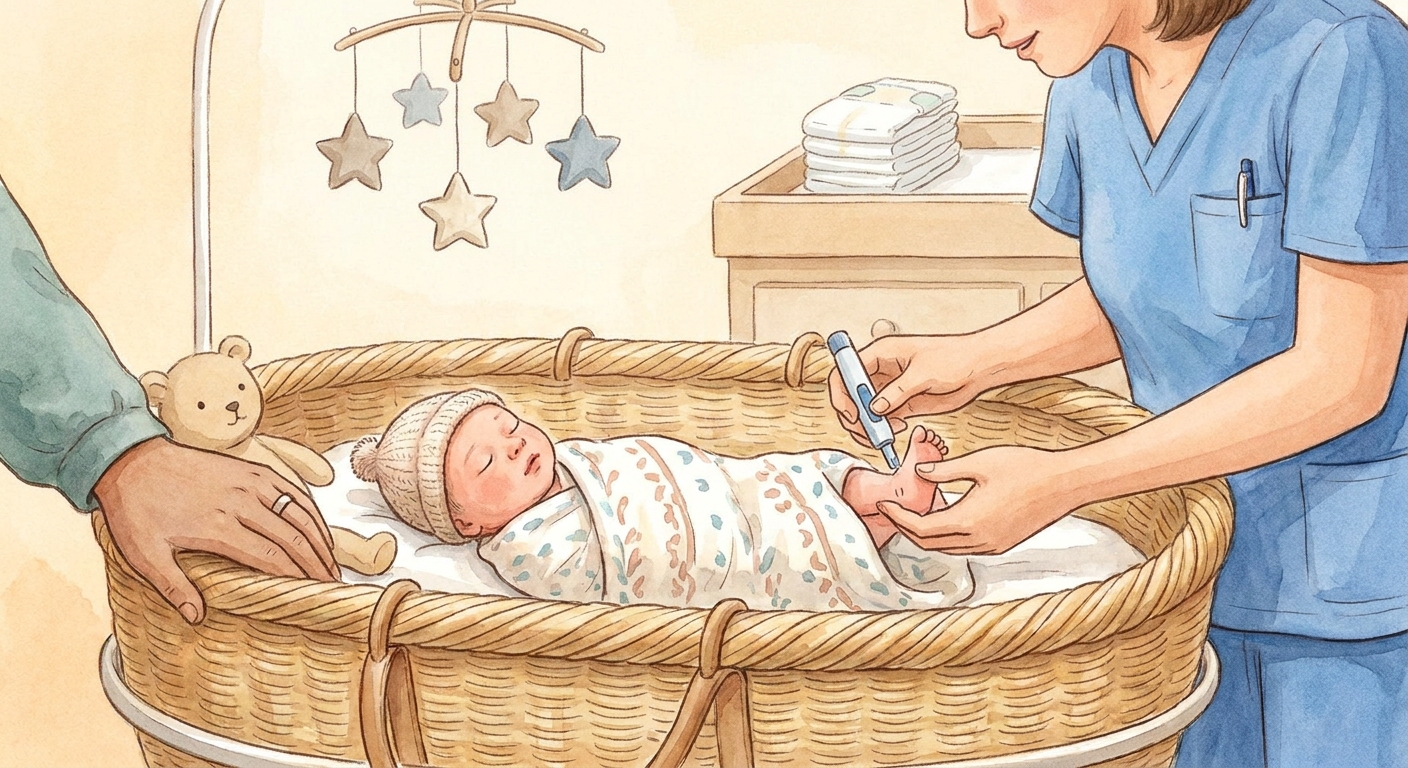
- Repeat bilirubin checks (sometimes more than once in a day).
- Feeding support to improve intake and hydration.
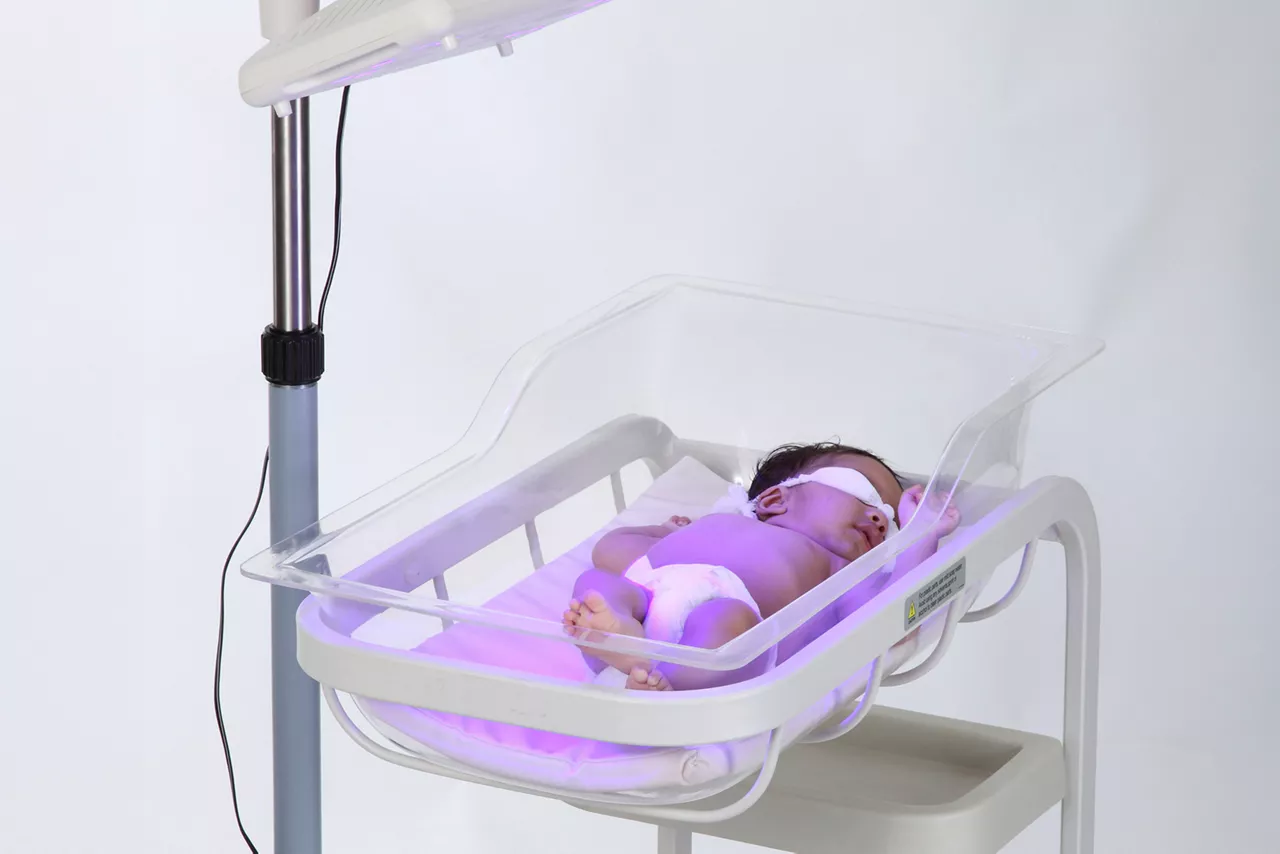
- Phototherapy, which uses a special light to help the body break down bilirubin.
- Rarely, exchange transfusion in severe cases.
I mention this because there are effective treatments. The reason we take fast-rising jaundice seriously is to prevent bilirubin from reaching levels that can cause bilirubin-related brain injury (kernicterus). Prompt assessment is protective, not punitive.
After the newborn period
This is the part I really want parents to hear: many kids with G6PD deficiency live normal, active lives.
Once you are past the early newborn window, the focus usually shifts. Instead of “Is the bilirubin still climbing?” it becomes “How do we prevent hemolysis during common childhood situations?”
The main ongoing issue is that certain stressors can trigger hemolysis later, most commonly during illnesses or after exposure to particular medicines, foods, or chemicals. When red blood cells break down quickly, a child may develop anemia and jaundice again.
As your child grows, the practical goal is simple: avoid known triggers and treat illnesses promptly.
Examples to discuss (not a DIY list)
Because trigger sensitivity can vary, I do not want you relying on random lists from social media or half-cited blogs. But I also know parents appreciate a few concrete examples of what to ask about.
Bring these up with your child’s clinician or pharmacist and ask what applies to your child:
- Foods: fava beans are the classic example.
- Chemicals: naphthalene, found in some mothballs.
- Medications: certain antibiotics (often discussed are sulfonamide antibiotics), certain antimalarials (like primaquine), and rasburicase (a medication used in specific hospital settings). This is not exhaustive, which is why verification matters.
If your child needs an antibiotic or another medication urgently, remind every prescriber and pharmacist: “My child has G6PD deficiency. Please confirm this is safe for them.” It is not overprotective. It is good safety practice.
What hemolysis can look like
When hemolysis happens, symptoms can range from mild to more obvious.
Seek same-day medical care
Call your clinician the same day (or go to urgent care based on severity) if your child with G6PD deficiency has:
- New or worsening yellowing of the skin or eyes during an illness.
- Sudden paleness, low energy, or unusual tiredness.
- Fast heartbeat, breathing harder than usual, or trouble keeping up with normal activity.
- Dark urine during an illness.
If your newborn is involved, always err on the side of calling sooner. Newborns can change quickly, and you should not have to decide alone whether something is “too yellow.”
Common questions
Is this the same as ABO incompatibility jaundice?
No. ABO incompatibility is a blood type mismatch between parent and baby that can cause red blood cell breakdown through an immune mechanism. G6PD deficiency is an inherited enzyme difference inside the red blood cell. Both can raise bilirubin, but they are different causes and are managed a bit differently.
Is this the same as breast milk jaundice?
No. Breast milk jaundice is a separate pattern of longer-lasting jaundice in otherwise thriving babies. It is not caused by red blood cell breakdown. A baby can be breastfed and have G6PD deficiency, of course, but the mechanism is different.
If my baby has G6PD deficiency, will they always be jaundiced?
No. Newborn jaundice is a time-limited phase for most babies. The bigger long-term consideration is avoiding triggers that can cause hemolysis during illness or after exposures later in childhood.
Can my child still get routine vaccines?
In general, yes. Routine vaccines are important because preventing infections helps reduce stress on the body. Vaccines themselves are not known to be hemolysis triggers in G6PD deficiency, but if your child develops a fever or gets sick around the time of a vaccine, follow your clinician’s guidance and monitor symptoms as you normally would.
Should family members be tested?
Sometimes, yes. If your baby is diagnosed, ask your clinician whether parents or siblings should be tested, especially if there is a history of newborn jaundice, anemia episodes, or if future babies are planned. Knowing ahead of time can help your next newborn get the right monitoring from day one.
What should I tell daycare or school later?
Tell them your child has G6PD deficiency and that you want to be notified promptly about illnesses and any medication offered. For older kids, it can help to practice a simple script they can say themselves: “I have G6PD deficiency. My parent needs to check medicines first.”
What to ask at your next visit
If G6PD deficiency is suspected or confirmed, these questions can help you leave with a clear plan:
- “How will we monitor jaundice and feeding over the next few days?”
- “Do we need any follow-up bloodwork? When?”
- “Can you review medicines, foods, and chemical exposures to avoid for my child?”
- “If my baby gets sick, what symptoms mean I should call right away?”
- “Should we see a specialist, and if so, when?”
- “How should this be documented so urgent care and pharmacies see it?”
My nurse-mom tip: put “G6PD deficiency” in the medical notes section of your phone, and if your child has a patient portal, make sure it is listed prominently in their problem list or allergies and alerts section if your clinic uses that feature.
When to get urgent help
Newborns: If your baby is hard to wake, feeding poorly, has fewer wet diapers than expected, has a fever, or you notice rapidly deepening jaundice, do not wait it out. Contact your clinician urgently or seek emergency care based on the guidance you have been given.
Older babies and kids: If your child with G6PD deficiency has signs of hemolysis like marked fatigue, pallor, dark urine, or new jaundice, seek same-day medical evaluation.
You are not being “too anxious.” You are being appropriately attentive. Jaundice and anemia are much easier to manage when we address them early.
The bottom line
G6PD deficiency is an inherited enzyme difference that can make newborn jaundice more significant by increasing bilirubin production during red blood cell breakdown. Later in childhood, it can raise the risk of hemolysis during illness or after exposure to certain medicines, foods, or chemicals.
The best next step is not memorizing lists. It is partnering with your child’s clinician and pharmacist so every medication and any concerning exposure gets reviewed. With a clear plan and the right follow-up, most families find this becomes a manageable part of their child’s medical story, not the headline.
Sarah Mitchell
Sarah Mitchell is a Registered Pediatric Nurse and a mother of three who has spent over a decade helping families navigate the beautiful, chaotic early years of childhood. She combines evidence-based medical knowledge with real-world parenting experience to offer practical, compassionate advice. At Awesome Parent, Sarah's mission is to help exhausted parents find solutions, trust their instincts, and finally get some sleep.