A calm, parent-friendly guide to pediatric psoriasis: plaques, guttate spots after strep, scalp signs, overlap with seborrhea, fungus look-alikes, itch patte...
Guttate Psoriasis After Strep or Scarlet Fever

Sarah Mitchell
Sarah Mitchell is a Registered Pediatric Nurse and a mother of three who has spent over a decade helping families navigate the beautiful, chaotic early years of childhood. She combines evidence-based medical knowledge with real-world parenting experience to offer practical, compassionate advice. At Awesome Parent, Sarah's mission is to help exhausted parents find solutions, trust their instincts, and finally get some sleep.
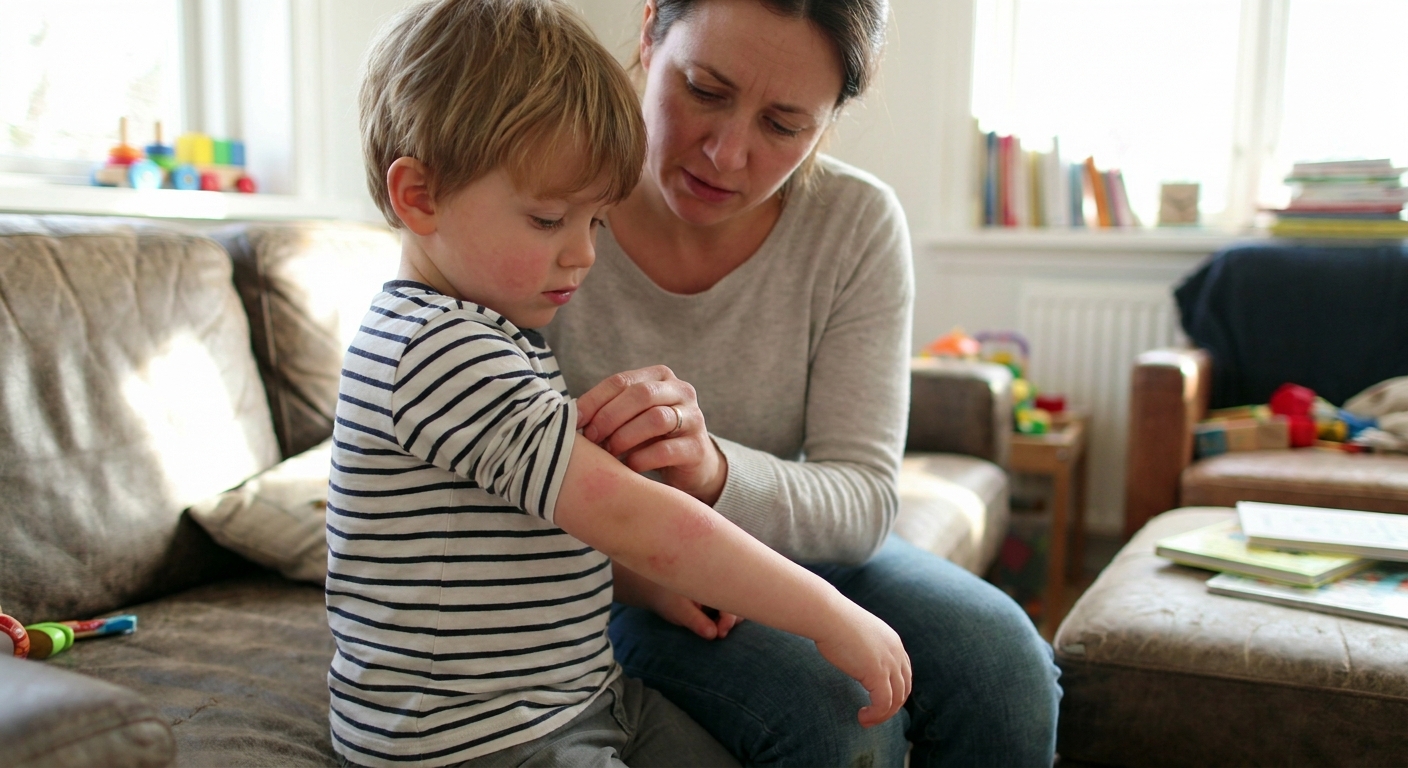
If your child had strep throat or scarlet fever and now, a week or two later, you are seeing lots of tiny, drop-like scaly spots pop up on the body, it can be startling. In clinic triage, I have talked to many parents who thought the infection “came back” or that an antibiotic allergy was brewing. Often, it is something different: guttate psoriasis, a type of psoriasis that can be triggered by strep.
The good news is that guttate psoriasis is usually manageable and often improves over time. The important part is getting the right diagnosis and knowing which symptoms still need urgent attention.
What is guttate psoriasis?
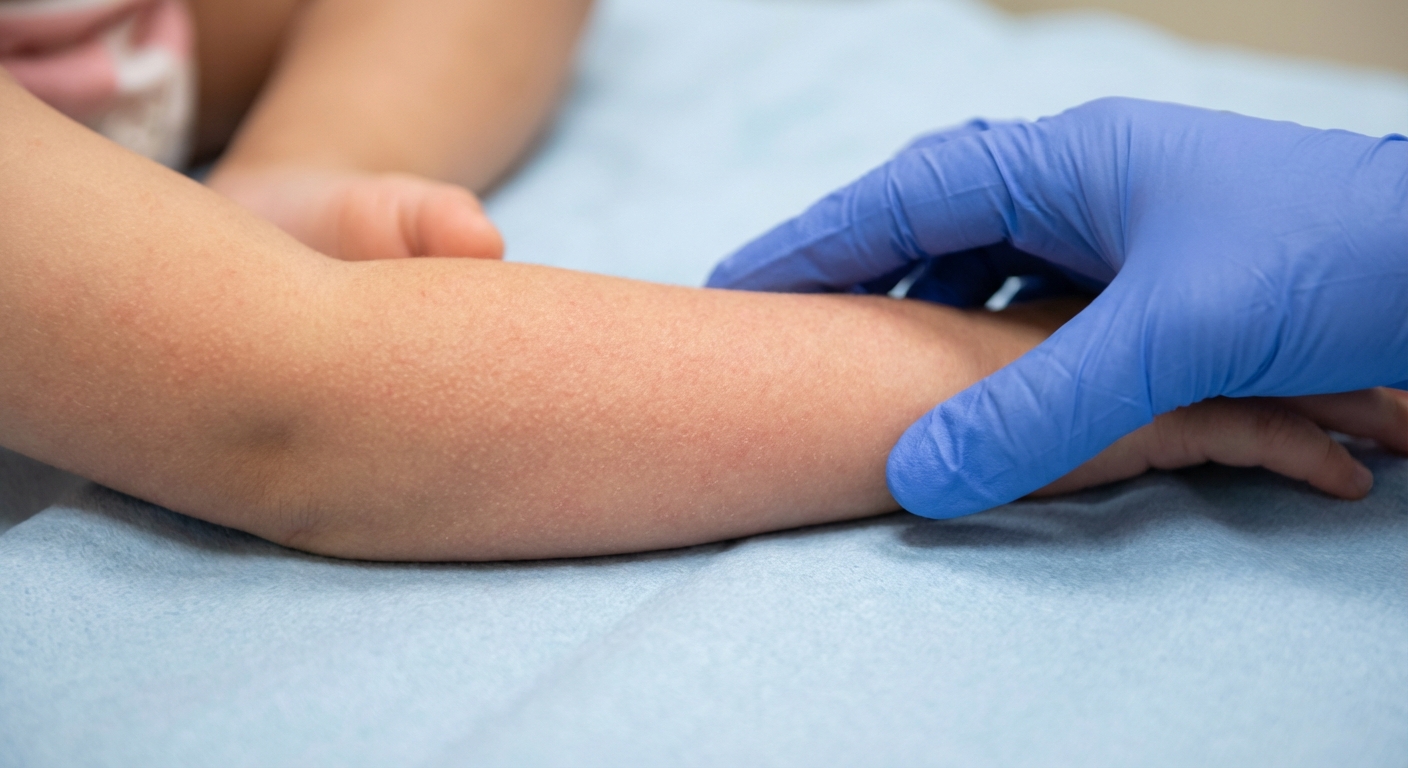
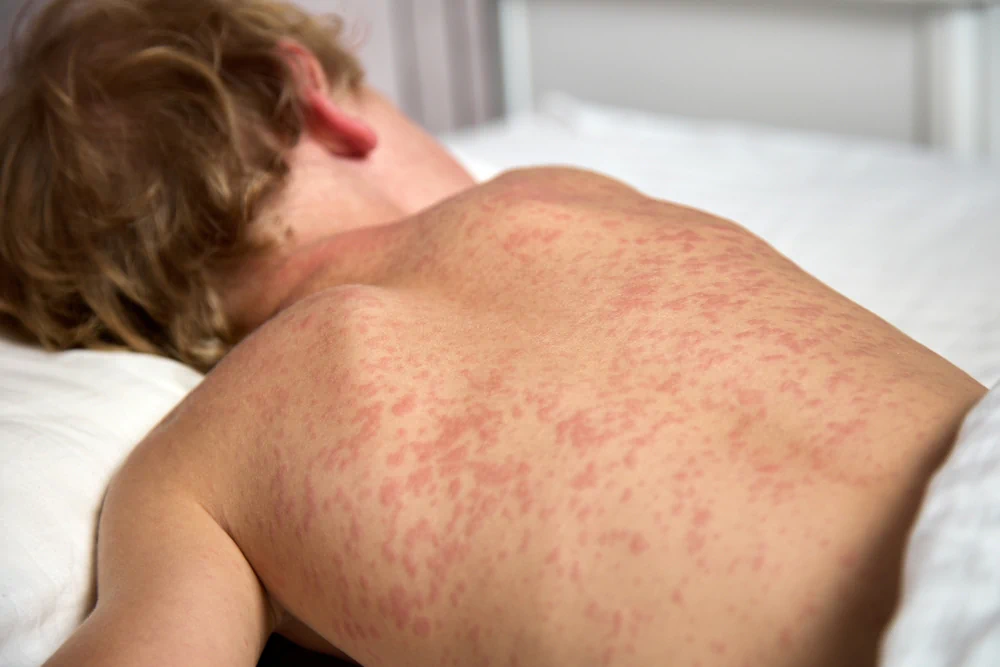
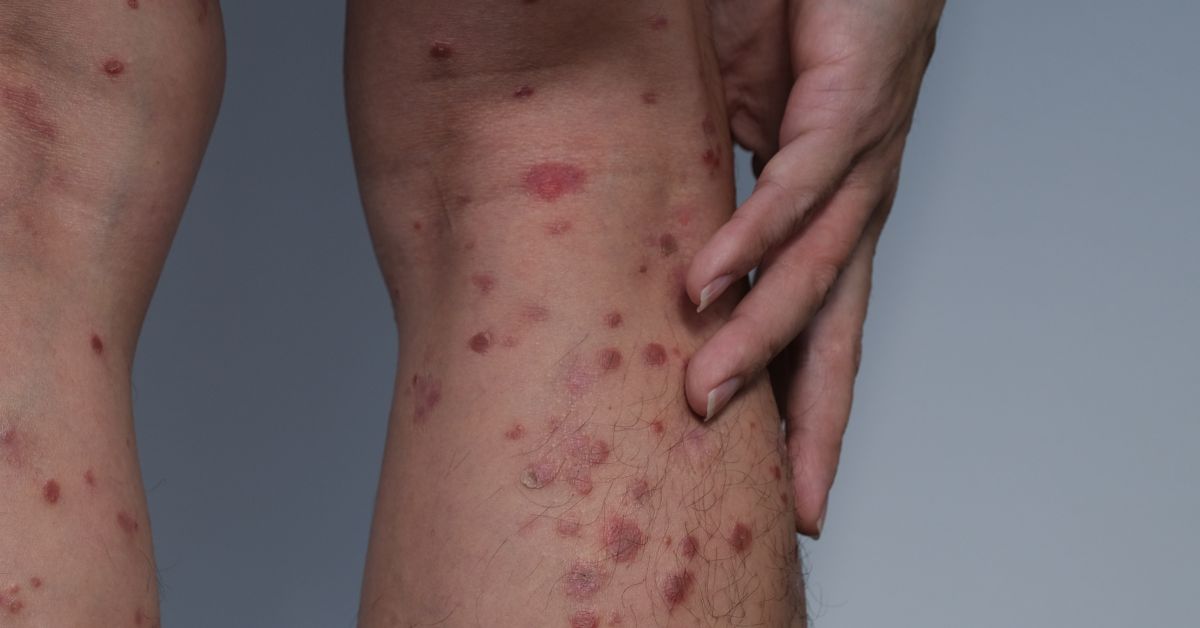
Guttate (pronounced “GUT-ate”) psoriasis is a psoriasis flare that shows up as many small, round or teardrop-shaped pink or red spots with a fine, dry scale on top. It most often appears on the trunk (chest, belly, back) and upper arms and thighs, and it can spread widely over a few days.
A classic story is:
- Strep throat or scarlet fever
- Child starts feeling better
- Often around 1 to 3 weeks later (but timing can vary), a sudden “sprinkle” of small scaly spots appears
This happens because strep can act as an immune trigger in some kids. It does not mean you did anything wrong, and it does not necessarily mean the strep was untreated.
What it looks like
Parents often describe guttate psoriasis as:
- Dozens to hundreds of small spots that seem to appear “overnight”
- Drop-like, pin-to-coin sized lesions (often smaller than a dime)
- Pink to red bumps or patches with dry, flaky scale
- Mild itch is common, but some kids barely notice it
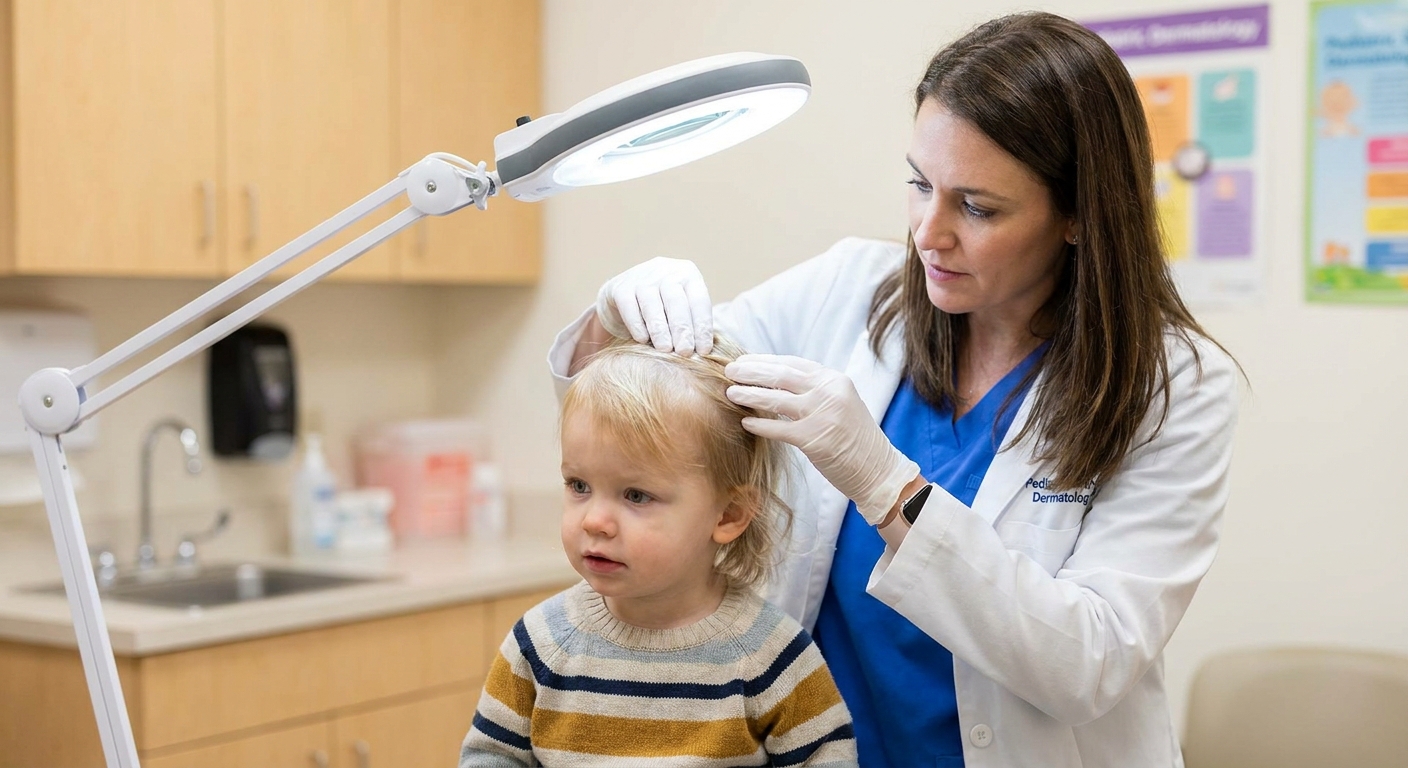
- Mostly on the trunk, sometimes the scalp (more dandruff-like), and less commonly on the face
It is not contagious. Your child cannot “give” guttate psoriasis to siblings.
Scarlet fever vs guttate
This is the key confusion point.
Scarlet fever rash
- Shows up during the illness, often (and sometimes quickly) within the first day or two after fever and sore throat start
- Feels like sandpaper
- Often begins on the neck and upper chest and spreads
- Can be more intense in skin creases (underarms, groin, elbows)
- Often comes with a very red throat and sometimes a “strawberry tongue”
Guttate psoriasis
- Shows up after the illness seems to be resolving, often around 1 to 3 weeks later, but it can vary
- Looks like separate little drops, not one sheet of sandpapery redness
- Has visible scale on many spots
- Often concentrates on the trunk
If you are staring at your child thinking, “This is not the same rash as before,” trust that instinct. The timing and texture really are different.
Peeling after scarlet fever
Another common “is this normal?” moment happens after scarlet fever when kids develop peeling, especially on the palms and soles. That peeling can look dramatic, but it is usually just the top layer of skin shedding after the earlier rash.
Post-scarlet fever peeling
- Can begin as the rash fades and continue over the next 1 to 3 weeks (sometimes longer), depending on the child
- Mostly affects fingertips, palms, toes, and soles
- Looks like sheet-like peeling or flaking skin
- Usually not lots of separate red scaly spots over the trunk
Guttate psoriasis
- Can also start after strep, often around 1 to 3 weeks later, but timing can vary
- Most noticeable on trunk and limbs
- Looks like many individual red or pink scaly drops
Both can happen in the same general timeframe, which is why photos and a clinician exam are so helpful.
Guttate vs plaque psoriasis
When most people hear “psoriasis,” they picture plaque psoriasis, which is more long-term and tends to come and go over years.
Plaque psoriasis
- Fewer lesions, but larger and thicker
- Well-defined patches with a more substantial silvery scale
- Common locations: elbows, knees, scalp, behind ears, sometimes the diaper area in infants
- Often a more chronic pattern
Guttate psoriasis
- Many small spots
- Often a sudden outbreak after strep
- May clear significantly over weeks to months
Some children who have guttate psoriasis never develop chronic plaque psoriasis. Others do. Your clinician can help you understand your child’s risk based on family history and how the rash behaves over time.
Other look-alikes
In triage, this pattern is one of the most common post-strep calls we get, and it overlaps with a few other rashes parents worry about. Depending on what it looks like and where it is, your clinician may also consider things like pityriasis rosea, eczema, ringworm, or a viral rash. That is why an in-person exam (or clear photos plus a visit) matters.
What to tell the clinician
If you are heading to your pediatrician, urgent care, or dermatology visit, here is what I would want to know as the triage nurse:
- When the strep or scarlet fever happened (approximate date is fine)
- How it was diagnosed (rapid strep test, culture, or “clinical diagnosis”)
- Whether antibiotics were prescribed, which one, and whether your child finished the course
- When the new rash started and how fast it spread
- Any current symptoms: fever, sore throat, joint pain, headache, belly pain
- Itch level and whether anything makes it better or worse
- Family history of psoriasis, psoriatic arthritis, or autoimmune disease
- Photos from day 1 and day 3, if you have them
Diagnosis is usually clinical, meaning it is based on the look and the story. Your child’s clinician may do another throat test if there are ongoing throat symptoms, known exposure, or concern the strep was not fully cleared. In select situations, they may order bloodwork that can support a recent strep infection. Those tests are situation-dependent and not always needed.
Course and treatment
Guttate psoriasis often improves over time, especially with supportive skin care and, when needed, prescription treatment. Many cases fade over several weeks to a few months. Some kids have recurrences with future strep infections.
Other triggers can matter too, including other infections, stress, and skin irritation or injury.
Treatment is individualized, but commonly includes:
- Moisturizers (thick, fragrance-free creams or ointments) to reduce dryness and itching
- Topical steroids for inflamed, itchy areas, used exactly as prescribed
- Vitamin D type creams or other prescription topicals in some cases
- Light therapy (phototherapy) for widespread or persistent rashes, usually through dermatology
Antibiotics treat strep infections. They do not directly “treat psoriasis,” but treating an active strep infection is still important for preventing complications and may reduce ongoing immune triggering. Your clinician may still check for active strep, especially if symptoms linger or return.
At home, simple comfort steps help more than you would think:
- Short, lukewarm baths or showers (hot water makes itching worse)
- Gentle, fragrance-free cleanser or skip soap on non-dirty areas
- Moisturize within 3 minutes of getting out of the bath
- Loose cotton pajamas and trimmed nails if itching is a problem
- Cool compresses for itchy patches, especially at bedtime

When to seek same-day care
A guttate psoriasis flare itself is usually not an emergency. But after a recent strep infection, there are a few red flags where I want you to get same-day medical care (urgent care or your pediatrician today, and emergency care if severe):
Fever that returns or persists
- Fever returning after your child had improved
- Fever with a very sore throat, drooling, trouble swallowing, or dehydration
- Any fever in a child who looks very ill, is hard to wake, or is struggling to breathe
Severe pain or joint symptoms
- Severe, widespread body pain that is out of proportion
- New or worsening joint swelling, redness, significant pain, limping, or refusing to walk
- Chest pain, shortness of breath, or fainting
Rash red flags
- Blistering, skin sloughing, or painful raw areas
- Purple spots that do not fade when pressed
- Facial swelling, hives, wheezing, or lip or tongue swelling (possible allergic reaction)
- Signs of skin infection on top of the rash: rapidly increasing redness, warmth, pus, or fever
If your gut says, “My child seems truly unwell,” it is always appropriate to be seen.
Common questions
Could this be an antibiotic allergy?
Antibiotic rashes can happen, and some look spotty. The biggest clues are timing, pattern, and whether there is scale. Drug rashes often begin while taking the medication or soon after. They can be itchy or not itchy, and they may look like widespread pink-red flat and bumpy spots, sometimes with hives. Guttate psoriasis more commonly shows up after the strep has passed and often has that fine scale. If you are unsure, do not guess at home. Let your clinician take a look.
Will my child have psoriasis forever?
Not necessarily. Some kids have one guttate outbreak that fades and never returns. Others have future flares, especially after strep. A smaller group goes on to develop more classic plaque psoriasis later. If there is psoriasis in the family, the chances are a bit higher, but it is still not a guarantee.
Should we test the whole family for strep?
Usually, no. Testing is typically based on symptoms or known exposure patterns. If your child keeps getting strep or the household is passing it around, your pediatrician can guide a plan.
Can my child go to school?
Guttate psoriasis itself is not contagious. The rash does not mean your child is contagious. Whether your child can return depends on whether they still have an active infection or symptoms. For strep throat, children are typically considered much less contagious after 24 hours on antibiotics and once fever-free, but follow your clinician and school policy.
Dermatology referral
Your pediatrician can often start treatment, but dermatology referral is common if the rash is very widespread, the diagnosis is uncertain, itching is significant, or it is not clearly improving in about 6 to 8 weeks.
How to prepare
Before you go, it helps to jot down a few details on your phone:
- Date strep symptoms began
- Date antibiotics started and finished (if applicable)
- Date the new rash first appeared
- Any current fever, sore throat, headache, belly pain, or joint pain
- Photos taken in good light
And if your child is old enough, ask them two questions I ask in triage: “Is it itchy?” and “Does anything hurt?” Those answers help the clinician narrow things down quickly.
A calm next step
If your child seems well overall and the rash is mainly those small scaly drops, this is a good “make an appointment” situation, not a panic situation. Keep your child comfortable, avoid harsh soaps, moisturize generously, and get eyes on it so you can confirm the diagnosis and get the right treatment plan.
You have already done the most important thing, which is noticing that this rash is different from the original sandpaper rash. That detail matters.
Sarah Mitchell
Sarah Mitchell is a Registered Pediatric Nurse and a mother of three who has spent over a decade helping families navigate the beautiful, chaotic early years of childhood. She combines evidence-based medical knowledge with real-world parenting experience to offer practical, compassionate advice. At Awesome Parent, Sarah's mission is to help exhausted parents find solutions, trust their instincts, and finally get some sleep.