A parent-friendly HFMD contagiousness timeline, when it’s safe to return to daycare, and practical steps to prevent spread at home, including guidance for pr...
Hand, Foot, and Mouth Disease During Pregnancy

Sarah Mitchell
Sarah Mitchell is a Registered Pediatric Nurse and a mother of three who has spent over a decade helping families navigate the beautiful, chaotic early years of childhood. She combines evidence-based medical knowledge with real-world parenting experience to offer practical, compassionate advice. At Awesome Parent, Sarah's mission is to help exhausted parents find solutions, trust their instincts, and finally get some sleep.
If you are pregnant and hand, foot, and mouth disease (HFMD) just marched into your house via a sticky little child, you are not overreacting. It’s stressful, it’s gross, and it’s one of those parenting moments where you want to wear gloves to your own kitchen.
The reassuring headline: HFMD is usually mild for healthy adults, and serious pregnancy complications are uncommon. The trick is knowing what to watch for, how to reduce your exposure in a realistic way (because you still have to parent), and when your OB team wants a call.

What HFMD is
HFMD is a common viral illness, most often caused by coxsackievirus or other enteroviruses.
It spreads through a mix of very normal kid stuff: saliva and respiratory secretions, fluid from blisters, and stool (the classic diaper and potty-help situation).
Kids typically get:
- Fever and feeling run-down
- Sore throat
- Painful mouth sores
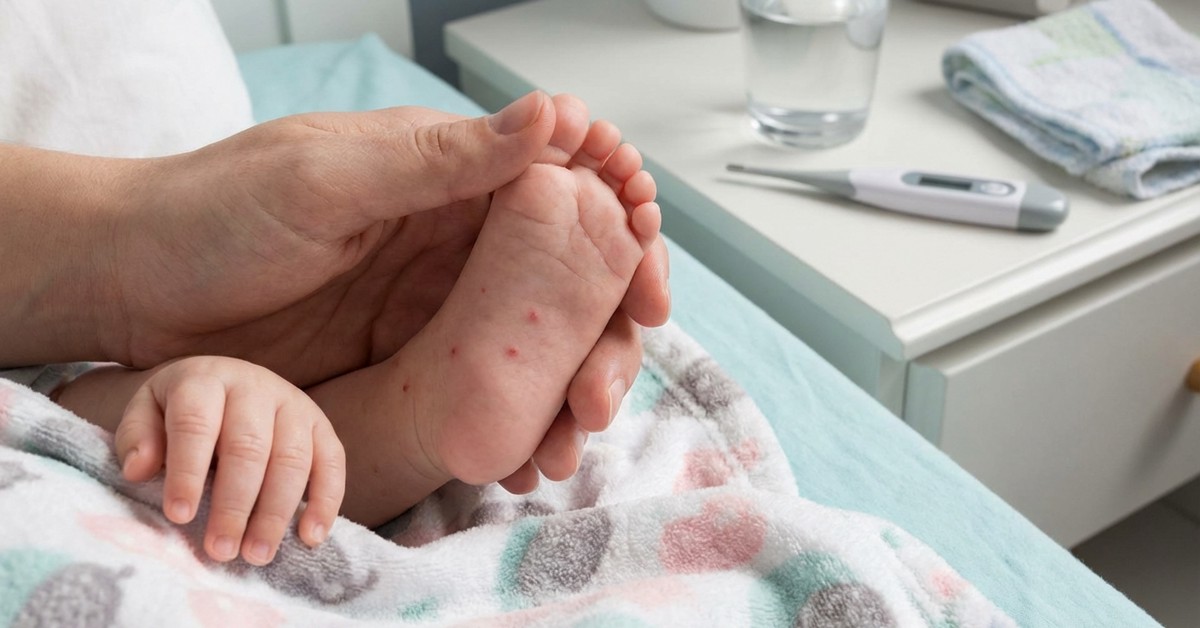
- A rash or blisters on hands and feet (sometimes also buttocks, legs, or arms)
Adults can catch it too, especially parents and caregivers.
HFMD symptoms in adults
Some pregnant people never develop symptoms even with heavy household exposure. Others feel like they have a small, annoying flu and then the rash shows up and ruins everyone’s week.
Common symptoms
- Fever (often low-grade, sometimes higher)
- Sore throat
- Fatigue and body aches
- Mouth sores that make it uncomfortable to eat or drink
- Rash, sometimes with tender blisters on hands and feet
Symptoms that can hit harder in adults
I’ve seen plenty of parents in triage who expected a mild cold and instead got a very painful rash and mouth sores. Adults can also develop:
- Swollen, tender hands or feet
- Headache
- Dehydration if mouth pain limits drinking
After-effects that look alarming (but usually fade)
- Peeling skin on fingers or toes 1 to 3 weeks later
- Nail changes (nails may loosen or shed weeks later in some cases)
Those delayed skin and nail changes can look dramatic, but they typically resolve with time.
HFMD vs fifth disease
If you’ve ever been warned about exposure to fifth disease during pregnancy, you might be wondering if HFMD is the same kind of problem. It’s not.
Fifth disease has a known pregnancy risk
Parvovirus B19 can, in some cases, affect the fetus and lead to complications like fetal anemia or hydrops, especially with infection earlier in pregnancy. That is why OB offices often take fifth disease exposure very seriously and may recommend bloodwork or ultrasound follow-up.
HFMD is different
HFMD is caused by enteroviruses. In pregnancy, most exposures and infections do not cause problems for the fetus. The biggest practical concerns are usually:
- Keeping you hydrated if you get mouth sores
- Managing fever safely
- Reducing newborn exposure if you are actively ill close to delivery
Rarely, enterovirus infection around the time of delivery can be associated with newborn infection, which is why your OB and pediatric teams may pay closer attention if symptoms show up late in pregnancy.
When to call OB or midwife
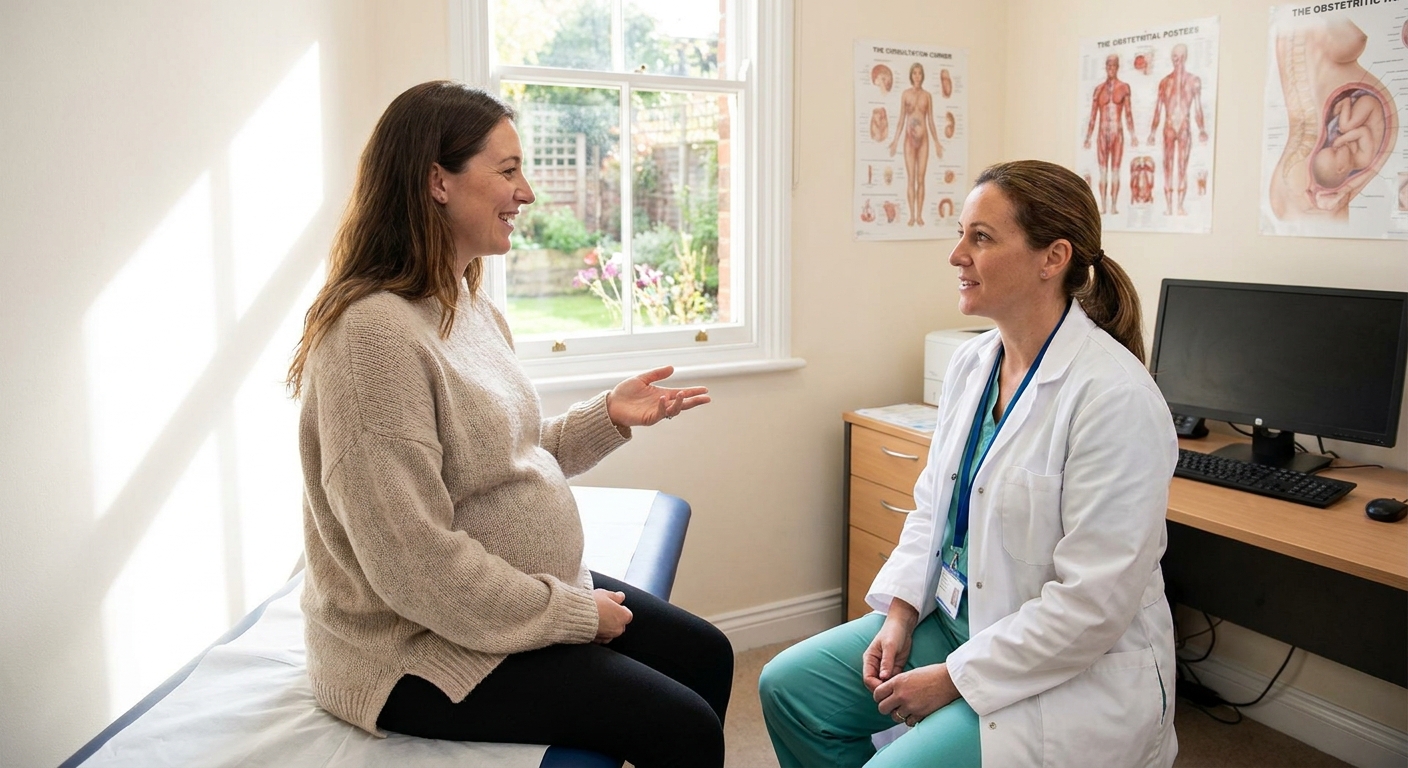
In my experience as a pediatric triage nurse and as a mom, a quick call to obstetrics is often worth it because it replaces late-night spiraling with a clear plan. Call your OB or midwife if:
- You develop fever, especially 100.4°F (38°C) or higher
- You have trouble staying hydrated due to mouth pain, vomiting, or feeling too ill to drink
- You have decreased fetal movement (once you are far enough along to notice patterns)
- You are near term and think you may have HFMD symptoms (they may want to discuss delivery timing and newborn precautions)
- You have immunocompromising conditions or take medications that suppress immunity
- You have a severe headache, stiff neck, confusion, or other concerning neurologic symptoms
- You have shortness of breath, chest pain, or feel significantly worse instead of better over time
If you are unsure whether your symptoms are HFMD or something else, it is still worth checking in. Pregnancy and “random viral stuff from my kid” can overlap in unhelpful ways.
Get urgent care or emergency care now if
- You cannot keep fluids down or have signs of dehydration (very dark urine, dizziness, fainting)
- Your fever is high, persistent, or you feel very ill
- You have severe abdominal pain, vaginal bleeding, leaking fluid, or regular contractions
- You notice markedly reduced fetal movement
How contagious it is at home
This is the part nobody wants to hear at 3 AM: HFMD spreads easily in families, and the timing can be messy.
Typical contagious window
- Most contagious: during the first week of illness, especially while symptoms are active and there is lots of saliva, coughing, runny nose, and blistering
- Still contagious after symptoms improve: the virus can continue to shed, especially in stool, for weeks
That does not mean you are guaranteed to catch it for weeks. It means the household is dealing with a virus that can linger in the background, particularly when diapers or toileting are involved.
Incubation period
After exposure, symptoms usually show up in about 3 to 6 days (sometimes closer to a week). In real homes, that can create a domino effect:
- Child A gets sick.
- Three to six days later, Child B or a parent gets symptoms.
- Another few days later, someone else has it.
It can feel like HFMD is “restarting,” when it’s often just staggered incubation.
Keeping a sick kid home
Every daycare and school has its own rules, so follow their guidance. In general, many programs focus less on the rash itself and more on whether your child:
- Has a fever
- Is too uncomfortable to participate in normal activities
- Has uncontrolled drooling from mouth sores (because it spreads germs everywhere)
From a parent-logistics standpoint, HFMD is frustrating because a child can look better but still be shedding virus. That is another reason hygiene at home matters even after the “worst week” passes.
Reduce risk without a laboratory fantasy
If your child is sick, you will still cuddle them. You will still hand them water. You will still pick up the dropped pacifier that somehow always lands in the worst spot. The goal is risk reduction, not perfection.
Highest-impact steps
- Handwashing with soap and water after diaper changes, bathroom help, handling tissues, and before eating. Alcohol-based sanitizer is helpful, but soap and water is especially important after stool exposure.
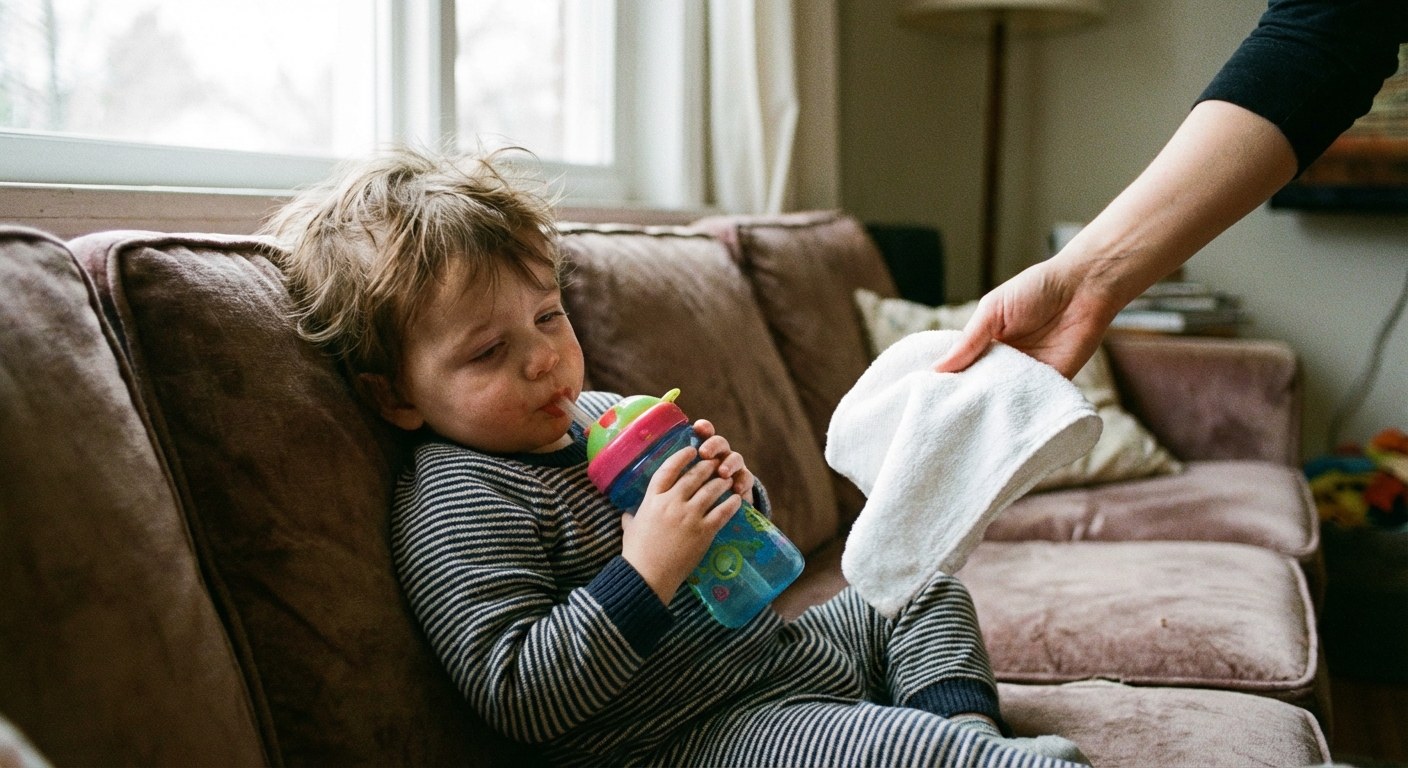
- Stop sharing cups, utensils, straws, toothbrush storage areas, and towels.
- Contain saliva as much as you can: drool, pacifiers, and chewed toys are prime spreaders.
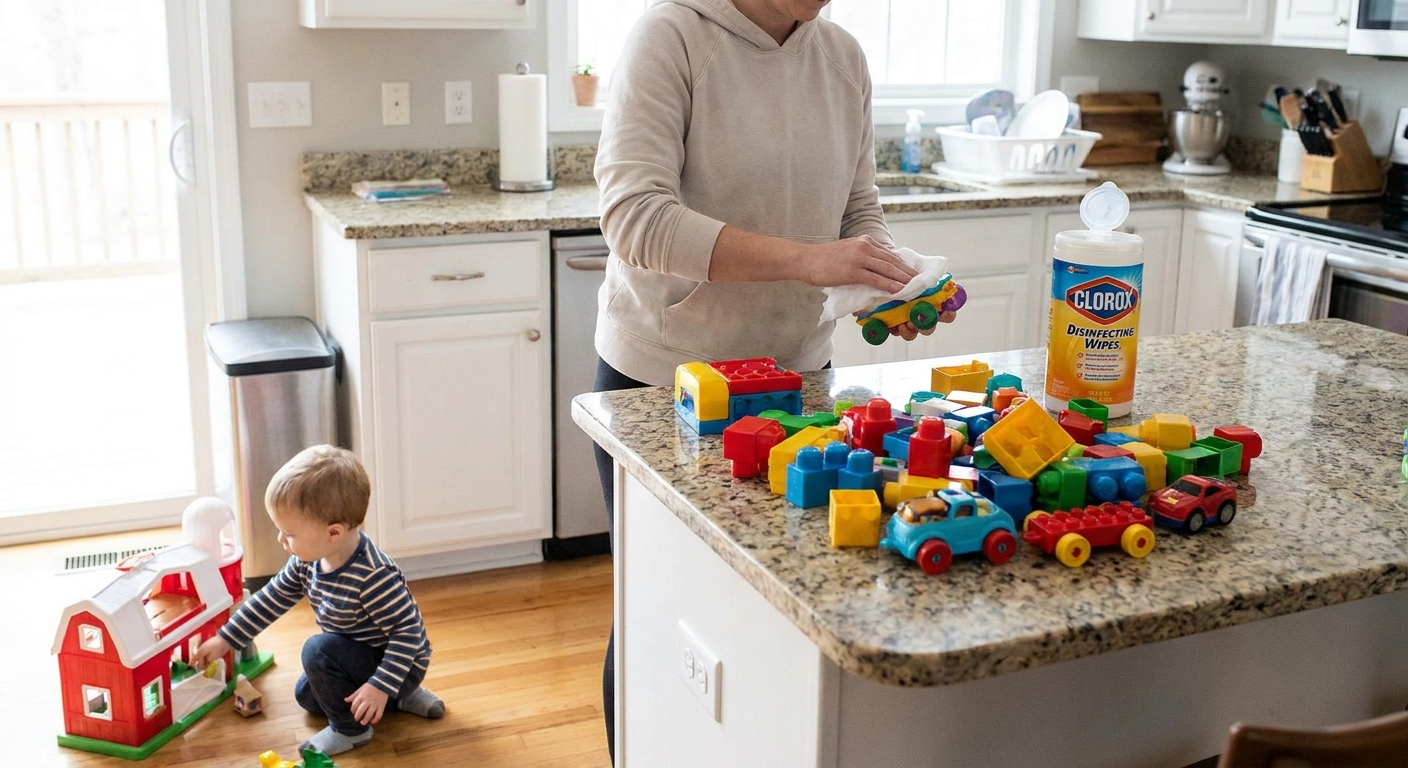
- Clean high-touch surfaces daily for the first week: doorknobs, light switches, faucets, phone screens, remote controls.
- Laundry basics: wash soiled bedding, towels, and clothing normally. No need for hazmat protocols, just avoid hugging a pile of dirty laundry to your face.
Diapering and potty help matters
Enteroviruses can shed in stool for weeks. If you are pregnant and your child is in diapers or still needs help wiping:
- Use disposable gloves if you want to, especially for diaper changes.
- Wash hands thoroughly right after.
- Disinfect the changing area regularly.
If you are close to delivery and your child is currently sick, this is a good time to accept help with diapering and bath time if you have a partner, family member, or trusted friend available.
If you get HFMD while pregnant
There is no specific antiviral medication for routine HFMD. Treatment is supportive.
Fever and pain
- Acetaminophen is commonly used in pregnancy for fever and pain. Follow your OB’s guidance on dosing.
- Avoid taking any medication you are unsure about. When in doubt, call obstetrics.
- As a general rule in pregnancy, avoid aspirin unless your clinician has specifically put you on it for a pregnancy-related reason.
Mouth sores
- Choose cool, soft foods: yogurt, smoothies, applesauce, soups that are not hot.
- Avoid acidic and spicy foods that sting.
- Small, frequent sips of water or electrolyte drinks can prevent dehydration.
- Be cautious with topical numbing mouth products (like benzocaine) unless your OB says it is OK for you.
Hydration check
A simple home check: you should be peeing regularly, and your urine should be pale yellow. If you are barely peeing or it’s very dark, that is a sign to call.
Does trimester matter?
Most of the time, HFMD during pregnancy stays in the “miserable but manageable” category. Still, your OB may think about timing differently depending on where you are:
First trimester
The main concern is usually fever and dehydration. Call your OB if you have a fever, cannot keep fluids down, or feel significantly ill.
Second trimester
Supportive care and hydration still matter most. If you have symptoms, it is reasonable to let your OB know, especially if fever is involved.
Third trimester and near delivery
This is when obstetrics may be most interested in hearing from you, not because HFMD usually causes pregnancy loss, but because the goal is to avoid you or the baby getting sick right around delivery. If you have symptoms close to your due date, your team may want a plan for newborn exposure and what to watch for.
Newborn concerns late in pregnancy
If your child has HFMD and you are near term, it is understandable to worry about your newborn catching it. Newborns can get more ill from some viral infections than older kids do, so obstetric and pediatric teams take newborn fever and illness seriously.
The practical takeaway is not panic. It’s planning:
- Tell your OB if you have symptoms close to delivery.
- Tell your baby’s pediatrician about recent household HFMD when you schedule newborn care.
- Be extra careful with handwashing and saliva exposure once baby arrives.
If your newborn ever develops a fever (often defined as 100.4°F or 38°C or higher rectally), seek medical care urgently. This is especially strict for babies under 28 days, and still urgent for young infants under 3 months as directed by your pediatrician.
Quick FAQ
Can I get HFMD more than once?
Yes. There are multiple viruses that can cause HFMD, so prior infection does not guarantee lifelong protection.
Can I test to see if it’s HFMD?
Most cases are diagnosed clinically based on symptoms and exposures. Testing is not always necessary, but your OB may recommend evaluation if symptoms are severe or unclear.
Is there a vaccine?
Not routinely in the United States for the typical viruses that cause HFMD.
What if I have no symptoms but my child does?
Most pregnant parents in that situation simply monitor themselves, practice careful hygiene, and contact OB if symptoms develop. If you are very close to your due date, it is still reasonable to notify your OB so you have guidance if anything changes.
When should I wonder if it is something else?
If a rash is widespread and very itchy, if you develop blisters in many areas beyond the typical hands, feet, and mouth pattern, or if you feel much sicker than expected, get checked. Pregnancy is not the time to tough it out through a viral rash mystery.
A final human note
HFMD has a special talent for showing up when you are already running on fumes. If you are pregnant, tired, and now disinfecting doorknobs like it’s your part-time job, I see you.
Focus on the big wins: wash hands, avoid sharing cups and utensils, stay hydrated, treat fever appropriately, and loop in your OB if you develop symptoms or you’re near delivery. You do not need to sterilize your entire home at midnight. You need a plan and a little grace.

Sarah Mitchell
Sarah Mitchell is a Registered Pediatric Nurse and a mother of three who has spent over a decade helping families navigate the beautiful, chaotic early years of childhood. She combines evidence-based medical knowledge with real-world parenting experience to offer practical, compassionate advice. At Awesome Parent, Sarah's mission is to help exhausted parents find solutions, trust their instincts, and finally get some sleep.