Honey-crusted sores, quick spread, and lots of parent worry. Here’s how to recognize impetigo, treat it safely, prevent reinfection, and know when it’s okay ...
Impetigo vs. Cold Sores on a Child’s Face

Sarah Mitchell
Sarah Mitchell is a Registered Pediatric Nurse and a mother of three who has spent over a decade helping families navigate the beautiful, chaotic early years of childhood. She combines evidence-based medical knowledge with real-world parenting experience to offer practical, compassionate advice. At Awesome Parent, Sarah's mission is to help exhausted parents find solutions, trust their instincts, and finally get some sleep.
There are few parenting moments more annoying than this one: you finally get your child out the door, and in the daylight you notice it. A crusty patch around the nose. Or a cluster of little blisters on the lip. Then comes the question I heard constantly as a pediatric triage nurse: “Is this impetigo or a cold sore?”
They can look similar at first glance, they both spread, and kids are world-class at touching their faces and then touching everything else. The good news is that there are a few simple pattern clues that usually point you in the right direction.

Quick visual clue: crusts vs. clustered blisters
If you only remember one thing at 3 a.m., remember this:
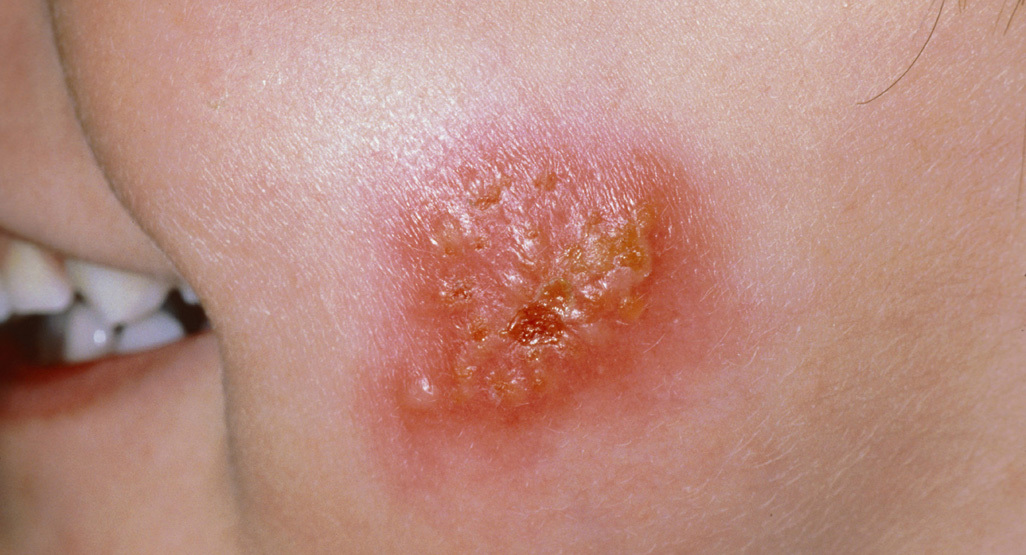
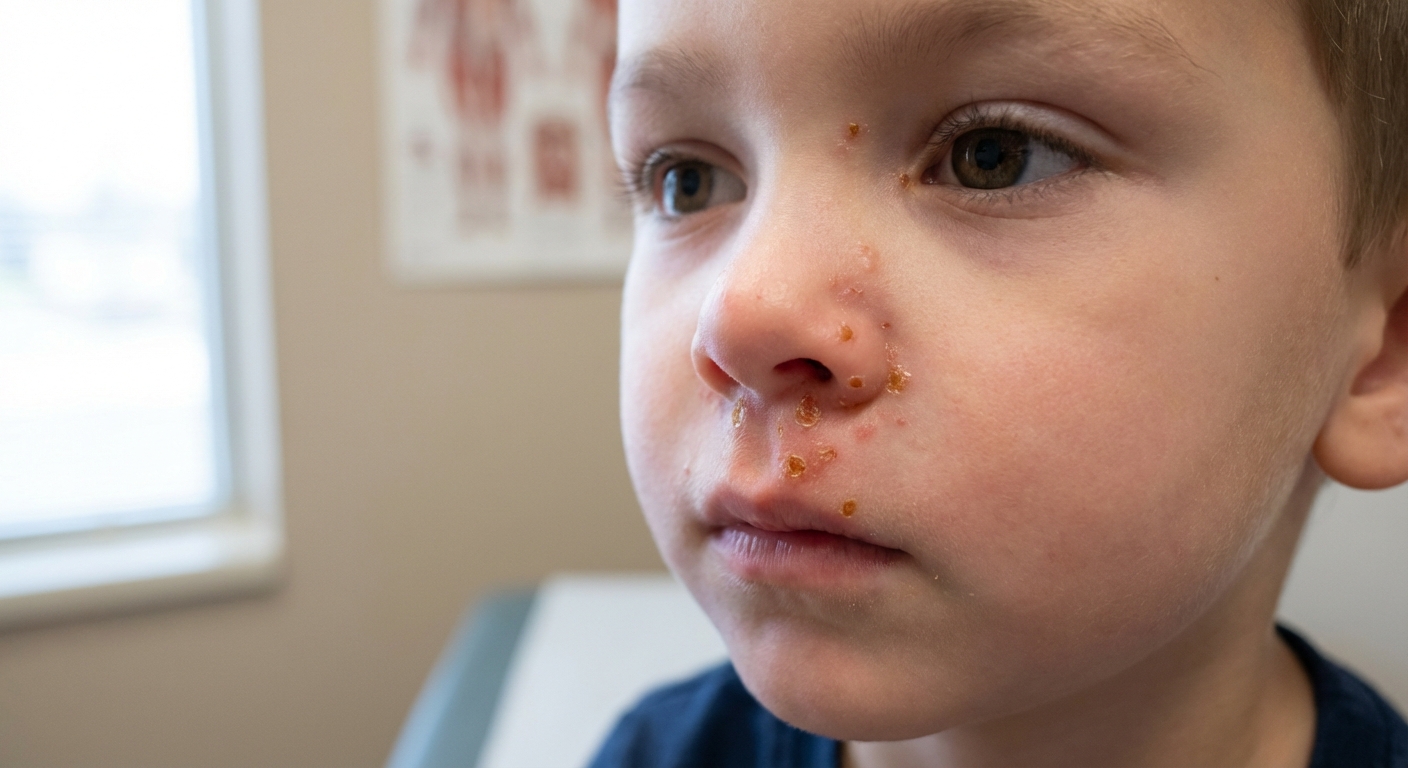
- Impetigo often becomes honey-colored crusts, especially around the nose and mouth. It can start as small red bumps or little blisters, then oozes and crusts over.
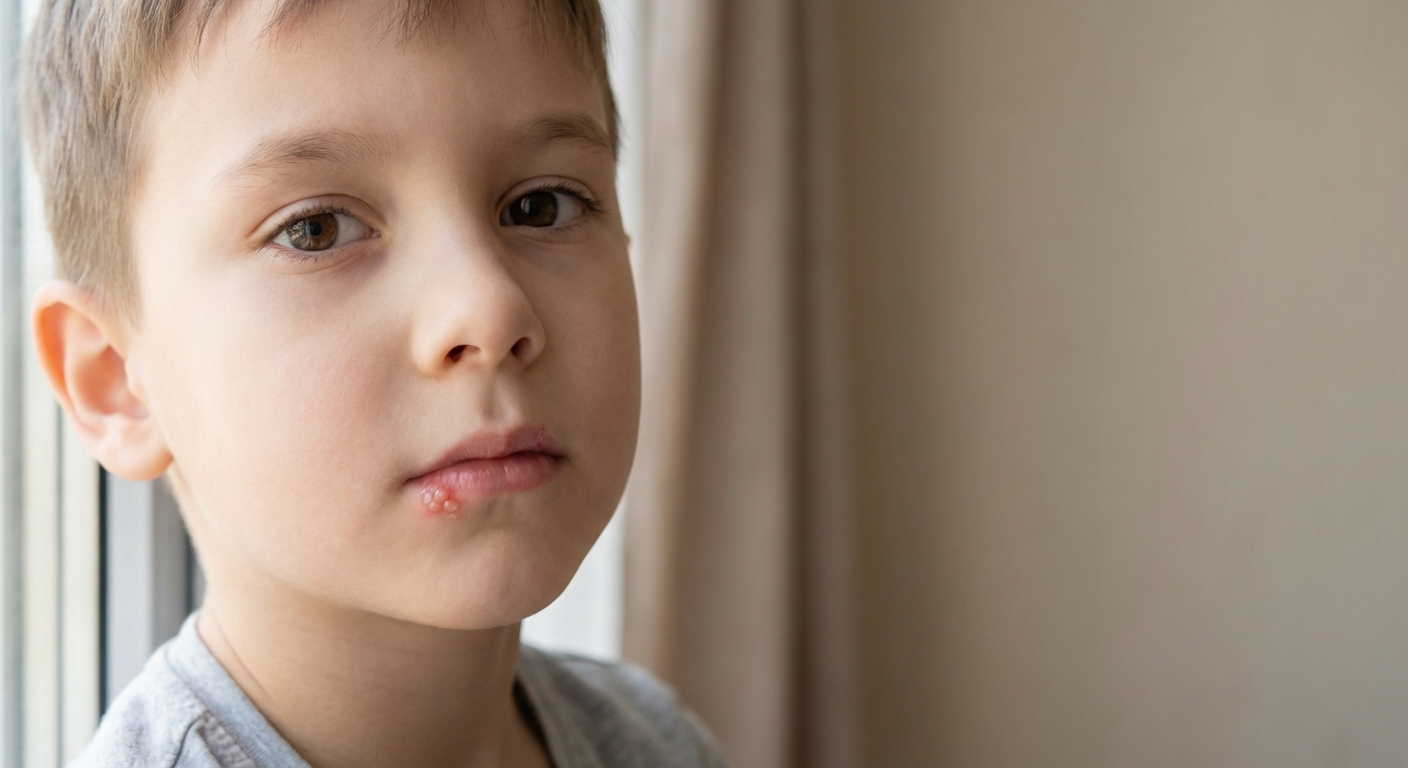
- Cold sores (HSV-1) usually show up as grouped tiny fluid-filled blisters on a red base, most often at the lip border (where the lip meets the skin). They later crust, but the earlier “cluster” is a big clue.
Both can itch or hurt. Both can crust. So the pattern and location matter as much as the crust itself.
What impetigo tends to look like
Impetigo is a common bacterial skin infection (often staph or strep). On the face, it loves the area around the nostrils because kids wipe runny noses and get tiny breaks in the skin.
Typical impetigo pattern
- Red patch or small blisters that ooze
- Dries into a golden or honey-colored crust
- May spread outward in new little spots, especially where kids scratch or rub
- Often more itchy or irritating than painful, but it can be tender, especially with larger blisters (bullous impetigo) or lots of raw skin
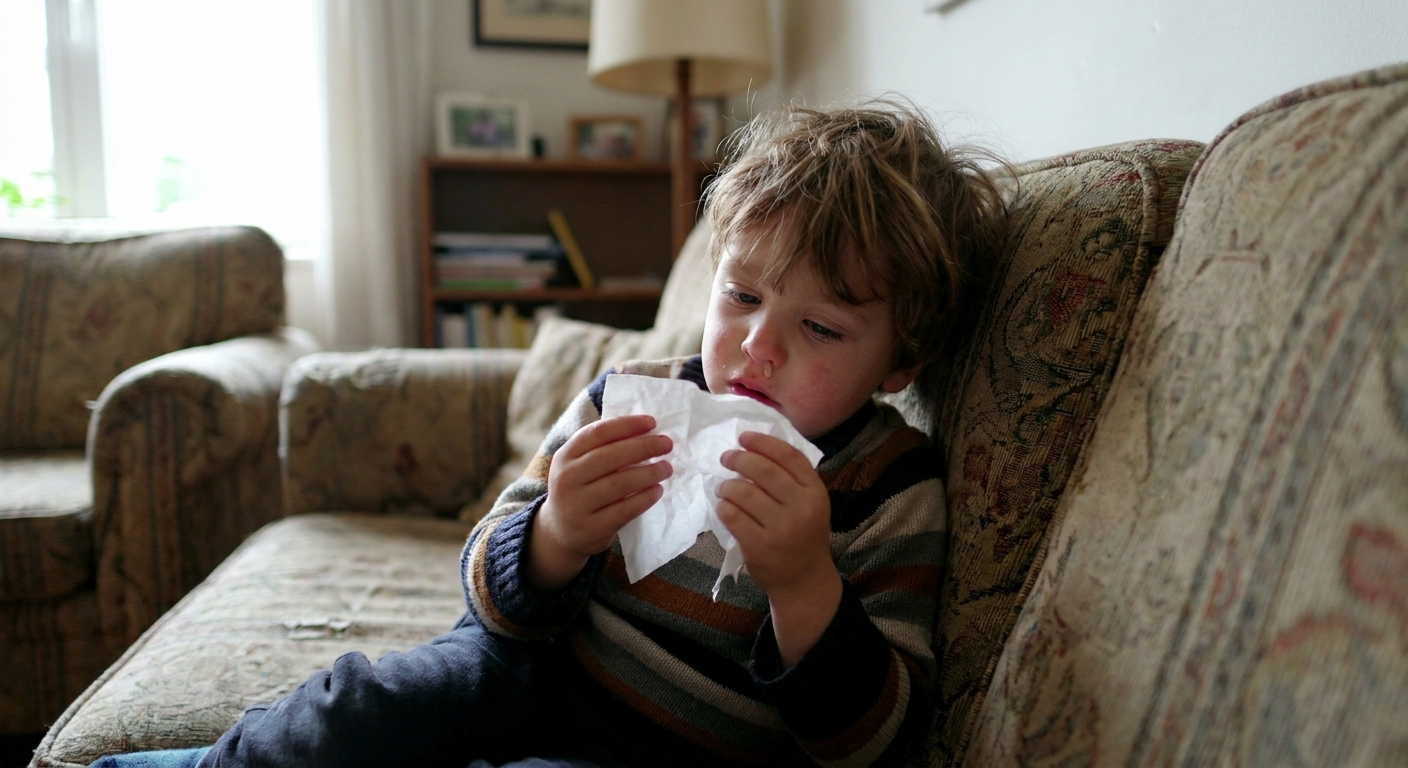
Impetigo can pop up after eczema flares, bug bites, a cold with lots of nose wiping, or any small scrape. The bacteria take advantage of broken skin.
What cold sores tend to look like
Cold sores are caused by herpes simplex virus type 1. Many people get infected in childhood. The virus can “wake up” later and cause a sore in the same general area again.
Typical cold sore pattern
- A tingly, burning, or sore feeling first (older kids may tell you this)
- Then clusters of tiny blisters close together
- Commonly at the edge of the lip, but can be around the mouth or nose
- Blisters break, then crust and heal over about 7 to 14 days
A first cold sore episode in a younger child can look more dramatic, with more mouth discomfort and fussiness. If your child seems very uncomfortable, is drooling a lot, or refuses to drink, call your pediatrician.
How each one spreads
Both impetigo and cold sores spread through contact, but they spread in slightly different patterns.
Impetigo spread pattern
- Spreads when bacteria from the sore get onto fingers, towels, pillowcases, clothing, or other skin.
- It can be contagious even when it is not obviously oozing, especially if there are fresh crusts and kids are touching it.
- Contagiousness usually drops significantly after effective antibiotic treatment has been started. Many schools and daycares use a 24-hour rule, but policies vary.
- Often creates new spots nearby (for example, from the nose to the cheek), or in siblings via shared linens.
Cold sore spread pattern
- Most contagious when there are active blisters or weeping sores.
- Spreads through saliva or direct contact (kissing, sharing cups, utensils, towels, washcloths, lip balm).
- Can spread from the mouth to other areas the virus touches, especially the eyes or broken skin.
Bottom line: For either rash, your best defense is simple and boring: handwashing, separate towels, and keeping little fingers away from the sore as much as humanly possible.

What not to pick, pop, or scrub
I know the crust is tempting. I also know kids will pick it the second your back is turned. But picking makes both problems worse.
- Do not pick crusts (impetigo or cold sores). Picking reopens skin, increases spread, and raises the risk of scarring or secondary infection.
- Do not pop blisters. For cold sores, popping spreads virus. For impetigo, it spreads bacteria.
- Do not use harsh antiseptics like hydrogen peroxide repeatedly. It can irritate skin and slow healing. Gentle soap and water is usually enough.
- Avoid shared topical products like family tubs of ointment, communal washcloths, or shared lip balm while you are sorting out what this is.
- Avoid “cover-up” makeup on kids for facial sores. It can trap moisture and spread germs on applicators.
If you need to clean the area, use warm water and a gentle cleanser, then pat dry. If your clinician prescribes a medication, follow their instructions about washing and application.
How treatment usually looks
I am not going to give you dosing here, but it helps to know what clinicians typically reach for so you understand why getting the diagnosis right matters.
- Impetigo: often treated with a prescription topical antibiotic when it is limited to a small area. If it is widespread, fast-spreading, or involves multiple sites, clinicians may use an oral antibiotic.
- Cold sores: sometimes treated with antiviral medication, especially for a first outbreak, more severe symptoms, immune system concerns, or cases where starting early could shorten the course.
This is also why a topical antibiotic alone will not help much if the pattern is truly HSV.
How clinicians confirm it
Most of the time, the diagnosis is made by exam plus the story of how it started and spread. If it is not clear, your clinician may consider testing:
- Impetigo: sometimes a swab for bacterial culture, especially if it is not responding to treatment or there is concern for resistant bacteria.
- Cold sores: sometimes a swab for HSV PCR (or viral culture) when the appearance is atypical, severe, or the result would change management.
If you are unsure, take a quick photo in good light before you clean it. One close-up and one from a little farther back (to show location on the face) can help a lot.
Which one needs same-day care?
This is the part parents care about most: “Do we need to be seen today?”
Same-day care is a good idea if you suspect a cold sore AND any of these are true
- Eye involvement: redness, swelling of eyelids, eye pain, light sensitivity, or your child says their eye feels “scratchy.” HSV near the eye can become serious quickly.
- Your child is an infant (especially under 3 months) and has facial blisters or a concerning rash.
- First outbreak and your child looks very ill, won’t drink, is drooling a lot, or seems in significant pain.
- Immune system concerns (for example, on chemotherapy or high-dose steroids) or a complex medical history where viral infections can hit harder.
Cold sores can sometimes benefit from antiviral medication, and antivirals work best when started early.
Same-day care for suspected impetigo is reasonable if
- The rash is spreading quickly, involves a larger area, or there are multiple new spots.
- There is fever, significant swelling, increasing pain, or redness spreading beyond the crusted area.
- The sore is close to the eyes or your child’s eyelid looks puffy.
- Your child is very young, has eczema with lots of open skin, or has a weakened immune system.
One more reason to go promptly: a rapidly spreading, warm, tender facial rash with fever can be a deeper skin infection like cellulitis (or erysipelas), and that is not something to watch and wait on.
At-home steps while you wait
If you are calling your pediatrician or heading to urgent care later today, here’s what you can do now to reduce spreading and keep your child comfortable.
- Hand hygiene: wash your child’s hands often and yours too, especially after touching their face.
- Separate towels and washcloths: one child, one towel. Launder in hot water if possible.
- Keep nails short: less damage from scratching means less spread.
- Use a barrier for drool if the area is irritated: a thin layer of plain petroleum jelly around (not directly into) the sore can reduce friction from constant wiping.
- Do not share cups, utensils, or lip products if you suspect a cold sore.
If your child is in daycare or school, ask your clinician about return timing. Many settings follow “24 hours after starting appropriate treatment” for impetigo, but policies vary, and cold sores have different guidance.
When it might be neither
Four quick curveballs I saw a lot in clinic:
- Irritant rash from drool or wiping: more like red, chapped skin without blisters or honey crust, often worse in winter or during constant runny noses.
- Eczema with infection on top: eczema can crack and weep, and then bacteria can move in.
- Eczema herpeticum: this is when HSV spreads over eczema-prone skin and causes rapidly spreading, painful blisters, often with fever and a sick-looking child. This is same-day urgent.
- Canker sores: these are ulcers inside the mouth (cheeks, gums, tongue). They are not the same as cold sores on the outside lip border.
If your child has eczema and suddenly develops painful blisters, fever, or a rapidly worsening rash, get medical advice promptly.
Fast checklist
- Looks like honey-colored crusts, often around nostrils: more likely impetigo.
- Starts as a tight cluster of tiny blisters on red skin, often at lip border: more likely a cold sore.
- Spreads by scratching and shared towels: both can, but impetigo spreads especially easily through skin contact and linens.
- Needs same-day evaluation: any rash with eye symptoms, a very young baby, a very sick-looking child, fever with fast spread, or significant pain.
FAQ
Can a cold sore turn into impetigo?
It can. Any open sore can get a secondary bacterial infection from picking, wiping, or touching. If a cold sore suddenly develops thicker honey-colored crusting, spreads beyond the original cluster, or there is increasing redness and swelling, check in with your child’s clinician.
Can impetigo look like blisters at first?
Yes. Early impetigo can start with small blisters or pimply bumps before it crusts. That is why location, pattern, and how it evolves over a day or two are helpful clues.
Should I cover it with a bandage?
On the face, bandages are tricky and often end up rubbed off. If your child can tolerate it, keeping the area clean and discouraging touching is usually more realistic. For impetigo elsewhere on the body, covering oozing spots can reduce spread.
What should I tell daycare?
Tell them your child has a potentially contagious skin sore and you are seeking medical advice. Many daycares request treatment has started for impetigo before return, often after 24 hours of antibiotics. Cold sores often do not require exclusion unless the child cannot keep hands away from the sore or has drooling that cannot be managed.
When to call urgently
Call your pediatrician right away or seek urgent care if your child has any of the following:
- Rash or sores near the eye, or any eye redness, swelling, pain, or light sensitivity
- Fever plus rapidly spreading facial rash
- A newborn or young infant with blisters or facial sores
- Your child seems very unwell, dehydrated, or is refusing fluids
- Fast worsening redness, swelling, warmth, or pain of the surrounding skin
- Widespread painful blisters in a child with eczema (possible eczema herpeticum)
And if you are staring at your child’s face thinking, “This just looks wrong,” trust that instinct. You do not need to be 100 percent sure which one it is before you reach out.
Sarah Mitchell
Sarah Mitchell is a Registered Pediatric Nurse and a mother of three who has spent over a decade helping families navigate the beautiful, chaotic early years of childhood. She combines evidence-based medical knowledge with real-world parenting experience to offer practical, compassionate advice. At Awesome Parent, Sarah's mission is to help exhausted parents find solutions, trust their instincts, and finally get some sleep.