
Not sure what to do with the machine, cup, and tiny mask you were handed? Here’s how to set up a toddler nebulizer, get through the treatment, clean it safel...
Inhaler and Spacer With a Toddler

Sarah Mitchell
Sarah Mitchell is a Registered Pediatric Nurse and a mother of three who has spent over a decade helping families navigate the beautiful, chaotic early years of childhood. She combines evidence-based medical knowledge with real-world parenting experience to offer practical, compassionate advice. At Awesome Parent, Sarah's mission is to help exhausted parents find solutions, trust their instincts, and finally get some sleep.
I used to teach inhaler and spacer technique all the time as a pediatric triage nurse. Then I had my own kids and discovered a humbling truth: it is one thing to explain it in a calm exam room, and a whole different thing to do it at home with a toddler who suddenly has the upper body strength of a tiny superhero.
The good news: you do not need perfect cooperation to make an inhaler plus spacer work. You need a simple routine, a decent mask seal, and enough calm repetition that your child stops treating the spacer like a personal insult.
Before you start: quick safety checks
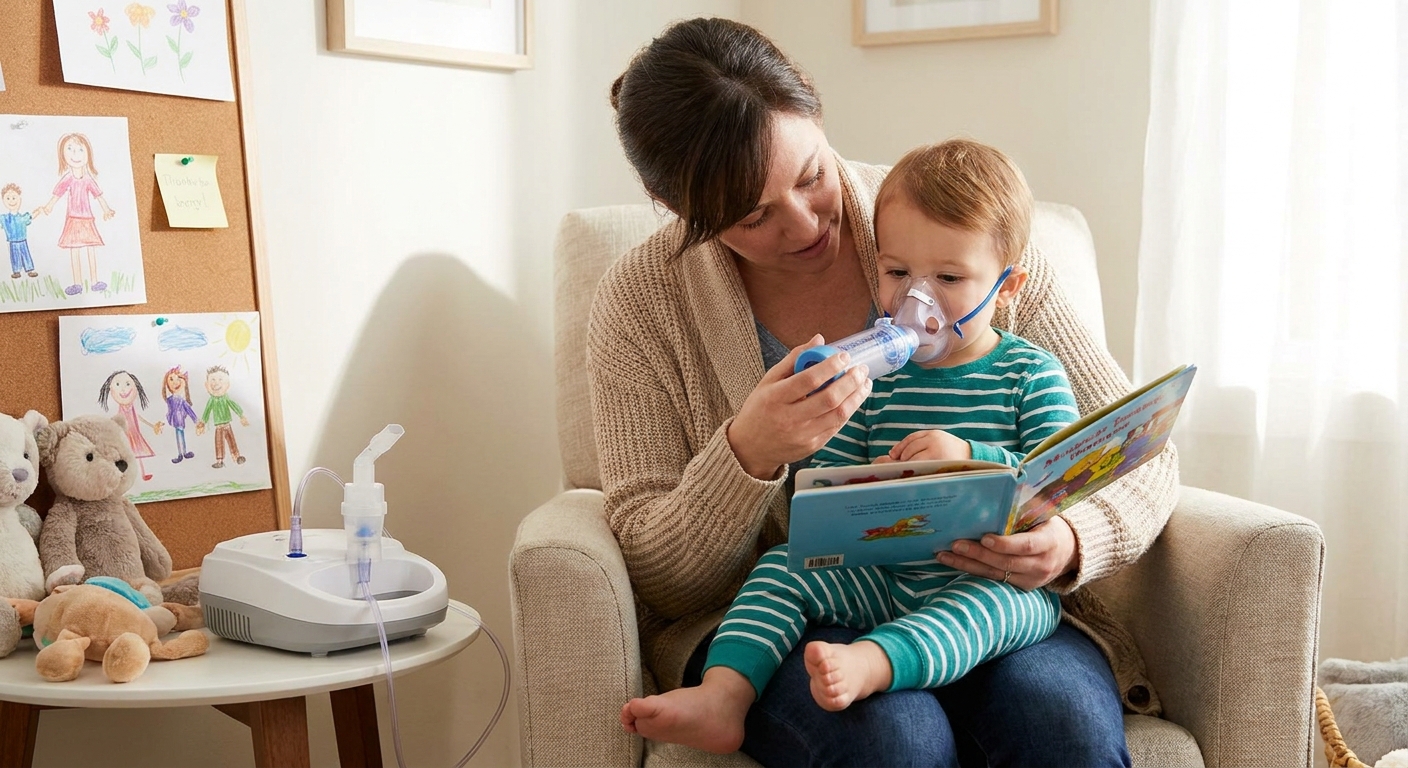
- Use the right equipment. Toddlers typically need a spacer with a face mask, not just a mouthpiece. If you are not sure you have the right size mask, ask your child’s clinician or pharmacist.
- Know which inhaler you have. Many families use a metered-dose inhaler (MDI) with a spacer. This article focuses on that setup. If you have a dry powder inhaler, technique is different and many toddlers cannot use it well.
- Check the inhaler and spacer condition. Make sure the canister is seated correctly, the spacer is not cracked, and the mask edge is soft and intact.
- Prime and shake if instructed. Some MDIs need priming if new or not used recently. Follow the device instructions or the pharmacist’s guidance.
- No dose advice here. Always follow your child’s prescribed instructions for how many puffs and how often.
If your toddler is struggling to breathe, looks blue or gray around the lips, cannot speak or cry normally, is very sleepy or panicky, or you see chest or neck pulling with each breath, treat that as urgent and follow your emergency plan or seek immediate care.
If you are needing the rescue inhaler more often than your plan says, or symptoms keep bouncing back soon after treatment, call your child’s clinician. That is a “do not wait” problem even if it is not a 911 problem.
Set up a same-every-time routine
Toddlers do best when the steps feel predictable. You are aiming for calm and consistent, not a long negotiation.
What to gather
- Inhaler (MDI)
- Spacer
- Mask attachment (toddler size)
- Tissue (for drool or a runny nose)
- Sticker, small book, or a favorite song on standby (optional, but helpful)
Where to do it
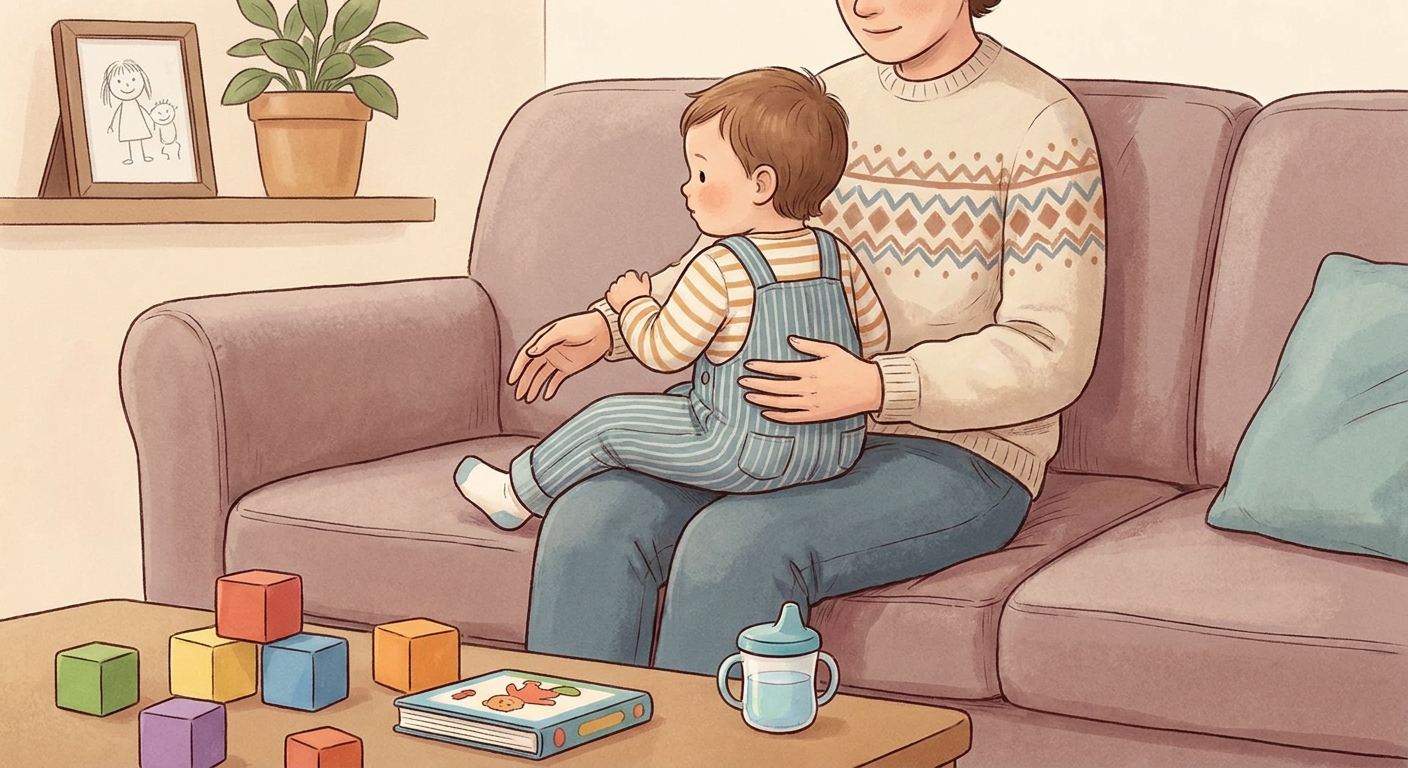
Pick a spot where you can safely hold your child: a couch, rocking chair, or the floor with your back against a wall. Avoid doing it while your toddler is standing or running around. We want stable bodies and steady hands.
Step-by-step: inhaler + spacer + mask
Your goal is to get the medicine into the spacer, then keep the mask sealed long enough for your child to take several calm breaths.
1) Position your toddler
Upright is best. Sitting helps the lungs open up and makes breathing easier. If your child is upset, your calm body posture matters more than you think. Shoulders down, voice low, movements slow.
2) Clear the nose if you need to
If your toddler’s nose is stuffed, they may fight the mask harder and breathe less effectively. A quick wipe, saline spray, or gentle suction (if that is part of your normal routine) can help. Do not turn it into a battle, just do what is quick and reasonable.
3) Assemble and shake
- Insert the inhaler into the spacer.
- Attach the mask if it is separate.
- Shake the inhaler as directed.
4) Make a good mask seal
Place the mask over your toddler’s nose and mouth. Press gently but firmly so air does not leak out around the edges.
- Seal tips: Aim the mask straight on, not tilted. Use your thumb and index finger to hold the mask rim evenly all the way around.
- Pacifier note: If your child uses a pacifier, remove it during the puff and breaths. It usually breaks the seal.
5) Give one puff into the spacer
With the mask sealed, press the inhaler once. Hold the spacer level (or however your device instructions show).
Important: Most clinicians and manufacturers recommend giving one puff at a time with breaths in between. If you fire multiple puffs rapidly into the spacer, more medicine can stick to the chamber instead of being inhaled. Follow your child’s specific device instructions and plan.
Timing note: For some medicines, especially rescue bronchodilators, some clinicians recommend waiting about 30 to 60 seconds between puffs. Others do not emphasize a specific wait as long as your child gets the breaths in and you shake again if directed. When in doubt, follow your prescribed plan or ask your pharmacist to walk you through your exact inhaler.
6) Count breaths, not seconds
After the puff, keep the mask sealed while your toddler takes several normal breaths. For little kids, many clinicians teach 5 to 6 breaths per puff, and sometimes up to 10 for younger toddlers or when breathing is fast. Your device and your child’s plan may have a specific recommendation, so use that if you were given one.
- If your spacer has a valve you can see moving, watch it to help you count breaths.
- If your child is crying, they are still moving air, so some medicine may get in. But crying usually means less medicine reaches the lower airways. Calmer breathing is better, so focus on keeping the seal and getting a few steadier breaths during pauses.
Quick recap
- Mask on (nose + mouth)
- 1 puff
- 5 to 6 calm breaths (up to 10 for younger toddlers if that is what you were taught)
- Repeat one puff at a time as prescribed
7) Repeat puffs only as prescribed
If more than one puff is prescribed, let your child finish those breaths, then shake again if directed and repeat the process. If your plan tells you to wait between puffs, follow that too.
8) Mouth and face care (when it matters most)
After-care depends a bit on the medicine:
- Inhaled corticosteroids (controller inhalers): Mouth rinse and spit is ideal, but not always realistic for toddlers. A few sips of water, a drink of milk, or wiping the inside of the mouth and lips can help. If you use a mask, wipe the face too. This is especially important to lower the risk of hoarseness and oral thrush.
- Rescue bronchodilators (like albuterol): Rinsing is usually less critical, but wiping drool and keeping the mask clean still helps with comfort and skin irritation.
Getting a seal when they fight it
If your toddler hates the mask, you are not alone. Here are strategies that are both practical and commonly used in pediatrics.
Use the hug hold
Sit your toddler on your lap facing outward. Wrap one arm around their torso like a snug seatbelt, gently pinning their arms close to their body. Use your other hand to hold the mask and spacer in place.
- Keep your hold firm but not forceful.
- Stay calm and boring. Toddlers feed off big reactions.
- As soon as the breaths are done, release and praise the effort, even if it was messy.
- If you cannot do it safely, stop and ask your child’s clinician to show you an alternative position or technique.
If they throw their head back
Try supporting the back of their head against your chest. Another option is to sit behind them on the floor with your legs in a V, letting their back rest against your body. Your body becomes the chair, which limits the dramatic backward flop.
If they are screaming
Crying is not ideal, but it does not automatically mean total failure. Focus on:
- Keeping the mask sealed
- Waiting for a brief pause in the crying to catch a few more normal breaths
- Doing the next puff only when you can maintain the seal again
If every session is a full meltdown, talk with your child’s clinician. Sometimes technique tweaks, mask fit changes, or timing changes make a big difference.
Make it less scary over time
- Let them explore it when they are well. Let your toddler hold the spacer, put the mask on a stuffed animal, or help you count breaths.
- Give choices that do not change the medical step. Do you want to sit on my lap or on the couch? Do you want the blue mask or the clear mask?
- Use a predictable script. Something like: Mask on, puff, ten breaths, all done. Same words, same rhythm.
- Pair it with something short and consistent. One song, one book page, one sticker after. Keep it simple so it does not turn into bargaining.

Common mistakes and fixes
- Mask not fully covering nose and mouth. Fix: center the mask and press evenly around the rim.
- Leaky seal because the toddler is talking or laughing. Fix: aim for quiet breaths, even if it means doing it during a calmer moment like after a story.
- Too many puffs fired into the spacer at once. Fix: one puff, then breaths, then the next puff if prescribed.
- Not shaking the inhaler when directed. Fix: build shake into your routine script before each puff.
- Breaths are too fast and shallow. Fix: model slow breathing yourself. Toddlers often match your pace.
- Spacer used while lying flat. Fix: sit up. Even a slight recline is usually fine, but flat on the back is harder for effective breathing.
- Spacer never cleaned. Fix: set a reminder tied to a weekly routine, like bath night or changing sheets.
Cleaning and care
Cleaning matters for hygiene and for function. It also helps reduce static inside some spacers, which can cause medicine to stick to the sides instead of staying suspended for breathing in.
General cleaning routine
Always follow the manufacturer’s instructions for your specific spacer, but many spacers can be cleaned like this:
- Take the spacer apart (mask off, chamber separated if applicable).
- Wash in warm water with a small amount of mild dish soap.
- Do not scrub the inside of the chamber. Scrubbing can increase static. Instead, gently swish and let it soak briefly.
- Rinse lightly if instructed for your model. Some manufacturers recommend letting a thin soap film remain to reduce static, while others recommend rinsing. This is why the device instructions matter.
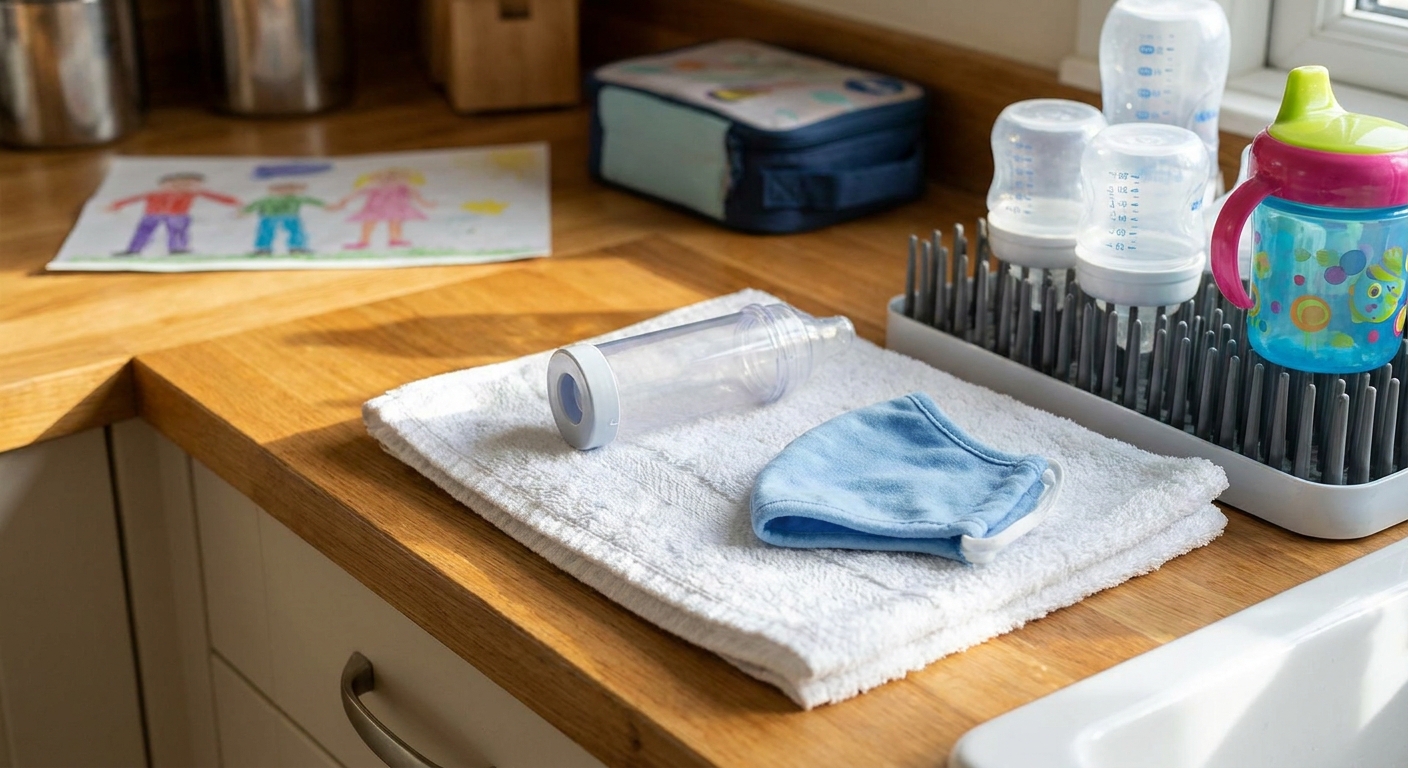
- Air-dry completely on a clean towel or drying rack. Avoid drying the inside with a cloth or paper towel unless the manufacturer says it is okay.
- Do not boil, sanitize with heat, or put it in the dishwasher unless the manufacturer specifically says your model can handle that.
Mask care
- Wash the mask with soap and water, then air-dry.
- If the mask edge becomes stiff, cracked, or warped, ask about replacing it. A poor seal makes everything harder.
Storage
- Store in a clean, dry place.
- Keep parts together so you are not hunting for the mask at 2 a.m.
When it does not seem to work
If you feel like you are doing everything right but symptoms are not improving as expected, it is worth troubleshooting with your child’s clinician. Common culprits include poor mask seal, a stuck valve, a cracked spacer, or an inhaler that is empty or not delivering properly.
About “empty inhalers”: If your inhaler has a dose counter, trust it. If it does not, ask your pharmacist how to track doses. The old float test (putting the canister in water) is unreliable and not recommended.
Bring the inhaler and spacer to your next appointment or pharmacy visit and ask for a technique check. I cannot tell you how many medicine is not working situations were actually the mask is leaking situations.
FAQ
How many breaths should my toddler take after a puff?
Many pediatric clinicians recommend roughly 5 to 6 normal breaths per puff for young children using a spacer and mask, and sometimes up to 10 for younger toddlers. Follow the guidance you were given for your child and your specific device.
Should my toddler breathe in slowly or take a big breath?
With a mask and spacer, normal calm breaths are the goal. If your toddler can do a slower breath, great. Most toddlers do best with several regular breaths rather than one perfect breath.
Can my toddler use the spacer while crying?
Some medicine may still get in if you maintain a good seal, but calmer breathing usually delivers medicine more effectively to the lower airways. Keep the seal and try to catch a few steadier breaths during pauses. If crying happens every time, practice when your child is well and ask your clinician to check mask fit and technique.
Do I need to wash the spacer every day?
Usually not, but it depends on the specific spacer and how often it is used. Many families do well cleaning weekly or as instructed. If it is visibly dirty or used during an illness with lots of mucus, clean it sooner.
My toddler hates the mask. Any quick tricks?
The fastest wins are: do it upright on your lap, use a firm but gentle hug hold, keep your words short and consistent, and practice with a stuffed animal when your child is calm. Also, ask the pharmacist to confirm the mask size. A mask that pinches or leaks can make kids fight harder.
A final pep talk
If you are wrestling a spacer onto a squirmy toddler, you are not failing. You are parenting. Keep the routine short, the seal snug, and your expectations realistic. Consistency does most of the heavy lifting.
And if you want extra reassurance, bring your setup to your child’s next visit and ask for a quick demo. Even nurses ask for refreshers sometimes. I certainly have.
Sarah Mitchell
Sarah Mitchell is a Registered Pediatric Nurse and a mother of three who has spent over a decade helping families navigate the beautiful, chaotic early years of childhood. She combines evidence-based medical knowledge with real-world parenting experience to offer practical, compassionate advice. At Awesome Parent, Sarah's mission is to help exhausted parents find solutions, trust their instincts, and finally get some sleep.