A calm, parent-friendly guide to newborn jaundice: what causes it, how to check for yellowing, what’s normal vs concerning, and when to seek urgent care.
Jaundice in Premature Babies

Sarah Mitchell
Sarah Mitchell is a Registered Pediatric Nurse and a mother of three who has spent over a decade helping families navigate the beautiful, chaotic early years of childhood. She combines evidence-based medical knowledge with real-world parenting experience to offer practical, compassionate advice. At Awesome Parent, Sarah's mission is to help exhausted parents find solutions, trust their instincts, and finally get some sleep.
When your baby arrives early, you expect a few extra checkboxes in the hospital. More monitors. More labs. More “we are just keeping an eye on this.” Jaundice is one of the biggest ones. As a pediatric triage nurse, I talked with a lot of parents who felt blindsided by how persistent jaundice can be in a premature baby, especially after you finally get home and you are trying to settle into a routine.
The reassuring truth is that jaundice is very common in preemies, and your baby’s team is usually watching it closely long before you ever notice yellow skin. The important part is understanding why it happens more often, what actually helps, how it is monitored, and what changes after discharge deserve a phone call.
Why jaundice is more common in premature babies
Jaundice is the yellow coloring of the skin and eyes caused by a buildup of bilirubin, a substance the body makes when it breaks down old red blood cells. Most newborn jaundice is related to unconjugated bilirubin, and it is very common. Premature babies tend to build up more bilirubin and clear it more slowly.
Immature liver, slower processing
A full-term baby’s liver is still learning on the job. A preemie’s liver is simply less ready. That means bilirubin does not get processed and cleared as efficiently, so levels can rise more easily and stay elevated longer.
Shorter red blood cell lifespan
Newborns have a higher red blood cell count than they need outside the womb. After birth, the body naturally breaks down some of those cells. In preemies, red blood cells tend to have a shorter lifespan, and many premature babies also have extra reasons for breakdown in the NICU, like bruising from delivery, frequent blood draws, or illness. More breakdown creates more bilirubin for the body to handle.
Feeding challenges can slow bilirubin exit
Bilirubin leaves the body through stool. Many premature babies take longer to build strong, consistent feeds because they tire easily, have weaker suck and swallow coordination, or need supplementation or tube feeds at first. When intake is lower, stooling can be slower, and bilirubin can hang around longer.
Jaundice can look mild while still needing attention
Parents often assume they will see jaundice clearly. With preemies, color changes can be subtle, and yellowing can be harder to judge by eye, especially under different lighting. This is one reason NICUs and newborn teams rely on measurements and trends rather than appearance alone.
How long can jaundice last in a preemie?
Compared with full-term newborns, jaundice in premature babies often:
- Can show up early, especially around feeding changes or after a stressful day.
- Peaks later because the liver is slower to catch up.
- Lasts longer, sometimes lingering even as the rest of your baby’s discharge goals are met.
What matters most is not the exact day count, but the overall pattern: your baby’s care team watches how bilirubin changes over time, how your baby is feeding, and whether your baby has any risk factors that make jaundice more concerning.
How bilirubin is checked
In the hospital you will hear a lot of numbers and a lot of “we are trending it.” That usually means one (or both) of these:
- Transcutaneous bilirubin (TcB), a quick check on the skin with a sensor.
- Total serum bilirubin (TSB), a blood test.
Preemies often need serum checks more frequently, especially when levels are rising, phototherapy is being considered, or your team wants the most precise number. I know it is hard to watch your baby get poked again. The goal is to treat at the right time and avoid overtreating or undertreating.
Feeding: the everyday treatment that matters
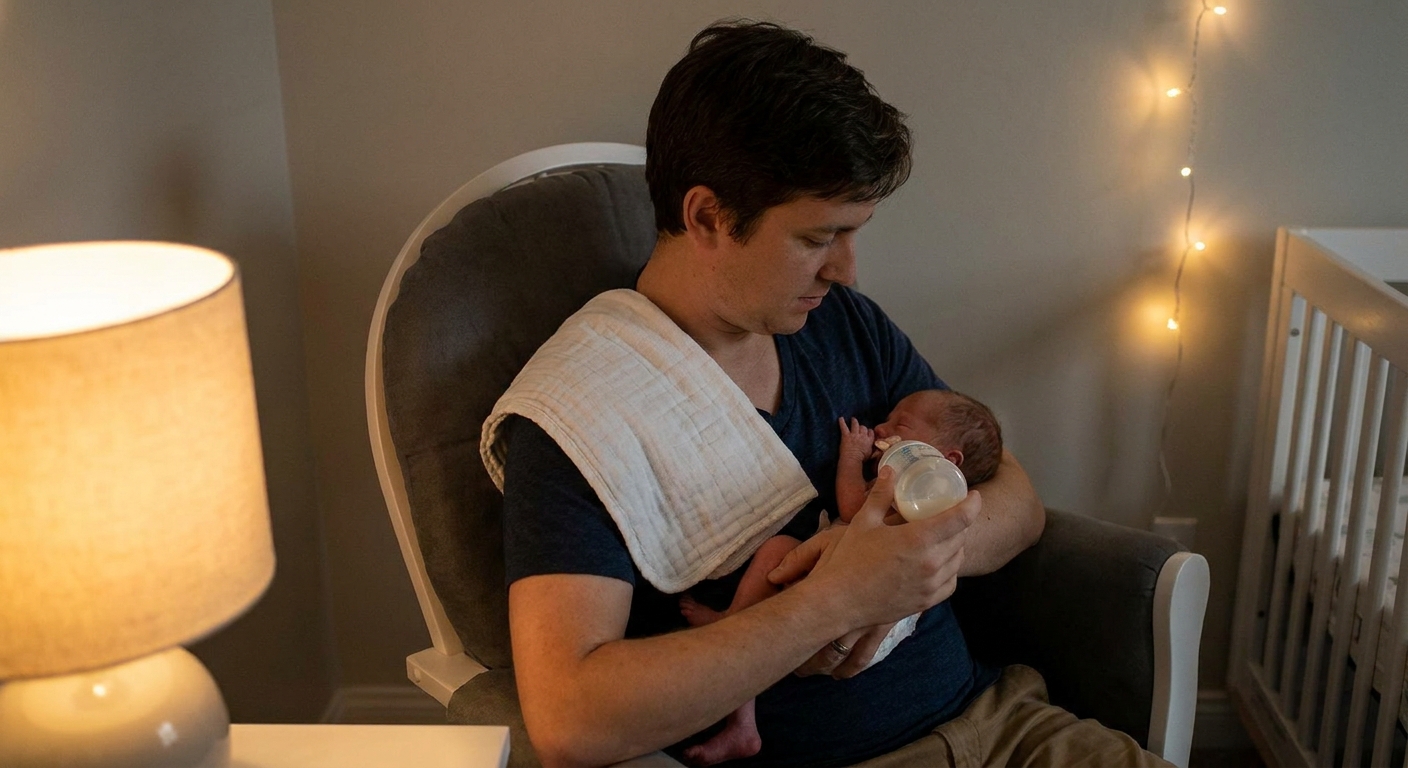
If you asked me to pick the most overlooked jaundice tool for preemies, it is feeding support. Not because it replaces medical treatment, but because it helps your baby clear bilirubin naturally and helps your team understand the full picture.
Why enough milk helps
- Adequate calories and volume help your baby keep up with growth and recovery.
- More intake usually means more stooling, and bilirubin leaves in stool.
- Better feeding stamina tends to build momentum over days, which often improves jaundice trends.
This is not about giving water or “extra fluids.” It is about making sure your baby is getting enough breast milk and or formula to keep stooling and gaining.
What feeding support can look like with a preemie
Depending on your baby’s gestational age and strength, your plan might include breast milk, formula, fortified breast milk, tube feeds, or a combination. None of these options is a moral issue. They are tools.
Common practical strategies your team may recommend:
- More frequent feeds or waking to feed, even if your baby is sleepy.
- Limiting time at the breast if baby tires, then offering expressed milk or formula to finish.
- Working with lactation on latch, milk transfer, pumping schedules, and protecting your supply.
- Tracking diapers as a real-world check on intake and output.
Phototherapy: what the blue lights do
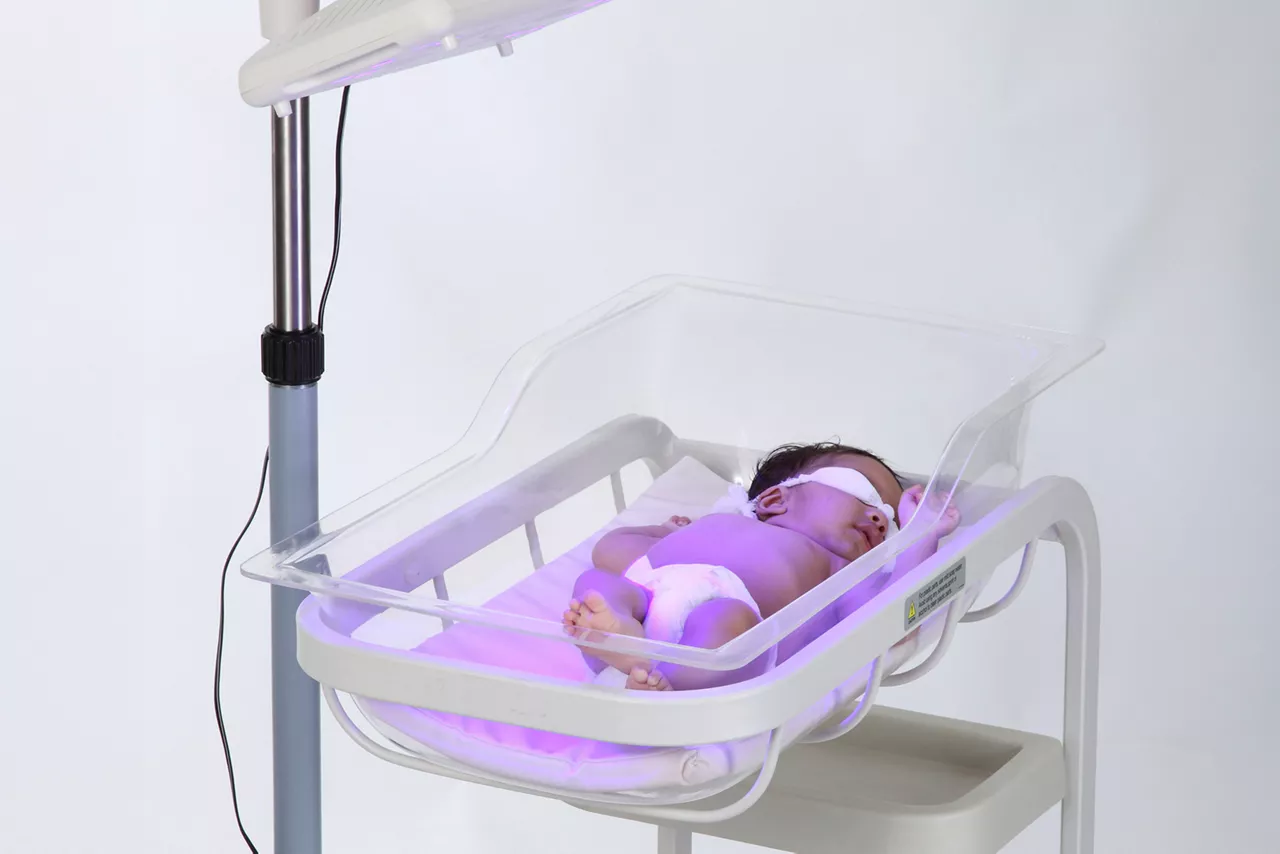
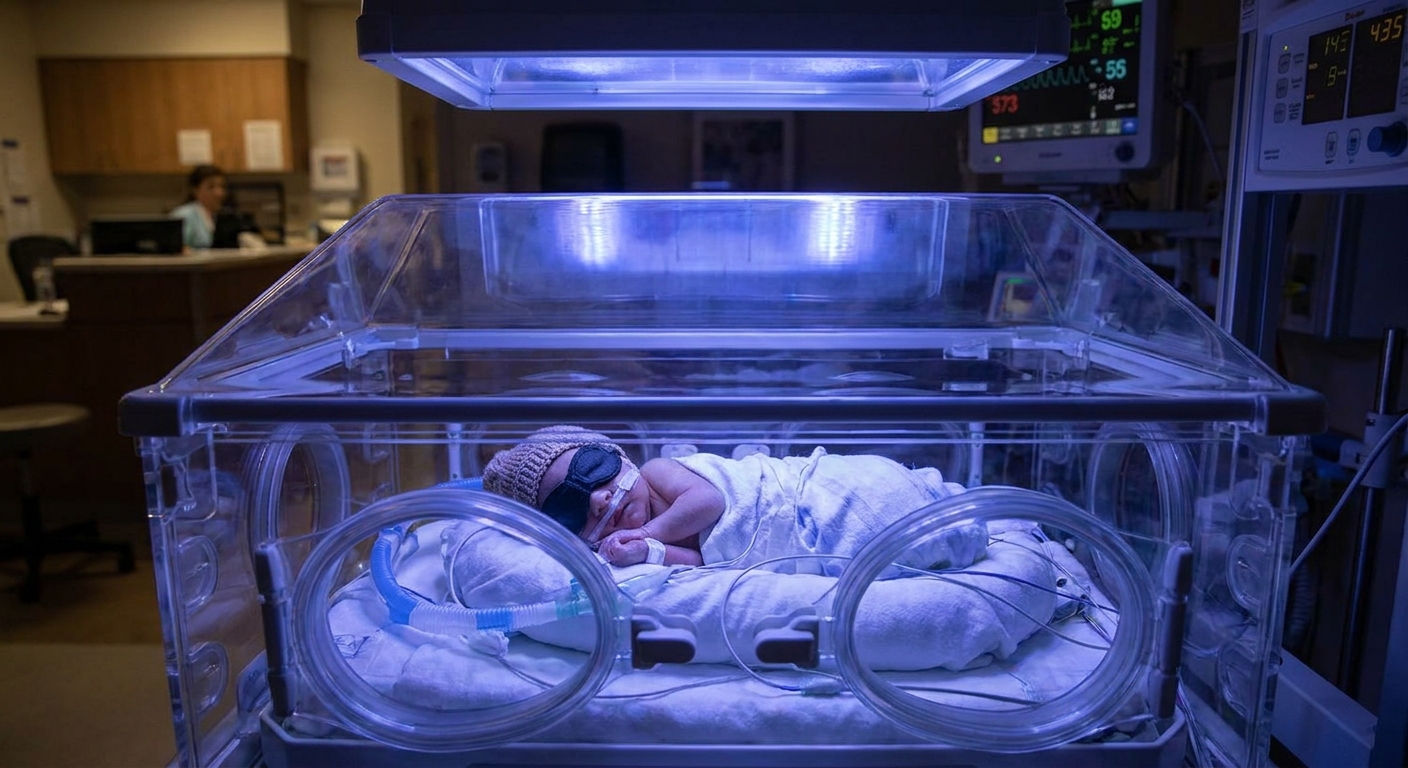
Phototherapy is the classic NICU and newborn nursery treatment for jaundice. It uses a specific spectrum of blue light to change bilirubin in the skin into a form the body can get rid of more easily.
What to expect in the hospital
- Your baby may be in an isolette or open crib, often wearing eye protection.
- They may be undressed except for a diaper to expose more skin to the light.
- Staff will still prioritize feeding and comforting. Some NICUs do more skin-to-skin breaks than others depending on your baby’s stability and the bilirubin trend.
- Bilirubin is checked periodically so the team can see if treatment is working and decide when to stop.
Home phototherapy
Some babies are discharged with prescribed home phototherapy. If that is part of your plan, your team will give you exact instructions on how to use it and when bilirubin will be rechecked. Home phototherapy is still medical treatment, not a DIY setup.
Can I use sunlight instead?
I hear this question all the time. Sunlight is not a safe substitute for medical phototherapy. It is hard to control intensity and exposure, and it adds risks like overheating and sunburn, especially for premature babies whose temperature regulation is already a work in progress.
When jaundice is not the usual kind
Most jaundice in newborns is the common, expected kind. But sometimes jaundice is a clue that something else needs attention, especially if it is prolonged or your baby seems unwell.
Call your baby’s clinician promptly if you notice:
- Very pale, chalky, or white stools.
- Very dark urine (especially if it stains the diaper darker than usual).
- Jaundice that is not improving or seems to be lingering well beyond what your team expected.
- Poor weight gain or worsening feeding, even if you feel like you are doing everything right.
Depending on your baby’s history, your clinician may also consider other contributors like blood type incompatibility, bruising, infection, thyroid issues, or enzyme conditions such as G6PD deficiency. You do not need to sort that out at home. You just need to raise the flag.
Going home: what is normal, and what needs a call
Discharge after a NICU stay or special care nursery stay can feel like stepping off a cliff, even when you are thrilled to be home. With jaundice, the goal is to know which changes are expected and which ones should trigger a call.
Things that can be normal
- Mild yellow tone that slowly fades over time rather than disappearing overnight.
- Sleepiness that improves when your baby is handled and offered a feed, especially in the first days home.
- Ongoing follow-up with weight checks and possibly repeat bilirubin checks, depending on your baby’s plan.
Call your baby’s doctor or NICU follow-up team if you notice:
- Yellowing that looks worse, especially spreading to the belly, arms, or legs, or becoming more intense than it was at discharge.
- Harder to wake for feeds, weak sucking, or your baby cannot stay awake long enough to feed.
- Fewer wet diapers than your care team told you to expect, or a sudden drop compared with the day before.
- Poor feeding overall, frequent vomiting, or you just cannot get enough in.
- High-pitched crying, unusual irritability, or your baby seems “off” in a way you cannot explain.
- Fever or temperature instability. A common general threshold is 100.4°F (38°C), but premature babies sometimes have different instructions. Follow your discharge paperwork, and if you are unsure, call.
Call urgently or seek emergency care if:
- Your baby is very difficult to wake or not waking for feeds.
- Your baby has trouble breathing, looks bluish, or is limp.
- You see signs of dehydration such as very dry mouth plus very low urine output, or your baby cannot keep feeds down.
If you are unsure, call. This is exactly what pediatric offices and after-hours lines are for. You are not bothering anyone. You are parenting.
Follow-up visits: why preemies get extra checks
Preemies are often scheduled for closer follow-up because their bilirubin pattern can change as feeding evolves, weight changes, and they transition from hospital support to home routines.
At follow-up, the clinician may:
- Check weight and feeding effectiveness
- Ask detailed questions about diapers and stooling
- Assess overall alertness and hydration
- Decide whether bilirubin should be rechecked based on the whole picture

Supporting a jaundiced preemie at home
You cannot “parent harder” to make jaundice disappear, but you can support your baby in the ways that matter most.
- Protect the feeding plan. If you were discharged with specific volumes, fortification, or a schedule, treat it like medication until your team says otherwise.
- Use wake-up tricks. Diaper change before feeding, un-swaddle briefly, skin-to-skin, gentle back rub, or switching sides during a feed can help a sleepy preemie.
- Track what counts. For a few days, it can be helpful to jot down feeding times, amounts, and diapers. Not forever, just long enough to see patterns and share accurate info if you need to call.
- Keep follow-ups. I know it is exhausting to pack up a tiny baby again, but these visits are how we catch problems early, when they are easiest to fix.
FAQ
Can jaundice come back after we leave the hospital?
It can. Sometimes bilirubin rises again if feeds drop off, your baby gets more sleepy, or there is a change in how well milk is transferring. That is why discharge plans often include clear follow-up timing. If your baby looks more yellow or is feeding worse, call.
My baby’s skin looks yellow, but the whites of their eyes look normal. Does that matter?
In preemies, jaundice can be subtle and lighting can fool you. The bigger question is the trend: is your baby getting more yellow, more sleepy, or feeding less well? If yes, reach out. If your baby seems stable but you are unsure, it is still reasonable to message or call and ask whether a check is needed.
Does breastfeeding cause jaundice in premature babies?
Breastfeeding itself does not “cause” jaundice in a simple way. For many preemies, the issue is milk transfer and volume early on, not breast milk being bad. The goal is adequate intake, whether that is at breast, pumped milk, supplementation, fortification, or a combination. If you are breastfeeding, lactation support can make a huge difference.
What if my preemie is jaundiced and also not gaining weight?
That combination deserves a call to your pediatrician or NICU follow-up team. Poor weight gain can mean your baby is not taking in enough, which can worsen jaundice and dehydration risk. The good news is that feeding plans can often be adjusted quickly once your team knows what is happening.
A final note from one tired parent to another
Premature babies can do this frustrating thing where they look peaceful and sleepy, and everyone around you says, “Enjoy it,” while your nervous system is screaming, “Is my baby too sleepy?” With jaundice, that instinct is worth listening to.
You do not need to diagnose anything at home. Your job is to notice changes in feeding, wakefulness, color, urine, and stool, then bring that information to your baby’s team. That is how we keep preemies safe and help them keep moving forward.
Sarah Mitchell
Sarah Mitchell is a Registered Pediatric Nurse and a mother of three who has spent over a decade helping families navigate the beautiful, chaotic early years of childhood. She combines evidence-based medical knowledge with real-world parenting experience to offer practical, compassionate advice. At Awesome Parent, Sarah's mission is to help exhausted parents find solutions, trust their instincts, and finally get some sleep.