A calm, parent-friendly guide to food poisoning symptoms, hydration steps that work, food safety basics, and the red flags that mean you should go to urgent ...
Listeria in Pregnancy: Foods, Symptoms, and When to Call

Sarah Mitchell
Sarah Mitchell is a Registered Pediatric Nurse and a mother of three who has spent over a decade helping families navigate the beautiful, chaotic early years of childhood. She combines evidence-based medical knowledge with real-world parenting experience to offer practical, compassionate advice. At Awesome Parent, Sarah's mission is to help exhausted parents find solutions, trust their instincts, and finally get some sleep.
If you are pregnant and you just remembered you ate a turkey sandwich, some queso fresco at a party, or leftovers that lived in the fridge longer than they should have, take a breath. As a pediatric nurse, I have talked to a lot of worried parents about listeria, and as a mom, I have absolutely had the late-night spiral of “Wait, was that cheese pasteurized?”
The goal here is not perfection. The goal is smart risk reduction and knowing when symptoms deserve a same-day call to your obstetric clinician.
What listeria is and why pregnancy changes things
Listeria monocytogenes is a bacterium (a type of bacteria) that can contaminate food. Most healthy adults either do not get sick or have mild symptoms. Pregnancy is different because your immune system shifts to support the pregnancy, which can make it easier for listeria to cause infection. The bigger concern is that listeria can cross the placenta and affect the pregnancy even if the pregnant person feels only mildly ill.
Listeriosis is uncommon, but because the stakes can be high, we focus on prevention and early evaluation if symptoms show up.
Why clinicians take it seriously: In pregnancy, listeriosis can increase the risk of miscarriage, preterm birth, stillbirth, or serious infection in a newborn. That is not to scare you. It is to explain why “call us today” is the right move when certain symptoms appear.
Foods that are higher risk in pregnancy
When I counsel families, I frame this as “higher risk does not mean guaranteed danger.” It means these foods are more likely to be involved in listeria outbreaks or to allow bacteria to grow when refrigerated.
Deli meats and hot dogs
- Higher risk: deli meat sliced at the counter, pre-packaged cold cuts, pâté or meat spreads, hot dogs straight from the package.
- Lower risk choice: heat deli meat or hot dogs until steaming hot. If you want a clear target, aim for an internal temperature of 165°F (74°C), then let it cool to eat. Reheating reduces risk because listeria is killed by adequate heat.
Soft cheeses and cheese made from unpasteurized milk
- Higher risk: soft cheeses that are unpasteurized, including queso fresco, queso blanco, panela, asadero, some feta, some Brie or Camembert, and certain blue-veined cheeses if made with unpasteurized milk.
- Lower risk choice: cheeses clearly labeled made with pasteurized milk. In the U.S., many soft cheeses sold in major grocery stores are pasteurized, but it is still worth checking the label.
Refrigerated smoked seafood and ready-to-eat seafood
- Higher risk: refrigerated smoked salmon or trout (often labeled “lox,” “nova-style,” or “kippered”) and other refrigerated ready-to-eat smoked seafood.
- Lower risk choice: smoked seafood that is cooked in a dish (like a casserole) or shelf-stable options until opened.
Refrigerated prepared foods
- Higher risk: refrigerated pâté, refrigerated meat spreads, and some refrigerated “grab-and-go” items (like pre-made salads or dips), especially if they sit for a while.
- Lower risk choice: buy freshly prepared items, keep them cold, avoid anything close to its use-by date, and follow “use by” dates carefully.
Raw sprouts
- Higher risk: raw alfalfa, clover, mung bean, and other sprouts.
- Lower risk choice: cooked sprouts in a hot dish.
Quick perspective: The foods above are not “bad foods.” They are simply foods where listeria has more opportunity to show up or multiply in the cold.
Lower-risk foods and yes-you-can options
Pregnancy food guidance can start to feel like a long list of “no.” Here are some reassuring, generally lower-risk choices:
- Hard cheeses (cheddar, Swiss, Parmesan) and pasteurized cheeses
- Yogurt, including Greek yogurt
- Milk and dairy labeled pasteurized
- Cooked meats served hot
- Canned or shelf-stable pâté or spreads (generally lower risk until opened; once opened, refrigerate and use quickly per the label, and discard anything that sits too long)
- Thoroughly reheated leftovers that were refrigerated promptly and heated until steaming
- Washed produce and good kitchen hygiene (separate cutting boards for raw meat and ready-to-eat foods)
If your craving is specifically a deli sandwich, a practical workaround is to ask for the meat to be heated or to build the sandwich at home with meat you reheat first.
Leftovers, fridge temps, and how listeria sneaks in
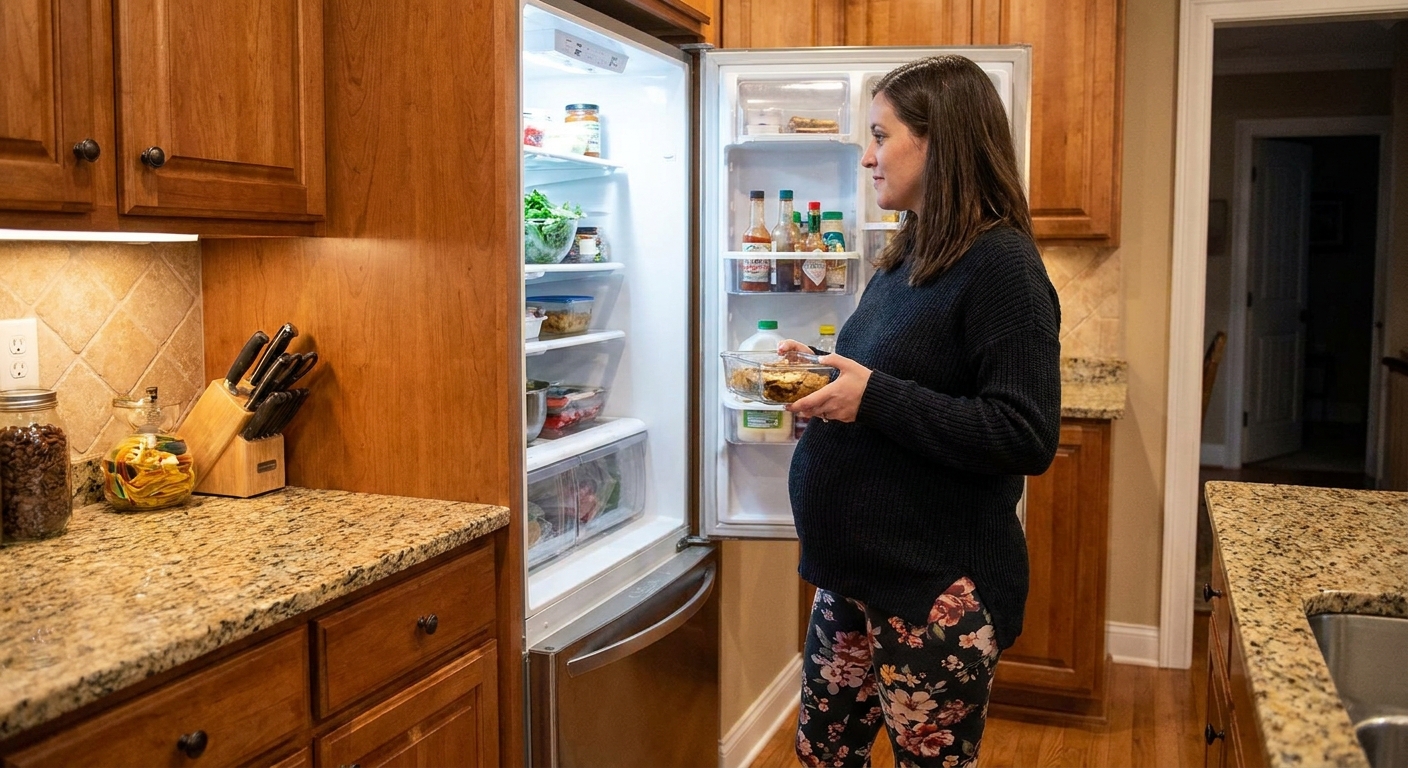
Listeria is tricky because it can grow at refrigerator temperatures. That does not mean your fridge is unsafe. It means storage habits matter.
Simple habits that lower risk
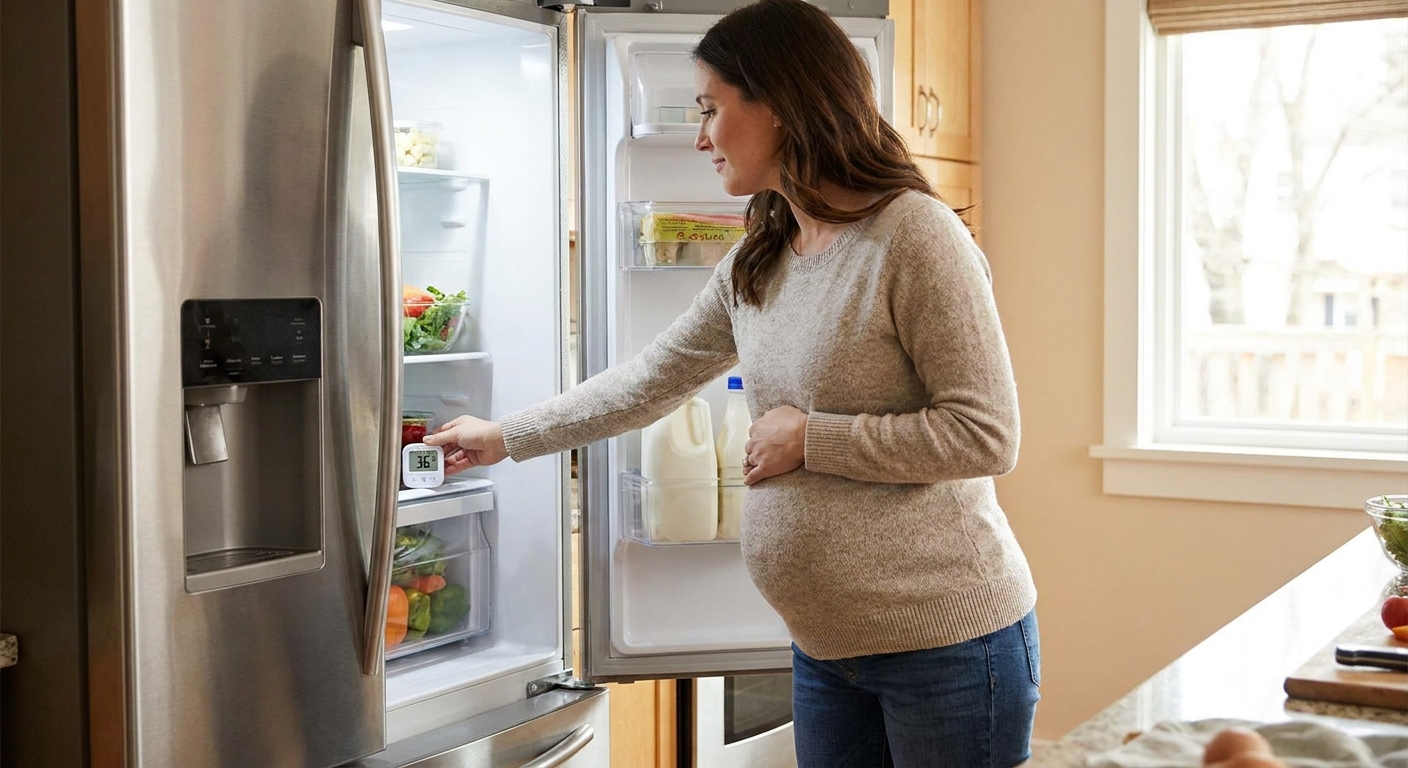
- Set your fridge to 40°F (4°C) or colder, and keep your freezer at 0°F (-18°C).
- Refrigerate perishable foods within 2 hours (within 1 hour if it is very hot where you are).
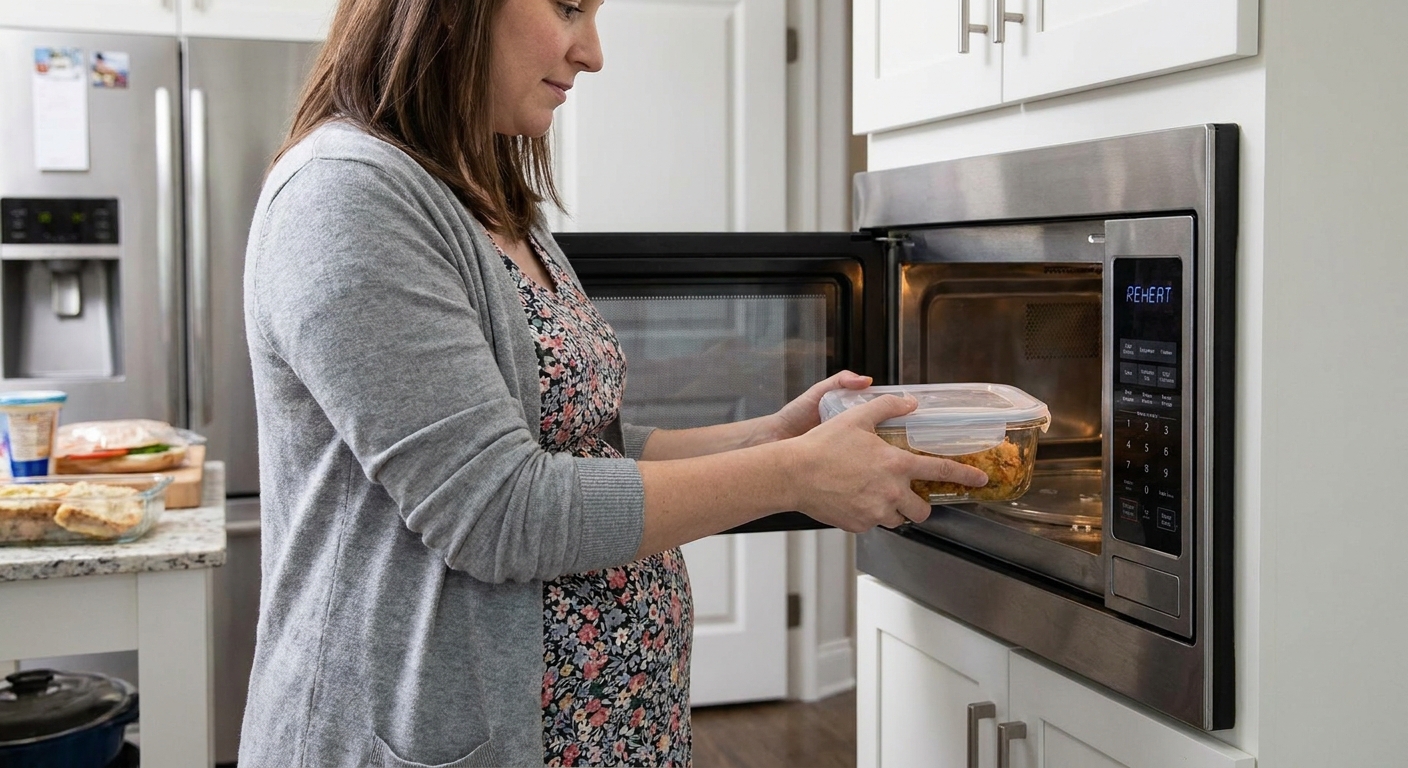
- Eat leftovers within 3 to 4 days, and reheat until steaming hot.
- When in doubt, throw it out. Pregnancy is not the season for “smell test bravery.”
- Wash hands, knives, and cutting boards after handling raw meat and before touching ready-to-eat foods.
- Prevent fridge cross-contamination: keep deli meats, raw meat packages, and anything that might drip in sealed containers or bags. Wipe up spills quickly and give the fridge a regular clean-out.
What listeriosis can feel like in pregnancy
This is the part that frustrates everyone, including clinicians: listeriosis can feel like lots of other everyday illnesses, and sometimes it starts mildly.
Possible symptoms
- Fever (even a low-grade fever can matter in pregnancy)
- Chills
- Muscle aches, body aches
- Fatigue that feels sudden or intense
- Nausea, vomiting, or diarrhea (sometimes, but not always)
- Headache
In more severe cases, symptoms can include stiff neck, confusion, trouble with balance, or severe headache. Those are urgent symptoms, pregnant or not.
Timing note: Listeria symptoms do not always show up right away. Some people get stomach symptoms within a day or two, but pregnancy-related invasive infection can show up days to weeks later, and sometimes even longer. The practical takeaway is the same: if you get a fever or flu-like symptoms at any point in pregnancy, call your OB or midwife the same day.
When to call your OB or midwife the same day
If you remember one section, make it this one. Call your obstetric clinician the same day if any of the following apply:
- You have a fever (especially 100.4°F / 38°C or higher) during pregnancy, with or without other symptoms.
- You have flu-like symptoms (chills, body aches, significant fatigue), especially after eating a higher-risk food.
- You have persistent vomiting or diarrhea and cannot keep fluids down, or you feel dehydrated.
- You notice decreased fetal movement from your normal pattern (later pregnancy).
- You are having contractions, cramping, vaginal bleeding, or leaking fluid.
- You have severe headache, stiff neck, confusion, or new neurologic symptoms. If severe, go to urgent care or the ER.
Same-day calls are not “being dramatic.” This is exactly what on-call OB teams are there for. They can decide whether you need testing, monitoring, or treatment.
Triage nurse tip: When you call, lead with the two big pieces of information: your pregnancy week and whether you have fever. Then mention the food exposure and when you ate it.
If you ate a higher-risk food but feel fine
This is incredibly common. Many people eat a higher-risk food and never develop listeriosis.
Here is what I recommend for most pregnant patients in the “I ate it and now I am panicking” category:
- Do not self-treat with leftover antibiotics. Call your clinician if symptoms develop.
- Monitor for symptoms, especially fever and flu-like body aches, over the next several weeks.
- Focus on what you can control next: safer choices going forward, fridge temperature, and reheating habits.
What your clinician may do if you are asymptomatic: often, the plan is watchful waiting rather than immediate testing or antibiotics. That is because testing does not always help if you feel well, and preventive antibiotics are not routinely used for every exposure. Your OB or midwife will guide you based on your specific situation, including whether the food was part of a known recall or outbreak.
If your anxiety is sky-high, it is okay to message your OB office for reassurance and individualized guidance. Peace of mind matters, too.
Diagnosis and treatment
If your clinician is concerned about possible listeriosis, they may recommend evaluation that can include:
- History of symptoms and food exposure
- Temperature check and exam
- Blood tests, including blood cultures in some cases
- Fetal monitoring depending on gestational age and symptoms
Treatment, when indicated, is typically with prescription antibiotics. The exact plan depends on your symptoms, how far along you are, and your clinician’s assessment.
Practical swaps for common cravings
If you want a deli sandwich
- Heat the meat until steaming, or to 165°F (74°C), then build the sandwich.
- Swap in hot chicken, turkey, or roast beef from a cooked source.
- Try an egg salad made fresh at home and eaten promptly.
If you want soft cheese
- Choose versions labeled pasteurized.
- Use melted cheese in a hot dish if you are unsure.
If you want smoked salmon
- Use smoked salmon baked into a hot meal rather than eaten straight from the fridge.
- Choose fully cooked fish options served hot.
FAQ
Is all deli meat unsafe in pregnancy?
No. The concern is ready-to-eat refrigerated deli meats that are not reheated. Heating until steaming hot (or to 165°F / 74°C) lowers the risk significantly.
Is it safe to eat feta or Brie if it says pasteurized?
In general, pasteurized dairy is considered the safer choice in pregnancy. Still, pay attention to storage, expiration dates, and keeping refrigerated foods cold.
What if I ate something on the avoid list weeks ago?
If you are currently well, that is reassuring. If you develop fever or flu-like symptoms at any point, call your OB office the same day and mention the earlier exposure.
Can listeria look like a normal pregnancy ache and fatigue day?
Unfortunately, yes. That is why fever, chills, and sudden flu-like symptoms are important to take seriously and discuss with your clinician.
A final pep talk
Pregnancy comes with enough mental load. If you slipped and ate the thing, you are not a bad parent. You are a human who is hungry and tired and trying.
Focus on the big wins: choose pasteurized dairy, reheat deli meats, keep your fridge cold, treat leftovers like a short-term relationship, and call your OB the same day if fever or flu-like symptoms show up. You do not have to carry the “what if” alone.
Sarah Mitchell
Sarah Mitchell is a Registered Pediatric Nurse and a mother of three who has spent over a decade helping families navigate the beautiful, chaotic early years of childhood. She combines evidence-based medical knowledge with real-world parenting experience to offer practical, compassionate advice. At Awesome Parent, Sarah's mission is to help exhausted parents find solutions, trust their instincts, and finally get some sleep.