A sudden tug can make a toddler stop using an arm. Here’s how nursemaid’s elbow happens, what it looks like, why it usually isn’t a fracture, and what a clin...
Little League Elbow in Young Throwers

Sarah Mitchell
Sarah Mitchell is a Registered Pediatric Nurse and a mother of three who has spent over a decade helping families navigate the beautiful, chaotic early years of childhood. She combines evidence-based medical knowledge with real-world parenting experience to offer practical, compassionate advice. At Awesome Parent, Sarah's mission is to help exhausted parents find solutions, trust their instincts, and finally get some sleep.
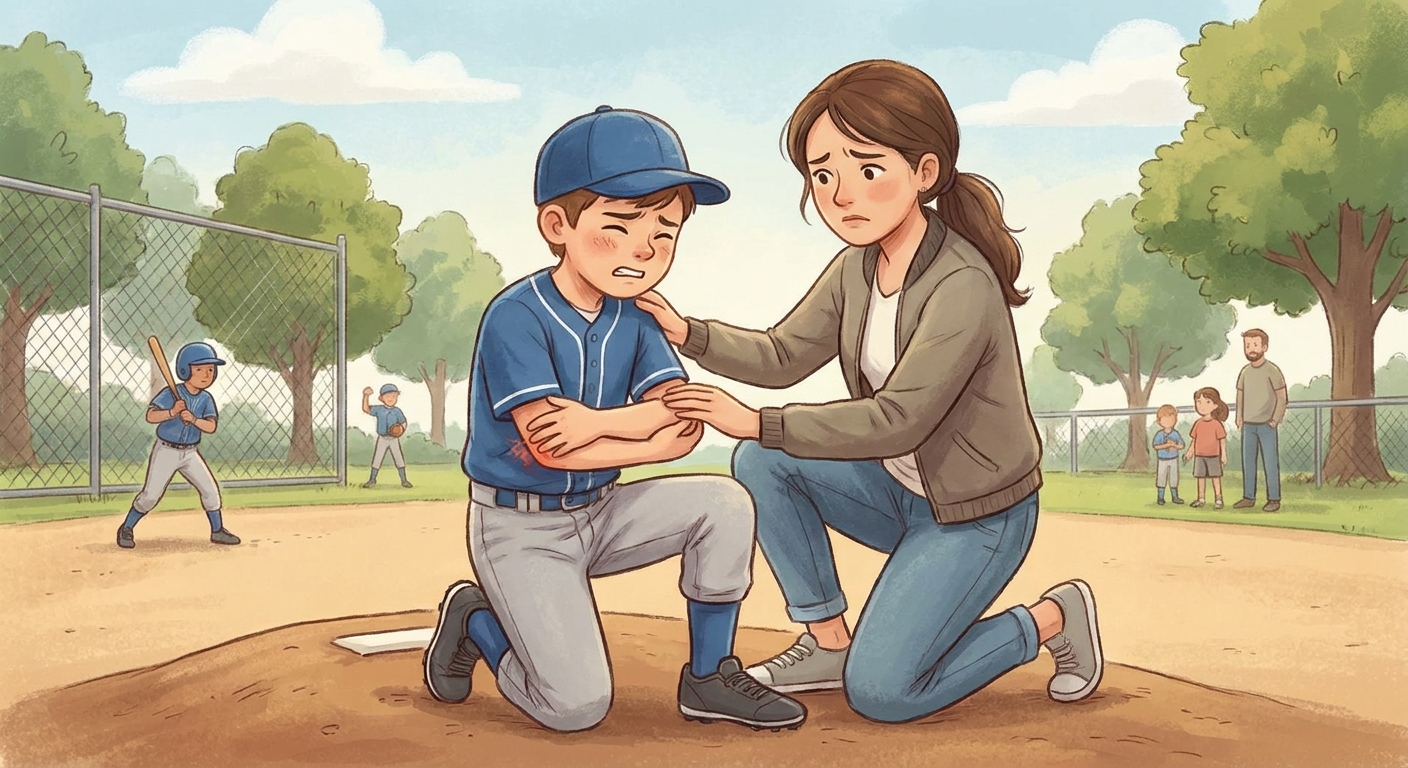
If your child pitches, plays catcher, or is the kid who happily fires baseballs at a fence for an hour, you have probably heard some version of: “My elbow hurts.” As a pediatric triage nurse, I took a lot of calls like this. As a mom, I have also watched a kid try to casually “work through it” because, obviously, the game is important.
Here is the calm truth: inner elbow pain in young throwers is often an overuse injury at or near a growth plate, but it is not the only possibility. Other issues like a muscle strain, ligament irritation, an osteochondral injury, or even a small fracture can show up with similar pain.
The fix is usually not a new brace or a tougher attitude. It often starts with rest from throwing, plus an exam when needed to rule out something more serious, and a plan to return safely.
What Little League elbow is
Little League elbow is the everyday name for inner elbow pain caused by repetitive throwing in kids, especially pitchers. In growing bodies, the tendons and ligaments around the elbow attach near areas of bone called growth plates. Those growth plates are softer than adult bone, so repetitive stress can irritate them.
The sore spot parents often notice is the bony bump on the inner elbow called the medial epicondyle. You do not need to memorize that term, but it can help you and your clinician describe the pain clearly.
In plain language: the elbow is getting tugged on over and over, faster than it can recover, and the growth area starts to protest.
This problem is most common in school-age kids through early teens, before growth plates close. It can happen in baseball, softball, and any sport with lots of throwing.
Common signs parents notice
Kids do not always describe pain the way adults do. What I hear most often sounds like, “It only hurts when I throw.” That is still a big clue.
Typical symptoms
- Pain or soreness on the inner side of the elbow, especially during or after throwing
- Tenderness to touch on the bony bump at the inner elbow (the medial epicondyle)
- Decreased throwing speed or accuracy, sometimes before the child admits it hurts
- Stiffness after games or the next morning
- Mild swelling around the inner elbow
Some kids keep playing, then complain later that night. Others feel it mid-inning and suddenly “cannot get loose.” Either way, elbow pain that shows up with throwing is your cue to pause and take it seriously.
Why rest from throwing matters
I know rest can feel like a four-letter word in the middle of a season. But with overuse injuries, the painful structure is being irritated by the exact motion your child wants to keep doing. If they keep throwing through pain, the irritation can worsen and recovery can drag on.
Rest is not punishment. Rest is how the growth plate area gets a chance to calm down.
What rest means here
- No pitching and often no throwing for a period recommended by your clinician
- No “just a few throws” to test it, because that often flares symptoms right back up
- Other activities may be allowed if they are pain-free, like running, lower body training, or non-throwing drills
Many kids also benefit from a gradual return-to-throwing plan and rehab exercises that focus on shoulder, core, and forearm strength, because elbow pain is often a whole-chain issue, not just an elbow issue.
If you want a quick decision rule I used in triage: pain while throwing means stop throwing until they have been assessed and symptoms are improving. This is a conservative rule of thumb, not a diagnosis. “A little sore” can still be a real injury in a growing arm.
Little League elbow vs nursemaid’s elbow
Parents often hear “elbow injury” and think of nursemaid’s elbow. They are totally different problems with different stories.
Little League elbow (overuse)
- Cause: repetitive throwing over time
- Who: common in older kids who pitch or throw a lot
- Pain location: often inner elbow
- Pattern: worsens with throwing, may build gradually
- Main fix: rest from throwing and a guided return (and sometimes imaging or PT)
Nursemaid’s elbow (sudden pull)
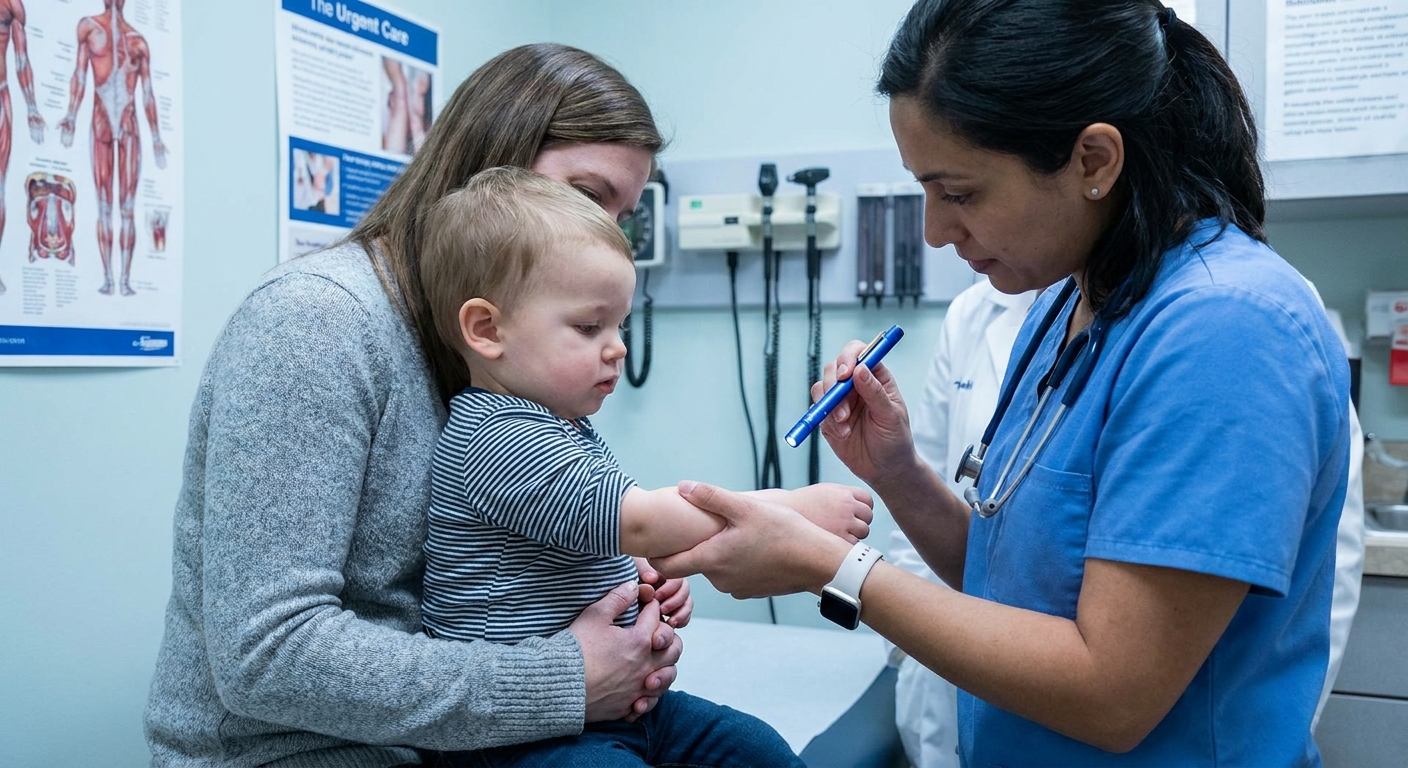
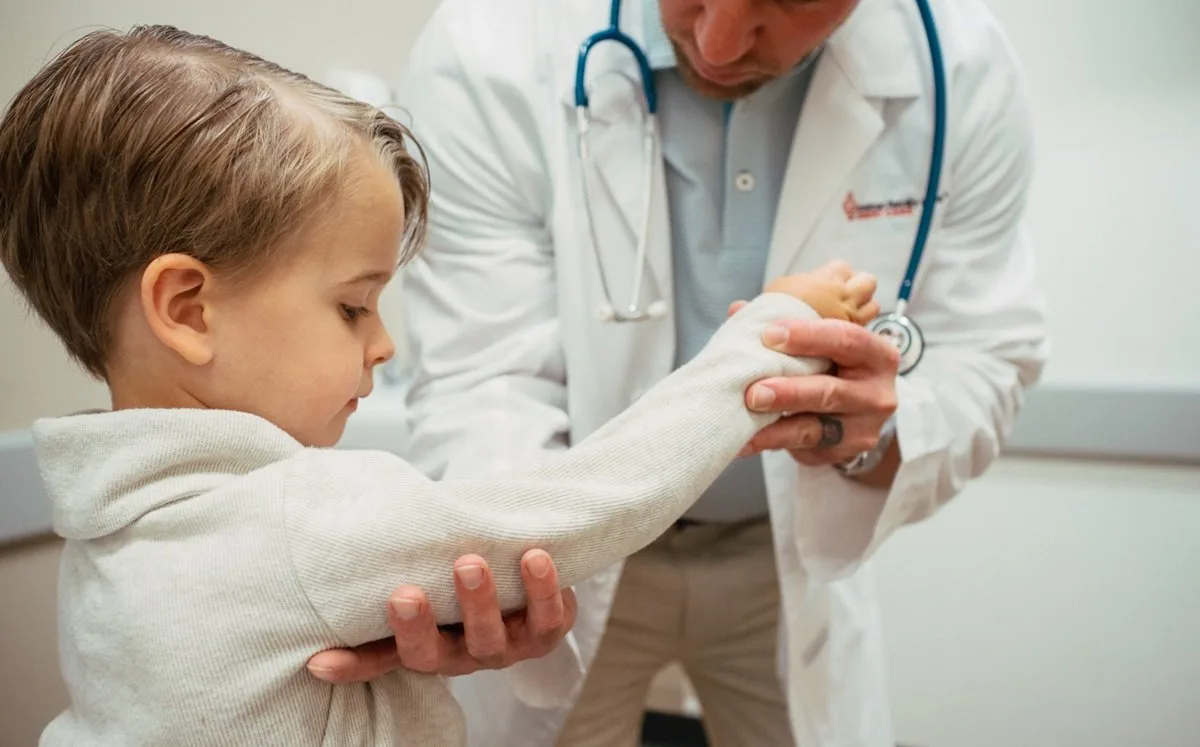
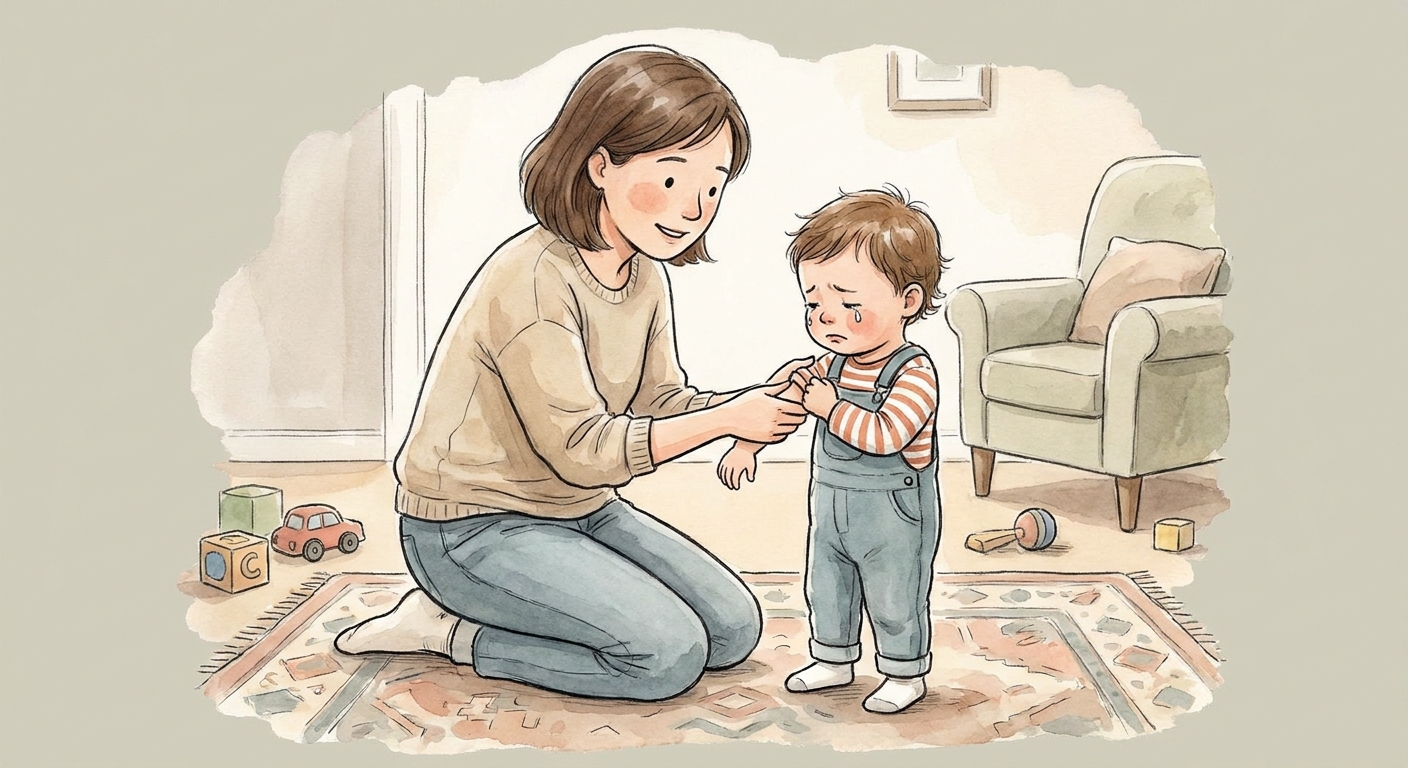
- Cause: a sudden pull on the arm, like yanking a toddler up by the hand or a sudden tug while preventing a fall
- Who: most common in toddlers and preschoolers
- Pattern: sudden pain and the child often holds the arm still, close to the body
- Main fix: a clinician performs a quick maneuver to put the joint back in place
If your child’s elbow pain started during pitching practice, that is not the classic nursemaid’s elbow story. If your toddler suddenly stopped using their arm after a pull, that is a nursemaid’s elbow kind of story and deserves prompt evaluation.
When to get checked quickly
Most inner elbow pain from throwing is not an emergency, but some symptoms should move you out of the “wait and see” lane.
Get your child checked promptly if you notice:
- Visible swelling that is significant or worsening
- Bruising around the elbow
- Locking, catching, or inability to fully bend or straighten the elbow
- Numbness or tingling in the ring finger or pinky, or weakness in the hand (this can suggest nerve irritation)
- Pain at rest or pain that wakes them at night
- A sudden “pop” during a throw followed by sharp pain (this can happen with more significant injury, including an avulsion fracture)
- Fever or the elbow looks red and hot (not typical for overuse and needs same-day evaluation in many cases)
And of course, if there was a fall, collision, or direct hit to the elbow and your child cannot use the arm normally, that is a different situation and should be assessed right away.
What to do at home
If your child has inner elbow pain tied to throwing and no red flags, these are reasonable first steps.
- Stop throwing right away. This is the most important step.
- Ice the sore area for about 15 to 20 minutes at a time, a few times a day for the first day or two.
- Consider appropriate pain relief if your child needs it and can take it safely. Many families use acetaminophen or ibuprofen if age-appropriate and okayed by their clinician.
- Avoid stretching into pain. Gentle movement is fine, forcing range of motion is not.
- Write down details for the appointment: when it started, where it hurts, what makes it worse, how much they have been throwing (games, practices, warmups), and whether there is any numbness or weakness.
One small parenting note from the clinic: kids often minimize symptoms because they do not want to be benched. If your child is giving vague answers, ask specific questions like, “Does it hurt when you throw hard?” or “Does it hurt the next morning?”
What your clinician may do
At the visit, your child’s clinician will typically:
- Ask about throwing volume, positions played, and recent changes in training
- Check elbow tenderness, swelling, stability, and range of motion
- Check the hand and fingers for strength and sensation
- Sometimes order an X-ray, especially if pain is significant, motion is limited, there was a sudden pop, or there is concern about the growth plate
Treatment often includes a period of rest from throwing, followed by physical therapy or specific strengthening, then a gradual throwing program once your child is pain-free and cleared to return. Rarely, if imaging shows a displaced avulsion fracture or another structural problem, a specialist may recommend more formal treatment, and occasionally surgery.
Return to throwing timeline
This is one of the most common questions I hear, and I get it. Kids want a date. Parents want a plan.
For straightforward Little League elbow, it is common to need several weeks away from throwing. Many kids are in the 4 to 6 week range, and some need longer depending on symptoms, exam findings, and how long they have been pushing through it.
The return is usually gradual, not a one-day switch. Your clinician or physical therapist can tailor a step-by-step throwing progression once your child is pain-free and cleared.
How to lower the risk
Overuse injuries are sneaky because they build during busy weeks, tournament weekends, or when kids play on multiple teams. Prevention is not about being strict. It is about being consistent.
Also, a quick catcher note since I mentioned it up top: the elbow does not care whether the throw was a pitch or a hard throw back to second. Total throwing load matters, including pitching, catching, infield warmups, and private lessons.
Practical ways to protect a growing throwing arm
- Follow established pitch-count and rest-day guidelines (Little League and USA Baseball recommendations are a solid starting point)
- Respect rest days, especially after pitching
- Avoid stacking teams if it increases total throws across the week
- Watch for fatigue. Mechanics often fall apart when kids are tired, and the elbow pays for it
- Encourage variety in sports and movement through the year, instead of year-round throwing
- Prioritize form and age-appropriate coaching over velocity goals
- Speak up early. Pain is a signal, not a challenge
If your child is a pitcher, ask the coach how pitch counts and rest are handled. A good youth program expects parents to be part of the safety net, not silent spectators.
FAQ
Can my child keep playing if it only hurts a little?
If the pain shows up with throwing, I recommend stopping throwing and getting guidance. Mild pain can still reflect growth plate irritation, and pushing through often turns a short break into a long one.
Is Little League elbow the same as tennis elbow?
No. Tennis elbow is usually pain on the outer elbow and is more common in adults. Little League elbow is typically inner elbow pain related to growth plates in kids.
How long does it take to heal?
It depends on severity and how quickly throwing stops. Some kids improve over a few weeks, others need longer and benefit from physical therapy plus a structured return-to-throwing plan. Your clinician can give a more specific timeline after an exam.
Should we use an elbow brace?
A brace might reduce discomfort for some kids, but it does not fix the underlying overuse. The foundation is rest from throwing, addressing mechanics and strength, and returning gradually once pain-free and cleared.
The bottom line
Inner elbow pain in a young thrower is not something to ignore or “tough out.” In kids, it often involves a growth area that needs time to recover, but similar pain can also come from other injuries that deserve an exam. Rest from throwing is the most powerful first step, and getting checked promptly matters if there is swelling, bruising, locking, reduced range of motion, a sudden pop, or any numbness or tingling.
If you are staring at a calendar full of games and feeling your stomach drop, I get it. I have been the nurse on the phone, and I have been the parent with snacks in the car, trying to do right by my kid. Protecting a growing arm now helps keep them throwing later.
Sarah Mitchell
Sarah Mitchell is a Registered Pediatric Nurse and a mother of three who has spent over a decade helping families navigate the beautiful, chaotic early years of childhood. She combines evidence-based medical knowledge with real-world parenting experience to offer practical, compassionate advice. At Awesome Parent, Sarah's mission is to help exhausted parents find solutions, trust their instincts, and finally get some sleep.