A parent-friendly guide to Sever’s disease: why heel pain flares with sports, how it differs from growing pains, what helps at home, shoe and insert tips, an...
Sever’s Disease vs Osgood-Schlatter: Heel Pain or Knee Pain?

Sarah Mitchell
Sarah Mitchell is a Registered Pediatric Nurse and a mother of three who has spent over a decade helping families navigate the beautiful, chaotic early years of childhood. She combines evidence-based medical knowledge with real-world parenting experience to offer practical, compassionate advice. At Awesome Parent, Sarah's mission is to help exhausted parents find solutions, trust their instincts, and finally get some sleep.
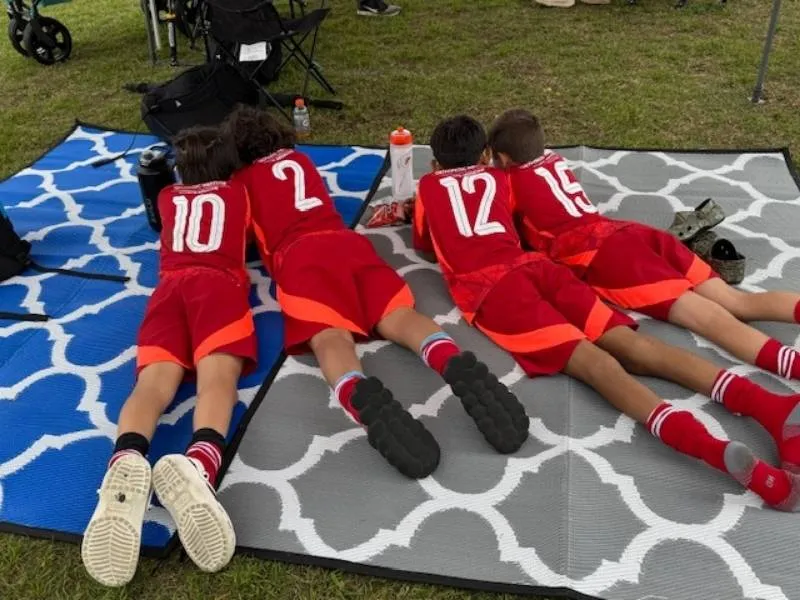
If your kid is suddenly limping after practice, I know exactly where your brain goes at 9:47 PM when everyone is finally in bed: Is this a fracture? Did we miss something big? In my years as a pediatric triage nurse, two names came up over and over for active kids in a growth spurt: Sever’s disease (heel pain) and Osgood-Schlatter disease (front-of-knee pain).
They are related in the sense that they are both growth-plate overuse problems, but they are not the same injury. The good news is that both are common, treatable at home in many cases, and usually improve with smart activity changes.
Let’s walk through how to tell which one you are dealing with and what to do next.
Quick difference: location
If you remember one thing, make it this: Sever’s hurts at the back of the heel, and Osgood-Schlatter hurts at the bony bump just below the kneecap.
- Sever’s disease (calcaneal apophysitis): pain at the back or bottom-back of the heel, where the Achilles tendon attaches.
- Osgood-Schlatter disease: pain at the tibial tubercle, the little bump at the top of the shin just under the kneecap, where the patellar tendon attaches.
Why they happen
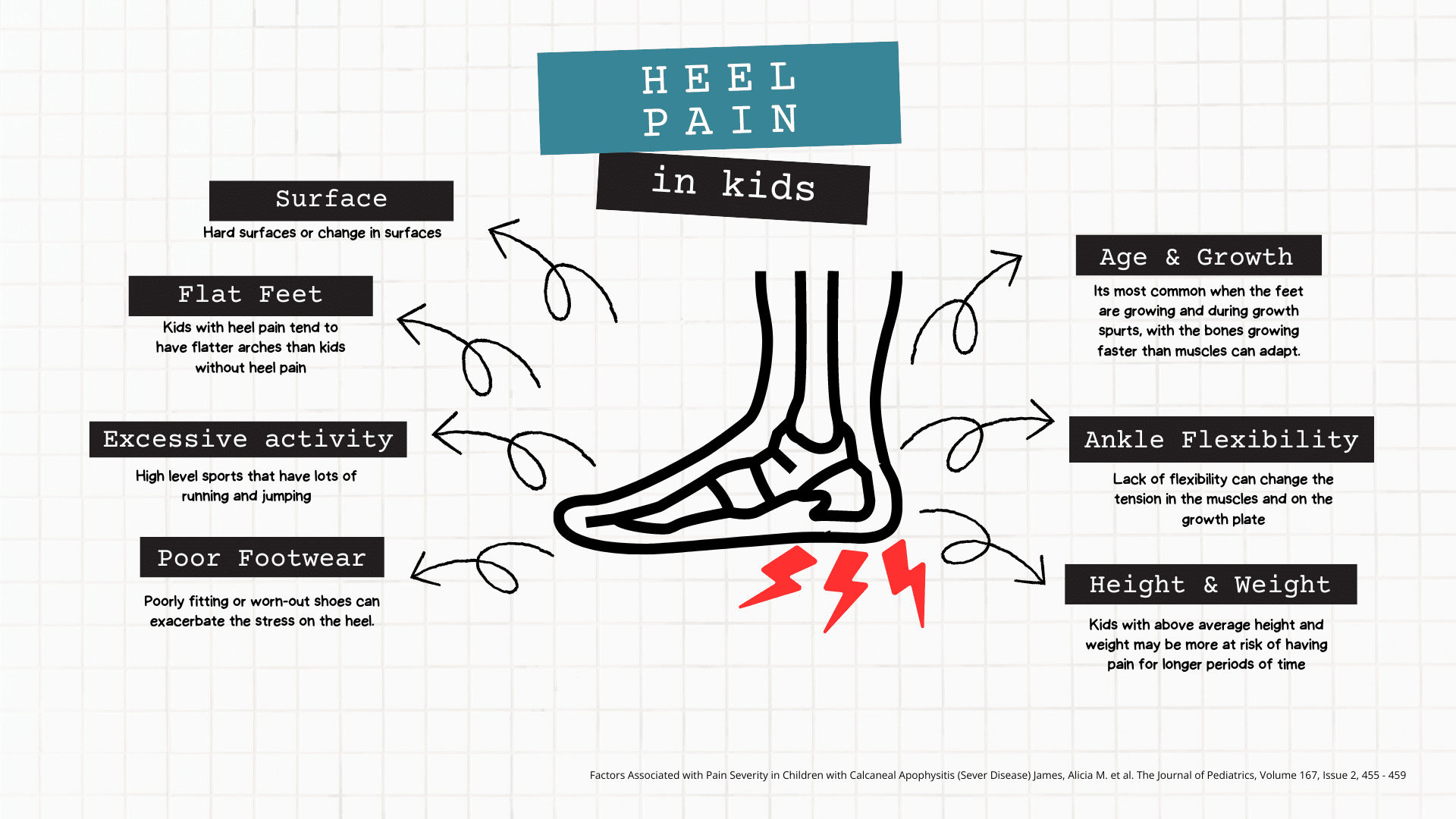
Both conditions tend to show up when kids are growing fast and training hard.
Here is the simple version I use with families: bones can grow faster than muscles and tendons can adapt. Tight calves and tight quads pull harder on their attachment points. Add a jump in practices, a new season, tryouts, tournaments, or a growth spurt, and that traction can irritate the growth center where tendon meets bone.
That is why these injuries are often called “overuse,” even when your child swears they only did “normal” practice.
Age and timing
There is overlap, and kids can absolutely fall outside the classic ranges. But age and growth-spurt timing can still help you narrow it down.
- Sever’s disease: often seen in active kids around 8 to 14, commonly in the preteen years.
- Osgood-Schlatter disease: often seen around 10 to 15, frequently during early adolescence.
If your child is on the younger side with heel pain after running, Sever’s rises on the list. If your child is in middle school with pain right on the shin bump under the kneecap, Osgood-Schlatter is a usual suspect.
Sports triggers
Both love the same general category of activities: running, jumping, sprinting, and quick direction changes. The “favorite” sports can look similar, but there are small patterns.
Sever’s triggers
- Soccer (especially on firm fields)
- Basketball
- Track and cross-country
- Gymnastics and dance
- Football
Osgood-Schlatter triggers
- Soccer
- Basketball and volleyball
- Track
- Gymnastics
- Any sport with lots of kicking, squats, jumping, or hills
One practical clue: shoe and surface changes tend to show up a lot in heel pain stories (cleats, worn out sneakers, sudden switch to hard courts), while jump volume and quad-heavy work often feature prominently in knee pain stories.
A quick tender-spot check
You do not need to be a clinician to get useful information. You just need to be specific about where it hurts.
Important: do not force pain. Use gentle pressure, and stop if your child has significant pain or pulls away.
Where Sever’s hurts
- Back of the heel, slightly to one side or both
- Sometimes the bottom-back edge of the heel
- Often tender if you gently squeeze the sides of the heel
Where Osgood-Schlatter hurts
- Right on the bony bump below the kneecap (top front of shin)
- Tender to press on that bump
- Often worse with kneeling
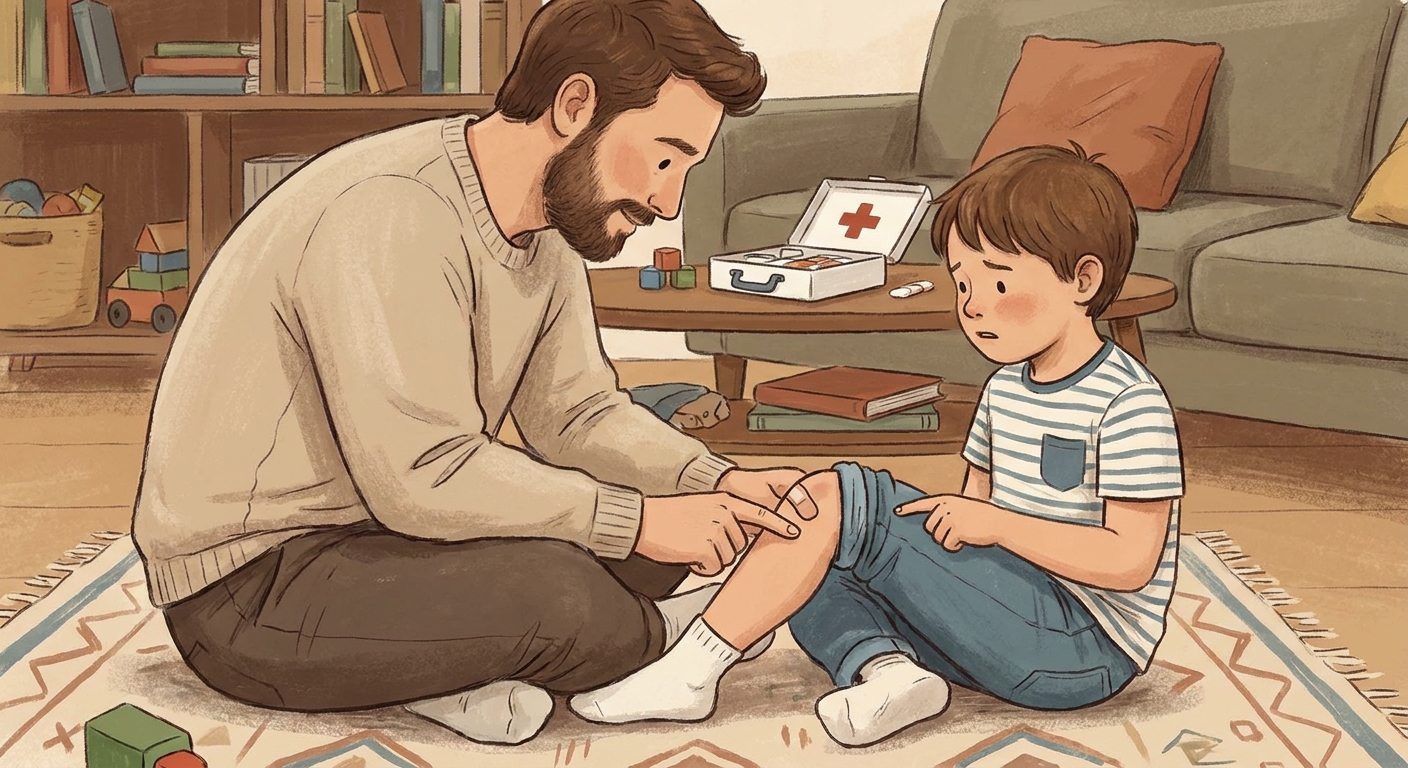
Helpful question for your child: “Point with one finger to the spot that hurts the most.” Growth-plate overuse pain is often very localized. If the pain is vague, all over the joint, or hard for your child to pinpoint, it deserves a closer look.
How to modify activity
Families often ask, “Should my kid stop sports completely?” Usually, we aim for pain-guided modification, not a full shutdown, but the pattern of what hurts can help you decide what to scale back.
Sever’s: what tends to flare it
- Running, especially sprinting
- Hard landings and jumping
- Cleats on firm ground
- Going barefoot on hard floors
What often helps: cut back on running and jumping for a short stretch, choose cushioned shoes, and add heel support. Many kids can keep some level of activity if pain stays mild and does not change their gait.
Osgood-Schlatter: what tends to flare it
- Jumping and landing
- Deep squats and lunges
- Stairs and hills
- Kicking and repeated sprint starts
What often helps: dial down jumping and intense quad work, shorten practices, cross-train with low-impact cardio, and commit to stretching and strengthening.
Big rule for both: if your child is limping, compensating, or pain is climbing each session, the activity level is too high right now.
What you might see
Sever’s
- Usually no obvious swelling, though the heel can look a little puffy after activity
- Kids may walk on tiptoes to avoid heel strike
Osgood-Schlatter
- A noticeable bump can develop at the tibial tubercle
- That bump can be tender, and sometimes mildly swollen
That Osgood-Schlatter bump can stick around even after symptoms settle. It is common and, while annoying, not usually dangerous.
Home care basics
Before we get into condition-specific tips, here is the shared starter pack that helps many kids:
- Relative rest: reduce the specific trigger activities for 1 to 2 weeks, then reassess.
- Ice: 10 to 15 minutes after activity (or when sore).
- Supportive shoes: avoid worn out shoes; use athletic shoes with cushioning for daily wear.
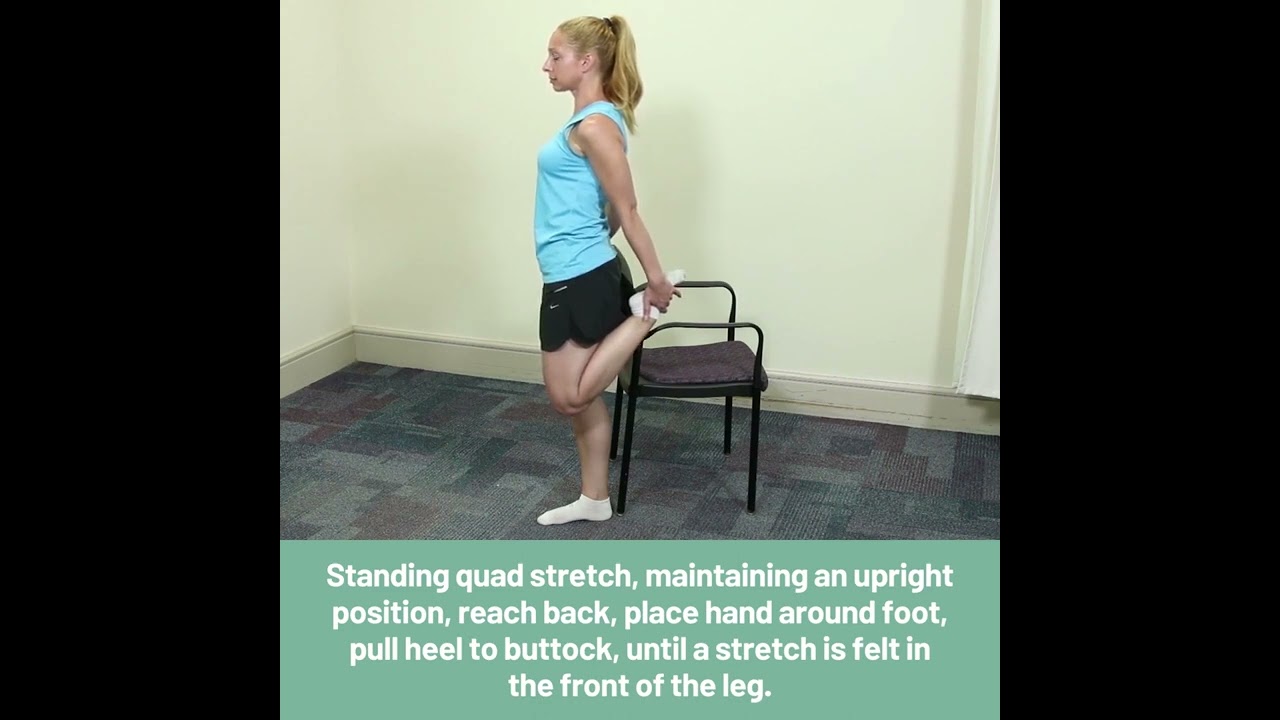
- Stretching: gentle daily stretching for the muscle group involved.
- Pain relief: if your pediatrician says your child can take them, over-the-counter options like acetaminophen or an anti-inflammatory medicine may help for short periods. Follow label dosing, and avoid these if your clinician has told you not to use them. Also, avoid masking pain just to push through games.
Sever’s extras
Because Sever’s is at the heel, shoe choices matter a lot.
- Choose cushioned athletic shoes for daily wear, not flat slip-ons.
- Consider heel cups or heel lifts if recommended by your clinician.
- Avoid lots of barefoot time on hard floors during a flare.
- Gentle calf stretching can help, and some kids also benefit from a gradual return to calf strengthening once the worst pain is calm.
For a deeper dive on heel-specific care, stretching, and when kids can return to sports, see our standalone page on Sever’s disease in kids.
Osgood-Schlatter extras
Because Osgood-Schlatter involves the patellar tendon pulling on the tibial tubercle, some kids get real relief from a patellar tendon strap during activity (when cleared by their clinician).
- Avoid kneeling directly on hard surfaces.
- Prioritize quad and hamstring flexibility.
- Add progressive strengthening, especially hips and glutes, so the knee is not doing all the work.
For strap guidance, activity modifications, and sport return tips, see our standalone page on Osgood-Schlatter disease.
Can a child have both?
Yes, it happens. Not necessarily at the exact same time, but in the same season of life, especially in very active kids who:
- Are in rapid growth spurts
- Play year-round or on multiple teams
- Have tight calves, tight quads, or limited ankle mobility
- Have sudden spikes in training volume
If your child has pain in both the heel and the front of the knee, it is a good sign to zoom out and look at overall load: number of practices, intensity, rest days, and shoe wear.
When it might be something else
Most of the time, these are straightforward overuse conditions. But there are red flags where you should call your child’s clinician promptly or seek urgent care.
Other issues can mimic these patterns. Heel pain can also be related to Achilles tendinopathy, plantar fascia irritation, or (less commonly) a stress injury. Pain at the front of the knee can overlap with patellar tendinopathy, Sinding-Larsen-Johansson syndrome, or stress injuries. If the story does not fit neatly, it is worth getting checked.
Call your pediatrician soon if
- Pain is persistent even with a week of reduced activity
- Your child is regularly limping
- There is swelling that is getting worse
- Pain wakes your child from sleep
- The pain is not localized (it is vague or all around the joint)
Get urgent care today if
- Your child cannot bear weight
- There was a clear injury with a pop, major swelling, or severe pain
- The area is very red, hot, or your child has a fever
- There is numbness, weakness, or a foot that looks pale or unusually cold
Those situations are less consistent with a simple growth-plate overuse flare and deserve in-person evaluation.
How clinicians confirm it
In clinic, diagnosis is usually based on the story and the exam: location of tenderness, what movements reproduce pain, flexibility, and gait.
X-rays are not always necessary for classic cases, but they may be used to rule out other issues (like fracture or other causes of pain), especially if symptoms are atypical or severe.
Return to sports
This is the question I hear most, and I get it. Kids do not just want to feel better. They want to play.
A practical target is returning in steps when:
- Walking is pain-free and there is no limp
- Your child can do an easy jog and basic drills with only mild discomfort
- Pain does not spike later that day or the next morning
If symptoms flare when you add intensity, back up one step for a few days. In my experience, steady progress beats a cycle of pushing hard, flaring, and starting over.
FAQ
Is Sever’s disease the same as a heel spur?
No. Sever’s is irritation at the heel growth center in kids. Heel spurs are a different issue and are more commonly discussed in adults.
Is Osgood-Schlatter a knee injury or a shin injury?
Families describe it both ways. The pain is at the top of the shin just under the kneecap, where the patellar tendon attaches. It is part of the knee extensor mechanism, so it behaves like a knee problem during sports.
Should my child push through it?
Mild discomfort that does not change how your child runs or jumps may be manageable with modifications. But limping is a stop sign. Pushing through limping can lead to compensation and additional injuries.
How long do these last?
It varies. Many kids improve in weeks with good load management, but symptoms can come and go during growth spurts or busy sports seasons. The goal is reducing flare-ups and keeping your child moving safely.
The bottom line
Sever’s disease and Osgood-Schlatter disease are two very common, very real sources of pain in growing athletes. They are related by the same basic theme (growth plate plus overuse), but you can usually tell them apart by the exact tender spot: back of the heel versus the bump below the kneecap.
If you want the condition-specific step-by-step plan, head to our full guides on Sever’s disease and Osgood-Schlatter disease.
Sarah Mitchell
Sarah Mitchell is a Registered Pediatric Nurse and a mother of three who has spent over a decade helping families navigate the beautiful, chaotic early years of childhood. She combines evidence-based medical knowledge with real-world parenting experience to offer practical, compassionate advice. At Awesome Parent, Sarah's mission is to help exhausted parents find solutions, trust their instincts, and finally get some sleep.