Worried about meningitis? Here are age-specific warning signs in infants and toddlers, how fast symptoms can change, and when to seek emergency care immediat...
Lumbar Puncture in Babies and Toddlers: What Parents Can Expect

Sarah Mitchell
Sarah Mitchell is a Registered Pediatric Nurse and a mother of three who has spent over a decade helping families navigate the beautiful, chaotic early years of childhood. She combines evidence-based medical knowledge with real-world parenting experience to offer practical, compassionate advice. At Awesome Parent, Sarah's mission is to help exhausted parents find solutions, trust their instincts, and finally get some sleep.
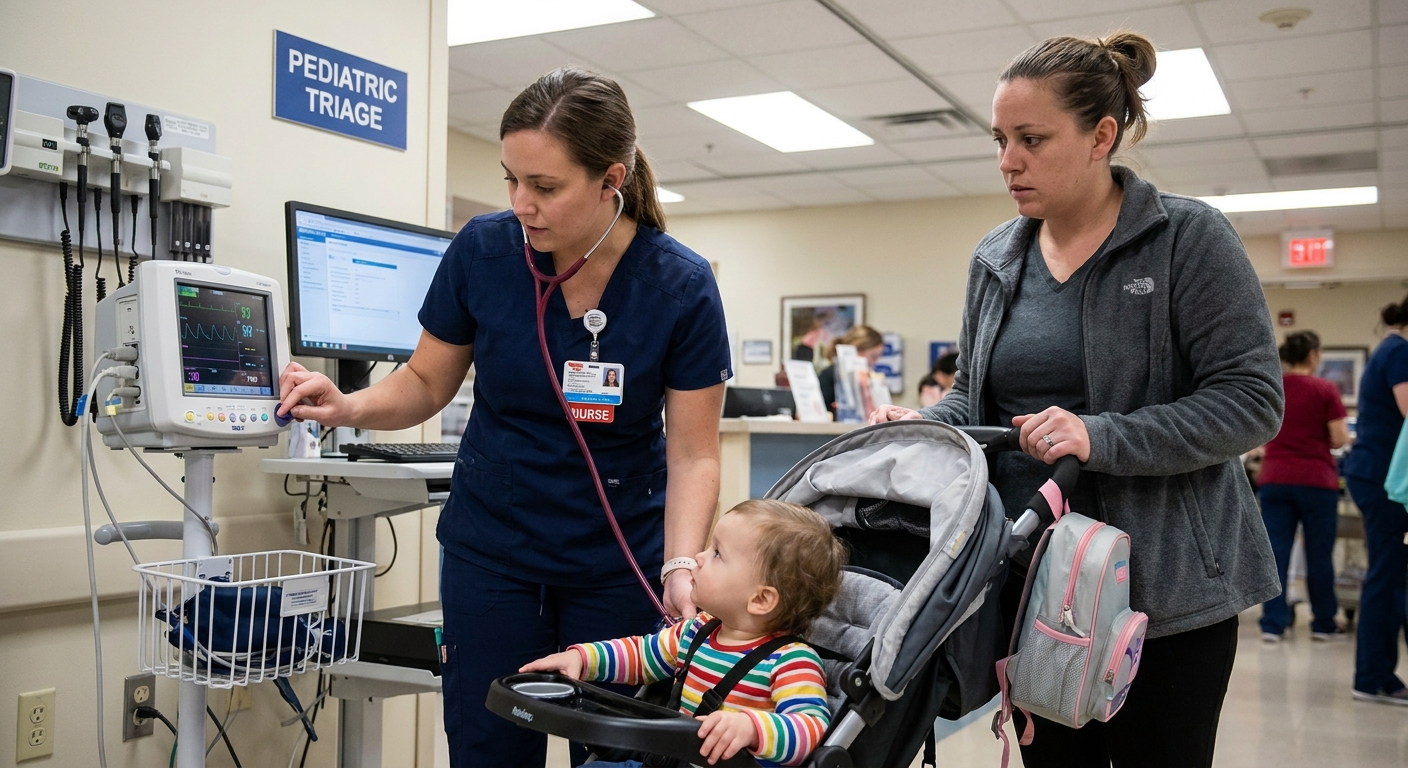
If you are reading this because a doctor just said the words lumbar puncture or spinal tap about your baby or toddler, I want to start by saying this plainly: it is completely normal to feel panicked. Even as a pediatric nurse, the first time I watched a spinal tap being recommended for a tiny patient, my stomach dropped. It sounds intense because it is a serious evaluation. In pediatric emergency and inpatient care, it is also a test clinicians use fairly often when they are trying to rule out dangerous infections, but it is still invasive and not done casually.
This article is the parent-side version of what I used to explain in triage, and what I would want someone to walk me through at 3 am: why clinicians recommend a lumbar puncture when meningitis is on the table, whether you can stay in the room, when results come back, and the comfort questions parents ask most.
What it is
A lumbar puncture (LP) is a test where a clinician collects a small amount of cerebrospinal fluid, the clear fluid that surrounds the brain and spinal cord. That fluid can be tested for signs of infection and inflammation, including meningitis.
Parents often hear “spinal tap” and picture something happening to the spinal cord itself. In reality, the sample is taken from the lower back, in a space that is typically below where the spinal cord ends. This location is chosen on purpose for safety, but like any procedure, it is not zero-risk. The team is balancing the risks of the procedure against the risks of missing a serious infection.
Why doctors recommend it
Meningitis can move fast, especially in newborns and young infants. The tricky part is that early symptoms can be vague, and blood tests alone cannot always confirm or rule it out.
A lumbar puncture helps the team answer urgent questions like:
- Is there evidence of meningitis?
- If yes, does it look more like bacterial or viral? (That affects treatment decisions.)
- Are antibiotics needed right now? In many situations, clinicians start antibiotics before results are final because waiting can be dangerous if bacterial meningitis is present.
In babies and toddlers, clinicians may recommend an LP when symptoms, exam findings, and age put meningitis on the short list. Sometimes the LP is done alongside other tests like blood work, urine testing, and viral swabs.
You may also hear the team talk about timing. When it is safe to do so, they often try to collect the spinal fluid before antibiotics because antibiotics can make it harder for cultures to grow bacteria later. If your child is very sick or unstable, the team may treat first and do the LP later, or sometimes not at all, depending on what is safest in that moment.
One thing I always told parents in clinic: recommending an LP is not the team trying to be dramatic. It is the team trying to be appropriately cautious with a condition where minutes and hours can matter.
Will I be in the room?
This varies by hospital, by your child’s age, by staffing, and by how sick your child is in that moment.
Common possibilities:
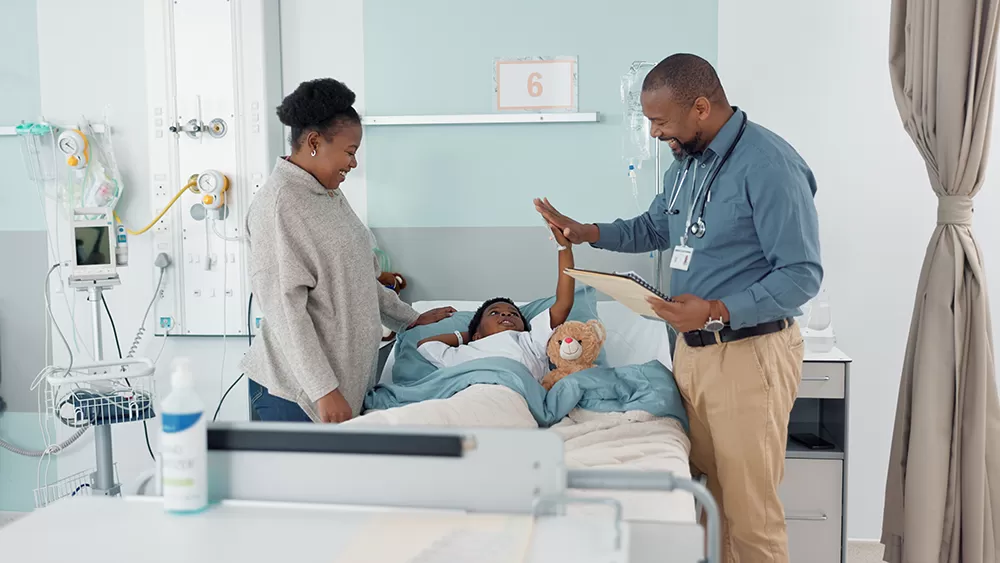
- You stay in the room for comfort. In some settings, a parent can remain near the head of the bed to soothe and talk to the child while the clinicians position them.
- You step out briefly. Some teams prefer fewer people in the room for safety and focus, especially if the space is tight or your child needs extra support.
- Your child receives sedation. If sedation is used, you may be asked to step out during parts of the process, then return as soon as it is safe.
If you want to stay, you can absolutely ask, “Is it possible for me to stay with them, and if not, can you tell me why?” A good team will explain the plan clearly.
What it feels like
Most parents describe the same three things: it feels fast, it feels crowded, and it feels like everyone is suddenly very serious.
That seriousness is a good sign. When clinicians prepare for an LP, you will often see:
- Multiple clinicians, each with a role (comforting, positioning, monitoring, assisting)
- Focused attention on keeping your child still and safe
- A lot of calm, repetitive coaching like “hold still, deep breaths, you are doing great”
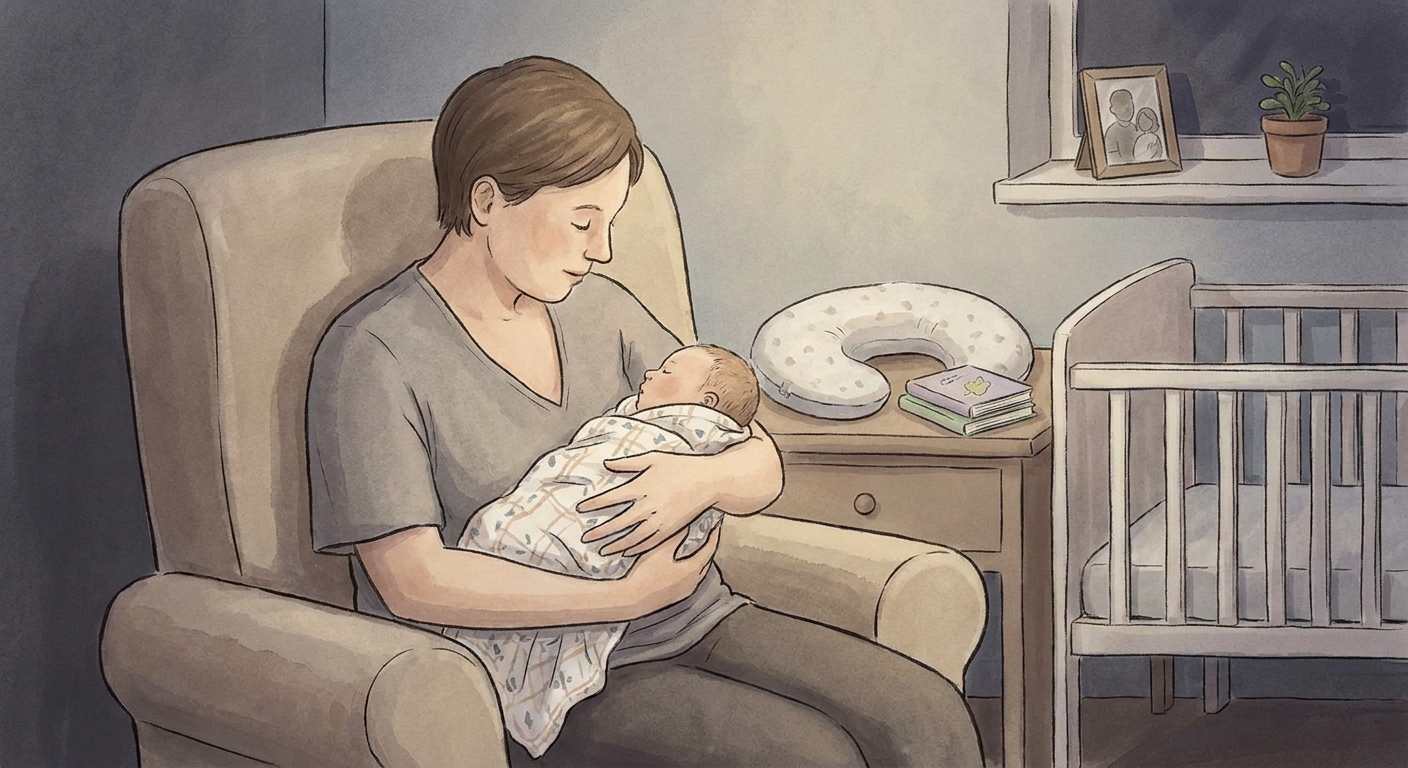
Your child may cry, even if pain control is used. Crying is also a normal reaction to being held still in an unfamiliar place. Parents often interpret crying as “something went wrong.” A lot of the time, it just means “I do not like this.” Those are very different things.
Also, it is okay if you cannot watch. You can tell the nurse, “I can be at their head and talk to them, but I cannot look.” We have heard that a thousand times, and we do not judge it for a second.
Does it hurt?
Parents deserve an honest answer: a lumbar puncture can be uncomfortable. The sensation depends on your child’s age, how quickly they can be positioned, and what pain relief or calming measures are used.
Depending on your child and the hospital, the clinicians may use:
- Numbing medicine on the skin
- Sweet solutions for infants (sucrose) with a pacifier for comfort
- Swaddling and positioning support to help them feel contained and safe
- Medication for anxiety or sedation in select cases
You can ask directly: “What are you using for pain control and comfort?” If the answer feels too vague, ask again. You are not being difficult. You are being your child’s advocate.
How long does it take?
The preparation can take longer than the sample collection itself.
- Prep time: Often 10 to 30 minutes, sometimes longer depending on how urgently other care is needed.
- Collection attempt: Often a few minutes, but it can take longer if the clinician needs to reposition or if the sample is hard to obtain.
- Recovery and settling: Many kids calm down quickly once they can be held normally again.
If it takes longer than you expect, it does not automatically mean something is wrong. It often means they are being careful, adjusting positioning, or making sure they get a usable sample so your child does not need a repeat.
When results come back
This is one of the hardest parts emotionally, because you want a yes or no answer immediately. The truth is: LP results come in layers.
Results you may hear the same day
- Basic fluid appearance (for example, clear versus bloody). Some blood can show up from the needle passing small vessels and does not automatically mean infection.
- Cell counts and chemistry (numbers like white blood cells, protein, glucose). These can provide early clues.
- Rapid testing for certain viruses or bacteria may be available in some hospitals. In places with a multiplex PCR meningitis panel on site, results can return in hours. In many hospitals, that kind of rapid testing is not available or is sent out.
Results that take longer
- Culture results (growing bacteria from the fluid) often have preliminary information at about 24 to 48 hours. Final results are commonly 48 to 72 hours, and sometimes longer depending on the lab and what grows.
- Additional specialized tests may take days, depending on what is ordered and whether it is sent out.
In real life, you might hear something like: “The early numbers are reassuring, but we are waiting on cultures.” Or: “We are concerned based on the initial results, so we are treating while we wait.” Both are common. Neither is meant to keep you in the dark. It is just how the science works.
Common worries
“Can my child be paralyzed from this?”
This is one of the most common fears. Serious complications like nerve injury are very rare. The procedure is done in the lower back in a location chosen to reduce risk, but no procedure is risk-free. Your clinicians weigh risks and benefits carefully before recommending it, and they will not push forward if it is not safe to do right then.
“What if they cannot get the sample?”
Sometimes, despite a skilled clinician, an LP does not yield enough fluid. If that happens, they will explain next steps. Depending on the situation, they may try again later, involve a more specialized clinician, or use other information to guide treatment.
“What does it mean if there is blood in the sample?”
A small amount of blood can occur if the needle passes a tiny blood vessel on the way to the fluid space. This is sometimes called a “traumatic tap,” and it is more common than parents expect. Clinicians and labs can often interpret results in context, and in some cases they can adjust how they think about the cell counts based on how much blood is present. It is understandably alarming to hear about, but it is not automatically a sign of meningitis.
“Will my child have back pain afterward?”
Some babies and toddlers are fussy afterward and some older children describe soreness. Many act surprisingly normal once they are snuggled, fed, and back in a calmer environment. Older kids and teens are more likely to mention a headache later the same day or the next day. Your team will tell you what to watch for and what pain relief is appropriate for your child’s age.
“Do they have to lie flat afterward?”
You may hear different instructions depending on the hospital and your child’s age. In pediatrics, the focus is usually on comfort, hydration or feeding, and monitoring, rather than forcing a toddler to lie flat for a long time (because, realistically, good luck with that). For older children and teens, clinicians may recommend taking it easy for the rest of the day and staying hydrated.
How you can help
You do not need to know medical details to be incredibly helpful. Your job is comfort and grounding.
- Ask where to stand. If you are allowed in, many kids do best hearing a parent’s voice near their head.
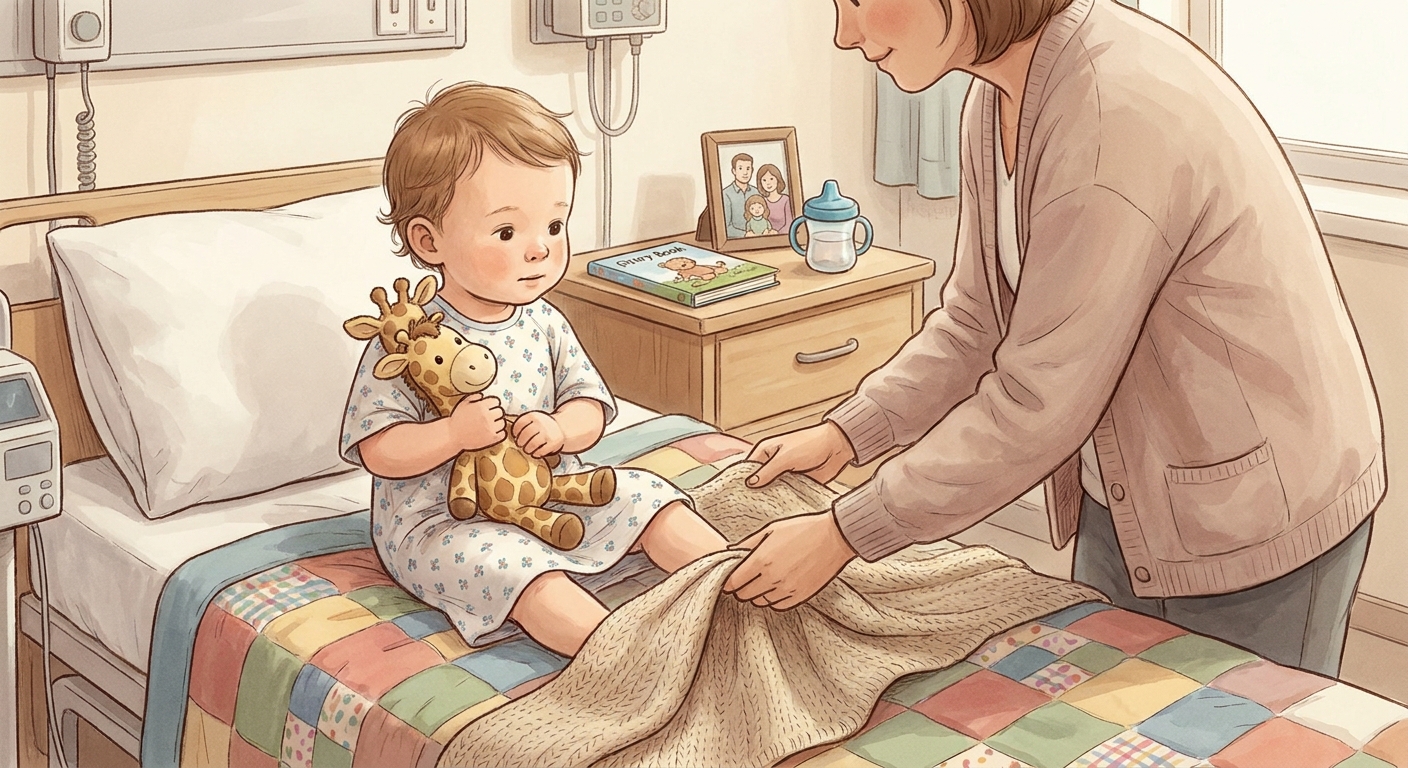
- Bring one predictable comfort item. A pacifier, lovey, or small stuffed animal can help. Hospitals often have extras if you forgot.
- Use a calm script. Simple phrases like “I am right here” and “You are safe” work better than long explanations.
- Keep your face soft. Kids read us. If you look terrified, they feel less safe. If you need to cry, it is okay to step out and come back.
What happens after
After an LP, clinicians usually continue monitoring while results come in. What happens next depends on the whole clinical picture, not just one test.
Common next steps include:
- Continuing or starting antibiotics while cultures are pending, if the clinicians are concerned
- IV fluids or support for dehydration
- Observation in the emergency department for a period of time
- Admission to the hospital for monitoring and treatment in higher-risk situations
If your child is admitted, you can ask: “What results are we waiting on, and when do you expect them?” It is a small question that can make the waiting feel more structured.
When to call a nurse or doctor right away
Your team will give you instructions based on your child’s specific situation. In general, speak up urgently if you notice:
- Worsening sleepiness that is out of character or hard to wake
- Repeated vomiting, or your child cannot keep fluids down
- A new or worsening severe headache (more common in older children)
- Fever that is getting worse or a new fever after going home
- Increasing redness, swelling, or drainage at the puncture site
Good questions to ask
- “What is the goal of the lumbar puncture for my child today?”
- “What comfort measures are you using?”
- “Will I be in the room, and where should I stand?”
- “Which results come back first, and which take longer?”
- “While we wait, what treatment are we starting and why?”
If you feel yourself spiraling, ask for the plan in one sentence. It is a trick I used as a nurse on myself as a parent, too: “Tell me what we are doing in the next hour.” Then: “Tell me what we are doing overnight.” Small time windows are easier for a tired brain to hold.
A final word
A lumbar puncture is one of those parenting moments that can feel surreal. Your child is little, the stakes feel enormous, and you are supposed to stay calm while strangers do something scary-sounding.
Here is what I want you to remember: the recommendation to do an LP usually comes from a place of protecting your child and getting clear answers as quickly as medicine allows. You are allowed to ask questions, take a breath, and need support. None of that makes you “that parent.” It makes you a parent who is showing up.
Sarah Mitchell
Sarah Mitchell is a Registered Pediatric Nurse and a mother of three who has spent over a decade helping families navigate the beautiful, chaotic early years of childhood. She combines evidence-based medical knowledge with real-world parenting experience to offer practical, compassionate advice. At Awesome Parent, Sarah's mission is to help exhausted parents find solutions, trust their instincts, and finally get some sleep.