A calm, practical guide to plugged ducts vs mastitis vs abscess, what symptoms mean, how to keep feeding safely, and when antibiotics or urgent care are needed.
Mastitis During Weaning

Sarah Mitchell
Sarah Mitchell is a Registered Pediatric Nurse and a mother of three who has spent over a decade helping families navigate the beautiful, chaotic early years of childhood. She combines evidence-based medical knowledge with real-world parenting experience to offer practical, compassionate advice. At Awesome Parent, Sarah's mission is to help exhausted parents find solutions, trust their instincts, and finally get some sleep.
Nothing humbles a confident weaning plan like waking up with a hot, painful breast and that very specific red wedge shape staring back at you in the mirror. I have talked parents through this exact moment as a pediatric triage nurse and then lived it myself. It feels unfair because you are doing the thing everyone says to do: dropping feeds.
Here is the tricky part: when milk is removed less often, it can sit longer and pressure can build. That backup (milk stasis) can trigger inflammation fast, and sometimes infection follows. In those cases, stopping all milk removal abruptly can make things worse when the breast is already very full or actively inflamed, because the stasis is part of what is driving the swelling and pain.

Why it happens during weaning
When you drop feeds or pump sessions, your body needs time to downshift production. During that transition, it is common to feel full or tender. Mastitis is different. It is a bigger inflammatory reaction in the breast, and it can happen during weaning because:
- Milk removal is less frequent, so milk sits longer in the ducts.
- Engorgement and swelling increase pressure, which irritates breast tissue and can narrow milk flow further.
- External pressure (tight bra, underwire, carrier strap, sleeping position) can worsen ductal narrowing and backup.
- Dropping several feeds at once can outpace your body’s ability to adjust.
- Stress and exhaustion (hello, weaning) can make it harder to notice early warning signs.
Important nuance: not every painful lump or red patch during weaning is a bacterial infection. Many cases are primarily inflammation related to milk stasis and ductal narrowing and may improve with supportive care. Some cases do turn into bacterial mastitis and need antibiotics. A clinician’s job is to sort out which situation you are in and how aggressive treatment should be.
Signs it is more than fullness
During a typical, gradual wean, fullness comes and goes and usually improves after a day or two as your body recalibrates. Mastitis or significant breast inflammation is more likely if you have:
- Flu-like feelings (chills, body aches, feeling wiped out)
- Fever (about 100.4°F / 38°C or higher) or feeling feverish with chills
- A hot, tender area that is worsening rather than improving
- Redness, often in a wedge or triangle shape
- A firm, focal lump that does not soften at all with gentle milk removal
- Rapid onset over hours, not days
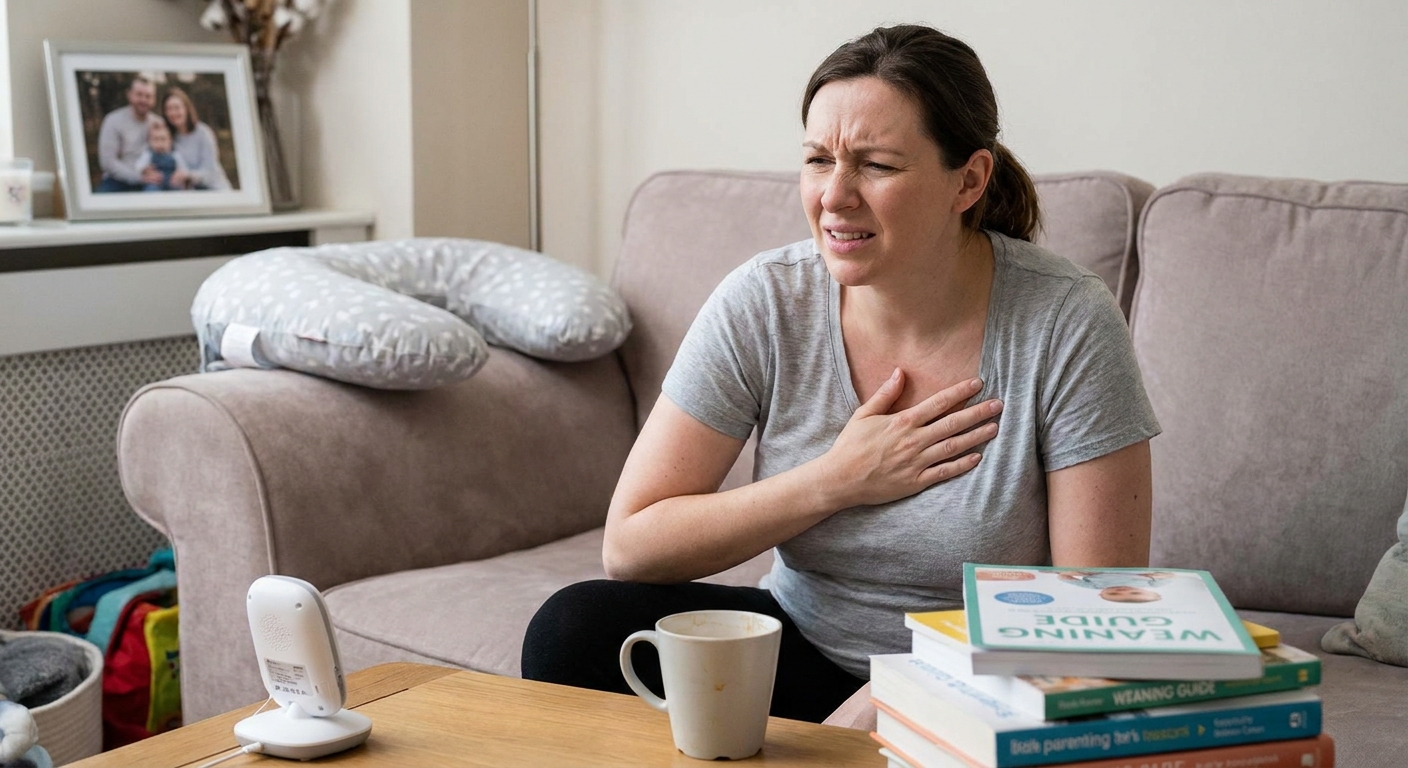
If you are thinking, “This feels like I got hit by a truck,” trust that instinct. That description is incredibly common with mastitis.
Why abrupt stopping can backfire
When milk is trapped, pressure rises inside the breast. That pressure can compress ducts even more, worsen swelling, and intensify pain. If you respond by stopping all milk removal immediately while the breast is very engorged or inflamed, the breast may become even more overfull, which can fuel the cycle.
This is why clinicians sometimes recommend a counterintuitive approach: continue a small amount of milk removal for comfort, even if your long-term goal is to stop lactating.
That does not mean you have to “go back to breastfeeding” if you are emotionally done or if weaning is necessary for your family. It means you may need a temporary pressure-release plan so the breast can calm down and you can wean safely.
What to do right now
If symptoms are mild and you are not severely ill, many parents can start supportive care while they contact their clinician for guidance.
1) Calm inflammation first
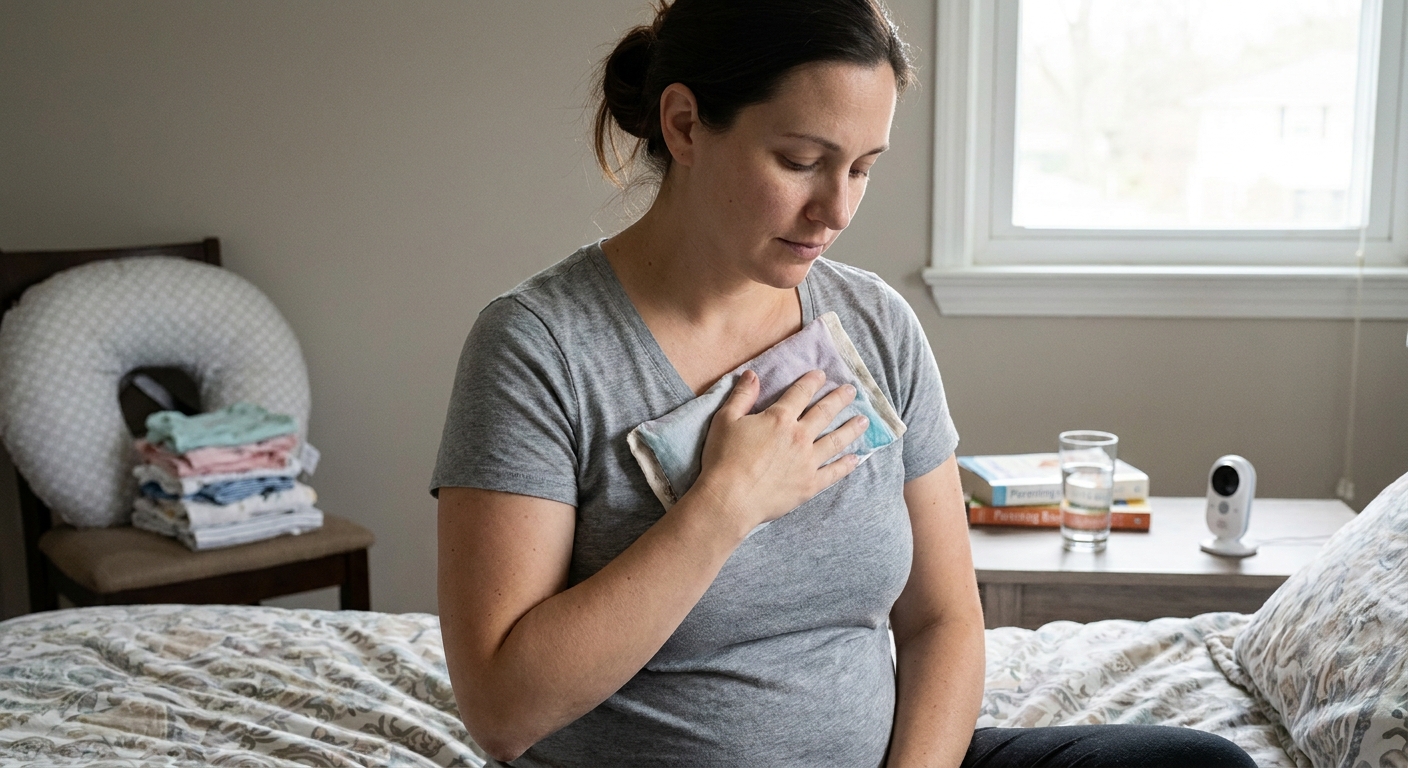
- Cold packs for 10 to 15 minutes at a time, several times a day.
- Ibuprofen if you can take it, since it helps pain and inflammation. Follow the label or your clinician’s dosing instructions.
- Rest and fluids. I know it sounds like a joke with kids in the house, but even a small decrease in activity helps.
2) Use minimal milk removal for comfort
This is the big weaning-specific point. The goal is not to drain the breast “empty.” The goal is to take the edge off so swelling and pressure can decrease.
- Try hand expression for a few minutes, or pump briefly, just until you feel softer.
- If you are still nursing some sessions, you and your clinician may decide to temporarily keep one short comfort feed on the affected side, then resume dropping feeds once symptoms improve.
- Avoid longer pumping sessions meant to fully empty the breast, which can signal your body to keep producing.
3) Skip deep massage
When parents feel a lump, the instinct is to dig in and “work it out.” During inflammatory mastitis, deep massage can irritate tissue and worsen swelling. Stick with gentle, light touch if you are doing anything at all.
4) Remove pressure points
- Switch to a supportive but not tight bra.
- Avoid underwires if they press on the sore area.
- Notice if you sleep on your stomach or have a carrier strap or bag pressing on one spot.
5) A quick “don’t do this” list
- Do not bind your breasts tightly.
- Do not repeatedly check and squeeze the lump all day (it can make swelling worse).
- Do not use prolonged heat if it increases throbbing or swelling.
- Do not try to “power pump” your way out of it while you are actively weaning.
How clinicians decide the plan
In a visit or phone call, a clinician is trying to balance two goals that can feel like they conflict:
- Calm the inflammation and prevent complications
- Support your plan to wean without accidentally increasing milk supply
What they consider typically includes:
- How sick you feel (high fever, chills, rapid worsening suggests you may need more than home care)
- Immune status and risk factors (for example, if you are immunocompromised, have poorly controlled diabetes, or are postpartum with a history of severe infections, you may need earlier evaluation)
- How full and tense the breast is (an overly full breast often needs some relief)
- Whether there is a discrete, very tender lump that is not improving
- How quickly symptoms started and whether they are worsening
- Your current weaning stage (dropping from 6 feeds a day versus already down to 1 to 2)
- Any history of recurrent mastitis or prior breast abscess
Possible recommendations may look like one of these:
- Minimal expression for comfort only for 24 to 48 hours while focusing on anti-inflammatory care.
- Temporarily pause the next feed drop until symptoms settle, then resume weaning more gradually.
- Continue a limited schedule (for example, one brief pump session every 12 to 24 hours) if you are stopping pumping, with planned reductions in time or volume.
- Evaluate for antibiotics if bacterial infection is suspected or if you are not improving.
- Consider ultrasound if there is a persistent focal lump, fluctuance, or poor response to treatment to rule out abscess.
If you feel torn between “I want to stop” and “my breast is screaming,” you are not failing at weaning. You are responding to biology. A short-term comfort plan often helps you reach the finish line faster, not slower.
When to get medical care today
I want you to have a clear “do not wait” list. Seek prompt medical care (same day if possible) from urgent care, your OB/midwife, primary care, or lactation medicine if you have:
- Fever (around 100.4°F / 38°C or higher) with chills, body aches, or feeling very unwell
- High fever (closer to 101.3°F / 38.5°C or above) or rapid worsening at any temperature
- Rapidly spreading redness or significant swelling
- Severe pain that is not improving with ibuprofen and cold packs
- No improvement within about 24 hours of supportive care, or worsening at any point (some clinicians allow 24 to 48 hours if symptoms are mild and you are stable, but call sooner if you are worried)
- A hard focal lump, especially with fever, or a lump that persists despite treatment (needs evaluation for infection or abscess)
- Pus-like nipple drainage or a new open area on the skin
- You feel faint, confused, or very unwell
Go to emergency care right away if you have signs of severe illness like trouble breathing, persistent vomiting, or you cannot keep fluids down.
Antibiotics and other treatments
Antibiotics can be very helpful when bacterial mastitis is likely, especially if you have fever and systemic symptoms. During weaning, clinicians often watch the trajectory closely:
- If you are clearly improving within 24 to 48 hours with supportive care and minimal milk removal, antibiotics may not be needed.
- If you have persistent fever, worsening redness, or you are not improving, antibiotics are more likely.
If your clinician prescribes antibiotics, take them exactly as directed and let them know if you are allergic to any medications. Also ask what to watch for if symptoms are not improving, because sometimes imaging is needed to rule out an abscess.
One more myth I want to gently retire: antifungal treatment is not routinely needed for breast or nipple pain unless there are specific findings or a clinician has a clear reason to suspect it. If someone is offering you an antifungal as the automatic answer to every case of breast pain, it is reasonable to ask, “What makes you think this is yeast?”
Weaning after you feel better
Once the pain and redness are clearly improving, you can return to weaning, just with a little more pacing.
Prevention tips
- Drop one feed at a time and hold there for a few days before dropping the next.
- If you pump, reduce by minutes, not by skipping huge blocks abruptly. For example, pump 2 to 3 minutes less every couple of days.
- Use comfort expression strategically: just enough to soften, not enough to feel empty.
- Stay aware of tight clothing and pressure on the breast as your schedule changes.
- If you feel a “hot spot”, respond early with cold packs and ibuprofen (if safe for you) rather than waiting for it to escalate.

3 AM questions
Is it mastitis if I do not have a fever?
It can be breast inflammation without systemic infection, and it can still be miserable. Fever makes infection more likely, but absence of fever does not automatically mean it is nothing. Watch the trend over 12 to 24 hours and check in with your clinician if it is worsening or not improving.
If I hand express, will my milk come back in?
Removing a lot of milk frequently can maintain supply, yes. But brief expression for comfort is different. When done minimally, it is often a bridge that lets inflammation calm down so you can continue weaning.
Should I use heat?
Some parents find brief warmth before a short expression helps milk start flowing, but prolonged heat can increase swelling for some people. If you use heat, keep it short and follow with cold afterward. If heat seems to make throbbing worse, skip it.
Can I keep weaning while on treatment?
Often yes, but many clinicians recommend pausing additional feed drops until symptoms clearly improve. Once stable, you can continue weaning gradually.
A final word from a nurse-mom
Weaning is already emotional. Adding fever and a painful red wedge is a special kind of cruel. If you take one thing from this: do not white-knuckle it by stopping all milk removal when significant engorgement or mastitis symptoms start during weaning. Get inflammation down, relieve pressure gently, and loop in a clinician early if you feel sick or you are not improving quickly.
You are not doing it wrong. Your body just needs a slower off-ramp.
Sarah Mitchell
Sarah Mitchell is a Registered Pediatric Nurse and a mother of three who has spent over a decade helping families navigate the beautiful, chaotic early years of childhood. She combines evidence-based medical knowledge with real-world parenting experience to offer practical, compassionate advice. At Awesome Parent, Sarah's mission is to help exhausted parents find solutions, trust their instincts, and finally get some sleep.