A calm, step-by-step guide for household chemical and medication ingestions: do and do not, when to call Poison Control, what info to have ready, plus button...
Toddler Swallowed a Water Bead: What to Do Now

Sarah Mitchell
Sarah Mitchell is a Registered Pediatric Nurse and a mother of three who has spent over a decade helping families navigate the beautiful, chaotic early years of childhood. She combines evidence-based medical knowledge with real-world parenting experience to offer practical, compassionate advice. At Awesome Parent, Sarah's mission is to help exhausted parents find solutions, trust their instincts, and finally get some sleep.
If you think your toddler swallowed a water bead, treat it as urgent. The safest first step is to call Poison Control right away (in the US: 1-800-222-1222) and follow their guidance. In many toddler cases, Poison Control or your clinician will advise same-day emergency department evaluation, even if your child looks totally fine in the moment.
I know that sounds intense. But water beads are not like swallowing a coin. They are designed to grow when they absorb liquid, and they can expand in the GI tract (stomach or intestines), creating a serious risk of bowel obstruction. Case reports and poison center guidance have documented dangerous obstructions from these beads, sometimes after a delay, which is why prompt medical guidance matters.
As a pediatric triage nurse (and as a mom who has had to fish plenty of “mystery objects” out of little mouths), I want to be clear: do not wait for symptoms to appear to ask for expert help, and do not try home remedies. This is one of those situations where time matters.
Why water beads are dangerous
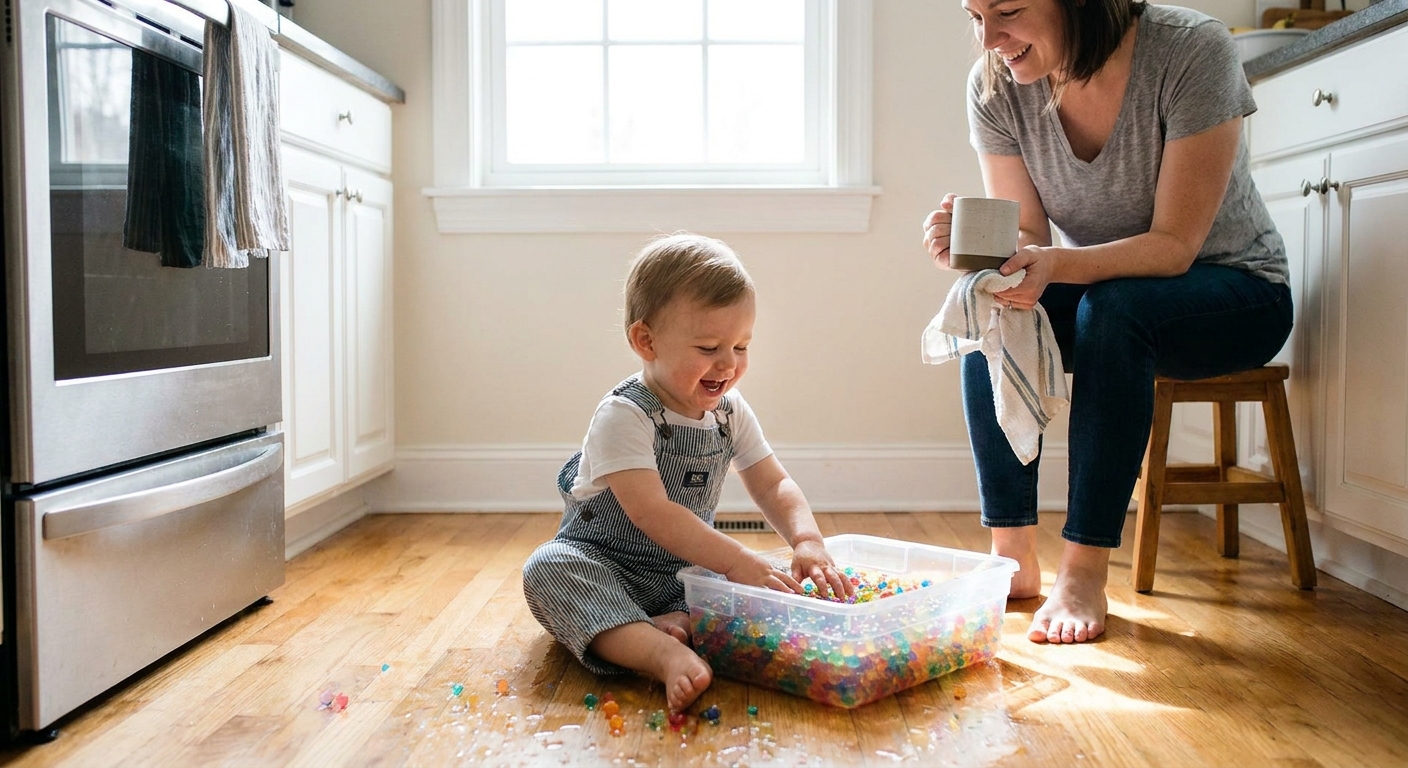
Water beads (sometimes called hydrogel beads, sensory beads, or Orbeez-type beads) start out tiny, firm, and easy to swallow. Once they’re exposed to liquid, they can expand dramatically over time.
Inside the body, that means a swallowed bead can:
- Swell after it’s already past the throat, making it hard to bring back up and harder to pass through the intestines.
- Create a blockage in the small intestine, where the space is narrow.
- Cause symptoms later, sometimes hours to days after ingestion, after you think you’re in the clear.
That delay is what makes water beads so sneaky. A toddler can swallow one, act normal for a while, and then develop vomiting or abdominal pain once the bead has grown or becomes stuck.
Symptoms can be delayed
Parents are often told to watch at home when a child swallows a smooth object like a small coin. With water beads, “watch and wait” is risky because obstruction symptoms can show up later, and they can look like a common stomach bug.
Get medical guidance immediately if ingestion is suspected, and go in urgently if your child develops any of these symptoms:
- Repeated vomiting
- Belly pain or significant fussiness that will not settle
- Swollen or bloated abdomen
- Refusing food or drink
- Drooling or trouble swallowing (more concerning if multiple beads were swallowed or something is stuck higher up)
- Constipation or not passing stool or gas
- Blood in stool
- Unusual sleepiness or weakness
Call emergency services if your toddler has severe pain, a hard distended belly, signs of dehydration with lethargy, or bilious (green) vomiting (which can be a sign of obstruction).
Why X-rays may miss water beads
This is one of the most frustrating parts of water bead ingestions. Many water beads are radiolucent, meaning they may not appear on a standard X-ray the way metal objects do.
So even if you go in quickly (which many toddlers should), you may hear, “We don’t see anything on the X-ray.” That does not reliably rule out a swallowed water bead.
Depending on your child’s symptoms, timing, and the clinical team’s concern, they may use other tools such as ultrasound, endoscopy, or in select situations CT. CT can be very helpful but involves radiation, so pediatric teams use it thoughtfully. The important thing is that your child is being evaluated by a team that can choose the right next step and give clear return precautions.
What to do right now
If you suspect your toddler swallowed a water bead, here’s the safest plan:
- Call Poison Control immediately (US: 1-800-222-1222) and follow their instructions. If you cannot reach them quickly, contact your pediatrician’s on-call line or go to urgent emergency evaluation based on your child’s age and symptoms.
- Do not induce vomiting.
- Do not give laxatives, oils, or “flush it out” drinks. These have not been shown to help with water beads and can complicate care or delay the evaluation your child needs.
- Bring the product information if you have it (container, label photo). If you have a remaining bead, bring one in a sealed bag. This can help staff identify the material and typical expansion size.
- Be ready to share details: when it happened (best guess), how many might be missing, and your child’s current symptoms.
If you are outside the US, use your local poison information service number.
“But my child swallowed a coin once and we just waited”
I hear this a lot in triage, and it makes total sense. Many swallowed coins pass without issue. Coins are generally radiopaque, meaning they usually show up clearly on X-ray, which helps clinicians track where they are. Management still varies depending on where the coin is (for example, stuck in the esophagus versus already in the stomach) and whether symptoms are present.
Water beads are different for three big reasons:
- They expand.
- They may not show on X-ray.
- They can obstruct the bowel after a delay.
So if your gut is telling you, “This feels different,” you’re right. This one deserves urgent guidance and close follow-up.
Button batteries and magnets
Since we’re talking about swallowed objects, two quick (but crucial) notes:
- Button batteries are a true emergency because they can cause severe burns in the esophagus quickly. Do not wait for symptoms.
- Magnets, especially more than one magnet or a magnet plus metal, are a true emergency because they can pinch the intestines and cause dangerous injury.
Those scenarios have their own rules and timelines. If the swallowed item is a button battery or magnet, seek emergency care immediately.
Water beads in the nose or ear
One more safety note I want on your radar: water beads can also be dangerous if a child puts one in a nose or ear. They can swell with moisture and become harder to remove, and attempts at home removal can push them deeper.
If you suspect a water bead is in the nose or ear, contact your pediatrician, urgent care, or the emergency department for advice on safe removal.
Prevention that works
Once your child is safe and you have had a chance to exhale, it’s worth doing a quick “where did it come from?” scan. Water beads often show up in sensory kits, vase fillers, older sibling science activities, or party decor.
A few realistic prevention steps that help:
- Keep water beads out of homes with toddlers and younger siblings whenever possible.
- If older kids use them, make it a supervised, table-only activity with immediate cleanup.
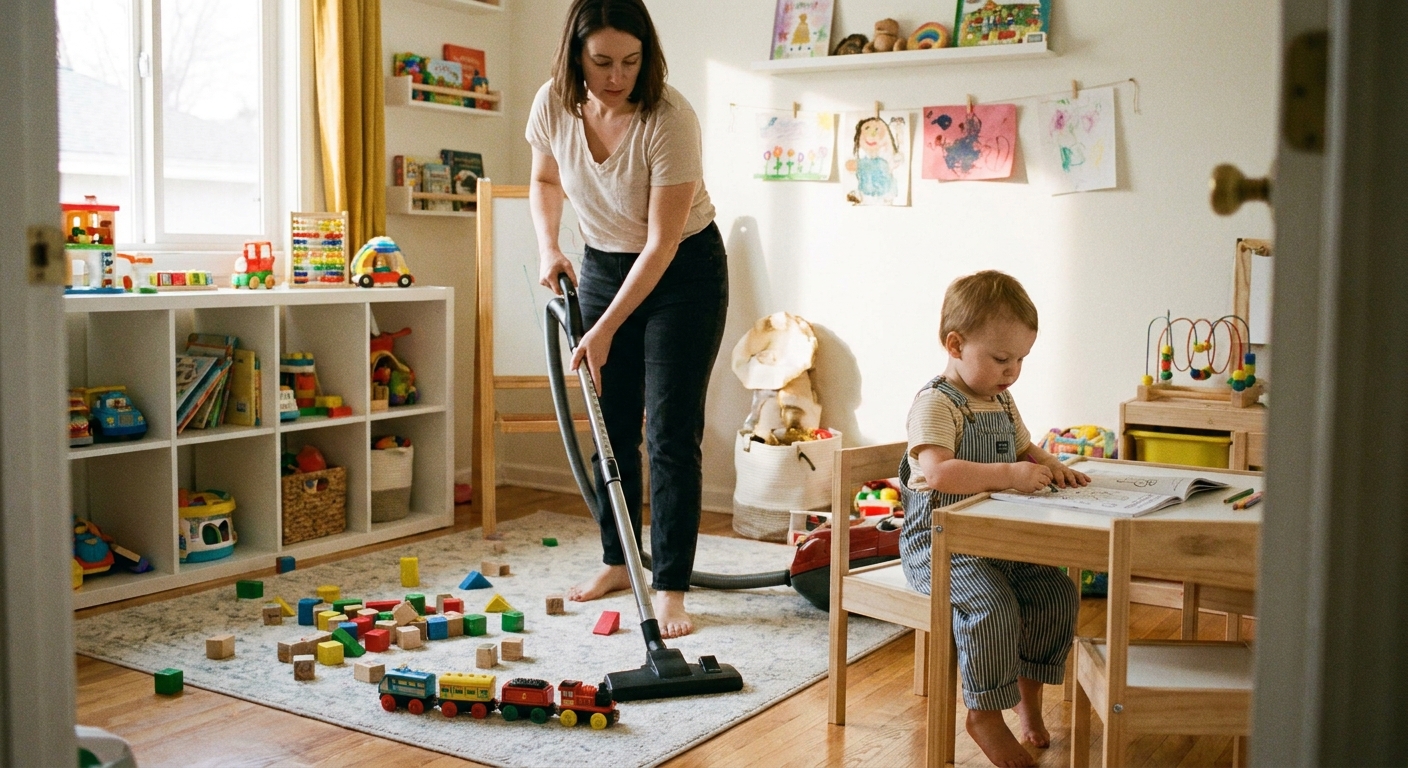
- Vacuum thoroughly afterward. These beads roll and hide unbelievably well.
- Store them locked or up high, just like medications or small batteries.
Quick FAQ
How long does it take a water bead to expand?
It varies by product. Many begin swelling quickly once exposed to liquid and can continue expanding over hours. Inside the body, that means size can change after swallowing.
What if I’m not 100% sure they swallowed one?
If a bead is missing and your toddler had access, that is enough reason to call Poison Control and get guidance. With water beads, waiting for certainty can mean waiting too long.
Will my child definitely need surgery?
Not always. The right treatment depends on where the bead is, how big it is, and whether symptoms are developing. Some cases require endoscopic removal or surgery, which is exactly why early evaluation and clear follow-up instructions are so important.
The bottom line
A swallowed water bead is an urgent bowel-obstruction risk because it can expand inside your child and may not show up on a standard X-ray. Symptoms can be delayed, so do not take a wait-and-see approach the way you might for some other objects. Call Poison Control right away and follow their guidance, and seek emergency care quickly if advised or if any symptoms appear.
If you’re reading this in a panic at an awful hour, take a breath and focus on one step: get expert guidance immediately. That is the safest move.
Sarah Mitchell
Sarah Mitchell is a Registered Pediatric Nurse and a mother of three who has spent over a decade helping families navigate the beautiful, chaotic early years of childhood. She combines evidence-based medical knowledge with real-world parenting experience to offer practical, compassionate advice. At Awesome Parent, Sarah's mission is to help exhausted parents find solutions, trust their instincts, and finally get some sleep.