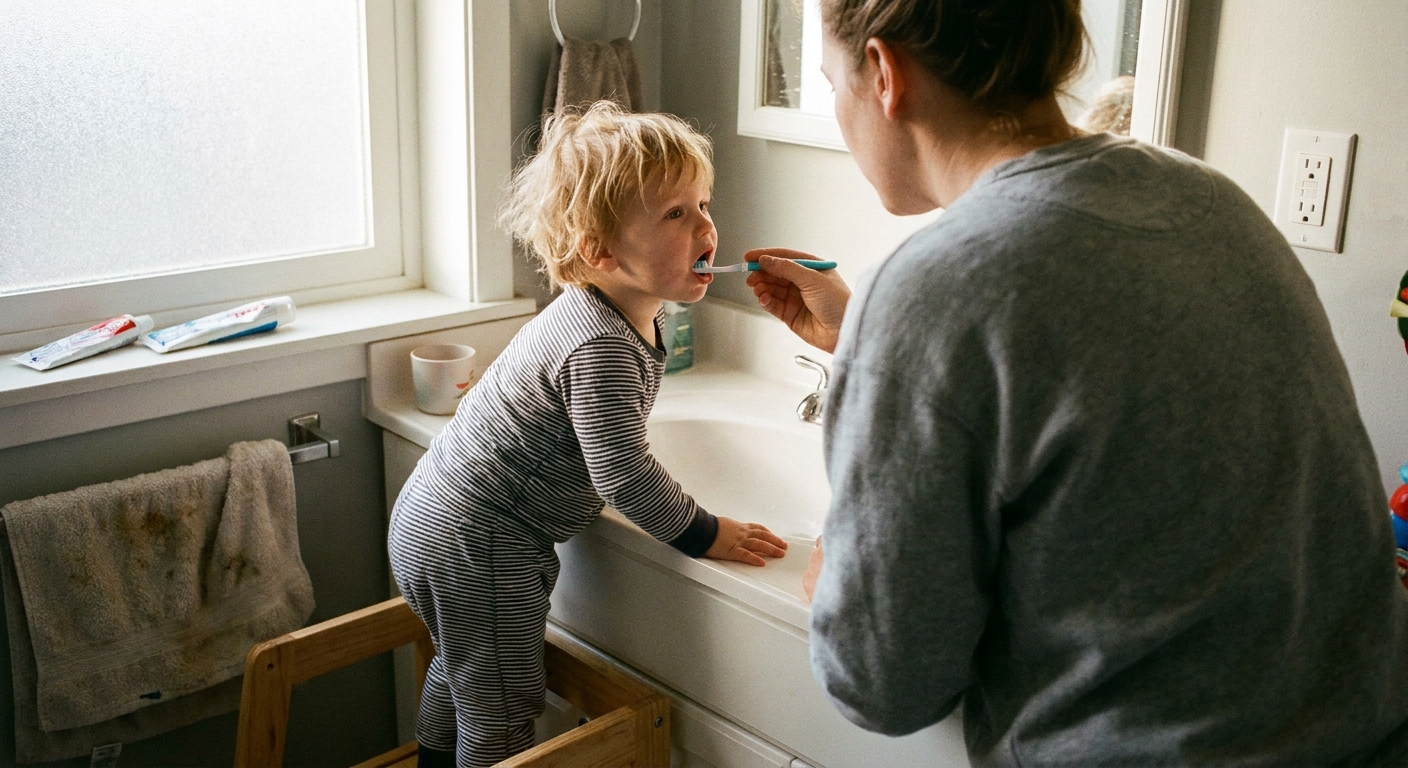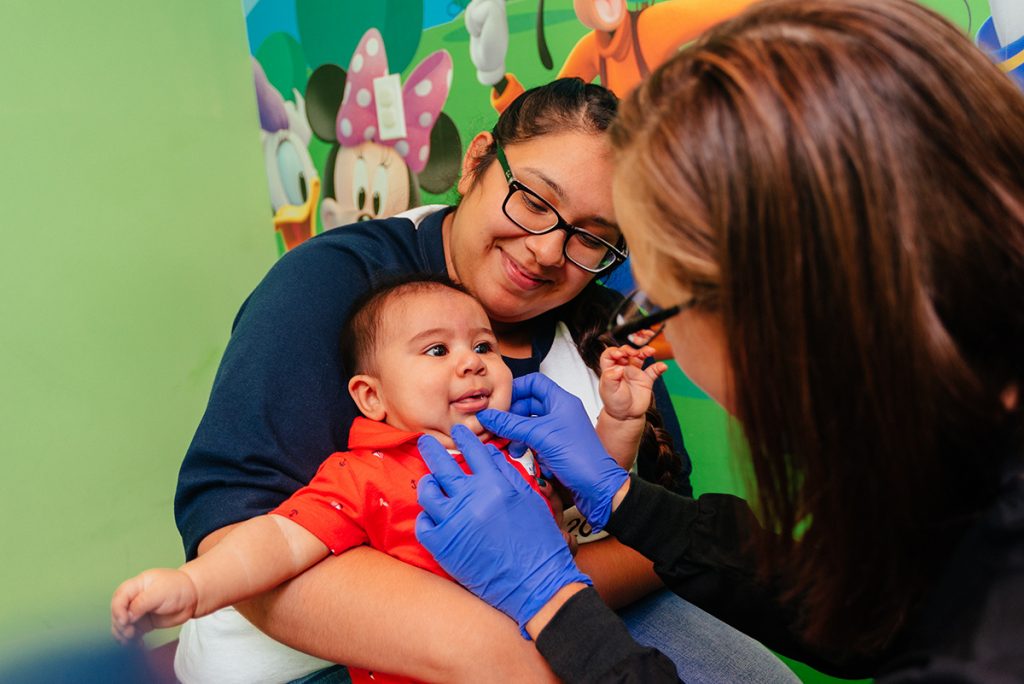
Songs, choices, playful routines, and calm boundaries that work. Plus toddler brushing technique, fluoride amounts by age, and what to do during a meltdown.
When to Start Flossing a Child’s Teeth

Sarah Mitchell
Sarah Mitchell is a Registered Pediatric Nurse and a mother of three who has spent over a decade helping families navigate the beautiful, chaotic early years of childhood. She combines evidence-based medical knowledge with real-world parenting experience to offer practical, compassionate advice. At Awesome Parent, Sarah's mission is to help exhausted parents find solutions, trust their instincts, and finally get some sleep.
The moment your child’s teeth start cozying up to each other like they’re sharing a sleeping bag, brushing alone stops being enough. As a pediatric nurse and a mom of three, I can tell you this is one of those parenting upgrades that feels small but makes a big difference over time. The good news: you do not need perfect technique or a Pinterest-worthy routine. You just need a simple, consistent plan.
When should kids start flossing?
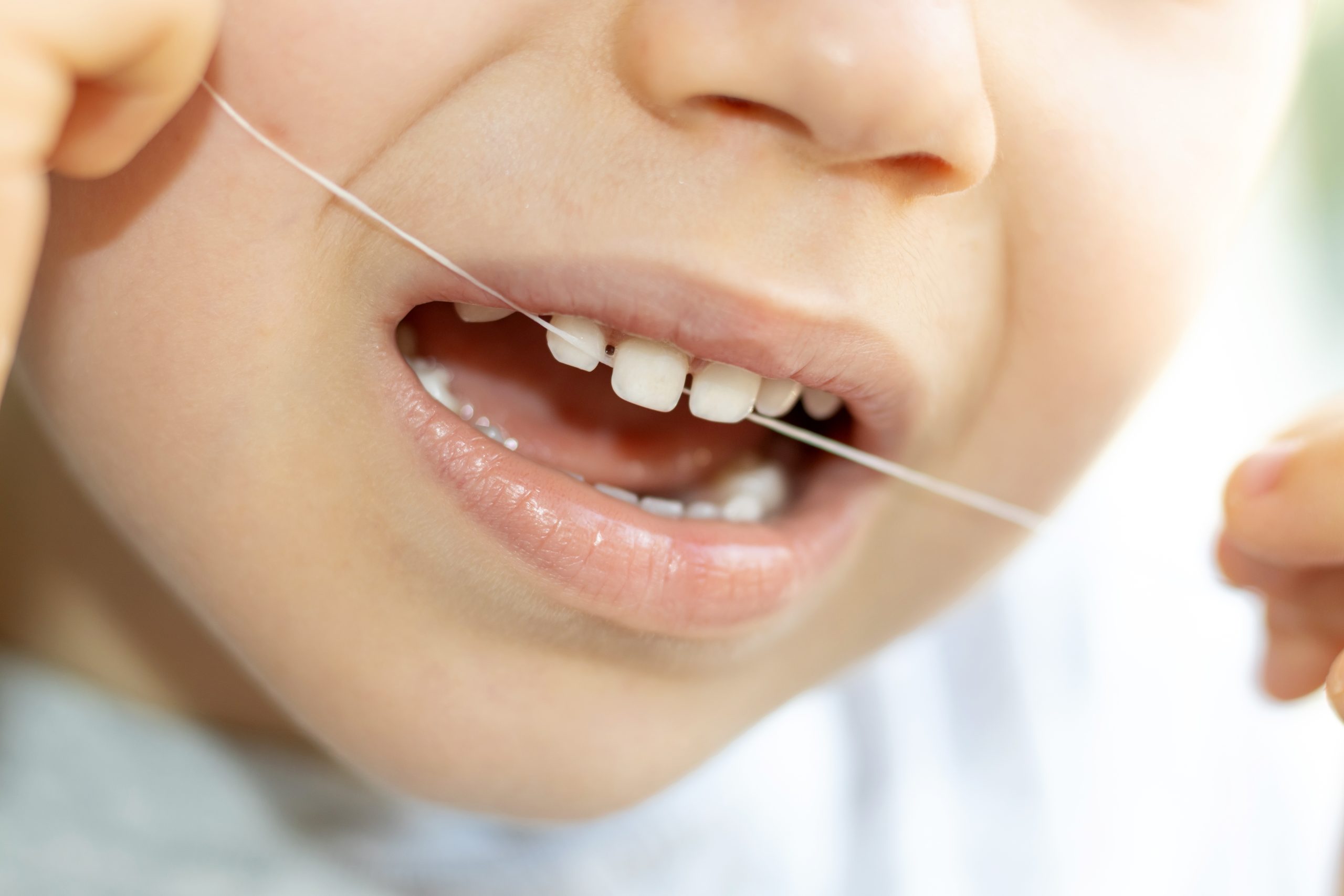
Many dentists recommend starting flossing as soon as two neighboring teeth touch and you cannot easily clean between them with a toothbrush bristle. For many kids, that happens somewhere between toddlerhood and early childhood, but the real trigger is not age. It is contact.
Why it matters: cavities in kids often start between teeth, especially in those tight back-tooth areas where food and plaque love to camp out. Brushing cleans the front, back, and chewing surfaces. Flossing is what cleans the tight “in-between” space.
Quick check: do their teeth touch?
- If you see a visible gap between teeth, flossing that spot is usually not urgent.
- If teeth are touching, or you can’t see space between them, plan to floss there.
- Molars are often the first “must floss” area because they sit close together and have deep grooves.
Rule of thumb: floss every spot where teeth touch. If you need a starting point, focus on the tight molar contacts first, then add the rest as the habit gets easier.
Flossing vs brushing: what’s the difference?
Think of it like cleaning a sticky high chair. Brushing is wiping the tray. Flossing is cleaning the crack where the tray meets the seat, the place your wipe never quite reaches.
- Brushing removes plaque from tooth surfaces and along the gumline. It also delivers fluoride from toothpaste to those surfaces.
- Flossing removes plaque and trapped food between teeth and slightly under the gum edge in those tight spaces.
Even if your child is a brushing champion, they still need flossing once contacts are tight. And if your child is a brushing… negotiator, flossing does not replace brushing. You still need both.
How to floss a young child
For most kids, parents should do the flossing until the child has the hand skill to do it well. That is often not until around ages 8 to 10, sometimes later. “Doing it myself” is great practice. It is not always great plaque removal.
Easy positions
- Knee-to-knee: Your child lies back with their head in your lap. Good for toddlers and preschoolers.
- Behind-the-head: Your child stands or sits, and you stand behind them like a hair stylist.
- On the bed or couch: Works well if the bathroom is overstimulating at night.
Step-by-step flossing
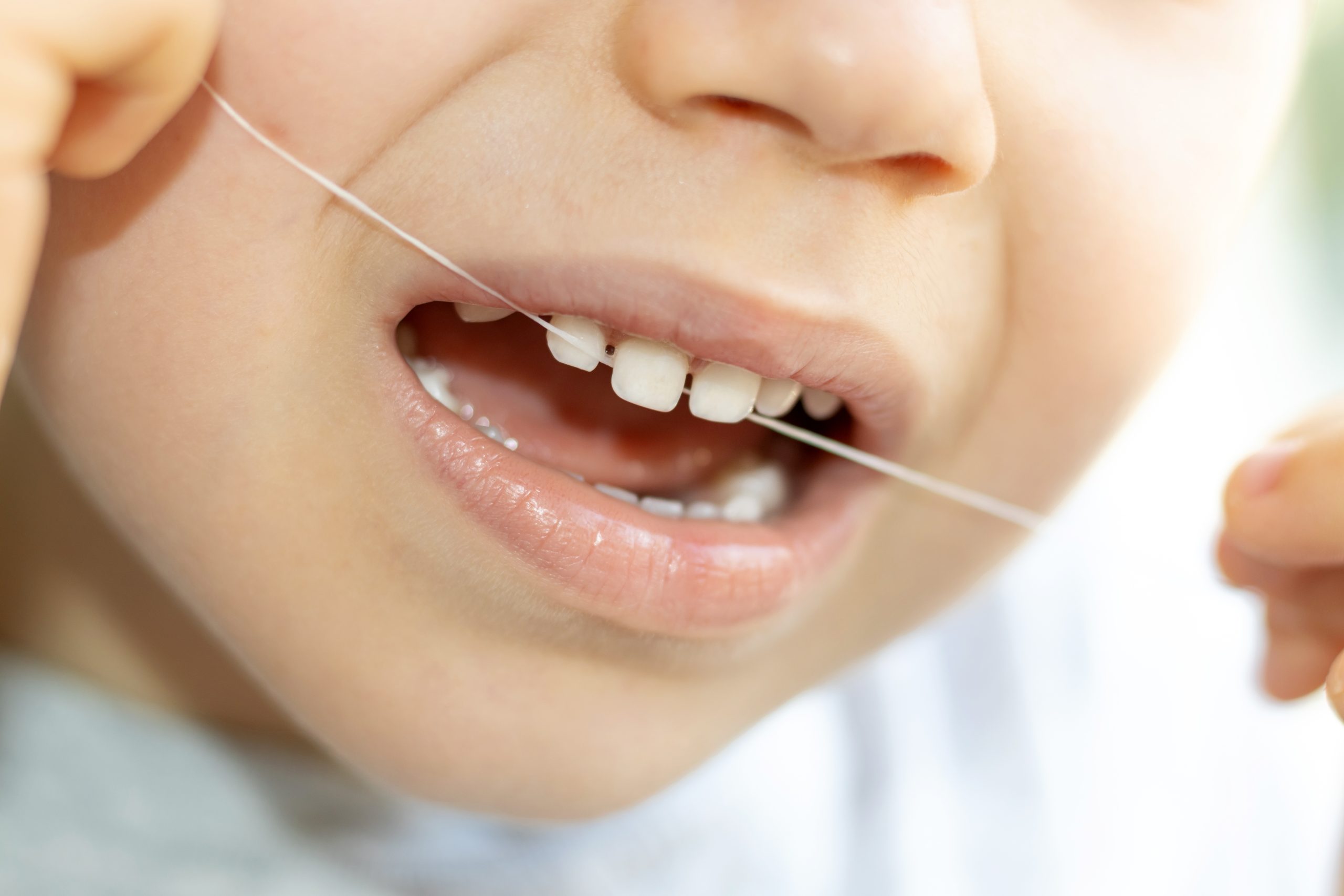
- Use about 12 to 18 inches of floss (a manageable length to wrap around your fingers) or a floss pick if that is what you can manage consistently.
- Slide gently between the teeth. If it snaps into the gums, pause, back up slightly, and re-angle. Slow and steady is the goal.
- Make a C-shape around one tooth and move the floss up and down a few times.
- Switch sides and do the same against the neighboring tooth.
- Move to a clean section of floss for the next contact (or rinse a reusable handle if you use one).
If your child clamps their teeth
- Try flossing right after brushing when the routine is already happening.
- Offer a choice: “Do you want to floss top teeth first or bottom teeth first?”
- Count to five for each flossed spot. Short and predictable is calming.
- If they truly cannot tolerate all contacts, floss just the tightest molar contacts first. Partial progress beats quitting.
Safety note: If you are flossing a wiggly toddler, floss picks can be easier, but keep a close grip and move slowly. You want gentle, controlled movement, not a sudden poke if they jerk their head. Also keep floss picks put away when you are done, since they can become a tempting chew toy.

How often should a child floss?
Aim for once a day wherever teeth touch. Most families do it at night, because it pairs naturally with brushing and you are clearing out the day’s plaque and food before sleep.
If “once a day” feels impossible right now, start with:
- 2 to 3 nights per week consistently, then build up.
- Once daily for the back teeth only, then expand as your child adjusts.
Bleeding gums: what it means
Seeing blood the first few times you floss a child’s teeth can be alarming, especially late at night when everything feels like an emergency. In most cases, mild bleeding is a sign of gum inflammation from plaque, not that you harmed them.
What’s normal
- A little bleeding or pink on the floss for the first week or two
- Tender gums that improve as flossing becomes regular
What to do
- Keep flossing gently once a day. Consistency is what makes the bleeding stop.
- Use a soft toothbrush and brush along the gumline.
- If bleeding started after you changed techniques, lighten your pressure and slow down. Aggressive flossing can irritate gums.
- Check toothpaste amount and supervision so brushing is actually effective.
Call the dentist if you notice
- Bleeding that is heavy, persistent, or not improving after about 10 to 14 days of gentle daily flossing
- Swollen, very red gums, bad breath that does not improve, or gum pain
- Any pus, fever, or facial swelling (those need prompt evaluation)
If the floss won’t fit
Sometimes teeth are so snug that floss shreds, gets stuck, or simply will not slide through. This can happen when new teeth erupt, when teeth shift, or when there is crowding.
Try these first:
- Use waxed floss or a floss designed to slide more easily.
- Go slow and wiggle gently through the contact rather than pushing straight down.
- Try a floss pick for better control (especially for back molars).
If you still cannot floss a specific spot, do not force it. It is worth having a dentist take a look. A dentist can check for:
- Very tight contacts that trap plaque
- Early cavities between teeth
- Chipped edges or rough spots that shred floss
- Crowding that may need monitoring
Bottom line: if floss repeatedly gets stuck between the same two teeth, do not keep yanking. Schedule a dental check so you are not accidentally injuring gums or missing a problem area.
Flossing with braces or appliances
Braces and appliances raise the flossing difficulty level, and they also raise the importance level. Food and plaque get trapped more easily around brackets and wires.
What helps
- Floss threaders to guide floss under wires
- Orthodontic floss (often stiffer or spongy in sections) for easier threading
- Small interdental brushes for cleaning around brackets and under wires (your orthodontist can recommend sizes)
- Water flossers as a helpful add-on, especially for kids who struggle with string floss
A water flosser can be great for rinsing and reducing plaque around braces, but it is not always a perfect substitute for physically cleaning the tight contact between teeth. Many orthodontic teams recommend using both when possible.
Common parent questions
Can my child just use those little floss picks?
Yes, especially for parents flossing young kids or for tight back molars where fingers do not fit well. Picks can be easier and faster. Just supervise closely and move slowly so the pick does not jab the gums if your child wiggles.
Do I need to floss baby teeth?
Baby teeth hold space for adult teeth, support speech, and help kids chew comfortably. Cavities between baby teeth can still cause pain, infection, and dental work. If baby teeth touch, flossing is absolutely worth it.
My child hates flossing. What is the minimum I should do?
If you are in survival mode, focus on the tight contacts, usually between the back molars. Do those daily if you can. Everything else is bonus until the routine gets easier.
When can kids floss by themselves?
Many kids can start practicing earlier, but most still need a parent to do the “real” flossing until they have strong fine motor control and patience. A practical test is: can they tie their own shoes well and consistently? If not, they likely still need help flossing effectively.
A routine that sticks
If you want flossing to become normal, keep it boring and brief.
- Pick one time (usually bedtime).
- Floss first, then brush. Many kids tolerate flossing better before their mouth feels tired.
- Use the same script: “Floss, brush, rinse, done.”
- Praise effort, not perfection. You are building a habit, not performing dental gymnastics.
And if you miss a night, you are not failing. You are parenting. Start again tomorrow.
Sarah Mitchell
Sarah Mitchell is a Registered Pediatric Nurse and a mother of three who has spent over a decade helping families navigate the beautiful, chaotic early years of childhood. She combines evidence-based medical knowledge with real-world parenting experience to offer practical, compassionate advice. At Awesome Parent, Sarah's mission is to help exhausted parents find solutions, trust their instincts, and finally get some sleep.