Worried your toddler might have a lazy eye? Here are the real-world signs parents notice, simple checks you can do at home, and when to book an eye exam.
White Pupil in Baby Photos: What Leukocoria Means

Sarah Mitchell
Sarah Mitchell is a Registered Pediatric Nurse and a mother of three who has spent over a decade helping families navigate the beautiful, chaotic early years of childhood. She combines evidence-based medical knowledge with real-world parenting experience to offer practical, compassionate advice. At Awesome Parent, Sarah's mission is to help exhausted parents find solutions, trust their instincts, and finally get some sleep.
If you have ever zoomed in on a cute baby photo at 1 AM and felt your stomach drop because one pupil looks white instead of the usual red-eye, you are not alone. Parents bring this question to clinics all the time, and it deserves a calm, clear answer.
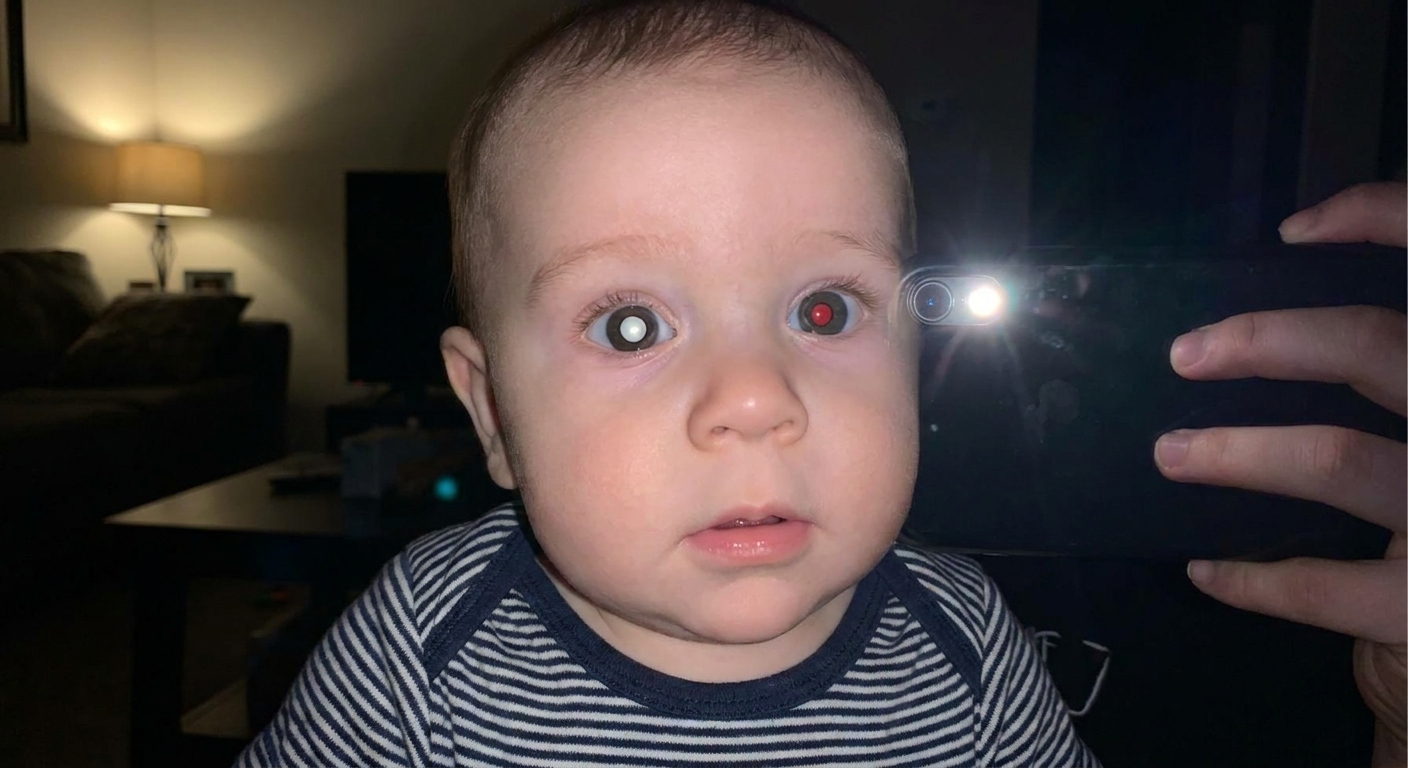
A white glow in the pupil can be a totally boring camera or lighting quirk. But it can also be a real medical sign called leukocoria, which deserves a prompt eye exam (often including a dilated exam).
What leukocoria means
Leukocoria literally means “white pupil” or “white reflex.” Instead of seeing a red reflex (the normal reddish glow from the retina when a flash hits the back of the eye), you might see:
- a white, silver, or yellow glow
- a pupil that looks gray or “milky”
- one eye reflecting differently than the other
Doctors also call this an abnormal red reflex. Pediatricians screen for it during well visits by shining a light and checking that both eyes reflect evenly.
When it is “just the camera”
Photos can be misleading. These are the most common non-scary reasons you might see a pale pupil in a picture:
1) Angle and distance
Flash reflection depends on geometry. If one eye is slightly turned or the camera is off-center, the flash can bounce back as a pale reflection from inside the eye (off-axis reflection from the retina can look white in a frozen frame). You cannot localize the exact spot from a photo, and you do not need to.
2) Bright room lights or sunlight
Overhead lights, a window, or sunlight reflecting off the eye can create a white “sparkle” that looks alarming when frozen in a single frame.
3) Red-eye reduction and phone processing
Some phones automatically “fix” red-eye. Occasionally that correction can make one pupil look oddly pale or gray.
4) Motion blur
Babies move. A smear of light across the pupil can mimic a white reflex.
A reassuring pattern: it happens in one or two photos only, changes depending on angle, and disappears in other pictures taken the same day.
When it is a red flag
Here is the big takeaway I want you to remember: if the white reflex shows up repeatedly, especially in the same eye, it is worth an eye exam even if your child seems totally fine.
Call for an appointment with a pediatric ophthalmologist (or an optometrist who sees infants and can urgently refer) if you notice:
- White or yellow pupil in multiple photos, especially with flash
- It is always the same eye
- You see it in normal room light, not just photos
- One pupil looks different in color or brightness compared to the other
- New or worsening eye turn (crossed eye or drifting eye), especially after about 3 to 4 months of age
- Persistent squinting, strong light sensitivity, or keeping one eye closed in bright light
- Vision concerns: not tracking, not making eye contact like before, bumping into things (in older babies and toddlers)
- A cloudy-looking eye or a “white spot” in the pupil you can see without a camera
How urgent is it?
Most families want a simple timing rule. Here it is:
Book an eye exam this week
If you have repeated white reflex in photos (even if your child otherwise seems well), ask for an evaluation this week, ideally within a few days. When you call, say: “I am seeing a white pupil or abnormal red reflex in photos and I am worried about leukocoria.” That phrase helps offices triage correctly.
Higher-risk situations: If your baby was born very premature, has a known eye condition, or there is a family history of retinoblastoma or childhood cataracts, ask to be seen as soon as possible.
Go today if:
- the eye looks cloudy or suddenly different
- there is eye pain, significant redness, swelling, or discharge
- your child had an eye injury
- you notice new severe light sensitivity with tearing or keeping the eye shut
- you cannot get prompt eye care and your gut says something is really off
Often this is not a call-911-right-now problem, but it is a “do not wait weeks to months” problem. Some causes are time-sensitive for vision, and a few are medically urgent. Getting checked promptly is the safest move.
What can cause leukocoria?
I am going to list the common possibilities without turning this into a doom-scroll. Leukocoria is a sign, not a diagnosis. Causes can include:
- Camera or lighting artifact (yes, still on the list)
- Refractive issues or big differences between eyes that change the reflex (sometimes tied to amblyopia risk)
- Cataract (a cloudy lens) which can block a normal red reflex
- Retinoblastoma (a rare eye tumor) which is one reason we take leukocoria seriously
- Retinopathy of prematurity (ROP) (in some premature infants)
- Persistent fetal vasculature (PFV) (a congenital condition inside the eye)
- Retinal detachment or other retinal disorders (uncommon in infants, but possible)
- Coats disease (uncommon, often in young boys, typically later than infancy)
- Vitreous hemorrhage (bleeding inside the eye, uncommon but possible)
- Scarring or inflammation inside the eye (less common)
Only an eye professional can sort this out by examining the red reflex properly and, if needed, doing a dilated eye exam.
Leukocoria vs lazy eye
This part matters because many parents land here after searching “lazy eye signs” or “crossed eyes in baby.” Those are real concerns, but not the same as leukocoria.
Lazy eye (amblyopia)
Amblyopia is reduced vision in an eye that the brain is not using well. It is often caused by:
- an eye turn (strabismus)
- a big glasses prescription difference between eyes
- something blocking vision, like a cataract
Key point: amblyopia itself does not typically cause a white pupil in photos. But some conditions that cause leukocoria (like cataract) can also lead to amblyopia, which is why prompt evaluation matters.
Crossed eyes (strabismus)
Strabismus means the eyes are not aligned. Some intermittent crossing is common in newborns. By about 3 to 4 months most babies can keep their eyes aligned more consistently, though brief drifting can still happen sometimes.
Key point: strabismus is about alignment. Leukocoria is about an abnormal reflection. They can occur together, but one does not automatically mean the other.
What to do right now
If you are in the spiral, here is a simple, practical plan.
Step 1: Check a few more photos
- Look at photos from different days, different lighting, and different angles.
- See if it is always the same eye.
- See if it happens without flash.
Important: do not spend hours trying to “prove” it. If you can reproduce it easily or you keep seeing it, move to Step 2.
Step 2: Take a few new photos or a short video
- Use flash in a dim room, then take one without flash.
- Stand a few feet away and keep the camera centered.
- Try to capture both eyes looking toward the camera.
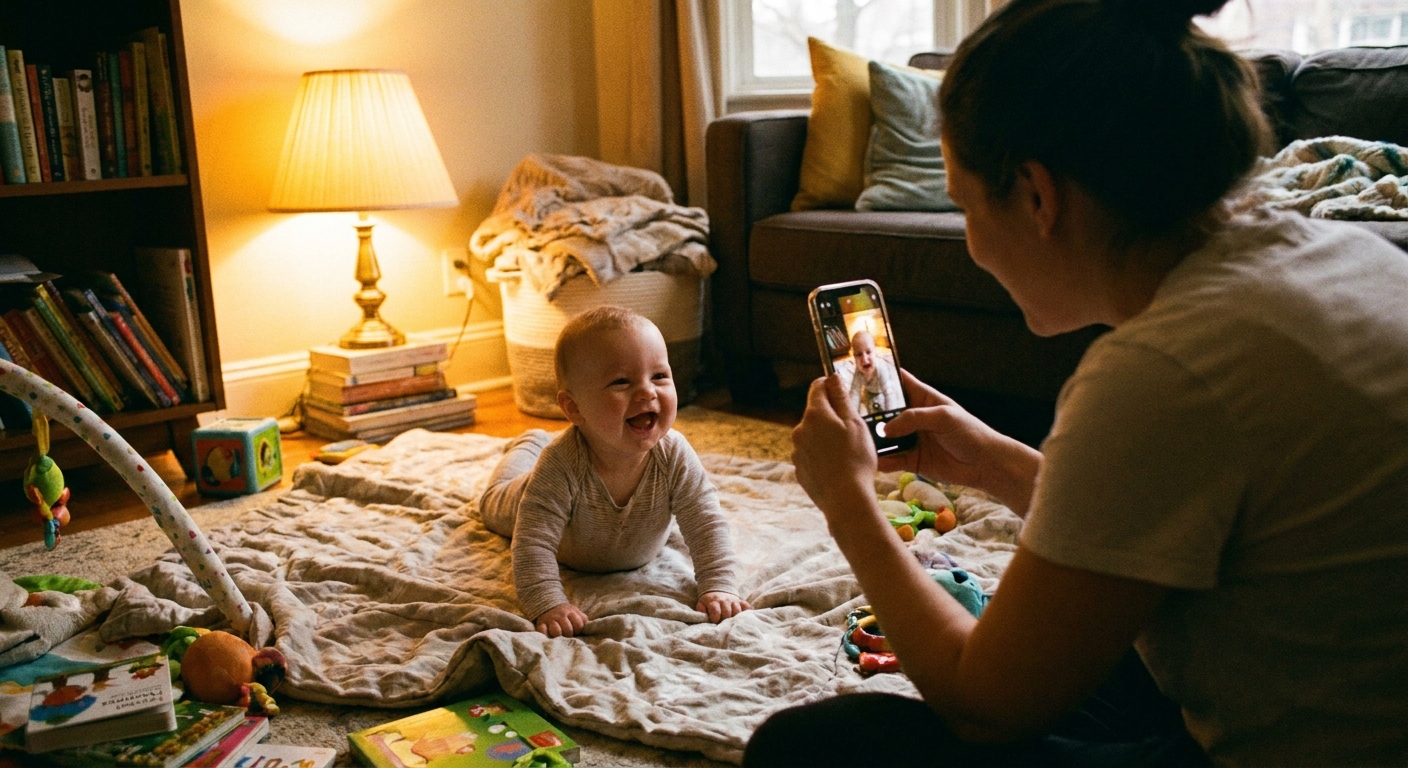
This is not to diagnose your child at home. It is just to give the eye doctor helpful information.
Quick safety note: do not hold a bright flash right up to your baby’s face. Keep a normal photo distance.
Step 3: Call for an urgent appointment
Ask for an urgent evaluation for “white pupil” or “abnormal red reflex” seen in photos. If you can get to your pediatrician faster, call them too. They can check the red reflex in the office and help expedite a referral.
Step 4: Keep perspective while you act
I know that is easier said than done. But here is the truth: most parents who notice this are being appropriately vigilant, not paranoid. Getting it checked is exactly what a good parent does.
What the eye doctor may do
Knowing what to expect can make the appointment less stressful:
- History: when you noticed it, how often, which eye, any family history of eye disease, and whether your child was premature.
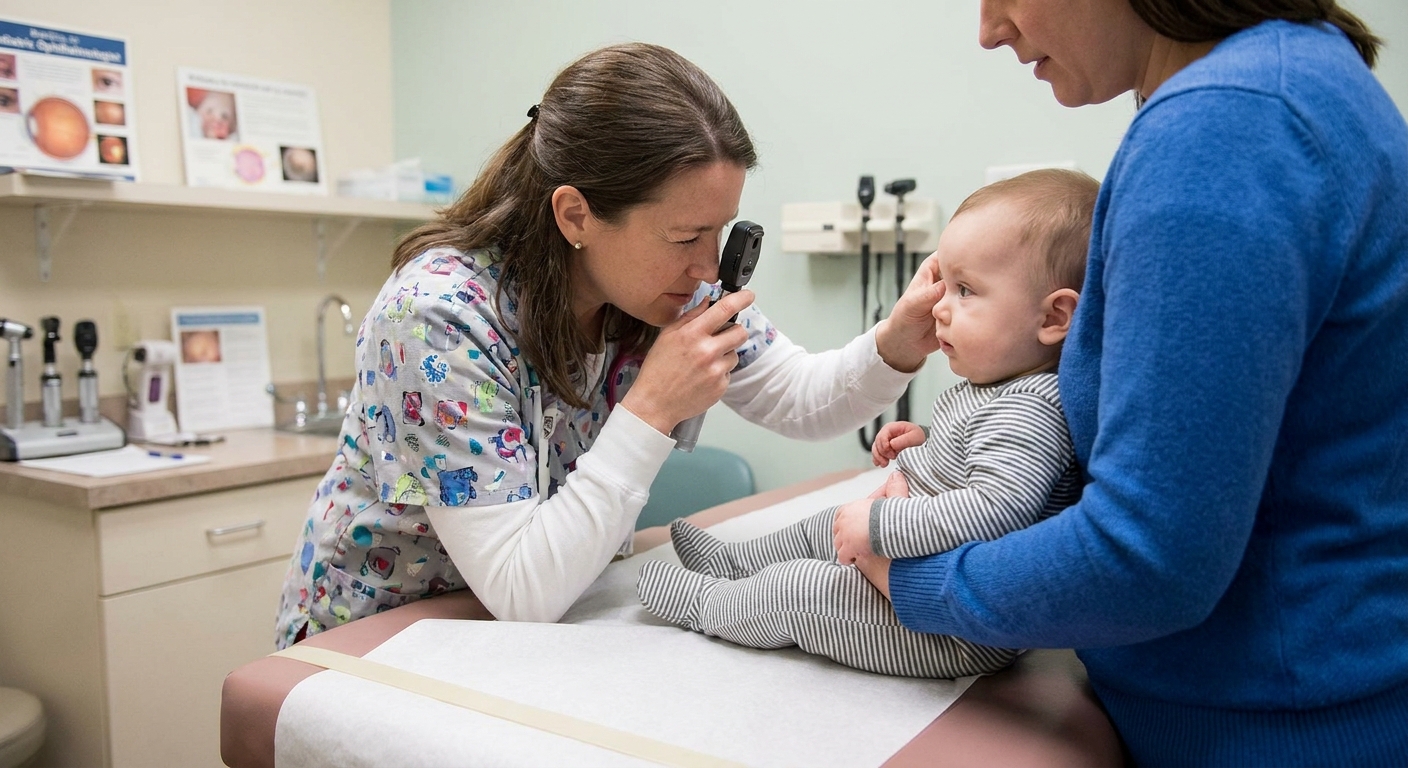
- Red reflex exam: a light is used to look for symmetry and brightness.
- Dilated eye exam: drops may be used to widen pupils so the doctor can look at the lens and retina.
- Vision and alignment checks: age-appropriate tests, plus looking for strabismus.
If there is concern about the back of the eye, the doctor may recommend imaging or a specialist evaluation. Many times, the outcome is either reassurance or a fixable condition with a clear plan.
FAQ
Is red-eye in photos normal for babies?
Yes. Red-eye is simply flash reflecting off the blood-rich retina. Some kids show it more than others. It can vary by eye color, lighting, and angle.
My baby has blue eyes. Can that change the reflex color?
Yes. Lighter eyes can reflect differently and sometimes look more yellow, white, or “sparkly” in certain lighting. The concern is persistence, one-sidedness, or a reflex that looks solid and bright rather than a tiny surface sparkle.
Can a phone camera make one eye look white but everything be fine?
Absolutely. But because leukocoria can signal important conditions, repeated white reflex should still be checked.
Can this wait until the next well visit?
If the white pupil is showing up repeatedly, I would not wait weeks to months. Call for an eye evaluation this week.
Bottom line
If you saw a white pupil once and never again, odds are good it was lighting. If you are seeing it repeatedly, especially in the same eye, treat it as a “check this soon” sign.
You do not have to figure out the cause at home. Your job is simply to notice, document, and get the right eyes on it. Then you can go back to what you were doing before you zoomed in on that photo, like trying to drink your coffee while it is still warm.
Medical note: This article is for education and cannot diagnose your child. If you are concerned, seek care from a qualified clinician.
Sarah Mitchell
Sarah Mitchell is a Registered Pediatric Nurse and a mother of three who has spent over a decade helping families navigate the beautiful, chaotic early years of childhood. She combines evidence-based medical knowledge with real-world parenting experience to offer practical, compassionate advice. At Awesome Parent, Sarah's mission is to help exhausted parents find solutions, trust their instincts, and finally get some sleep.