Walk through your home like a baby would. Use this practical room-by-room baby-proofing checklist, plus a printable checklist concept and a simple timeline b...
Baby Gates: Where to Use Them and Hardware vs Pressure Mount

Sarah Mitchell
Sarah Mitchell is a Registered Pediatric Nurse and a mother of three who has spent over a decade helping families navigate the beautiful, chaotic early years of childhood. She combines evidence-based medical knowledge with real-world parenting experience to offer practical, compassionate advice. At Awesome Parent, Sarah's mission is to help exhausted parents find solutions, trust their instincts, and finally get some sleep.
When I worked triage in our pediatric clinic, I heard the same story over and over: “I turned my back for one second.” Then I had my own kids and realized that “one second” is basically a toddler’s entire business plan.
Baby gates are one of the simplest ways to cut your stress significantly, but only if you use the right type in the right place. Let’s make this easy and safe, without the late-night rabbit hole.
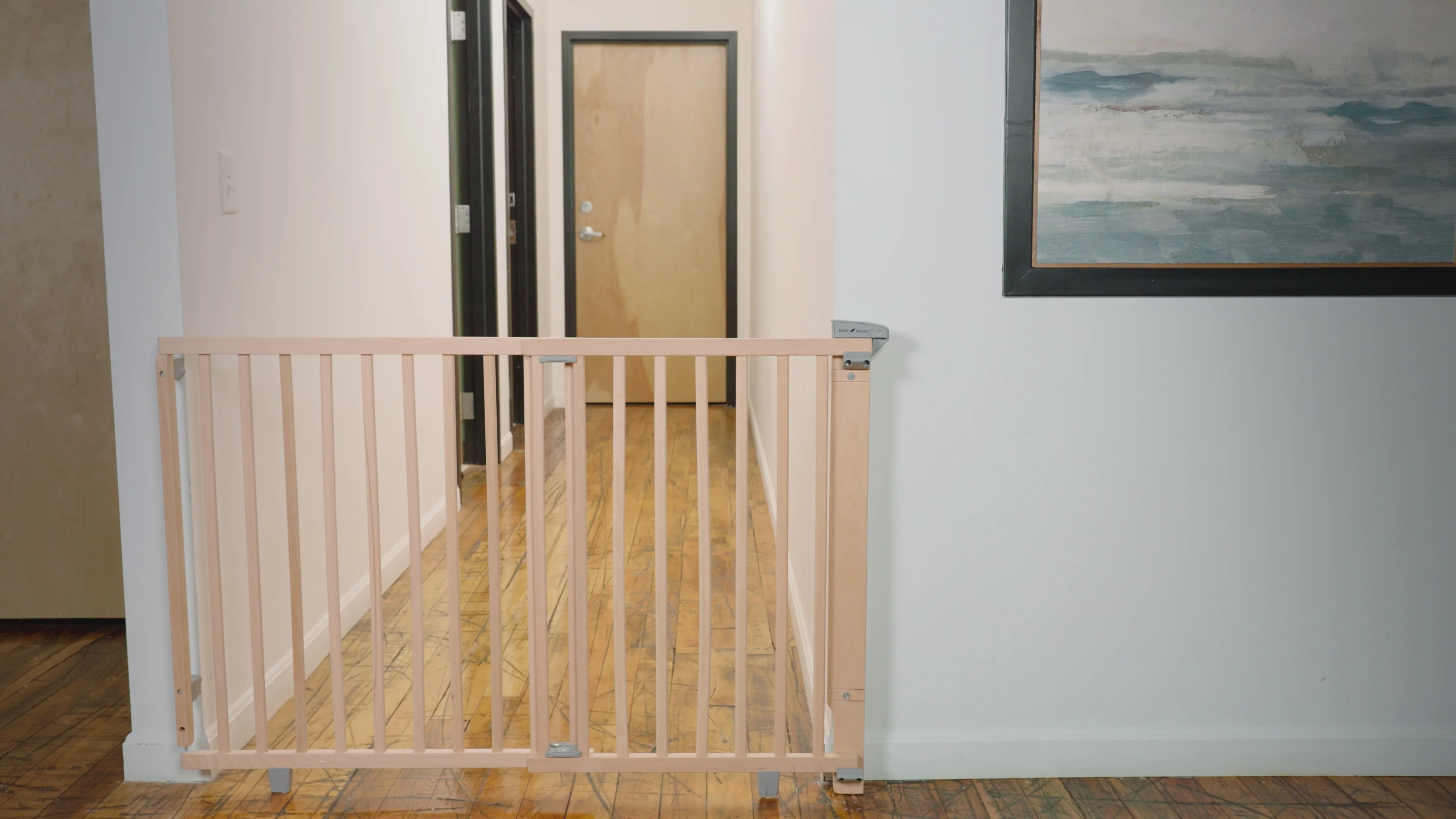
Where baby gates belong
You do not need to gate every doorway in your home. Focus on places where a fall, water, heat, or access to a high-risk room could quickly turn into an emergency.
Top of stairs
This is the big one. A fall down a full flight of stairs can cause serious head injury, even for older toddlers. Child-safety organizations and manufacturers generally recommend a hardware-mounted gate at the top of stairs, and I agree with that guidance because it needs to stay solid if your child leans, pushes, or rattles it.
Bottom of stairs
Bottom-of-stairs gates prevent climbing up unsupervised and prevent falls for newer walkers who love stairs but do not yet respect gravity. These can often be pressure-mounted, depending on the layout and your child’s age and persistence.
Kitchens
Kitchens have hot surfaces, sharp objects, glass, and heavy appliances. Many families gate the kitchen during cooking or meal prep. If you are moving quickly with hot liquids, a gate buys you space and predictability.
Bathrooms
Toilets and tubs are water hazards, and little kids are fast and top-heavy. A gate outside the bathroom can help if you cannot reliably keep the door closed.
Rooms with specific hazards
- Fireplaces or wood stoves
- Exercise equipment like treadmills or weights
- Home offices with cords, batteries, or small choking hazards
- Laundry rooms with chemicals and open machines
- Garages or utility areas with tools and large exterior doors
Nursery doorways
If you want to keep a toddler in their room at night for safety, a gate can be part of that plan. Just make sure it does not interfere with evacuation routes, and never use anything that a child could climb and topple.
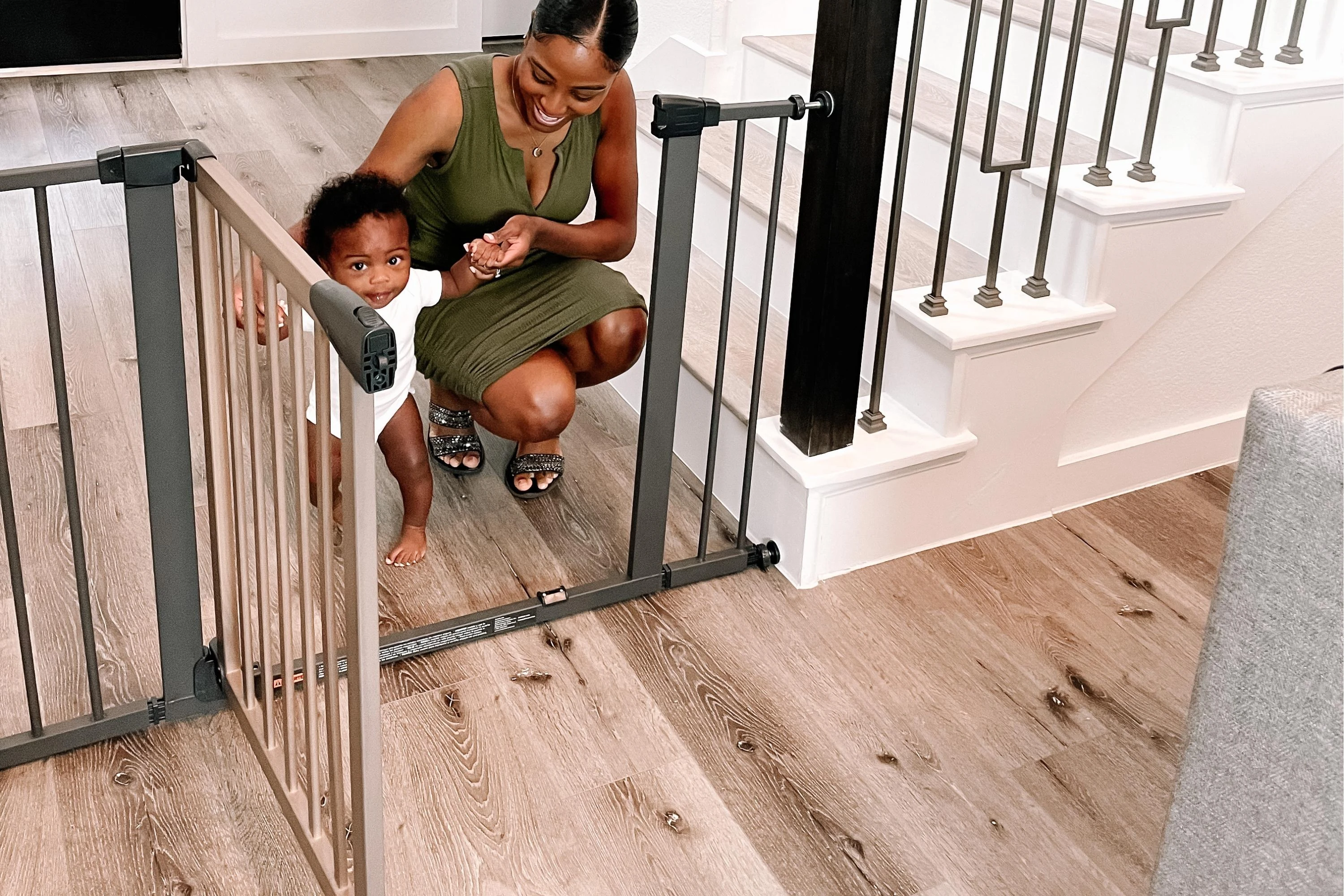
Hardware vs pressure gates
These names describe how the gate stays in place.
Hardware-mounted gates
Hardware-mounted gates attach to the wall or banister using brackets and screws. They are stable, withstand force better, and are the safest choice for places where a fall would be dangerous.
- Best for: top of stairs, angled walls, high-traffic areas, strong pushers and climbers
- Pros: most secure, less likely to shift, often has a true swing-open door
- Cons: requires drilling, leaves small holes when removed
Pressure-mounted gates
Pressure-mounted gates stay in place by tightening against two solid surfaces. They are great for doorways and between rooms when the main hazard is “access,” not “falling from height.”
- Best for: blocking a kitchen doorway, keeping a crawler out of the dog’s water bowl area, creating a safe play zone
- Pros: easy to install and remove, no drilling, portable for travel to grandparents’ houses
- Cons: can loosen over time, can shift if shoved, and many have a bottom bar that is a trip hazard
Top of stairs: the non-negotiable
I want to be very clear here because it is one of the most important baby-gate rules: Do not use a pressure-mounted gate at the top of the stairs.
Here’s the practical reason: pressure gates are designed to “press” into place, not to act like a railing. If a child leans hard, bounces, or you accidentally catch it with your hip while carrying laundry, the gate can shift. At the top of a staircase, even a small shift can create a gap or a sudden give, and that is exactly when falls happen.
Many pressure gates also have a raised threshold bar. At the top of the stairs, that bar becomes a tripping risk for adults and older kids, especially when you are tired and carrying a baby.
Hardware-mounted gates are anchored. They stay where you put them, which is what you want above a flight of stairs.
Picking a gate by age
A one-year-old who crawls is a different opponent than a two-year-old with a personal mission. Choose based on what your child is doing now, and what they are about to do next.
- Crawlers and early walkers: many pressure-mounted walk-through gates work well for room-to-room blocking, as long as the fit is solid and the latch is reliable.
- Strong toddlers and climbers: favor hardware-mounted gates in more locations, choose taller designs, and avoid anything with footholds or big cutouts.
- New baby plus older sibling: plan for the older sibling’s strength. If they can shake it, unlatch it, or step over it, it is not doing the job.
One more quick sorting tip: pet gates are not automatically child-safe gates. Some are great, some are not built or tested for child use. Check that the gate is specifically intended for children and follow the manufacturer’s age and use guidance.
How to measure (so you do not buy twice)
Before you shop, grab a measuring tape. Measure the exact spot where the gate will be installed, not just the doorway trim.
- Measure width at three heights: near the floor, mid-height, and near where the top of the gate will sit. Walls and banisters can be slightly uneven.
- Measure between solid mounting points: wood trim, studs behind drywall, or banister posts. Drywall alone is not a “solid mounting point.”
- Check the baseboard: thick baseboards can tilt a gate or leave gaps at the hinge side if you do not use spacers (often included with hardware gates).
- For stairs: decide if the gate will mount to posts or to the wall. You may need a banister mounting kit to avoid drilling into an ornate railing.
If your opening is wider than standard, look for gates with manufacturer extensions made for that model. Avoid makeshift extenders. If it is not designed to work together, it is more likely to wiggle loose.
Installation basics
Every model is a little different, so always follow the instructions that come with your gate. These are the safety checks I teach parents again and again.
For hardware-mounted gates
- Anchor into studs when possible. If you cannot hit a stud, use the wall anchors recommended by the manufacturer.
- Keep it level so the latch closes correctly. A gate that “almost” latches is a gate that will eventually not latch.
- Open direction matters at the top of stairs: many families prefer gates that do not swing out over the stairs. Choose a model that allows safe opening direction or has a stop feature, and follow the manufacturer’s guidance.
- Give yourself landing space: if you can, install so you are standing on a flat landing when you open and close the gate, not balancing right at the edge of the top step.
- Recheck after a day or two: if your model uses adjustable hinges or tension points, a quick re-tighten after things settle can help.
For pressure-mounted gates
- Follow the tightening instructions exactly. Too loose shifts. Too tight can damage walls or warp the frame so the latch is unreliable.
- Confirm the lock every time you close it, especially with gates that have a lift-to-open handle.
- Watch the bottom gap: it should match the manufacturer’s guidance and stay low enough that your child cannot scoot or crawl underneath.
- Plan for the threshold bar: if adults will step over it constantly, you may prefer a gate with a walk-through door rather than a step-over style.
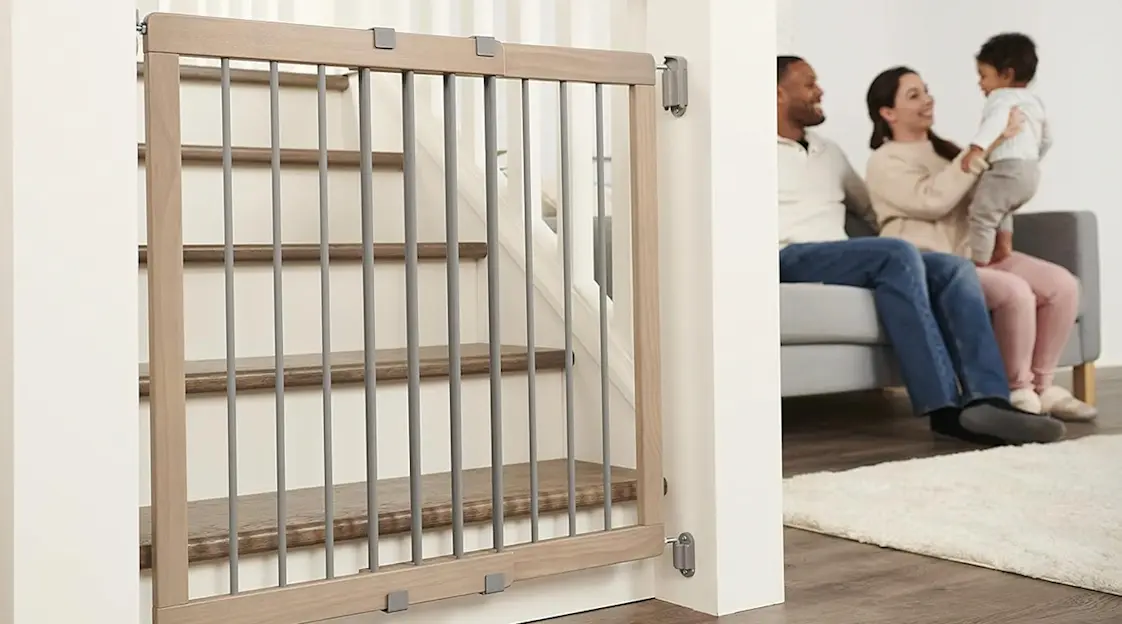
Gate safety basics
Not all gates are created equal. These are the safety points that matter most.
Height
Choose a gate that is tall enough that your child cannot easily topple over it. In real homes, many families do well with gates in the 28 to 36 inch range, but the right height depends on your child and the gate’s design. If your child can get a leg up and over, it is time to rethink the setup, not just “watch more closely.”
Slat spacing
If you choose a gate with vertical slats, the openings should be small enough to reduce the risk of head entrapment. As a general benchmark used in juvenile product guidance, look for openings around 2 3/8 inches (about 6 cm) or less, and always defer to the manufacturer’s specifications and current safety standards.
Designs to avoid
- Horizontal bars that function like a ladder. They invite climbing.
- Older accordion-style gates with large diamond-shaped openings. These have a history of entrapment risk, and I would skip secondhand versions entirely.
- Gates with large decorative cutouts where a head or limb could become trapped.
- Improvised barriers such as zip ties, rope, stacked furniture, or “creative” mounting on banisters. Use a purpose-built banister kit made for your gate model.
Check standards and recalls
If you are buying a new gate, look for a model that states it meets current safety standards (often listed on the packaging or product page). If you are using a hand-me-down, take two minutes to search for recalls and confirm you still have all original parts and hardware.
Gates are not supervision
I say this with love: gates are a tool, not a force field. They reduce risk, but they do not make an unsafe area suddenly safe for unsupervised play.
Common problems and fixes
“My pressure gate keeps loosening.”
This is usually from normal vibration and repeated pushing. Retighten according to the manual, and check that you are pressing against solid surfaces, not flexible trim. If your child is repeatedly body-slamming it, consider upgrading to hardware mounting in that location.
“There’s a gap on one side.”
For pressure gates, a slight gap near the latch side is common before tightening fully. For hardware gates, uneven walls or baseboards may require spacers. If the latch does not engage cleanly every single time, treat it as a reinstall situation, not a “good enough.”
“My toddler figured out the latch.”
Welcome to having a toddler. Look for a two-step release that requires adult hand size and coordination, and keep chairs or ride-on toys away from the gate so they cannot be used as a step stool.
“Adults keep tripping.”
That bottom bar is a real ankle biter. In high-traffic areas, switch to a walk-through gate with a door. At the top of stairs, this is another reason hardware-mounted swing gates are usually the best fit.
When to stop using gates
Most families use gates well into the toddler years, but the “right time” depends on your child’s behavior and your home layout.
- Stop (or change your approach) if your child can climb over. A climbing toddler plus a tall drop or hard flooring is a bad combination.
- Stop if the gate is being used in a way it was not designed for, like stacking objects next to it, using bungee cords, or propping it half-latched.
- Consider phasing out once your child can reliably follow safety rules around stairs and restricted rooms, usually closer to preschool age for many kids.
If you are not sure, ask yourself this: Is the gate still preventing danger, or has it become something my kid is actively trying to defeat? When it becomes a daily climbing challenge, you are better off shifting to supervision, closed doors with knob covers where appropriate, and clear rules.
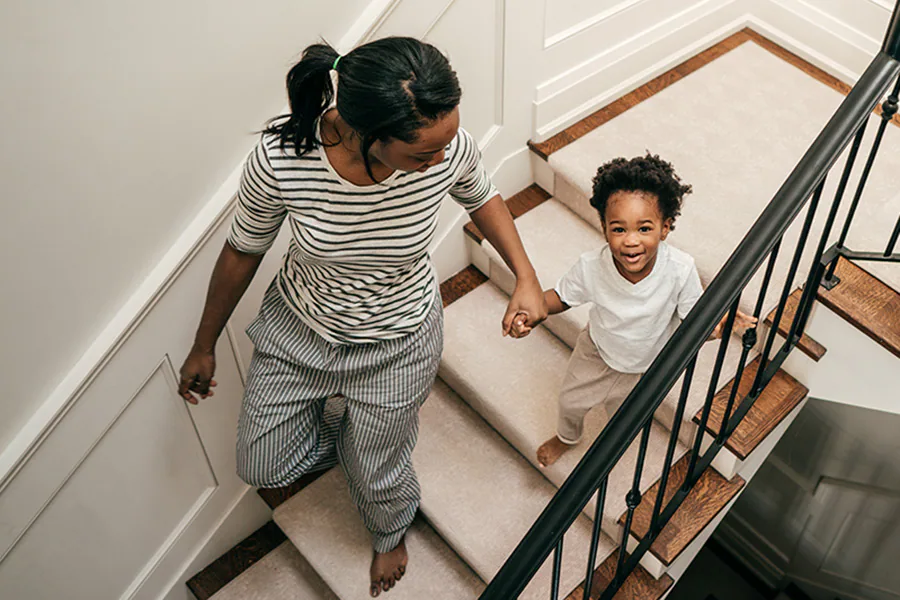
Quick checklist
- Top of stairs: hardware-mounted
- Bottom of stairs: pressure-mounted can work, hardware-mounted if your child is very forceful or the fit is tricky
- Kitchen doorway: often pressure-mounted, consider a walk-through door for convenience
- Bathroom or laundry access: pressure-mounted is usually fine if you have solid surfaces and a good latch
- Odd angles or banisters: hardware-mounted with the correct banister kit for your gate model
FAQ
Do I need a gate if I have carpeted stairs?
Carpet helps a little with slipping, but it does not prevent falls. If your baby or toddler can access the stairs unsupervised, a gate is still a smart idea.
Can I use a pressure-mounted gate on stairs if it feels really tight?
Not at the top of stairs. Even a tight pressure fit can shift under force, and many pressure gates have a trip bar. Use hardware mounting at the top.
Should I put a gate on my child’s bedroom door at night?
Some families do, especially with wanderers. If you choose this, use a properly installed gate, keep the route clear, and make sure your smoke alarms are working and you can access your child quickly. If you have questions about your specific setup, your pediatrician can help you think it through.
What if my walls are not suitable for drilling?
You may be able to mount into studs beside the opening, use a banister kit on stair railings, or choose a different location to gate (for example, gating the bottom instead of the top if top mounting is structurally difficult). If you cannot install a top-of-stairs gate securely, treat that staircase as a supervised-only zone and close doors that provide access.
A nurse-mom reminder
If you are feeling behind on babyproofing, take a breath. You do not need to do everything today. Start with the stairs and any room with water or heat, then work outward from there.
And if you want the simplest rule in the world: top of stairs equals hardware-mounted. Your future self, carrying a laundry basket while a toddler narrates their entire life story, will thank you.
Sarah Mitchell
Sarah Mitchell is a Registered Pediatric Nurse and a mother of three who has spent over a decade helping families navigate the beautiful, chaotic early years of childhood. She combines evidence-based medical knowledge with real-world parenting experience to offer practical, compassionate advice. At Awesome Parent, Sarah's mission is to help exhausted parents find solutions, trust their instincts, and finally get some sleep.