Walk through your home like a baby would. Use this practical room-by-room baby-proofing checklist, plus a printable checklist concept and a simple timeline b...
Window Blind Cords and Toddler Strangulation Risk

Sarah Mitchell
Sarah Mitchell is a Registered Pediatric Nurse and a mother of three who has spent over a decade helping families navigate the beautiful, chaotic early years of childhood. She combines evidence-based medical knowledge with real-world parenting experience to offer practical, compassionate advice. At Awesome Parent, Sarah's mission is to help exhausted parents find solutions, trust their instincts, and finally get some sleep.
I have had more than one late-night triage call that started with, “I turned my back for two minutes.” That is not parental negligence. That is toddlerhood. Kids climb, explore, and test gravity like it is their job. The reason window blind cords make pediatric nurses go very quiet and very serious is simple: a cord loop can tighten quickly, and a toddler does not have to “be tangled for long” for it to become an emergency.
The good news is that this is one of those home hazards you can fix with a few targeted changes.
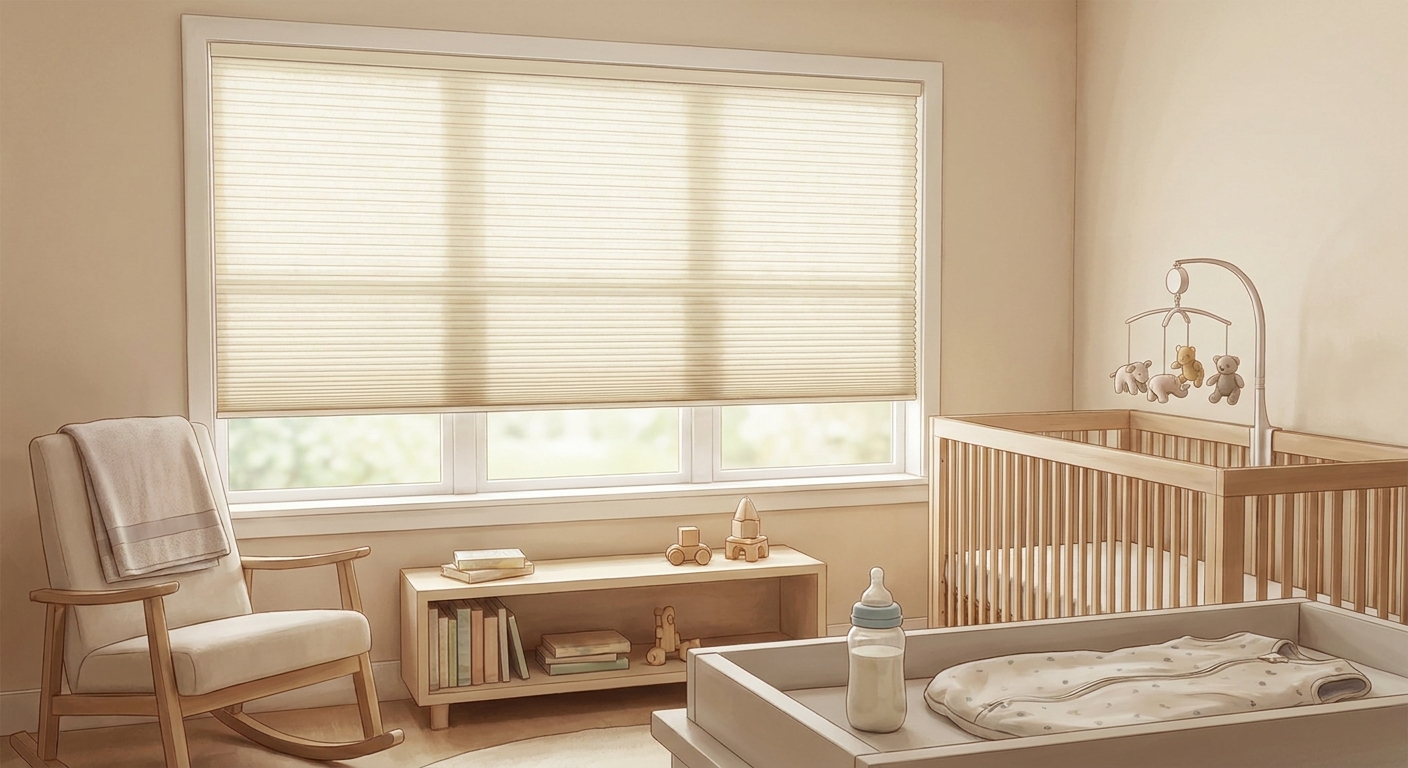
Why blind cords are dangerous
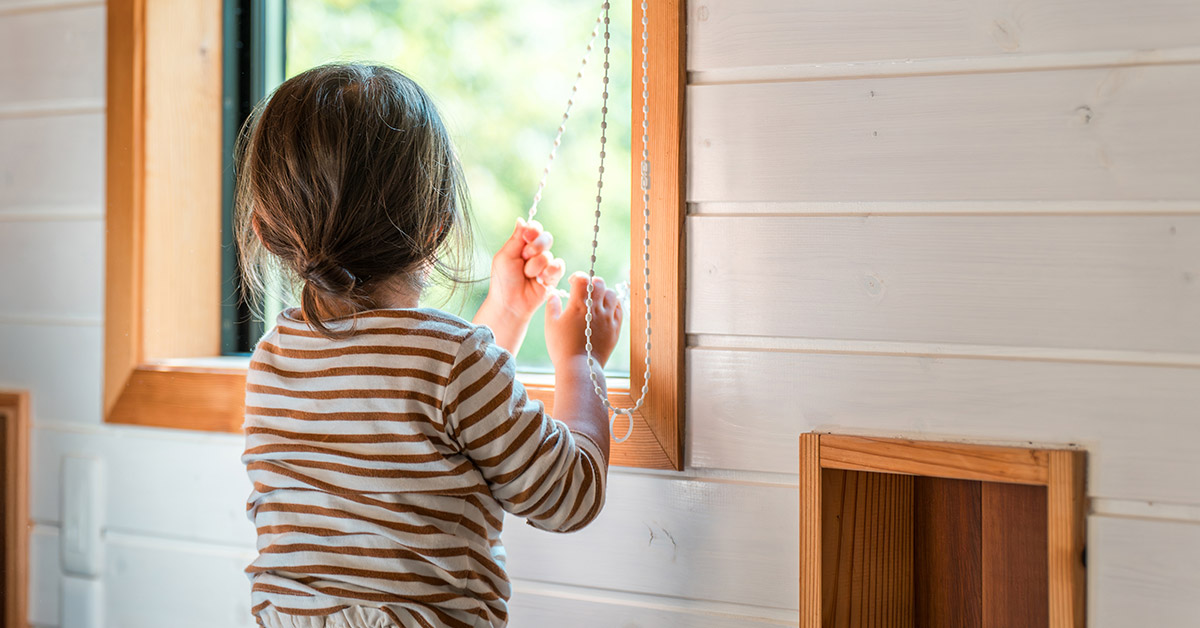
Strangulation risk is not about a child intentionally wrapping something around their neck. It is about a loop, a reachable cord, and a child who is climbing, bouncing, or leaning at exactly the wrong angle.
What makes blinds risky
- Loops. Continuous cord loops can act like a noose if a child slips into the loop or pulls it down and creates slack.
- Two pull cords. Even “regular” pull cords can become a dangerous loop if they are long, knotted, or within reach.
- Inner cords. Some blinds and shades have cords running through slats or inside the shade. If those cords become exposed, they can form loops too.
- Accessibility. Toddlers do not need to be tall. They just need a boost, which brings us to furniture placement.
How nearby furniture increases risk
In real homes, the cord is rarely the only issue. The setup is.
- Climbing access: A dresser, toy bin, changing table, glider, desk, or even a storage cube placed under or near a window can become a step stool.
- Leaning and slipping: A toddler can climb up to look outside, lose footing, and slip into a hanging cord or loop.
- Crib climbing phase: Once a child can pull up and cruise, they can also reach farther than you expect from inside a crib.
What cordless changes
The safest goal is simple: no reachable cords and no reachable cord loops. How you get there depends on your windows and your budget.
Cordless blinds and shades
Cordless designs eliminate hanging pull cords. Many are operated by pushing or pulling the bottom rail, or by a wand that is not a loop.
- Why they help: No dangling pull cord means there is much less to grab, wrap, or get caught in.
- What to watch for: Confirm there are truly no accessible cords or loose loops. Some products look “cordless” from a distance but still have reachable parts or exposed inner cords if they are damaged.
Motorized options
Motorized shades remove cords and also reduce day-to-day fiddling around the window, which is a win if your toddler is in an “I do it myself” season.
- Why they help: No cords, and you control them from a remote or wall control.
- Real-world note: Keep remotes out of reach like any other small device.
If you cannot replace blinds today
I get it. Sometimes the fix has to be “right now with what we have.” The priority is making cords inaccessible until you can upgrade.
- Keep cords high and short. Use a cord cleat or cord wind-up device to keep cords tight and out of reach. You want the cord secured every single time, not just “most days.”
- Anchor continuous loops. Continuous cord loops are especially dangerous when they hang freely. A tension device that anchors the loop to the wall or window frame helps keep the loop taut and reduces the chance a child can pull it away and create slack. Use the provided hardware and follow the manufacturer instructions closely.
- Do not rely on knots. Knots can loosen, cords can slip, and toddlers are excellent at defeating “temporary” solutions. If it can be pulled down, assume it will be.
- Inspect for exposed inner cords. If cords inside the blind are frayed, broken, or poking out, treat that as a reason to replace the blinds as soon as possible.
One more “mom life” truth: the best cord safety device is the one you will actually use consistently. If you find yourself thinking, “I never remember to wrap this,” that is a signal to move toward cordless when you can.
Also, if your blinds are older, take a minute to check the manufacturer guidance and the U.S. Consumer Product Safety Commission (CPSC) for safety updates, retrofit options, or recalls. This is one of those areas where standards have changed for a reason.
If a crib is by a window
This is one of the most common nursery layouts, and it is also one of the easiest to improve. Babies become toddlers fast, and toddlers become climbers even faster.
The safest plan
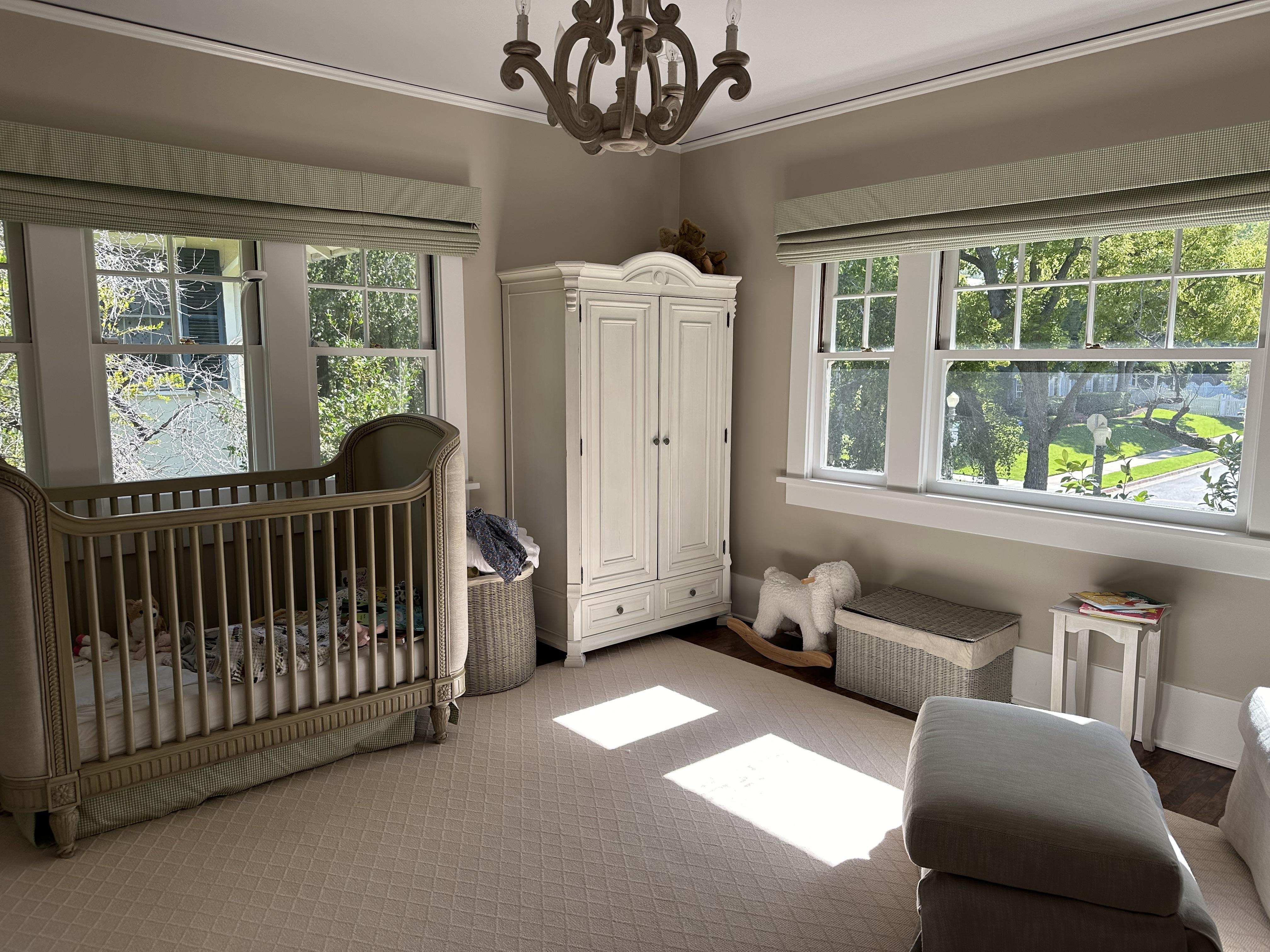
- Move the crib away from the window. Aim for enough distance that your child cannot reach blinds, cords, or the window sill from inside the crib, even when standing and stretching.
- Make the window area boring. Avoid placing anything next to the crib that becomes a step up, like a hamper, storage basket, or nightstand.
- Choose cord-free coverings if possible. In a nursery, this is one of those upgrades that truly pays off in peace of mind.
If you cannot move the crib
Sometimes room layouts are tight, or you are in a rental, or you are working with what you have. If the crib must stay near the window temporarily:
- Make cords completely unreachable. Secure cords high and tight with an appropriate device so there is no slack and no loop hanging down.
- Keep the crib mattress at the correct height. Lower it as soon as your baby can sit up, pull to stand, or climb, based on the crib manufacturer guidelines. A higher mattress makes reaching the window area easier.
- Check reach from inside the crib. Stand where your child stands. If you can touch the cord or blind from crib height with an outstretched arm, assume your child can too.
Quick cord check
When parents tell me, “We don’t have corded blinds,” I believe them. But I also know cords can show up in surprising places. Do a slow scan at toddler eye level.
- Bedroom: blackout curtains with tie-backs, shade cords behind a curtain panel
- Living room: pull cords behind the couch near a window, cords draped over a side table
- Playroom: toy shelf positioned under a window, reading nook bench beneath blinds
- Grandparents’ house or daycare: older blinds with long cords or continuous loops
If you spot a reachable cord or loop, treat it like you would treat an open staircase gate. It is not a “later” problem.
If your child gets tangled
I am going to be straightforward here because in an emergency, clarity helps. If there is a cord around a child’s neck, this is a 911 situation.
- Get the cord off immediately. If it is tight and you cannot get it off quickly, cut the cord.
- Call emergency services right away if there was anything around the neck. Even if your child seems okay, neck compression can cause injury you cannot see right away.
- If your child is not breathing or not responding, start CPR and have someone call emergency services.
Practical tip: keep scissors or a cord-cutting tool quickly accessible to adults but out of child reach. In a real emergency, you do not want to be searching.
After a cord incident, seek urgent medical evaluation if there was any neck compression, coughing or breathing change, color change, loss of consciousness, vomiting, unusual sleepiness, voice change, visible marks, or if you are unsure. Trust your gut and err on the side of being seen.
FAQ
Are wand blinds safer?
Generally, yes, because a solid wand is not a loop and is harder to wrap around the neck. That said, the safest setup is still one with no accessible cords or cord loops. Always check what is reachable from furniture and from inside a crib or toddler bed.
Is tying the cord up high enough?
It helps, but only if the cord stays secured high every time and does not create a dangling loop. Toddlers pull things down. If your solution can be defeated by one enthusiastic tug, keep looking.
My child is not a climber. Do I still need to worry?
Toddlers often become climbers with no warning and no training montage. If a cord or loop is reachable, treat it as a current risk, not a future one.
What about cord shorteners and clips?
They can reduce risk when installed and used correctly, especially as a temporary measure. The key is eliminating slack and preventing loops from forming. If you cannot confidently say both are true, consider switching to cordless options.
The bottom line
Window blind cords are one of those hazards that feel easy to ignore until the day they are not. The highest-risk setup is a reachable cord loop plus something climbable near the window. The safest setup is cordless, or cords that are fully inaccessible and do not form loops.
If there is a crib by a window, prioritize moving it away from any cords and anything your child can grab or reach. You are not being “extra.” You are being appropriately boring about safety, which is my favorite kind of parenting.
If you want to sanity-check your setup against formal guidance, the AAP and the CPSC both emphasize keeping window covering cords out of children’s reach and choosing cordless options when possible.
Sarah Mitchell
Sarah Mitchell is a Registered Pediatric Nurse and a mother of three who has spent over a decade helping families navigate the beautiful, chaotic early years of childhood. She combines evidence-based medical knowledge with real-world parenting experience to offer practical, compassionate advice. At Awesome Parent, Sarah's mission is to help exhausted parents find solutions, trust their instincts, and finally get some sleep.