Pregnant with the flu? Here’s what symptoms to watch, when to call your OB the same day, and how clinicians decide on antivirals like oseltamivir.
COVID-19 During Pregnancy: Symptoms, Isolation, and When to Call

Sarah Mitchell
Sarah Mitchell is a Registered Pediatric Nurse and a mother of three who has spent over a decade helping families navigate the beautiful, chaotic early years of childhood. She combines evidence-based medical knowledge with real-world parenting experience to offer practical, compassionate advice. At Awesome Parent, Sarah's mission is to help exhausted parents find solutions, trust their instincts, and finally get some sleep.
If you are pregnant and staring at a positive COVID test (or a household full of sniffles), take a breath. I know it can feel extra scary when you are responsible for two bodies at once. The good news is that many pregnant people have mild illness and recover at home. The key is knowing what is normal, what is not, and when your body or your baby is telling you it is time to call.

This article is focused on the pregnancy itself: symptoms, isolation, medication questions, and obstetric warning signs, including fetal movement changes.
COVID symptoms in pregnancy: what is typical
COVID symptoms in pregnancy usually look a lot like COVID symptoms in anyone else. Some people have no symptoms at all. Others feel like they have a bad cold or the flu for a few days.
Common symptoms
- Fever or chills
- Cough
- Sore throat
- Congestion or runny nose
- Body aches, headache
- Fatigue
- Shortness of breath
- Loss of taste or smell
- Nausea, vomiting, diarrhea
Pregnancy can make some of these feel more intense. For example, you may already be short of breath in the third trimester, so it can be tricky to tell what is “pregnancy normal” versus “COVID getting worse.” When in doubt, call.
How long does it last?
Many people start improving within about 5 to 10 days, but there is a wide range based on the variant, your vaccination status, and your underlying health. Cough and fatigue can linger longer. If symptoms are clearly worsening instead of slowly improving, that is a reason to check in.
Why clinicians take COVID in pregnancy seriously
Most pregnant people do well, but pregnancy changes your immune system, heart, and lungs. Because of that, COVID can increase the risk of more severe illness compared with non-pregnant peers, especially if you have other risk factors.
Your clinician may be more proactive about monitoring, testing, or treatment if you have any of the following:
- Asthma or other lung disease
- High blood pressure
- Diabetes (including gestational diabetes)
- Kidney disease
- Immune suppression
- Higher BMI
- Multiple gestation (twins or more)
- Not up to date on COVID vaccination
This is not meant to alarm you. It is meant to help you and your care team decide how closely to follow your symptoms and whether treatment is appropriate.
Home isolation while pregnant: what helps
If you are sick, your goals are simple: protect others in your home, keep your breathing comfortable, stay hydrated, and watch for red flags.
If you live with other people
- Ventilation helps. Open windows when possible, run a fan, or use an air purifier if you have one.
- Masking reduces spread. If you need to be around others, wearing a well-fitting mask can lower transmission.
- Hand hygiene still matters. Wash hands after coughing, blowing your nose, or handling tissues.
- Do not share cups and utensils. It is an easy win when everyone is tired.
If you are the default parent for other kids, aim for “risk reduction,” not perfection. In real homes, total isolation is not always possible. Do what you can without turning your recovery into a full-time job.
Isolation rules change, so check local guidance
Public health guidance can shift over time and by location, so follow your local recommendations and your OB’s office policies. In general, try to avoid close contact with others while you are feverish and while symptoms are at their worst, then continue to be careful for several days after you start feeling better. If you have to be around other people during that window, masking and ventilation are your best tools.
Supportive care at home
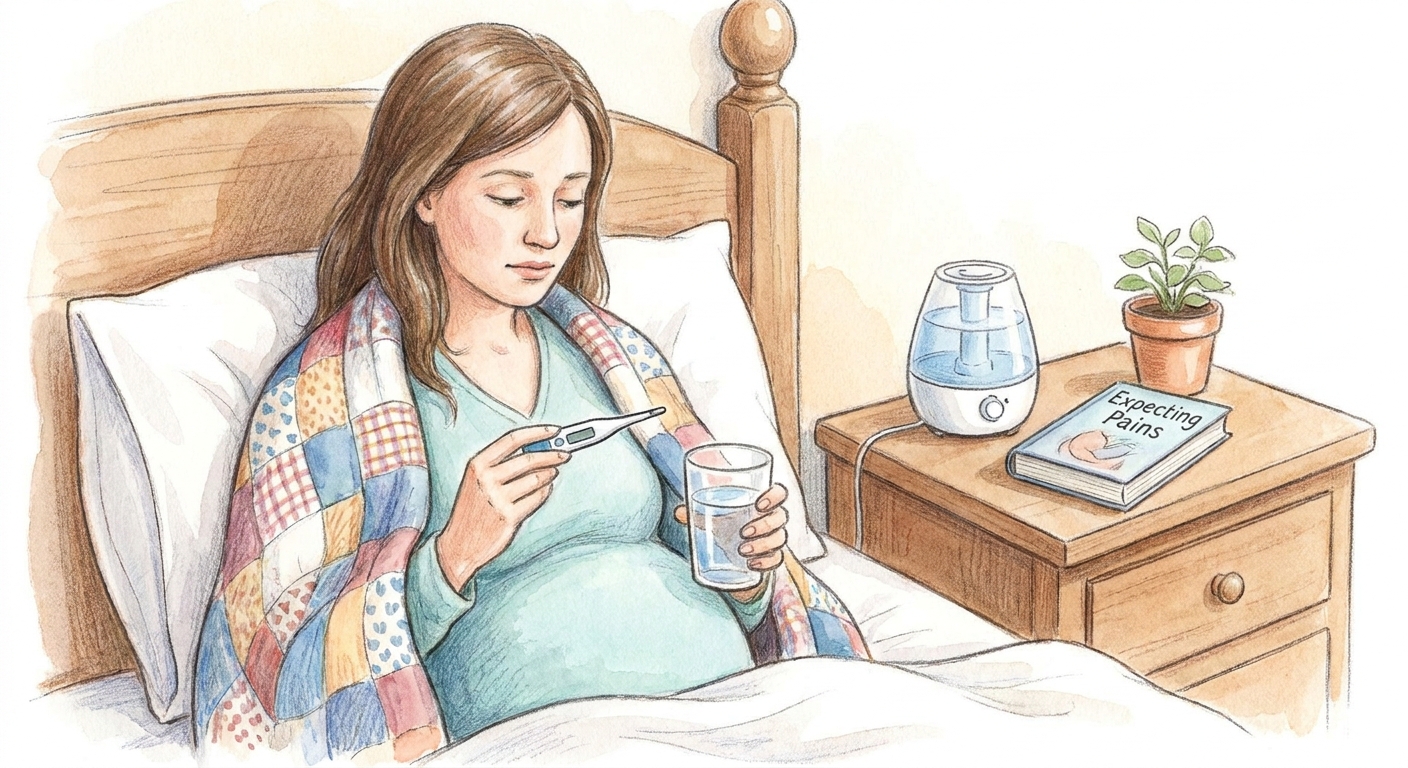
- Hydration: Small, frequent sips count if you feel nauseated. Clear urine or pale yellow urine is a helpful sign you are hydrated.
- Rest: It is okay to rest aggressively. Your body is working hard.
- Fever control: Treat fever promptly. Many OB practices recommend acetaminophen in pregnancy, but confirm what is right for you. If your fever is high, keeps coming back, or will not come down with the plan your clinician gave you, call.
- Nutrition: “Whatever stays down” is fine for a couple days. Aim for protein when you can.

Medications in pregnancy: what to ask
As a triage nurse, one of the most common issues I saw was not “Can I take something?” but “I took something and now I am panicking.” So let’s slow it down and make it practical.
Because your trimester, medical history, and other medications matter, the safest plan is to ask your OB or midwife before starting new over-the-counter meds. If you have already taken something, call and ask anyway. We would much rather reassure you than have you spiral at 2 AM.
Questions to ask (copy and paste into your portal message)
- Which fever reducers are safest for me right now, and what dose do you recommend?
- Are decongestants okay in my trimester and with my blood pressure?
- Is a cough suppressant or expectorant okay for me?
- If I am nauseated, what is your recommended plan for pregnancy-safe nausea meds?
- Do you recommend a pulse oximeter at home, and what oxygen number should prompt a call?
- Am I eligible for antiviral treatment, and how soon do I need to start it?
- Should I change any of my regular medications while I am sick?
A note on antivirals (like Paxlovid)
Some pregnant people qualify for antiviral treatment, especially if they are early in the illness and have risk factors for severe disease. Eligibility depends on timing, medical history, medication interactions, and local guidance. This is a great “call early” item, because some options are time-sensitive.
When to call your OB or midwife
Pregnant people are often worried they are “bothering” their clinician. Please bother them. This is literally what triage nurses and on-call providers are for.
Call your OB or midwife promptly if you have:
- Fever that you cannot bring down with clinician-approved medication, or fever that returns after improving
- Worsening cough or chest tightness
- Shortness of breath that is new, worsening, or limiting your ability to speak in full sentences
- Dehydration signs like very dark urine, dizziness when standing, or you cannot keep fluids down
- Persistent vomiting or diarrhea
- Severe headache that is not improving, especially with vision changes
- New swelling of face or hands, or sudden significant swelling
- Right upper belly pain (under the ribs) that is persistent
- Vaginal bleeding
- Leaking fluid from the vagina
- Regular contractions, pelvic pressure, or cramping that feels like labor before term
- Any decrease or change in fetal movement once you are feeling baby move regularly
Some of these are “COVID-related” and some are not. The point is that being sick can make it harder to notice pregnancy complications, and we do not want to miss something important.
Go in now: urgent care or ER
- Severe trouble breathing, gasping, or you cannot speak full sentences
- Chest pain or pressure that is persistent
- Blue, gray, or pale lips or face
- Confusion, fainting, or you cannot stay awake
- Oxygen level is low on a home pulse oximeter based on the threshold your clinician gave you, or readings are persistently concerning
- Heavy vaginal bleeding or severe abdominal pain
- You feel baby is not moving at all when you would normally feel movement, especially after trying usual strategies (see next section)
If you are unsure, call your labor and delivery unit or on-call OB line. They can help direct you to the right place quickly.
Fetal movement: when a change needs a call
This is the part that keeps many parents up at night, and I get it. Fetal movement can change day to day based on baby’s sleep cycles, your activity, your hydration, and even where the placenta sits. But a meaningful decrease should be taken seriously.
What counts as “decreased movement”?
Once you are feeling your baby move regularly, a noticeable drop in the usual pattern is worth a call. Some people describe it as “Baby is usually busy after dinner and tonight it is quiet,” or “The movements feel weaker than usual.” Trust that instinct.
What to do right away at home
- Sit or lie on your side in a quiet spot.
- Have something cold to drink, and if you can tolerate it, a snack.
- Put your phone down for a few minutes and focus on movement.
If movement does not return to your baby’s normal pattern, call your OB, midwife, or labor and delivery. If you cannot reach anyone quickly and you are concerned, it is appropriate to be evaluated.

If you have COVID, should you monitor fetal movement more?
You do not need to obsessively count all day, but you should be attentive to your baby’s usual pattern. Illness, dehydration, and fever can make babies a bit quieter sometimes. The safest approach is simple: if you notice a real change, call.
Warning signs that are not just COVID
COVID can cause body aches, headache, and fatigue. Pregnancy complications can also cause those symptoms. If you have any of the following, you deserve a same-day call and often an in-person evaluation:
- Severe headache that will not ease, especially with vision changes
- Sudden swelling of face or hands
- Severe right upper belly pain
- Vaginal bleeding
- Leaking fluid
- Contractions or rhythmic tightening that keeps coming
- Signs of blood clot like new one-sided leg swelling or calf pain, especially with redness or warmth
Even if you assume “this is probably COVID,” please let your OB team make that call with you.
What to tell your clinician
If you call, message, or go in, these details are useful:
- Your gestational age
- Date symptoms started
- Test results and date (home test or lab test)
- Highest temperature you have had, and what you took for it
- Any breathing symptoms and whether they are worsening
- Your medical history (asthma, hypertension, diabetes, etc.)
- Current medications and supplements
- Hydration status (peeing normally or not)
- Baby’s movement compared with normal
Quick FAQ
Should I keep my prenatal appointments?
Call the office before you show up. They may switch you to telehealth, reschedule non-urgent visits, or bring you in with precautions depending on timing and what you need that day.
Can COVID cause preterm labor?
Illness and inflammation can be associated with preterm contractions or preterm birth risk in some situations. The risk is more clearly increased with severe COVID than with a mild case, but either way, take symptoms seriously. If you have rhythmic cramping, pressure, back pain that comes and goes, or leaking fluid, contact your OB team promptly.
Should I get vaccinated or boosted after I recover?
If you are not up to date, ask your OB or midwife about the timing for vaccination or boosting after infection. COVID vaccination during pregnancy is widely recommended by major medical organizations because it helps reduce the risk of severe disease, which is the scenario most associated with pregnancy complications.
Is it normal to feel more anxious when I am sick?
Completely. Being pregnant plus sick is a vulnerable combo. If anxiety is spiraling or you cannot rest, reach out to your clinician. You deserve support, not just a “ride it out” plan.
The bottom line
Most pregnant people with COVID recover at home with rest, fluids, and support. Your job is not to diagnose yourself. Your job is to notice changes and speak up early, especially for breathing symptoms, dehydration, obstetric warning signs, and any real change in fetal movement.
If you want a simple rule to hold onto at 3 AM, here it is: If you are worried about your breathing or your baby’s movement, call.
Sarah Mitchell
Sarah Mitchell is a Registered Pediatric Nurse and a mother of three who has spent over a decade helping families navigate the beautiful, chaotic early years of childhood. She combines evidence-based medical knowledge with real-world parenting experience to offer practical, compassionate advice. At Awesome Parent, Sarah's mission is to help exhausted parents find solutions, trust their instincts, and finally get some sleep.