
Infant flu can turn serious faster than flu in older kids. Here are breathing and dehydration warning signs, testing and antiviral timing, and when to seek u...
Flu During Pregnancy: Fever, Antivirals, and When to Call

Sarah Mitchell
Sarah Mitchell is a Registered Pediatric Nurse and a mother of three who has spent over a decade helping families navigate the beautiful, chaotic early years of childhood. She combines evidence-based medical knowledge with real-world parenting experience to offer practical, compassionate advice. At Awesome Parent, Sarah's mission is to help exhausted parents find solutions, trust their instincts, and finally get some sleep.
The flu in pregnancy is not just “a bad cold.” As a pediatric triage nurse, I talked to plenty of pregnant parents who felt blindsided by how fast influenza can ramp up. As a mom, I also understand the 3 a.m. spiral of, “Is this normal, or am I risking the baby by waiting?”
Let’s make this simple and practical: what flu can look like in pregnancy, which symptoms need same-day care, how antiviral decisions are usually made, and what your obstetric team will want to know when you call.
One quick note in my nurse voice: your own OB or midwife’s guidance wins. If they tell you to come in, go in.
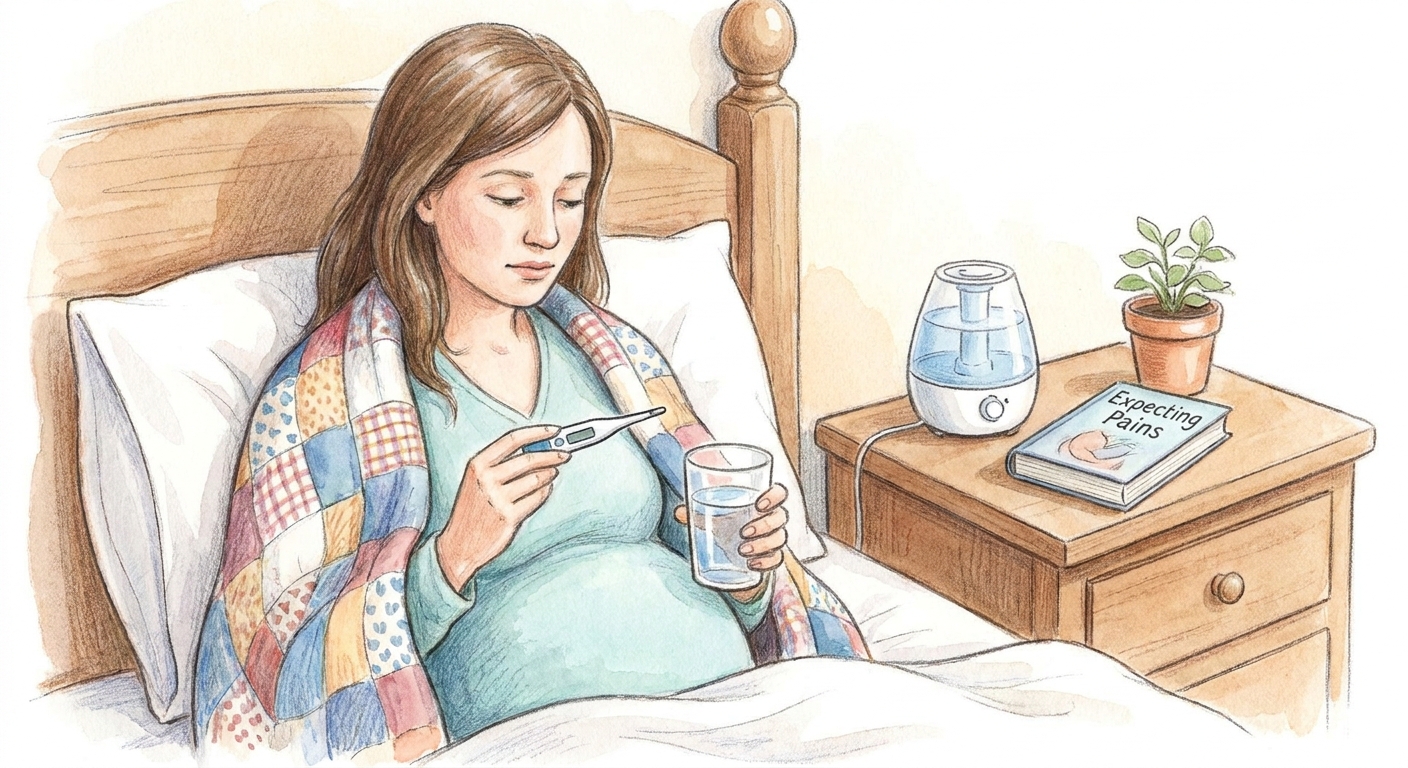
Flu in pregnancy: what it often looks like
Influenza tends to come on suddenly. Many people can tell you the exact hour they went from “fine” to “flattened.”
Common flu symptoms include:
- Fever and chills
- Body aches (often intense)
- Headache
- Dry cough
- Sore throat
- Extreme fatigue
- Runny or stuffy nose (can happen, but is not always the main feature)
- Nausea, vomiting, or diarrhea (more common in kids, but adults can have it too)
Pregnancy can make respiratory illnesses feel worse because your body is already doing extra work. You also have less “lung room” as pregnancy progresses, and your immune system functions differently during pregnancy. Put together, flu can be more likely to cause complications in pregnant people compared with non-pregnant adults.
Why flu matters more in pregnancy
Most pregnant people recover from influenza without lasting problems, especially with prompt treatment and good support at home. The reason clinicians take it seriously is the higher risk of complications, including:
- Pneumonia and worsening shortness of breath
- Dehydration, especially if you cannot keep fluids down
- Preterm labor (illness and dehydration can be triggers)
- Hospitalization more often than in non-pregnant adults
Also, fever in pregnancy deserves attention. A brief fever is common with the flu, but persistent or high fever is a reason to call so your team can guide safe treatment and decide if you need evaluation.

Fever: what’s concerning and what to do first
When fever needs same-day advice
Call your OB or maternity triage the same day if you are pregnant and have:
- Fever of 100.4°F (38°C) or higher with flu-like symptoms
- Fever that is not improving after acetaminophen (Tylenol) and fluids
- Fever that keeps coming back after it seemed to break
- Fever lasting longer than expected, especially if you still feel worse instead of better (exact “time cutoffs” vary by practice, so call sooner rather than later)
- Fever plus decreased fetal movement (once you are far enough along to notice a pattern)
At-home fever support that is usually recommended
Your OB may recommend:
- Acetaminophen for fever and aches (take only as directed on the label or by your OB)
- Hydration with frequent sips, oral rehydration solutions, broth, or electrolyte drinks
- Rest and light layers, rather than bundling up heavily
Important: Avoid taking ibuprofen, naproxen, or other NSAIDs in pregnancy unless your obstetric clinician specifically instructs you to. The safest choice for fever in pregnancy is typically acetaminophen, but always confirm based on your own medical history.
Breathing symptoms: when to get urgent help
This is the category I want you to take seriously, even if you worry you are “overreacting.” With flu, breathing problems can escalate.
Get same-day care or urgent evaluation if you have:
- Shortness of breath at rest or difficulty speaking full sentences
- Chest pain or chest pressure
- Blue or gray lips/face
- Wheezing or a feeling you cannot get air in
- Oxygen saturation that is under 95% or trending down if you have a home pulse oximeter (what is “low” can vary based on baseline and altitude, so pair numbers with how you feel and follow your OB team’s guidance)
- Severe weakness, confusion, fainting, or you cannot stay awake
If symptoms are severe, do not wait for a callback. Go to labor and delivery triage, urgent care that can evaluate pregnant patients, or the emergency department. Some urgent cares will redirect you to L&D or the ER depending on how far along you are and what symptoms you have, and that is normal.
If you feel like you cannot breathe, call emergency services.

How clinicians decide about antivirals
One of the biggest flu myths is that you only treat it if you are “really sick” or you have to wait for a positive test. In pregnancy, clinicians often lean toward treating early because the risk of flu complications is higher.
What antivirals are used
The most commonly used antiviral for influenza in pregnancy is oseltamivir (Tamiflu). Some settings may use other influenza antivirals depending on what is circulating, medication availability, and your specific situation, but oseltamivir is a common first-line choice.
What “early” means and why it matters
Antivirals work best when started as soon as possible, ideally within 48 hours of symptom onset. That said, pregnant patients who are very ill or hospitalized may still benefit even if symptoms started earlier, so it is still worth calling.
Do you need a test first?
Sometimes clinicians will test for flu and COVID at the same visit because symptoms overlap. But public health and obstetric guidance (including CDC style recommendations used by many OB practices) supports starting antiviral treatment based on suspected flu in pregnancy without waiting for test results, especially if you are within that early treatment window.
Are antivirals safe in pregnancy?
This is a reasonable, common question. Clinicians prescribe oseltamivir in pregnancy because the benefit of treating influenza promptly generally outweighs the potential risks of medication. Available observational studies and real-world use over many flu seasons have been reassuring, and untreated flu itself can pose real risks.
Bottom line: if your obstetric clinician recommends an antiviral, it is because they are balancing risk and benefit with pregnancy in mind.
What about antivirals after an exposure?
If you are pregnant and you had a close, significant exposure to someone with confirmed flu, ask your OB or midwife whether post-exposure antivirals are appropriate for you. Not everyone needs this, but for some patients it is on the table, especially if risk is higher.
What to report to your OB or midwife when you call
If you want the fastest, most helpful advice, here is the “triage nurse checklist” of what to have ready. You do not need to be perfect, but these details really help.
- How far along you are (gestational age)
- When symptoms started (best estimate of date and time)
- Your highest temperature and how you measured it (oral, ear, etc.)
- What you have taken so far (acetaminophen dose and timing, any cold/flu meds)
- Breathing symptoms (shortness of breath at rest, wheezing, chest pain)
- Hydration status (peeing normally or less, vomiting, unable to keep fluids down)
- Baby movement changes if you are feeling movement regularly
- Any underlying conditions (asthma, diabetes, high blood pressure)
- Exposure information (someone in your house diagnosed with flu, school outbreak, etc.)
If you have a home pulse oximeter, you can report the number, but do not let it override how you feel. Numbers help. Your symptoms matter more.
Practical at-home care while you wait
Flu recovery is mostly supportive care plus, when appropriate, antivirals. The goal at home is to keep fever down, protect breathing, and prevent dehydration.
Hydration hacks that actually work
- Take small, frequent sips every few minutes instead of chugging
- Try cold fluids, popsicles, or ice chips if nausea is strong
- Use an oral rehydration drink if you are sweating, vomiting, or not eating much
Comfort measures
- Humidifier in the bedroom can ease cough and throat irritation
- Saline nasal spray for congestion
- Honey in warm tea for cough if you are not allergic (avoid honey only for infants under 12 months, not for pregnant adults)
- Rest, and yes, this counts as a valid medical plan
Cold and flu meds: be picky
For over-the-counter cold medications in pregnancy, it is best to check with your OB or pharmacist. A few common “be cautious” categories:
- Combination cold and flu products (they can stack ingredients you do not need, like multiple cough suppressants or decongestants)
- Decongestants such as pseudoephedrine (some clinicians prefer avoiding it in the first trimester or in patients with high blood pressure)
- Aspirin containing products unless your OB prescribed it for a specific reason
If you are staring at a shelf at the pharmacy feeling miserable, it is okay to call and ask, or ask the pharmacist to help you choose a single ingredient product that matches your OB’s advice.

Prevention that actually matters
I know prevention advice can feel annoying when you are already sick, but for next time, this is the big one.
Flu shot in pregnancy
The flu vaccine is recommended during pregnancy. It helps protect you from severe illness, and it also helps protect your newborn in the early months through shared antibodies.
Everyday prevention
- Hand hygiene, especially after school pickup, errands, and wiping noses
- Masking in high-risk settings during surges if you want an extra layer of protection
- Avoiding close contact with sick people when possible, and improving airflow at home if someone is ill
Flu vs cold vs COVID
You cannot diagnose yourself perfectly from a list, but here is a practical way I explain it on the phone:
- Flu is often sudden and intense, with fever, body aches, and “hit by a truck” fatigue.
- Common cold tends to be milder, often more congestion and sore throat, and less dramatic body aches.
- COVID can overlap with both and may include fever, cough, sore throat, and fatigue. Testing is the only way to know for sure.
If you are pregnant and you have flu-like symptoms, it is reasonable to ask about testing for both flu and COVID, because the next steps can differ.
When it is not “just the flu”
Sometimes what looks like flu can be something else, or it can be flu plus another infection. Call for advice if you have:
- Symptoms that improve then suddenly worsen (this can be a clue for pneumonia or a secondary bacterial infection)
- Persistent high fever or fever returning after it resolved
- New chest pain, worsening cough, or cough producing increasing mucus
- Severe sore throat with trouble swallowing or drooling
- Signs of dehydration (very dark urine, dizziness, minimal urination)
Also, if you test positive for COVID or are exposed, your obstetric team may have specific pregnancy-focused guidance. The key is not playing symptom detective alone when you feel awful. Let your care team help you sort it out.
FAQ
Should I call my OB for flu symptoms even if I do not have a fever?
Yes, especially if symptoms started within the last 48 hours. Pregnancy alone often moves you into the “call and consider antivirals” category, even if your temperature is normal.
If I started feeling sick three or four days ago, is it too late for antivirals?
Not necessarily. Antivirals are most effective when started early, but if you are getting worse, have significant symptoms, or are at higher risk of complications, clinicians may still treat. It is still worth calling.
What if I cannot keep fluids down?
Call the same day. In pregnancy, dehydration can become a problem quickly and can trigger contractions. Your team may recommend evaluation for IV fluids and symptom control.
Will flu hurt my baby?
Most pregnancies do well, especially with prompt care. The biggest concerns are complications in the pregnant person, like pneumonia and dehydration, and fever that is not controlled. The fastest way to protect baby is to take your symptoms seriously and get treatment guidance early.
A quick pep talk from your 3 a.m. friend
If you are pregnant and think you have the flu, you are not being dramatic by calling. You are being smart. Fever and breathing symptoms are the big red flags, and antivirals are time-sensitive. When in doubt, contact your OB or labor and delivery triage and tell them exactly what is going on. You do not need to tough it out to prove anything.
Sarah Mitchell
Sarah Mitchell is a Registered Pediatric Nurse and a mother of three who has spent over a decade helping families navigate the beautiful, chaotic early years of childhood. She combines evidence-based medical knowledge with real-world parenting experience to offer practical, compassionate advice. At Awesome Parent, Sarah's mission is to help exhausted parents find solutions, trust their instincts, and finally get some sleep.