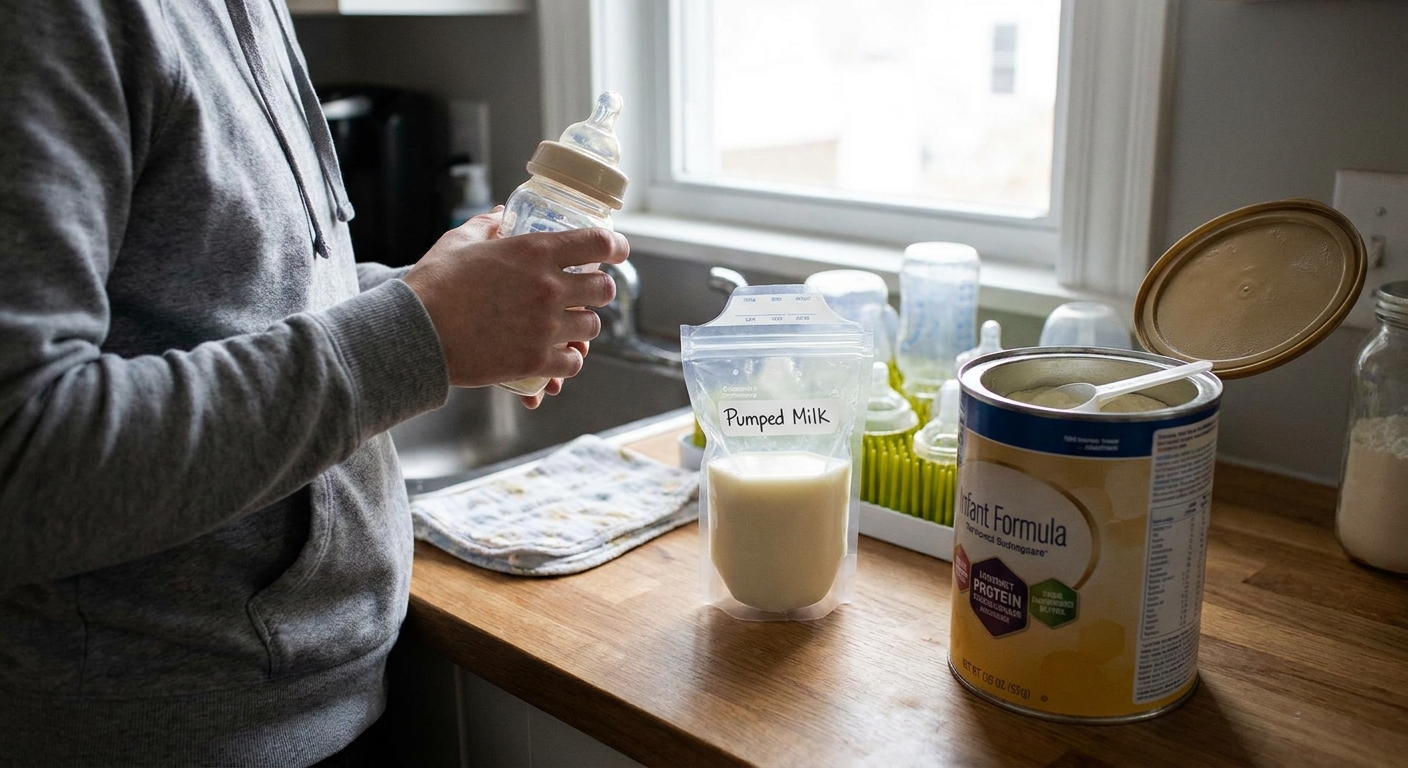
A calm, step-by-step explanation of triple feeding, when it’s used, what to watch in diapers and feeds, and when to check in with a lactation consultant.
Donor Breast Milk vs Formula for a Newborn

Sarah Mitchell
Sarah Mitchell is a Registered Pediatric Nurse and a mother of three who has spent over a decade helping families navigate the beautiful, chaotic early years of childhood. She combines evidence-based medical knowledge with real-world parenting experience to offer practical, compassionate advice. At Awesome Parent, Sarah's mission is to help exhausted parents find solutions, trust their instincts, and finally get some sleep.
When you are supplementing a newborn, the question often lands in your lap at the worst possible hour: Should I use donor breast milk or formula? As a pediatric nurse and a mom of three, I want to tell you something up front that I used to repeat constantly in triage: the safest feeding plan is the one that reliably gets enough milk into your baby and supports hydration and growth, without adding unnecessary risk or stress.
Pasteurized donor human milk from a regulated, accredited milk bank can be a wonderful bridge in certain situations. Formula can also be a wonderful bridge, or a long-term plan, because it is safe, regulated, and available. Let’s walk through how each option works, what “safe” really means here, and how families actually get donor milk.

What donor milk is (and is not)
When people say “donor milk” in a medical setting, they usually mean pasteurized donor human milk from a regulated, accredited milk bank (often nonprofit, depending on the region). This is not the same thing as milk from a friend, a neighbor, or an online group.
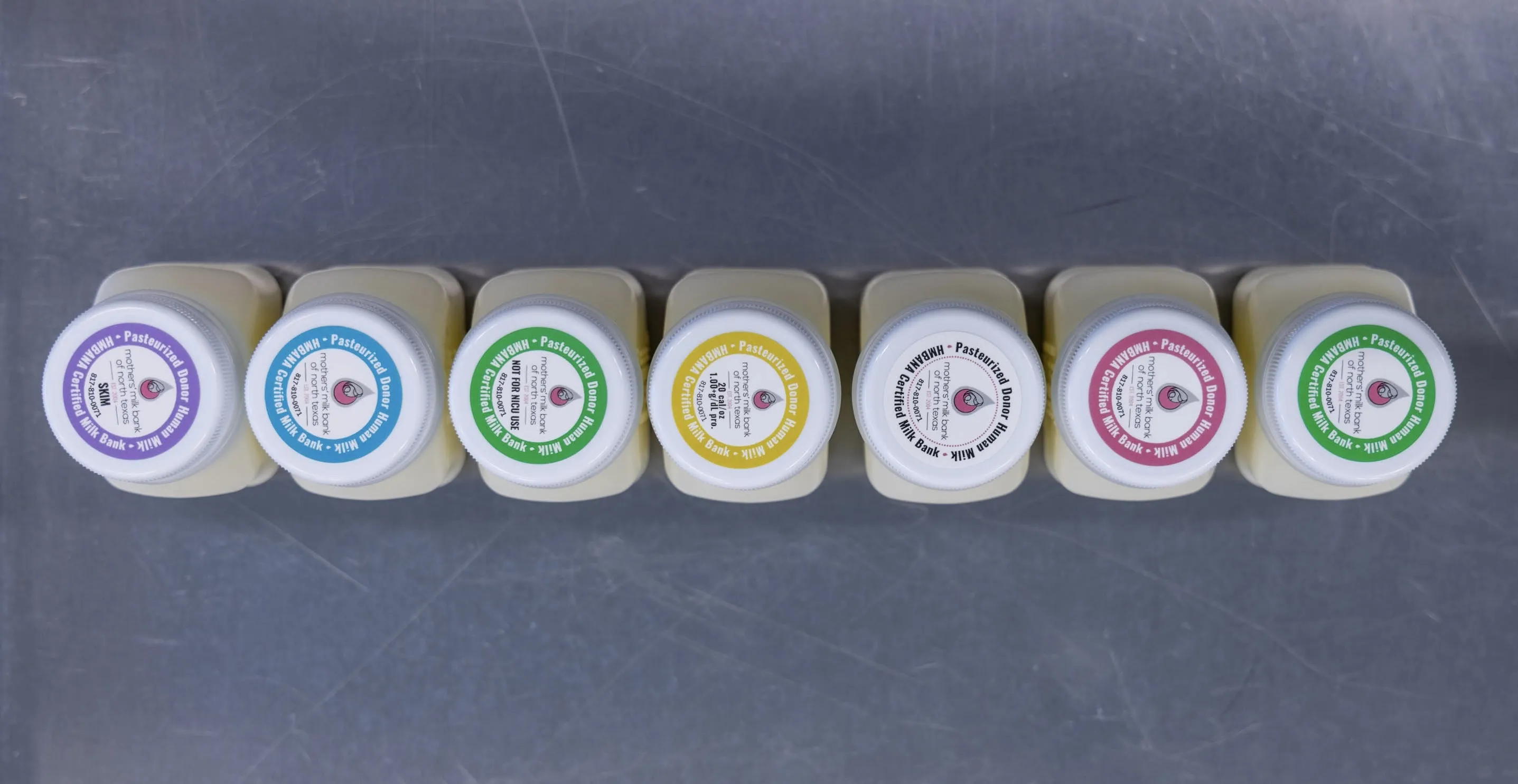
Milk bank donor milk is donated by screened lactating parents, processed under strict handling rules, and pasteurized to reduce the risk of transmitting infections. It is most often used for medically fragile babies, especially premature infants, but it can sometimes be available for healthy newborns depending on supply and local policies.
Informal milk sharing is when milk is exchanged person-to-person, often through social media or community networks.
Online-purchased milk is a separate category that can carry additional risks because you cannot verify identity, handling, storage, or shipping conditions the same way you can with a milk bank.
How milk banks screen and process milk
Parents are often reassured simply by hearing “it comes from a milk bank,” but it helps to know what that means in practical terms.
Donor screening
Milk bank screening varies by country and accrediting body, but it is often similar to blood donation screening in that it typically includes a health interview and infectious disease blood tests. Screening commonly includes:
- Health history and lifestyle questionnaire (medications, supplements, nicotine use, drug use, certain health conditions)
- Blood testing for infectious diseases of concern (commonly HIV, hepatitis B, hepatitis C, and syphilis)
- Ongoing eligibility rules if health status or medication use changes
Pasteurization and handling
Donor milk from regulated milk banks is most often pasteurized using the Holder method (a standardized heat treatment used in human milk banking). Some milk banks may use other validated methods. Pasteurization reduces the risk of transmitting infections. After pasteurization, milk banks may:
- Culture or test batches according to their protocols (which can include pre- and/or post-pasteurization testing)
- Track and label milk for traceability
- Store frozen and ship using temperature-controlled processes
Important nuance: pasteurization can reduce some of the immune factors naturally present in human milk. Even so, pasteurized donor milk is still human milk, and for certain babies (especially preterm infants) it can be clinically valuable.
Why informal sharing is riskier for newborns
I completely understand why informal milk sharing sounds appealing. It can feel more “natural” than formula, and it often comes with a supportive community. The problem is that newborns are uniquely vulnerable, and informal sharing can add risks that families cannot easily see or control.
Risks include
- Infectious disease exposure (even well-meaning donors may not know their current status, and screening may not be up to date)
- Medication, supplement, nicotine, alcohol, or drug exposure (some substances can pass into milk)
- Contamination from collection and storage (pump parts, hand hygiene, storage bags, refrigerator temperatures, transport time)
- Mislabeling (accidental mix-ups with another person’s milk, or milk pumped when a donor was ill or taking a medication)
- Adulteration (rare, but reported in some studies of online-purchased milk, such as dilution with water or mixing with other milks)
If you are considering informal donor milk anyway, talk with your pediatrician first. For many families, the safer alternatives are milk bank donor milk (when available) or commercial infant formula.
How families get donor milk
Access is one of the biggest differences between donor milk and formula.
In the hospital
Many hospitals keep milk bank donor milk for babies who meet certain criteria. Common examples include:
- Premature or very low birth weight infants
- Babies with certain medical or surgical conditions
- Newborns with significant hypoglycemia (low blood sugar) when donor milk is part of the hospital protocol
- Situations where a parent’s own milk is not yet available and human milk is medically preferred
Hospitals often prioritize limited donor milk supply for the highest-need babies. If your newborn is otherwise healthy, donor milk may or may not be offered routinely depending on the facility.
At home
Some milk banks dispense to outpatients, but rules vary. You may need:
- A prescription or note from your pediatrician or healthcare provider
- A recipient screening form (basic health information)
- To arrange shipping or local pickup
Two very practical realities come up for families:
- Supply can be limited. Even when you are willing to purchase it, donor milk availability depends on donations and local demand.
- Cost can be significant. Insurance coverage varies widely and is often better for medically necessary situations than for general supplementation.
Donor milk vs formula: key differences
Both options can support healthy growth when used appropriately. The best choice depends on your baby’s medical needs, your feeding goals, availability, and what will keep feeding consistent and sustainable in your home.
Safety and regulation
- Milk bank donor milk: Screened donors, controlled processing, and pasteurization. Safety depends on using a regulated, accredited milk bank system in your region.
- Infant formula: Commercial formula is regulated and manufactured to meet infant nutrition standards. When prepared and stored as directed, it is a safe food for infants.
Nutrition
- Donor milk: Human milk components, but pasteurization can reduce some bioactive factors. Donor milk is often pooled, which can make its calorie and protein content variable. For preterm babies, hospitals frequently add fortifier under medical supervision.
- Formula: Consistent nutrition from batch to batch. Standard infant formulas are designed to meet the needs of full-term infants. Specialized formulas exist for reflux, allergy concerns, premature infants, and other medical conditions.
Digestive tolerance
Newborn GI symptoms like gas, spit-up, and grunting can be common regardless of milk source. If your baby is fussy, gassy, or spitting up a lot, check in with your pediatrician before assuming the milk source is the problem.
Availability and convenience
- Donor milk: May be hard to obtain, may require paperwork, often costly, and typically comes frozen with specific thawing and storage guidance from the milk bank.
- Formula: Widely available, shelf-stable options exist, and it is easier to obtain urgently when you run out at 2 AM.
When donor milk is worth pursuing
In my nursing world, donor milk is most clearly beneficial when a baby has higher medical risk, or when a provider specifically recommends human milk for a particular reason.
You might ask your baby’s care team about milk bank donor milk if:
- Your baby was born premature or had a NICU stay
- Your baby has a medical condition where human milk is preferred as part of the treatment plan
- You are temporarily supplementing while working to establish breastfeeding, and donor milk is readily available and affordable in your area
- You have a strong personal preference for human milk, and you have a safe, regulated milk bank option
If your baby is severely immunocompromised or has complex medical needs, follow your specialist’s guidance closely and use only accredited milk bank sources.
If donor milk is offered in the hospital, it is also okay to ask: What milk bank do you use? and How long will it be available for my baby?
When formula is the smart choice
Formula is not a “failure” or a consolation prize. It is a carefully designed, regulated source of nutrition that helps babies grow. In real life, it is often the option that makes feeding consistent and reduces stress, which matters for baby safety and parent mental health.
Formula is often the best choice when:
- Donor milk is not available quickly, consistently, or at all
- Cost would create financial strain
- You need a reliable long-term supplement and do not want to worry about supply interruptions
- Your baby needs a specialized formula as recommended by your clinician
- You are in the thick of postpartum recovery and need the option that is simplest to sustain
If you are supplementing because you are waiting for your milk supply to increase, it can also help to connect with a lactation consultant early. Sometimes a small tweak in latch, positioning, pumping strategy, or flange fit can make a big difference.
Quick handling tips
Using milk bank donor milk at home
- Thaw safely using the milk bank’s instructions. Many banks recommend thawing in the refrigerator.
- Use within the milk bank’s time limits after thawing and after opening. These limits can vary by bank.
- Avoid microwaving breast milk. It can create hot spots and damage some components of the milk.
Using formula at home
- Follow the label exactly for mixing, storage, and discard times, and follow any local public health guidance about water safety.
- Measure carefully. Too much powder or too much water can both cause problems for babies.
- Keep it clean. Wash hands, clean bottles and parts thoroughly, and use safe storage times once a bottle is started.
Common questions
Is donor milk better than formula for a healthy full-term newborn?
“Better” depends on what you mean. For healthy full-term newborns, both donor milk (from a regulated milk bank) and commercial formula can be appropriate supplements. Donor milk may feel closer to your breastfeeding goals, while formula is typically more accessible and consistent. Your pediatrician can help you weigh what makes sense for your specific baby and situation.
Can I use donor milk temporarily and then switch to formula?
Yes. Many families use donor milk as a short-term bridge and then transition to formula when donor milk is no longer available or affordable. Babies can do well with that approach.
Is it safe to buy donor milk online?
I would be very cautious. Unless it is coming from a regulated, accredited milk bank with clear screening, handling, and shipping standards, you cannot reliably know how it was collected, stored, or transported.
Will donor milk prevent jaundice or help with weight gain?
Jaundice has multiple causes, but one big piece we can control is intake. Feeding enough volume, frequently enough, supports hydration and stooling, which can help with jaundice management and early weight patterns. Whether that supplement is donor milk or formula, the key is that baby is getting adequate intake and close follow-up in the first week.
Call your clinician promptly if you notice:
- Baby is too sleepy to feed or is feeding poorly
- Fewer wet diapers than expected for age
- Worsening yellow color of the skin or eyes
- Lethargy, trouble waking, or a fever
My calm bottom line
If your baby needs supplementation, you have two solid, mainstream options: pasteurized donor milk from a regulated, accredited milk bank or commercial infant formula. Donor milk can be a great choice when it is truly milk bank sourced, available, and fits your family’s needs. Formula is often the most practical choice because it is consistent, accessible, and safe when prepared correctly.
If you are feeling stuck, bring this simple question to your pediatrician: Given my baby’s age, weight, and health, what is the safest and most realistic supplement for us right now? You deserve an answer that reduces fear and helps you sleep, not one that adds pressure.
Sarah Mitchell
Sarah Mitchell is a Registered Pediatric Nurse and a mother of three who has spent over a decade helping families navigate the beautiful, chaotic early years of childhood. She combines evidence-based medical knowledge with real-world parenting experience to offer practical, compassionate advice. At Awesome Parent, Sarah's mission is to help exhausted parents find solutions, trust their instincts, and finally get some sleep.