
Pediatric nurse and mom advice on taking your baby’s temperature correctly, easing discomfort safely, and knowing when a fever needs urgent care.
How to Take a Baby’s Temperature

Sarah Mitchell
Sarah Mitchell is a Registered Pediatric Nurse and a mother of three who has spent over a decade helping families navigate the beautiful, chaotic early years of childhood. She combines evidence-based medical knowledge with real-world parenting experience to offer practical, compassionate advice. At Awesome Parent, Sarah's mission is to help exhausted parents find solutions, trust their instincts, and finally get some sleep.
It is 2:17 a.m., your baby feels warm, and suddenly you are holding a thermometer like it is a tiny medical final exam. I have been the triage nurse on the other end of that call, and I have also been the parent in the dark whispering, “Please just give me a number I can trust.”
This article is about getting an accurate temperature reading the first time, with plain-language comparisons of rectal, armpit, ear, and forehead methods and the common mistakes that create a false number.
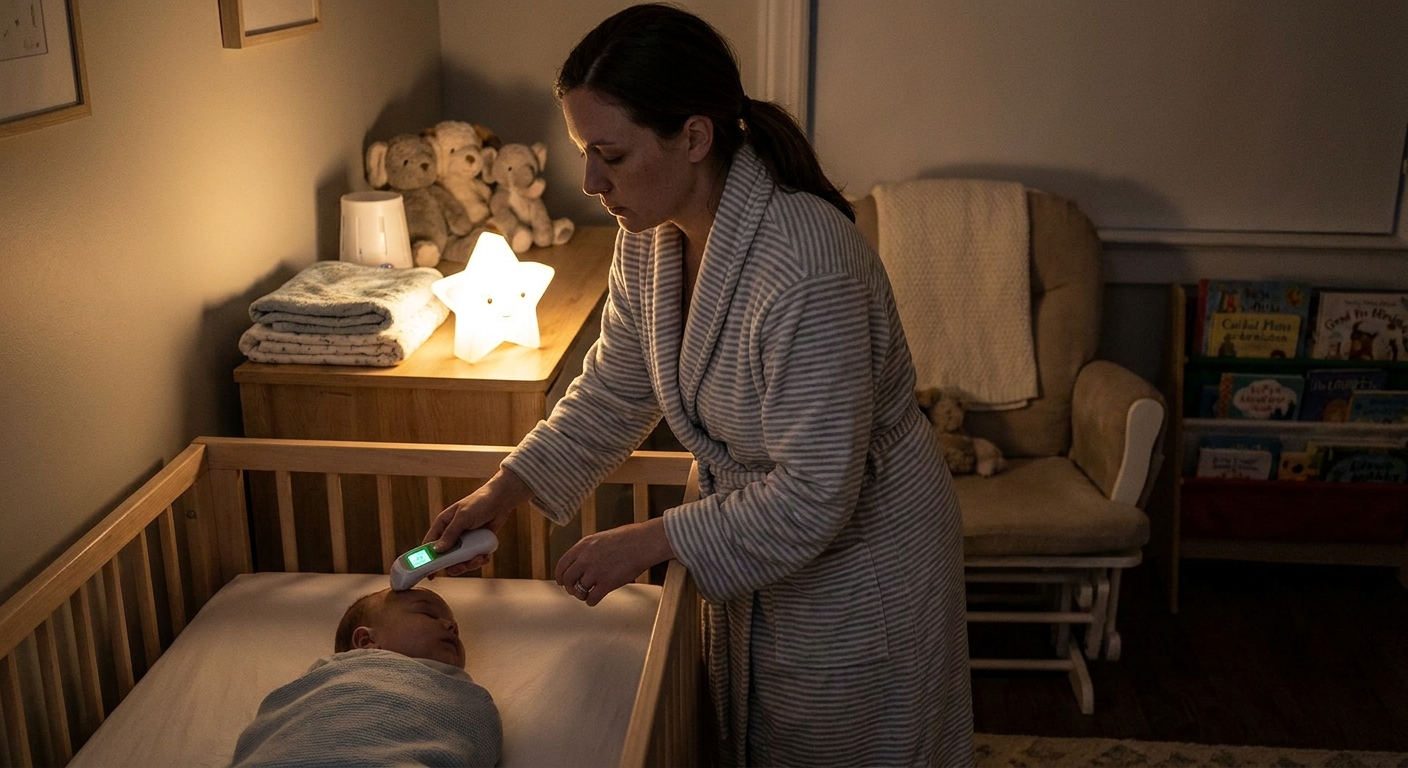
Quick answer: the most trusted method
For young infants, clinicians trust a rectal temperature the most because it best reflects core body temperature. In many pediatric clinics and emergency departments, when we need the most reliable number for a baby, rectal is the gold standard.
That does not mean you must use rectal every single time. It means: if your baby is very young, looks unwell, or you need the most accurate number to guide next steps, rectal is usually the method medical teams will rely on.
Before you start: get a reliable number
- Use a digital thermometer (not a mercury glass thermometer).
- Check the label: some are “rectal only,” some are “oral/rectal,” and some are designed for the forehead or ear.
- Wait after a bath: a warm bath can make skin feel hot and can skew some readings.
- Aim for calm: crying, wiggling, or fighting the device can lead to poor placement and an unreliable result. Do your best, no perfection required.
- Clean it: for any method, follow the manufacturer’s cleaning instructions. For rectal use, I recommend dedicating one thermometer to rectal only and cleaning it carefully after each use.
Rectal temperature (most accurate for infants)
Best for: newborns and young infants, or anytime you want the most accurate reading.
Why it is trusted: it measures close to core temperature and is less affected by room temperature, sweat, hats, or a warm forehead.
How to do it safely
- Use a digital thermometer reserved for rectal use.
- Apply a tiny amount of lubricant (like petroleum jelly) to the tip.
- Position your baby on their back with legs gently bent, or tummy-down across your lap, whichever feels more secure.
- Insert the tip gently about 1/2 inch (around 1 to 2 cm). Stop if you feel resistance. Do not force it.
- Hold it steady until it beeps, then remove and read.
Common mistakes that cause a false number
- Not inserting far enough: if it is barely in, you may get a low reading.
- Thermometer not steady: movement can interrupt good contact.
- Using the wrong device: do not use a forehead, ear, or pacifier thermometer rectally.
- Measuring right after a bowel movement: it may slightly affect the number for some babies. If the reading does not match how your baby looks and feels, recheck in a few minutes.
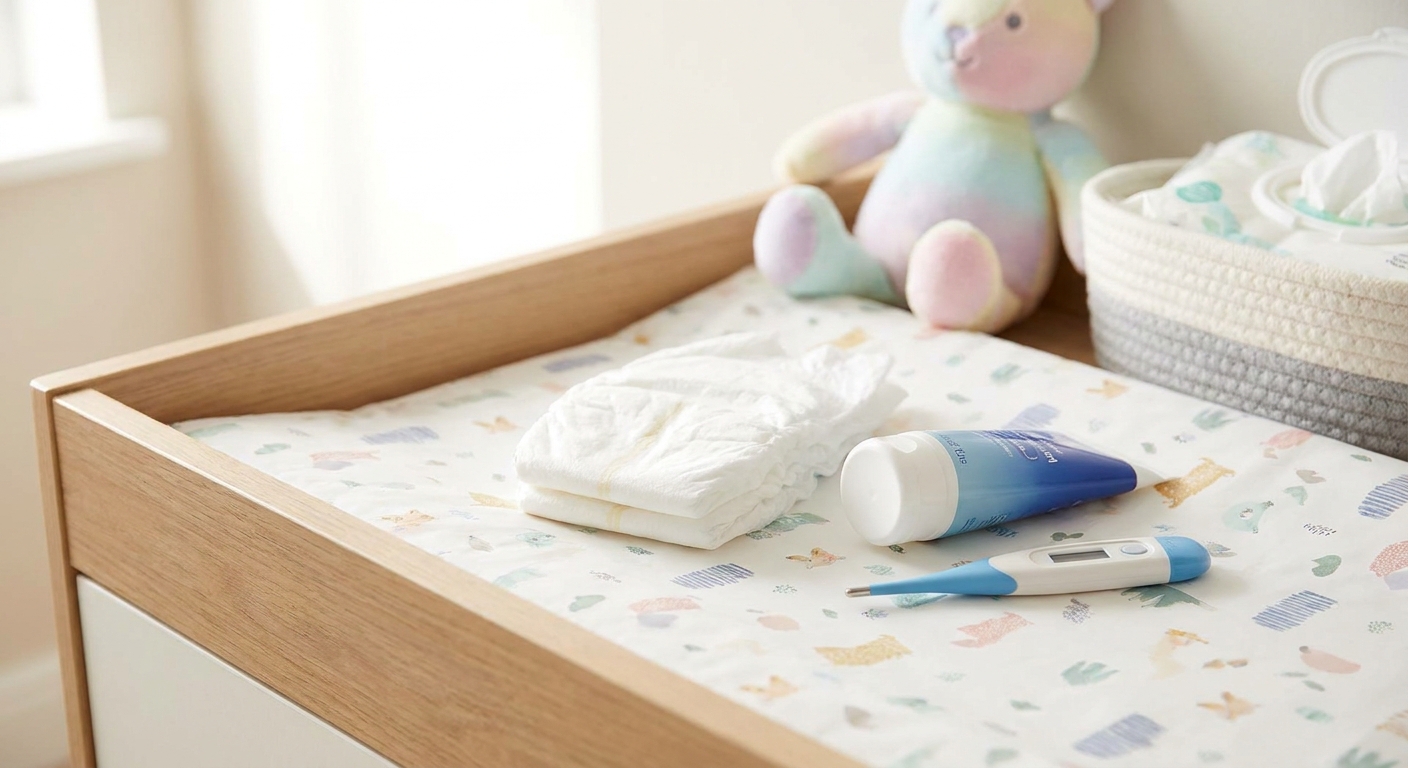
Armpit temperature (easy, often lower)
Best for: a quick screening when your baby seems mostly well, or when you want a non-invasive first check.
What to know: armpit temperatures can read lower than core temperature and are more sensitive to technique. In the clinic, if an armpit reading suggests fever in a young infant, we typically confirm with a rectal temperature.
How to do it
- Make sure the armpit is dry.
- Place the thermometer tip high in the armpit, against bare skin.
- Hold your baby’s arm snugly against their side until the thermometer beeps.
Common mistakes that cause a false number
- Measuring through clothing: fabric breaks the skin contact you need.
- Loose arm: if the arm is not held firmly in place, the tip shifts and reads low.
- Sweaty armpit: moisture can interfere with an accurate result.
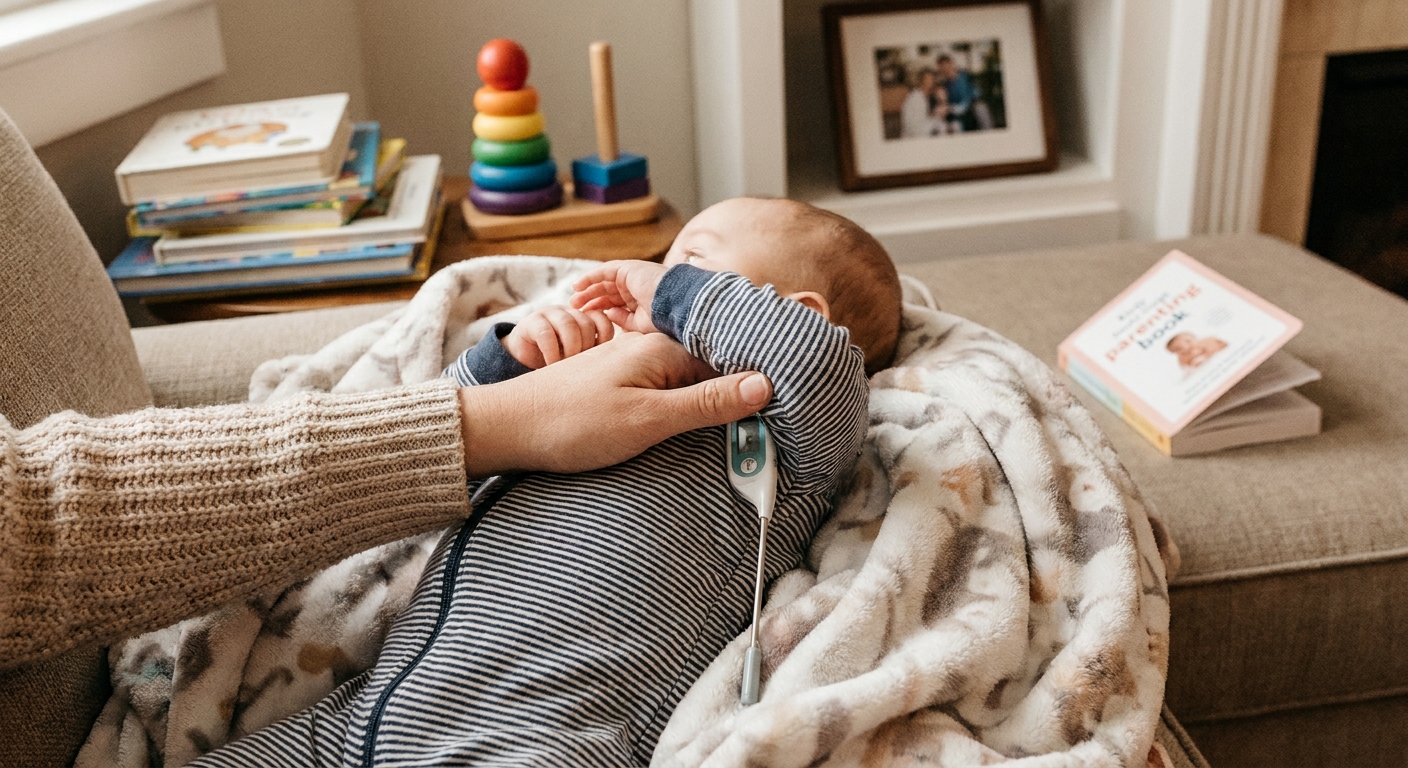
Ear temperature (fast, technique matters)
Best for: older babies and toddlers when used correctly with an ear thermometer designed for home use.
What to know for small babies: ear canals are tiny and angles are tricky. A slightly off position can give a falsely low reading. Ear temps can be convenient, but they are not my first choice for a very young infant when we need the most dependable number.
How to improve accuracy
- Use a tympanic thermometer with clean lens covers.
- Follow your specific model’s directions for ear positioning.
- If the number surprises you, repeat the reading after repositioning. If two readings are far apart, take a third, then use the most consistent result, or confirm with a more reliable method for your child’s age.
Common mistakes that cause a false number
- Wrong angle: not aiming toward the eardrum often reads low.
- Earwax buildup: can interfere with the sensor.
- Using it right after baby was lying on that ear: trapped heat can skew the result. If possible, wait a few minutes and recheck.
Forehead temperature (convenient, can vary)
Best for: a low-stress check, especially for squirmy kids, and for trending temperature over time when you use it consistently.
What to know: forehead readings measure skin temperature and use an algorithm to estimate body temperature. They can be thrown off by sweat, a hat, a warm room, or a baby who was just snuggled under a blanket.
How to do it
- Make sure the forehead is dry.
- Remove hats and wait a few minutes if baby was bundled.
- Follow the device instructions carefully (some require a swipe across the forehead, some are touch models, some are no-touch).
Common mistakes that cause a false number
- Measuring right after coming inside from heat or cold: give baby time to acclimate.
- Sweaty skin: tends to cause inconsistent or inaccurate readings.
- Scanning the wrong area: hairline and temples matter for many models.
- Inconsistent distance on no-touch devices: too far away can skew results.
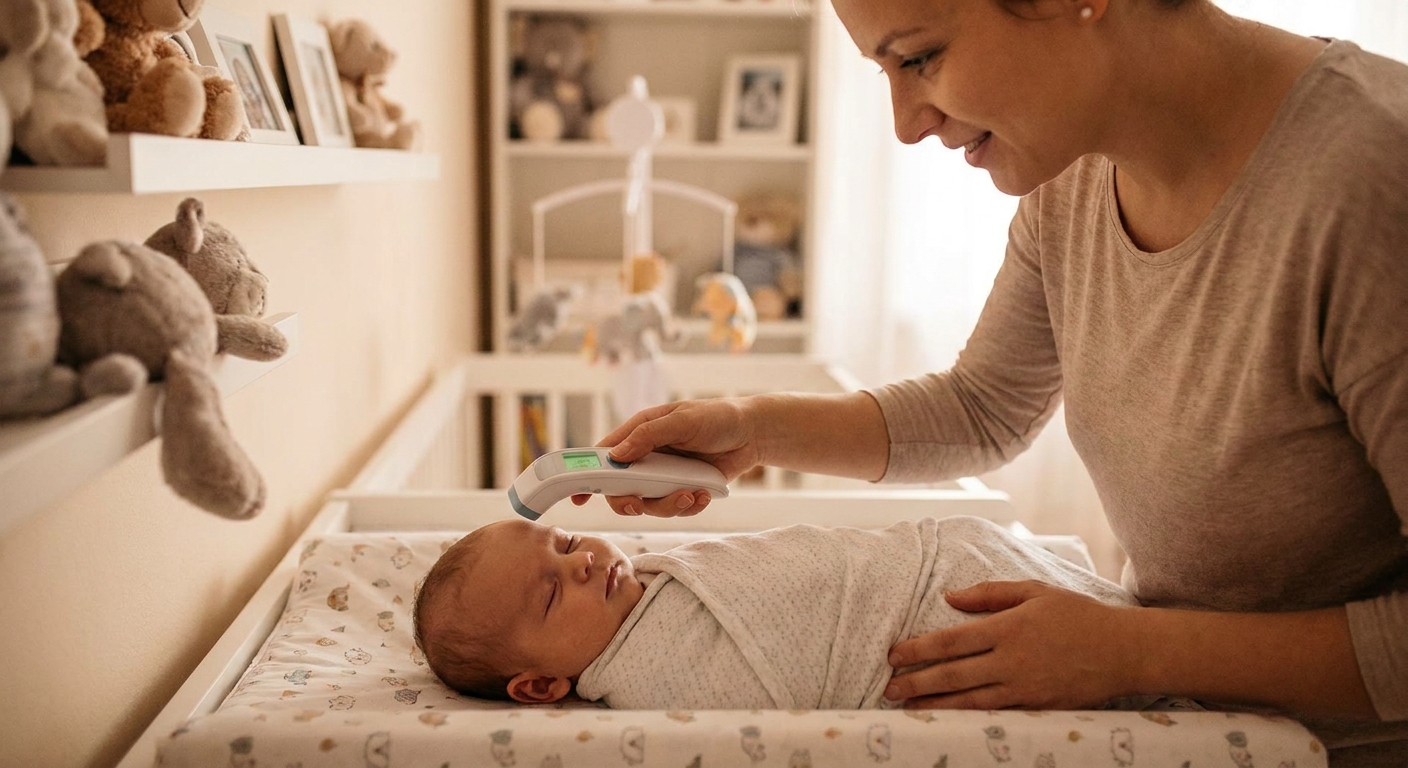
Comparing methods at home
If you are trying to pick the right method, here is the practical way I explain it to parents at the clinic:
- Rectal: most accurate and the one clinicians rely on for young infants.
- Armpit: easiest backup option, but often reads lower and is more technique-dependent.
- Ear: fast, but can be unreliable in small infants due to tiny ear canals and positioning challenges.
- Forehead: very convenient, but more likely to give an off number if baby is sweaty, bundled, or the device technique is inconsistent.
If your reading does not match your baby’s behavior and appearance, it is reasonable to repeat the temperature using better technique. If your baby is very young or looks unwell, confirm with a rectal temperature, because that is the number most clinicians will act on.
Common thermometer mistakes
- Not reading the instructions for your exact model: each brand has its own quirks, especially ear and forehead versions.
- Switching methods and comparing numbers directly: different sites can give different results. If you are tracking trends, try to use the same method each time.
- Taking multiple readings back-to-back without pausing: give it a moment, especially with forehead scanners.
- Low battery: surprisingly common source of weird readings.
- Dirty sensor: clean according to the manufacturer instructions, especially ear lenses and forehead sensors.
When to recheck
You do not need to spiral if the first reading feels questionable. Recheck if:
- You got a number that does not fit the situation (baby feels hot but reads normal, or feels fine but reads high).
- Your baby was crying hard, wiggling, sweaty, or bundled right before you measured.
- You used a forehead or ear method and the reading is close to a cutoff your clinician has told you to watch.
My triage-nurse tip: if you recheck, do it with the same method for consistency. If accuracy really matters because your baby is very young or looks unwell, confirm with a rectal temperature.
When to call a clinician
This is not a full sick-baby triage guide, but measurement and next steps are linked, especially for the youngest babies.
- If your baby is under 3 months and has a rectal temperature of 100.4°F (38°C) or higher, contact your clinician right away or seek urgent care based on your local guidance.
- If your baby looks very unwell, has trouble breathing, is difficult to wake, or you have that gut feeling that something is off, trust it and get help.
- If you got a fever reading using an ear or forehead thermometer in a young infant, confirm with a rectal temperature and call for guidance.
FAQ
What counts as a fever?
Many clinicians define fever as a rectal temperature of 100.4°F (38°C) or higher. Fever cutoffs can vary by age and where you measure (rectal, armpit, ear, forehead). For young babies, rectal is the clearest reference point because it is the most reliable.
Can I use an oral thermometer for rectal temps?
Only if the manufacturer says it is safe for rectal use. If it is approved for rectal temps, I still recommend dedicating one thermometer to rectal use only.
Should I add a degree to an armpit temperature?
No. “Add a degree” rules are unreliable. If you are concerned about the number, the better move is to confirm with a more accurate method rather than doing math at 3 a.m.
What about pacifier thermometers?
They can be hard to use correctly because babies chew, spit, or stop sucking. If you use one, follow the brand instructions closely and recheck with a more reliable method if the number does not make sense.
A calm closing thought
Taking a baby’s temperature is one of those parenting skills that looks simple until you are doing it with a wiggly newborn and one eye open. If you remember just one thing, make it this: rectal is the most trusted method for young infants, and technique matters more than fancy features.
You are not failing if you have to take it twice. You are doing exactly what good parents do: getting a number you can trust.
Sarah Mitchell
Sarah Mitchell is a Registered Pediatric Nurse and a mother of three who has spent over a decade helping families navigate the beautiful, chaotic early years of childhood. She combines evidence-based medical knowledge with real-world parenting experience to offer practical, compassionate advice. At Awesome Parent, Sarah's mission is to help exhausted parents find solutions, trust their instincts, and finally get some sleep.