If your child has inner elbow pain from pitching or lots of throwing, it may be Little League elbow. Here is what it looks like, why rest matters, return tim...
Little League Shoulder in Young Pitchers

Sarah Mitchell
Sarah Mitchell is a Registered Pediatric Nurse and a mother of three who has spent over a decade helping families navigate the beautiful, chaotic early years of childhood. She combines evidence-based medical knowledge with real-world parenting experience to offer practical, compassionate advice. At Awesome Parent, Sarah's mission is to help exhausted parents find solutions, trust their instincts, and finally get some sleep.
If your young pitcher is suddenly rubbing the top of their throwing shoulder, wincing on the mound, or telling you it hurts when they lift their arm, your brain goes straight to worst-case scenarios. Take a breath. One of the more common overuse causes of shoulder pain in growing throwers is something called Little League Shoulder, and the good news is that it is very treatable when caught early.
As a pediatric nurse and a mom who has spent a lot of time on youth fields, I will tell you the same thing I told families in triage: shoulder pain in a kid who throws a lot is often an overuse problem, not a toughness problem. Rest is not a punishment. It is the treatment.
What Little League Shoulder Is
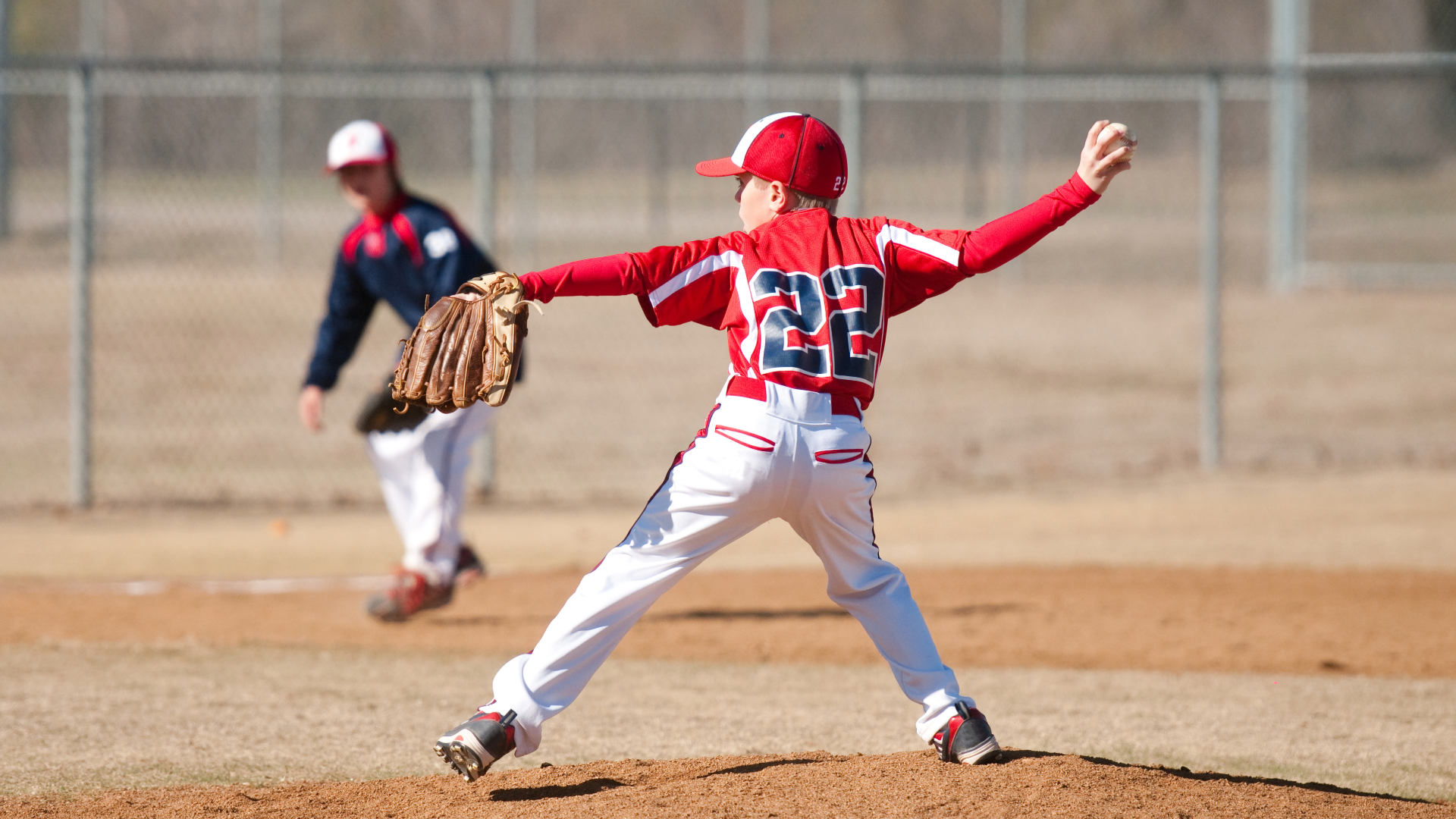
Little League Shoulder is an overuse injury to the growth plate at the top of the upper arm bone (the humerus), right near the shoulder. In medical terms, it is often called proximal humeral epiphysiolysis.
In kids and young teens, growth plates are areas of developing cartilage. They are what allow bones to lengthen as your child grows. The tradeoff is that growth plates are more vulnerable to repetitive stress than mature bone.
Pitching and other hard throwing can create repeated twisting and pulling forces across that shoulder growth plate. Over time, those forces can irritate it, cause inflammation, and sometimes cause changes that show up on an x-ray, including widening at the growth plate.
Who Is Most at Risk
I tend to see this most in preadolescents and teens, especially during growth spurts and during seasons when throwing volume ramps up quickly.
- Pitchers and catchers, or kids who play both
- Year-round players without a real off-season
- Kids on multiple teams (the throwing adds up fast)
- Tournament stretches with back-to-back games
- Recent increases in pitch counts, innings, showcases, or long-toss
What It Feels Like
The classic complaint is pain at the top or outside of the throwing shoulder, often described as deep soreness rather than a sharp jab. Kids may point right below the bony tip of the shoulder.
Common symptoms parents notice
- Pain when throwing, especially with pitching or long throws from the outfield
- Worse pain as the game goes on or later that day
- Decreased speed or accuracy, sometimes before they admit it hurts
- Shoulder fatigue that seems out of proportion to the workout
- Pain lifting the arm overhead or rotating the arm back
- Tenderness if you gently press over the upper outer shoulder
This article is specifically about top-of-shoulder pain in throwers. If your child’s main pain is on the inner side of the elbow, that is a different overuse pattern and needs a separate evaluation approach.
Also, not every sore throwing shoulder is Little League Shoulder. Other issues can mimic it, including rotator cuff irritation, shoulder impingement, AC joint irritation, labral injury, a fracture after a fall, or even pain referred from the neck. If you are unsure, that is a good reason to get it checked.
Why Rest From Throwing Matters
Here is the part that is hardest for motivated kids and anxious parents: you cannot rehab Little League Shoulder while continuing to throw through pain.
Growth-plate irritation improves when the repeated stress stops. Continuing to pitch on a painful shoulder can prolong healing and increase the risk of recurrence. It is also why medical clearance and a structured return plan matter.
What “rest” means
Rest usually means no pitching and no hard throwing for a period of time. Many kids can still stay active with lower-stress conditioning and, depending on symptoms and clinician guidance, possibly hitting or running. The exact plan depends on how sore they are and what an exam shows.
In clinic, I used to frame it like this: rest is not “doing nothing.” It is trading painful work for healing work.
When to Get Checked Now
Most overuse shoulder pain builds gradually. Certain symptoms, however, are red flags that your child needs a prompt medical evaluation, especially if they happened during a specific throw.
Call your child’s clinician urgently or seek same-day care if:
- Night pain that wakes them up, especially if it is persistent or significant
- Pain at rest that is more than mild
- A sudden “pop” sensation in the shoulder during a throw
- Sudden loss of strength or they cannot lift the arm normally
- Visible swelling, significant bruising, or a new shoulder deformity
- Numbness or tingling down the arm or into the hand
- Fever or your child looks generally ill along with shoulder pain
If the pain is mild but persistent, or it returns every time they ramp up throwing, that is still a good reason to schedule a non-urgent sports medicine or pediatric visit. Waiting months rarely makes this easier.

What to Do at Home
If your child has top-of-shoulder pain that seems linked to throwing, the safest first steps are simple.
- Stop pitching and hard throwing until your child is evaluated or clearly improving without pain.
- Ice the sore area for 15 to 20 minutes after activity, up to a few times a day for the first couple of days.
- Consider pain relief if needed and if your child can take it safely. Acetaminophen or ibuprofen are common options, but follow label directions and check with your clinician if your child has medical conditions, is dehydrated, has kidney issues, or takes other medications.
- Do not “test it” with a few hard throws to see if it is better. That often resets the irritation.
- Write down the pattern: When did it start, what makes it worse, how many pitches or innings recently, and whether there were tournaments or back-to-back games. This helps your clinician a lot.
How It Is Diagnosed
Diagnosis starts with a careful history and physical exam. Your clinician will ask about throwing volume, recent increases in pitching, showcases or tournaments, and whether your child plays on multiple teams.
Clinicians may order x-rays of the shoulder, sometimes of both shoulders for comparison. X-rays can show widening or irritation at the proximal humeral growth plate, but they can also look normal early on. In more complicated cases, or if symptoms do not improve as expected, additional imaging might be considered.
Treatment and Recovery
Treatment is typically very effective and usually includes:
- Rest from throwing for a clinician-recommended period
- Physical therapy focused on shoulder blade control, rotator cuff strength, flexibility, and total-body mechanics
- A gradual return-to-throwing program once pain-free with daily activities and cleared by the treating clinician
Recovery time varies, but many young athletes need weeks to a few months before they are safely back to full-intensity pitching. The key is not the calendar. The key is pain-free function and a stepwise return.
A return-to-throwing plan is usually guided by your clinician or PT and builds in stages, often progressing distance and easy effort first, then increasing intensity, then adding mound work last.
One of the most common setbacks I see is returning to pitching as soon as it “kind of” feels better, then flaring again during the first game situation. That is why structured progression matters.
How to Prevent a Repeat
You cannot bubble-wrap a pitcher, and I would never ask you to. But you can lower risk a lot by keeping throwing loads reasonable and building in real recovery.
Practical prevention tips
- Avoid sudden volume jumps, especially early season and during tournament weekends.
- Encourage rest days from throwing. Muscles and growth plates both need them.
- Do not stack teams without a plan. Playing for multiple teams can silently double a child’s throwing load.
- Follow pitch-count and rest guidance. Use your league’s pitch-count rules and required rest days, and do not let “unofficial” bullpen sessions and warmups become extra hidden volume.
- Build an off-season. Many sports medicine clinicians recommend a period each year with a real break from overhead throwing.
- Prioritize mechanics and conditioning. Strong legs, core, and shoulder blade control reduce stress on the shoulder.
- Speak up early. If your child says their shoulder “feels tired” or “kind of hurts,” listen before it becomes a bigger injury.
If you want one simple rule that I use as a parent: pain is information. We do not punish it, and we do not ignore it.
FAQ
Is Little League Shoulder serious?
It can be if a child keeps throwing through it. When identified and treated early with rest and a gradual return, most kids recover well and return to pitching safely.
Can my child still play in the field?
Maybe. Some kids can participate in limited ways that avoid hard throwing, but this should be decided with your clinician based on pain level and exam findings. Many families find it simpler to take a full throwing break for a period of time.
What if my child only hurts after the game, not during?
That still counts. Post-game soreness that is consistent and centered at the top of the throwing shoulder is a common overuse pattern in growing athletes. It is worth addressing before it becomes pain during activity.
Is a “pop” always an emergency?
A pop with sudden pain, weakness, or loss of motion deserves prompt evaluation. It does not always mean something catastrophic, but it is not a symptom to brush off.
A Final Word
Kids love baseball, and I love that for them. I also love when they can lift their arm without pain. If your pitcher is hurting at the top of their throwing shoulder, the bravest, most athletic thing they can do might be the least glamorous one: stop throwing for now and get checked. Healing first is what gets them back on the mound for the long haul.
Sarah Mitchell
Sarah Mitchell is a Registered Pediatric Nurse and a mother of three who has spent over a decade helping families navigate the beautiful, chaotic early years of childhood. She combines evidence-based medical knowledge with real-world parenting experience to offer practical, compassionate advice. At Awesome Parent, Sarah's mission is to help exhausted parents find solutions, trust their instincts, and finally get some sleep.