Babies often show UTIs as fever with no obvious cause. Here’s what to watch for, how urine samples are collected, what to do while waiting, and when to go to...
Prolonged Newborn Jaundice and a Urine Infection

Sarah Mitchell
Sarah Mitchell is a Registered Pediatric Nurse and a mother of three who has spent over a decade helping families navigate the beautiful, chaotic early years of childhood. She combines evidence-based medical knowledge with real-world parenting experience to offer practical, compassionate advice. At Awesome Parent, Sarah's mission is to help exhausted parents find solutions, trust their instincts, and finally get some sleep.
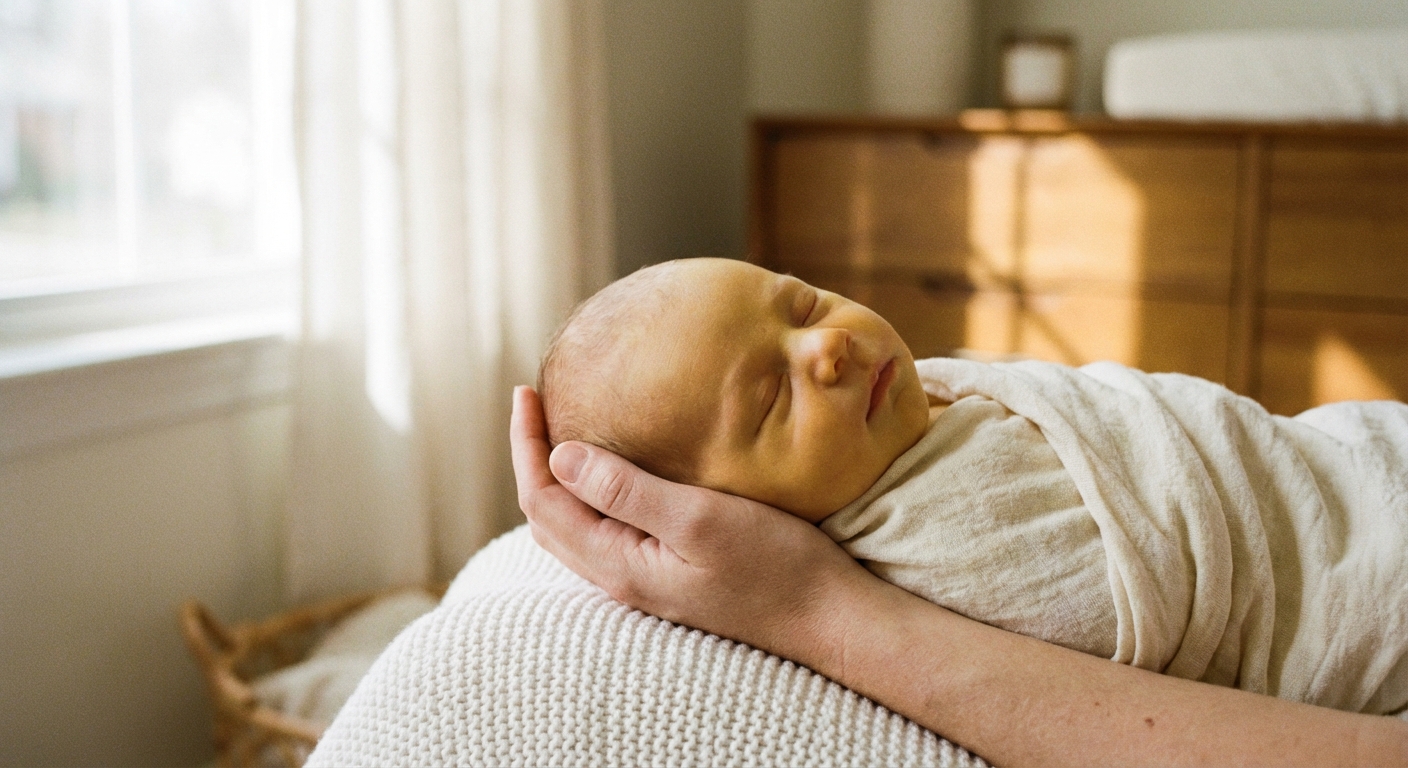
I used to tell families in triage that newborn jaundice is usually a “watch and wait” situation. Then I’d pause and add: until it isn’t. One of the times it stops being simple is when a baby stays yellow longer than expected and the care team starts talking about checking a urine sample. Parents are often surprised by that, because urine and yellow skin do not seem connected at all at 3 a.m. when you are staring at your baby under the nursery lamp.
Let’s connect the dots, talk through what clinicians are looking for, and cover the specific symptoms that should move a lingering jaundice situation from “keep an eye on it” to “call today.”
When jaundice is prolonged
Many newborns look yellow in the first days of life and then gradually pink back up as their liver gets better at processing bilirubin.
Clinically, jaundice is often considered prolonged when it is still present after:
- 2 weeks (14 days) in a term infant
- 3 weeks (21 days) in a preterm infant
That does not automatically mean something dangerous is happening. It just means the workup changes. In many practices, that is the point when clinicians start talking about checking a fractionated bilirubin (direct/conjugated and indirect/unconjugated) and looking for causes beyond routine newborn jaundice.
If you want the big picture of early jaundice, signs to watch, and how jaundice is typically monitored, read our main overview: Newborn Jaundice: Signs, Causes, and When to Worry.
What the prolonged jaundice workup looks like
Parents often ask, “Why are we checking all these things if my baby seems fine?” Because prolonged jaundice is one of those symptoms that can be totally benign, or it can be the first clue of something that is very treatable once identified.
Depending on age, exam, feeding, and stool and urine history, a clinician might consider:
- Fractionated bilirubin (direct vs indirect)
- Weight, feeding, and hydration assessment
- Review of the newborn screen
- Blood type and hemolysis testing in some situations
- Thyroid evaluation if indicated
- Urine testing to check for a urinary tract infection (UTI), especially when symptoms do not add up neatly
The goal is not to turn your baby into a pin cushion. The goal is to avoid missing the handful of diagnoses where time matters.
Why urine matters when a baby stays yellow
In young babies, a urinary tract infection (UTI) can be sneaky. Older kids often tell you it burns to pee or they have to go constantly. Newborns cannot, and their symptoms can be vague: poor feeding, fussiness, low energy, temperature changes, slower weight gain, or just “something feels off.”
Here is the real-world connection: infections, including UTIs, can show up in newborns with jaundice (sometimes without obvious urinary symptoms). Not every prolonged jaundice case is a UTI, and the “why” can be complex. But UTIs are a known, treatable occult source in young infants, which is why urine testing often enters the conversation when jaundice is lingering and the baby is not following the expected course.
What clinicians are trying to avoid
- Missing a UTI that needs antibiotics
- Assuming all prolonged jaundice is benign when a medical issue is quietly driving it
- Delaying care in a newborn who is also showing feeding or behavior changes
A urine test is not always needed for every baby who looks a little yellow. It is more likely to come up when jaundice persists past the expected window or there are additional concerns like feeding changes, low energy, poor growth, or temperature issues.
When urine testing is less likely: a thriving, well-appearing baby with good weight gain and a classic breast milk jaundice pattern may be lower risk for UTI. Even then, prolonged jaundice still deserves clinician-guided evaluation, because the first step is making sure there are no red flags like elevated direct bilirubin or abnormal stool color.
How urine is collected in newborns
Parents often ask why we cannot just squeeze a diaper or use a quick bag stuck to the skin. The reason is contamination. Newborn poop, skin bacteria, and diaper materials can make a sample look infected when it is not.
Depending on your baby’s age and the situation, your clinician may recommend:
- A catheterized urine sample (a tiny tube into the bladder) for a cleaner result
- A suprapubic aspirate (rare, typically in specific hospital settings)
- A urine bag sometimes for a quick screening urinalysis, but usually not acceptable to confirm infection with a culture
In plain language: a bag sample can sometimes help decide whether you need a better sample, but if the urinalysis raises concern, clinicians typically need a catheterized (or suprapubic) specimen to culture accurately.
None of these are fun to watch as a parent. I will say, from years in clinic: babies typically calm quickly afterward, and the clarity you get from an accurate test is worth it.
Feeding changes that matter
When a newborn stays yellow, I care less about whether you breastfeed or formula feed, and much more about whether your baby is getting enough overall.
Call your clinician today if you notice
- Fewer wet diapers than usual or diapers that are barely wet
- Feeds getting shorter, weaker, or harder, like your baby keeps falling off the breast or cannot finish a bottle they were previously taking
- New or worsening vomiting, especially if it is forceful
- Noticeable sleepiness during feeds that is new for your baby
- Not gaining weight well or you suspect weight loss after having started to gain
Why this matters: poor intake can worsen jaundice. Infection can also cause poor intake. When both are on the table, clinicians want to assess feeding and hydration and may check for infections at the same time.
If you suspect your baby is well-fed but still yellow, that can fit with breast milk jaundice, which is typically a well-growing baby who otherwise looks great. We cover that separately so we do not repeat ourselves here: Breast Milk Jaundice in Newborns.

Temperature and when to go in
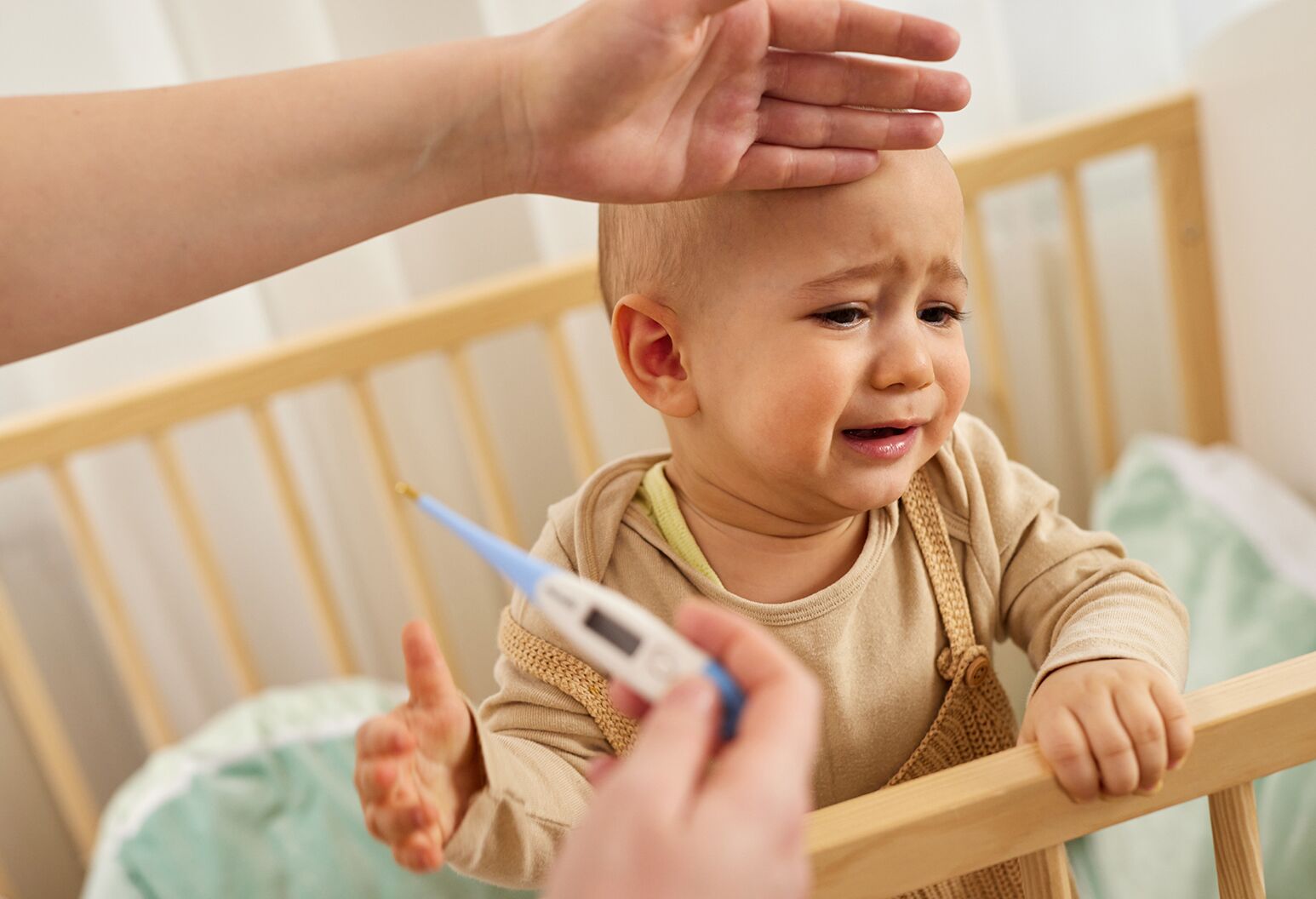
In newborns, temperature changes can be a big deal, and infections do not always present with a classic high fever. Some babies run low or fluctuate.
If your clinician gave you specific guidance for your baby, follow that. If you are unsure, these are common medical thresholds that should prompt urgent evaluation in young infants.
Seek urgent care now if your newborn has
- Rectal temperature 38.0°C (100.4°F) or higher
- Rectal temperature below 36.0°C (96.8°F), especially with poor feeding or sleepiness
- Hard-to-wake sleepiness, limpness, or a weak cry
- Breathing trouble, grunting, or color changes (pale, blue, gray)
- Signs of dehydration such as very dry mouth, sunken soft spot, or very low urine output
If you can safely do so, a rectal temperature is generally the most reliable in newborns. If you are unable to get a good reading or you are simply worried, call and get guidance rather than trying to troubleshoot the thermometer for an hour.
If you are unsure whether something “counts,” trust your instincts and call. In triage, the sentence I took most seriously was: “This is not my baby’s normal.” Parents are incredibly good at noticing subtle changes.
Poop and urine color red flags
If your baby has pale, chalky, or gray stools, that is not a wait-and-see symptom.
Pale stools with jaundice need same-day evaluation for a possible bile flow problem. This is a different pathway than a urine infection, and it is time-sensitive. Call your pediatrician right away or go to urgent care or the emergency department if you cannot be seen promptly.
We go deeper into this topic here: Pale Stools and Jaundice After 2 Weeks.
What about dark urine?
Newborn urine is normally very light. Consistently dark urine with jaundice can be a red flag because it suggests the body is excreting conjugated (direct) bilirubin into the urine. (Unconjugated bilirubin does not show up in urine.)
If you are seeing dark urine repeatedly, especially alongside pale stools, call your clinician promptly and do not wait for the next routine check.
Signs that can point to a UTI
Newborn UTI symptoms can be frustratingly nonspecific. These are the common ones that often show up in real life and triage calls:
- Fever or temperature instability
- Poor feeding or refusing feeds
- Sleepiness beyond the usual newborn snooze
- Irritability that feels different or hard to settle
- Vomiting or frequent spit-up that is new
- Slower weight gain
- Jaundice that lingers along with any of the above
Important: you cannot diagnose a UTI from symptoms alone in a newborn. That is exactly why urine testing comes into the conversation.
If the urine test suggests infection
If a urine sample shows signs of infection, your clinician will usually send a urine culture to confirm which bacteria is present and which antibiotics will work.
Because newborns are small and can get sick quickly, treatment often includes:
- Prompt antibiotics (the route depends on baby’s age and how well they appear)
- Close follow-up to make sure feeding, hydration, and energy improve
- Additional evaluation in some cases, especially for very young infants
Age matters here. Many infants under about 28 days with suspected or confirmed bacterial infection are managed in the hospital with IV antibiotics and a broader evaluation. Older, well-appearing infants may sometimes be treated differently. Your clinician is not being dramatic. They are matching the plan to the risk profile that comes with age.
If your baby is admitted for IV antibiotics, please hear this clearly: that decision is usually made out of an abundance of caution, not because anyone thinks you did something wrong.
Where phototherapy and blood type fit
Parents often ask whether lingering jaundice means their baby needs phototherapy again, or whether a blood type mismatch is involved.
Those are important topics, and we have dedicated pages so you can get clear, focused guidance without repeating everything here:
What I will add in this article: when jaundice lasts beyond the typical timeline, clinicians think beyond “normal newborn jaundice,” even if a baby once needed lights or had a known risk factor. That is why urine and stool questions start showing up in your appointment.
What you can do at home
You do not need to solve this alone at home, but you can collect helpful information that makes your visit more efficient.
Track these for 24 hours (or as long as you can)
- Feeds: how often, how long, approximate ounces if bottle-feeding
- Wet diapers: number and whether they seem “good and wet”
- Poops: number and color (snap a photo for your clinician if the color worries you)
- Behavior: alert periods, how easy baby is to wake for feeds
- Temperature: if you were advised to monitor it, include method and the numbers you got
And if you are trying to decide if baby looks more yellow, check in natural daylight near a window rather than under warm indoor lights, which can make everyone look a bit golden.

When to call urgently
Get same-day evaluation if
- Stools are pale, chalky, gray, or white
- Urine is consistently dark, especially with pale stools
- Baby is difficult to wake or feeds are significantly worse
- Rectal temperature 38.0°C (100.4°F) or higher, or below 36.0°C (96.8°F)
- Breathing looks abnormal
- Dehydration signs show up
Call your pediatrician soon (within 24 hours) if
- Jaundice is lingering past the expected window and you are seeing any changes in feeding, weight gain, urine output, or behavior
- You feel like the yellow color is worsening rather than slowly fading
- Your baby is otherwise well but still noticeably yellow and you are not sure what the plan is
If you are ever on the fence, call. You are not being dramatic. You are being a parent.
FAQ
Can a UTI really cause jaundice?
UTIs and other infections can present in young infants with jaundice, including jaundice that lasts longer than expected. It is not the most common cause of prolonged jaundice, but it is treatable, and symptoms can be subtle. That is why urine testing is sometimes part of a careful evaluation.
If my baby has no fever, can they still have a UTI?
Yes. Newborns do not always show classic fever patterns with infection. Poor feeding, sleepiness, irritability, vomiting, or prolonged jaundice can all be reasons to test, depending on the whole picture.
My baby is gaining weight and acting normal but still looks yellow. Is that always breast milk jaundice?
Not always, but that pattern can fit breast milk jaundice. Your pediatrician will look at stool color, weight gain, exam findings, and often direct versus indirect bilirubin to make sure nothing else is going on.
What symptom matters most with prolonged jaundice?
If I could pick just one red flag: pale stools. That needs same-day evaluation. After that, any significant change in feeding, wakefulness, temperature, or hydration is also a reason to call promptly.
Sarah Mitchell
Sarah Mitchell is a Registered Pediatric Nurse and a mother of three who has spent over a decade helping families navigate the beautiful, chaotic early years of childhood. She combines evidence-based medical knowledge with real-world parenting experience to offer practical, compassionate advice. At Awesome Parent, Sarah's mission is to help exhausted parents find solutions, trust their instincts, and finally get some sleep.