A calm, practical guide to exclusive pumping: routines that work, boosting and maintaining supply, flange fit troubleshooting, updated clog and mastitis tips...
Pumping at Work While You Still Nurse at Home

Sarah Mitchell
Sarah Mitchell is a Registered Pediatric Nurse and a mother of three who has spent over a decade helping families navigate the beautiful, chaotic early years of childhood. She combines evidence-based medical knowledge with real-world parenting experience to offer practical, compassionate advice. At Awesome Parent, Sarah's mission is to help exhausted parents find solutions, trust their instincts, and finally get some sleep.
The first week back at work with a pump bag slung over your shoulder can feel like you need an MBA in logistics just to keep everyone fed. I have been the triage nurse talking parents through this, and I have also been the mom in the work bathroom, staring at the clock, hoping the next meeting ends on time.
If you are nursing mornings and nights, and your baby takes bottles at daycare that are breast milk, formula, or a mix across the day, your goal at work is simple: remove milk often enough to protect your supply and keep you comfortable, then store it safely so it is ready for tomorrow.

Below is a realistic workday plan, plus how to tweak it when formula is part of the daycare routine.
What you are aiming for
When your baby is away from you, your body still expects milk removal around the times your baby would normally feed. Pumping is how you tell your body: we still need this milk.
- Comfort goal: prevent engorgement, clogged ducts, and that distracted, achy feeling by not waiting too long between sessions.
- Supply goal: pump often enough that your total milk removals (nursing plus pumping) match what your body is used to.
- Practical goal: produce enough milk for daycare bottles, with a small buffer so you are not living pump-session to pump-session.
One gentle mindset shift that helps: a workday pump schedule is not about perfection. It is about consistency.
Sample pumping schedule
This is a starting point for a typical daytime schedule where baby is at daycare during working hours and you nurse at home in the morning and at bedtime. Adjust times to your commute and your baby’s usual feeding rhythm.
Before you leave home
- Nurse after wake-up (and/or right before you walk out the door if your baby will take it). This “tops off” baby and buys you time before your first pump.
- Optional: If mornings are rushed, you can pump for 5 to 10 minutes after the first nursing session to build a small freezer stash. Do not do this if it makes you stressed or causes oversupply symptoms.
At work: pump about as often as baby eats
Many babies take bottles every 2.5 to 3.5 hours at daycare, especially in the first months. Older babies may stretch longer, and some reverse-cycle (drink less at daycare and nurse more at home). For lots of parents, this translates into 2 to 3 pumping sessions during an 8-hour workday.
- Session 1: mid-morning, about 2.5 to 3 hours after your morning nursing session
- Session 2: around lunchtime
- Session 3: mid-afternoon, about 2.5 to 3 hours after your lunch pump
If you work a shorter shift, you may only need 1 to 2 sessions. If you work a longer shift or have a longer commute, you may need to add one more session.
How long to pump
- Many parents do well with 15 to 20 minutes per session using a double electric pump.
- If milk flow is slower, try 20 to 25 minutes, or add a few minutes of gentle hand expression at the end.
- If you are prone to clogs, short, rushed sessions can be a trigger. A few extra minutes can be protective.
After daycare pickup
- Nurse when you reunite if your baby is interested. Some babies are too distracted at pickup and will save the big nursing session for home. Either is normal.
- Nurse at bedtime as planned.
- Overnight feeds: If your baby still wakes to nurse, those sessions count as milk removals and can support supply.
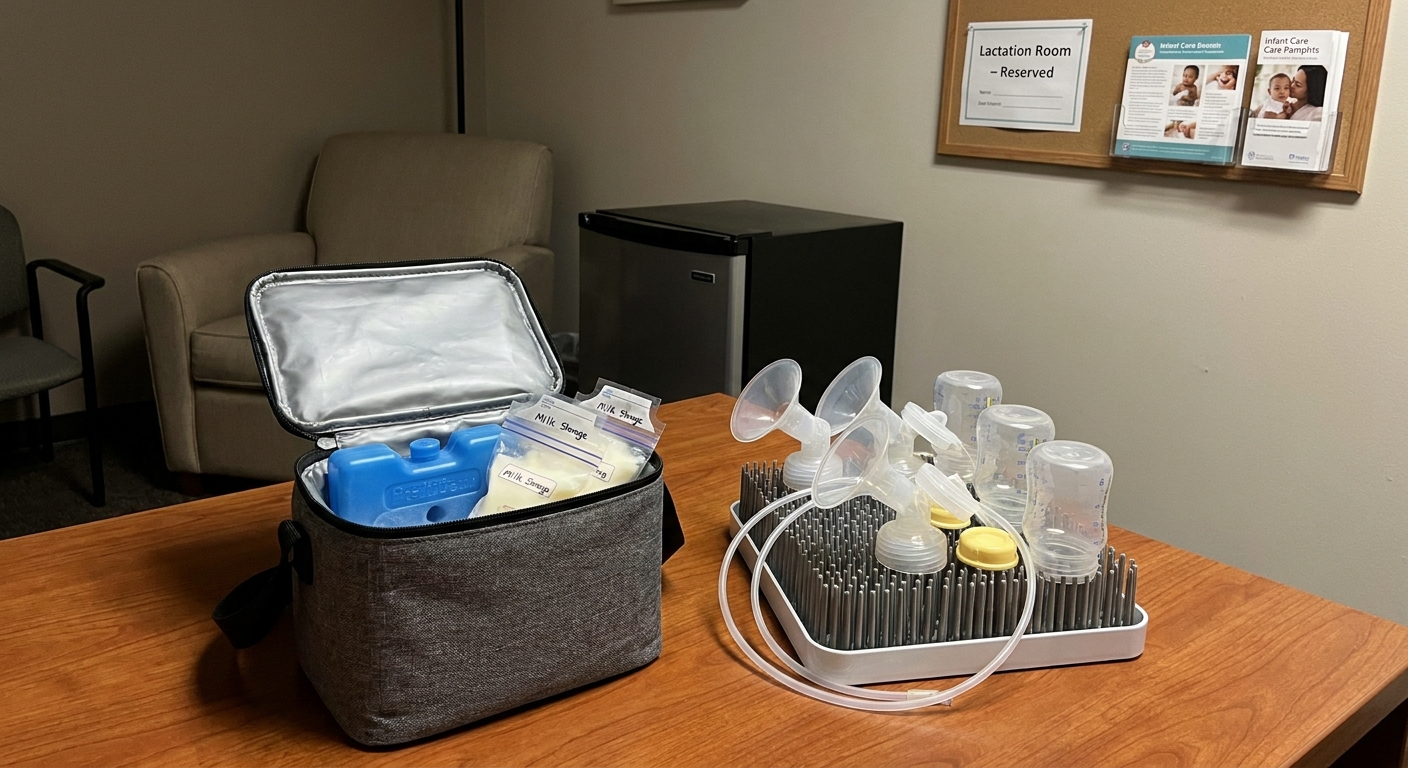
My triage nurse rule of thumb: if you are uncomfortably full, leaking through pads, or getting clogs, you likely need to pump a bit sooner or add a short session. If your supply is dipping, you may need one extra pump or a more effective pump setup.
Protect your supply
Supply often wobbles during return to work. That does not mean you are failing. It usually means your body needs clearer signals, or your pump setup needs a tune-up.
1) Do not regularly skip the same pump
Occasionally missing a session happens. Meetings run long, childcare calls, life. But skipping the same pump most days (for example, always skipping the afternoon pump) is a common reason supply gradually dips.
2) Make sure your pump fits
Flange size and suction settings matter more than most people are told. A poor fit can reduce output and leave milk behind, which tells your body to make less.
- Signs the flange might not fit: rubbing, blanching, pinching, pain, or very low output despite frequent pumping.
- Comfort matters: pumping should feel like tugging, not sharp pain.
3) Use hands-on pumping
Gentle breast compressions during pumping and a quick hand expression finish can increase output and help fully drain, especially later in the day.
4) Add a short booster session if supply is slipping
If you notice a dip for more than a few days, consider:
- Adding a 10-minute pump in the evening after baby goes down, or
- Adding one more work session for a week or two while your body adjusts
5) Quick check: milk in versus milk out
If daycare bottles total, for example, 12 to 16 ounces during the separation, you are generally trying to pump close to that amount across your work sessions. Some babies take more, some take less (age, solids, and reverse-cycling matter). Zoom out to the week, not the Tuesday.
If daycare uses formula
If your baby gets formula at daycare sometimes or every day, you are still a breastfeeding parent. The goal is to decide, on purpose, how much milk you want to provide and how much pumping you want to do to maintain that.
If formula is occasional
You can usually keep your pump schedule the same. Many families like formula as a safety net for low-output pump days or growth spurts.
If formula replaces one full bottle each day
You have two options, and both are valid:
- Option A: Pump anyway at the time that bottle happens. This protects supply and gives you more breast milk for another day.
- Option B: Gradually drop that pump if your goal is fewer pumping sessions and you are comfortable with your supply adjusting down slightly.
The key word is gradually. Dropping a pump suddenly can increase the risk of engorgement and clogged ducts.
If daycare is mostly formula but you nurse at home
Many parents maintain morning and bedtime nursing long-term, even with minimal pumping, especially once baby is older and eating solids well. If you want to keep nursing at home, watch for signs your body is asking for more milk removal, like recurrent clogs, discomfort, or a baby who suddenly seems frustrated at the breast.
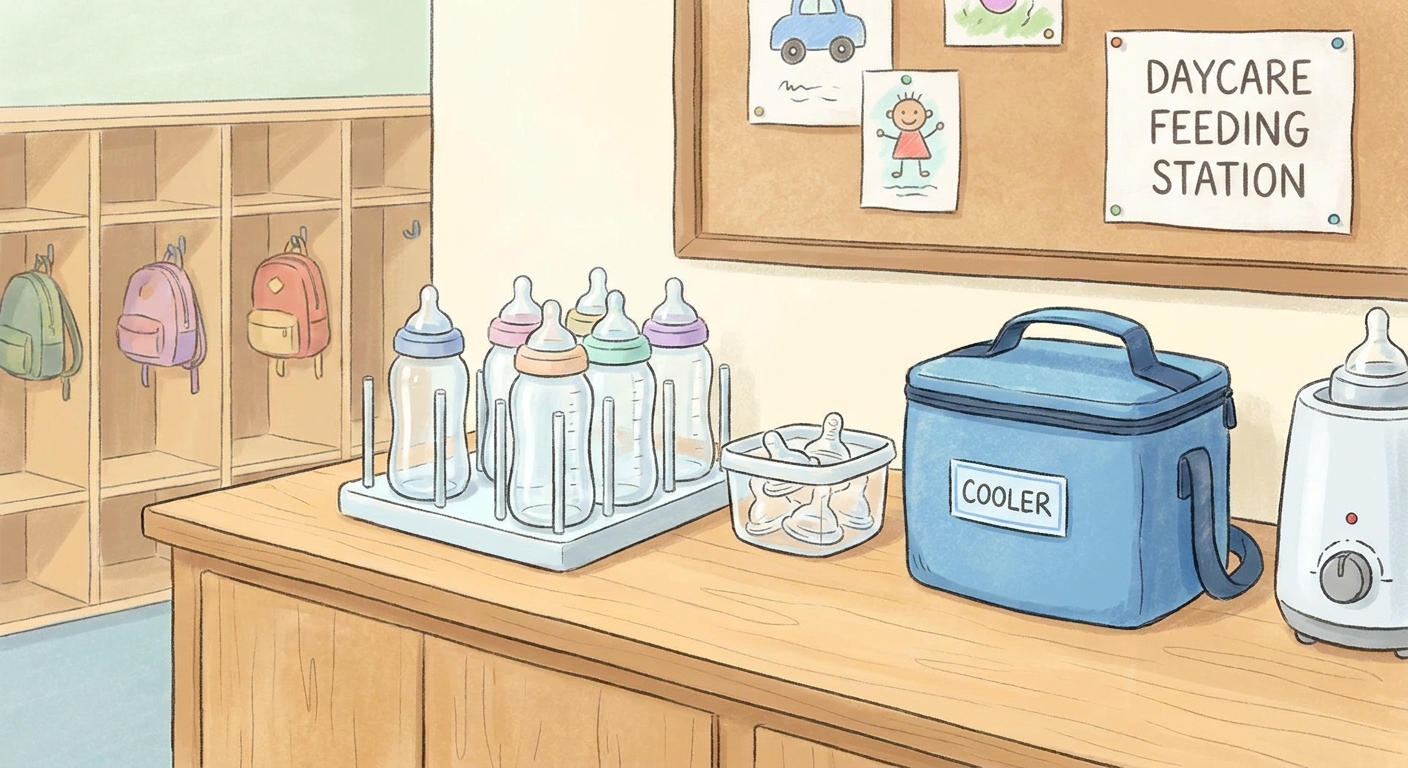
A gentle reality check: formula use does not require you to quit breastfeeding. It simply gives you another tool. The schedule that keeps you healthy, functional, and connected to your baby is the right schedule.
Safe storage and transport
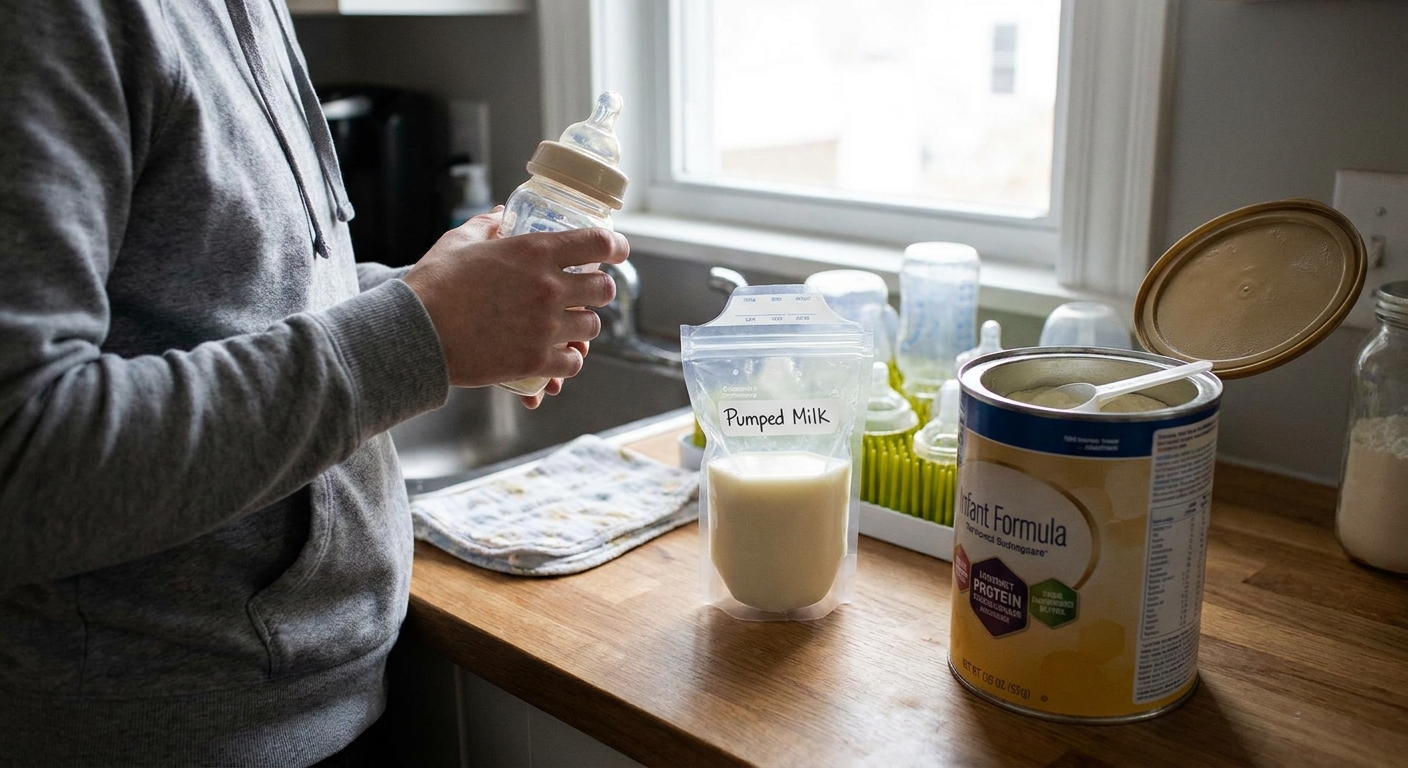
Breast milk storage is usually straightforward on a workday: pump, store cold, transport cold. The complexity tends to show up when bottles include formula too.
Breast milk at work: the simple approach
- Use clean collection bottles or milk storage bags.
- Refrigerate as soon as you can. If a fridge is not available, use an insulated cooler with ice packs until you can get to a refrigerator.
- Label clearly for daycare: date, and if your daycare asks, the volume.
Can you combine milk from different pump sessions?
Many parents combine milk from the same day, but the safest method is to cool freshly pumped milk before mixing it with already chilled milk. That prevents warming the colder milk.
Transport home
Bring pumped milk home in an insulated cooler with frozen ice packs if it will be out of the fridge for any stretch of time. Once home, refrigerate promptly, then prep daycare bottles for the next day when you have the energy (or do a quick “future you” favor and at least set everything out).
Storage rules with formula
This is the part that trips up even very organized parents, because breast milk and formula do not follow identical rules. Always follow your daycare’s policy and your pediatrician’s guidance, especially for premature or medically fragile infants.
1) Leftover formula: do not save it
Once a baby drinks from a bottle, bacteria can enter the nipple and bottle. Many U.S. guidelines use the rule: discard any leftover formula within about 1 hour after the feeding begins. (Unfinished breast milk is sometimes handled differently, but in mixed bottles, it is safest to follow the more cautious rule below.)
2) Prepared formula has a shorter fridge life
Once prepared or opened and refrigerated, formula is typically used within 24 hours. Breast milk can often be refrigerated longer. Many U.S. guidelines cite up to 4 days in a refrigerator at 4°C/39°F for healthy, term infants, but shorter time frames may be recommended in higher-risk situations or in certain childcare settings.
3) Mixed bottles follow the stricter rule
If a bottle contains both breast milk and prepared formula, most daycares and clinicians treat it like formula for timing. In real life, that means:
- Plan mixed bottles for when they will be used soon, not as an end-of-week stash.
- Be extra careful with leftovers. If baby has started the bottle, do not save it for later.
If your daycare prefers to keep things simple, a very workable strategy is sending separate breast milk bottles and using formula as a separate bottle when needed, instead of mixing in the same bottle.
Quick note as a nurse: storage recommendations can vary slightly by country and childcare licensing rules. If your baby was premature or has health conditions, ask your pediatrician for specific guidance.
Pumping at work basics
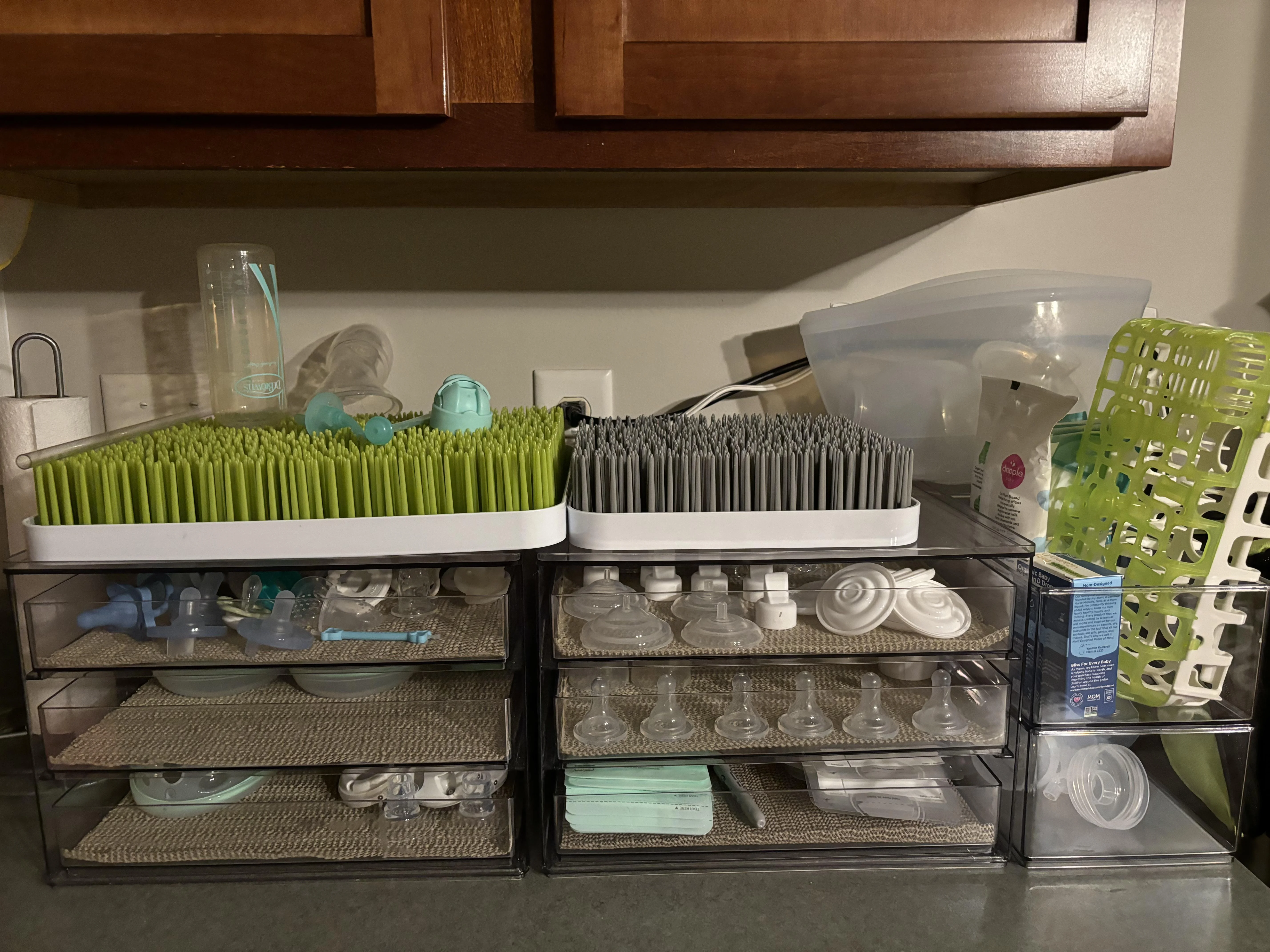
You do not need fancy gadgets. You need the basics, plus one or two “save my day” items.
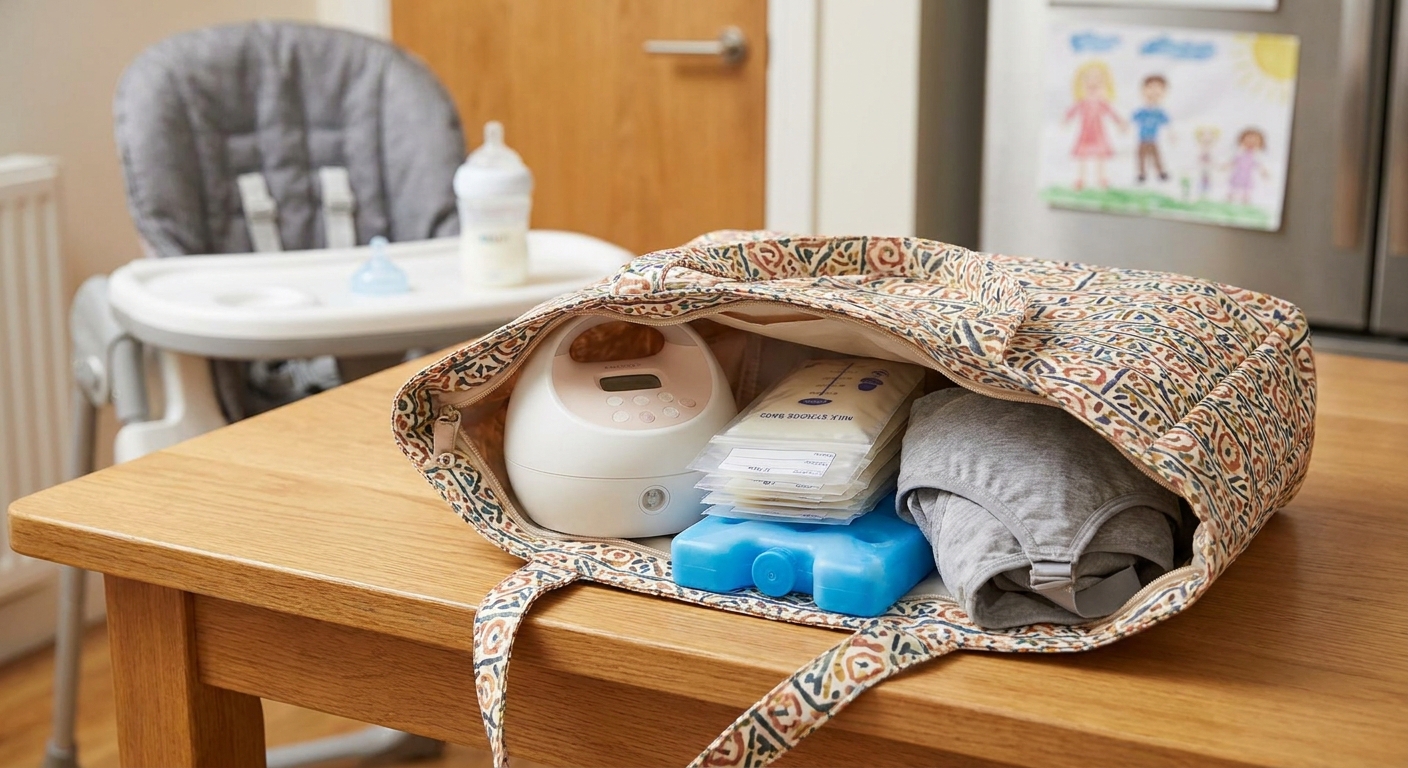
- Pump and power source
- Correct flange sizes
- Collection bottles or bags
- One extra set of pump parts, or at least extra valves and membranes
- Cooler bag and ice packs
- Dish soap and a bottle brush, or pump wipes for emergencies
- Hands-free pumping bra
- Sharpie and labels
- A clean zip bag for parts
- A spare shirt (this is the voice of experience)
If you are pumping in a shared space, add a lightweight scarf or nursing cover if it helps you feel comfortable. Privacy supports relaxation, and relaxation supports letdown.
Cleaning pump parts at work
If your workplace has a sink, many parents wash parts with soap and water after each use and let them air-dry. If that is not realistic, talk with your pediatrician and follow workplace and daycare policies. Some families use a cooler or refrigerator to store used parts between sessions, then wash thoroughly at home. Others prefer bringing multiple clean sets and skipping interim storage entirely.
If your baby was premature or medically fragile, be extra cautious and ask for individualized guidance.
Daycare bottle basics
One of the most common return-to-work stressors is this: baby drinks more at daycare than you can reasonably pump at work.
Ask about pacing
If your daycare is open to it, paced bottle feeding can reduce accidental overfeeding and help bottle feeds feel more like nursing. It can also make your pumped milk stretch further without leaving baby hungry.
Think in smaller bottles
Many babies do well with smaller, more frequent bottles instead of a few very large ones. If your baby routinely drains big bottles fast, ask daycare what they are seeing (how quickly baby finishes, whether they offer breaks, and what hunger cues they use).
Common problems and fixes
You pump less than baby drinks
- Add a third session if you are only pumping twice.
- Check flange fit and replace pump parts that are worn.
- Try hands-on pumping.
- Consider sending one formula bottle while you troubleshoot, so you are not panicking daily.
You are engorged before the next pump
- Pump a little earlier or add a short 8 to 10 minute session.
- Make sure your sessions are long enough to feel softer afterward.
- Avoid going a full workday with only one pump if you are prone to clogs.
Your letdown is slow at work
- Look at a photo or video of your baby for a minute.
- Warm compress for 2 minutes before pumping.
- Start with massage and a faster stimulation mode if your pump has it.
- Give yourself permission to breathe. Stress is a very real letdown thief.
You feel guilty about formula
I am going to say this as clearly as I can: feeding your baby safely is the goal. Formula can protect your mental health, your job, and your ability to keep nursing at home. That is not failure. That is smart parenting.
Workplace support
If you are struggling to get pumping breaks or a private space, you are not being “difficult.” You are asking for what you need to feed your baby and do your job.
- Put pump breaks on your calendar like meetings.
- Ask HR or your manager about your workplace lactation policy and where you are expected to pump.
- Problem-solve ahead: who covers your phone, your patients, your classroom, or your line when you are pumping.
I cannot fix every workplace system with a sentence, but I can tell you this: when pumping is treated as a normal need, it gets easier fast.
When to get help
Most pumping hiccups are fixable. Get support sooner rather than later if:
- You have fever, flu-like symptoms, or a painful red area on your breast
- You have recurrent clogged ducts
- Your baby is not gaining weight well
- You are pumping regularly but output keeps dropping over 1 to 2 weeks
- Pumping is painful, even after adjusting suction
A lactation consultant can often make major improvements quickly, especially for pump fit and technique.
FAQ
How many times should I pump at work if I nurse morning and night?
Many parents do best with 2 to 3 pumping sessions during an 8-hour separation, spaced about every 3 hours. If your supply is sensitive, you may need 3. If your baby is older and taking fewer bottles, 2 may be enough.
Do I need to pump at the exact times my baby takes bottles?
No. Close is good enough. Aim for a similar number of milk removals across the day and try not to stretch too long between sessions if you are uncomfortable.
If daycare gives one formula bottle, should I still pump that session?
If you want to keep your current supply, pumping at that time helps. If your goal is fewer sessions and you are comfortable with a small supply adjustment, you can gradually drop that pump.
Can daycare mix my breast milk and formula in the same bottle?
Some daycares will, some will not. From a safety and simplicity standpoint, sending separate bottles is often easier because mixed bottles generally follow formula timing rules for use and leftovers.
What is the most important thing to do in week one back at work?
Protect your pumping breaks like they are meetings. Put them on your calendar. Bring more storage bags than you think you need. And remember that it often takes 1 to 2 weeks for your body, your baby, and your workplace rhythm to settle.
Sarah Mitchell
Sarah Mitchell is a Registered Pediatric Nurse and a mother of three who has spent over a decade helping families navigate the beautiful, chaotic early years of childhood. She combines evidence-based medical knowledge with real-world parenting experience to offer practical, compassionate advice. At Awesome Parent, Sarah's mission is to help exhausted parents find solutions, trust their instincts, and finally get some sleep.