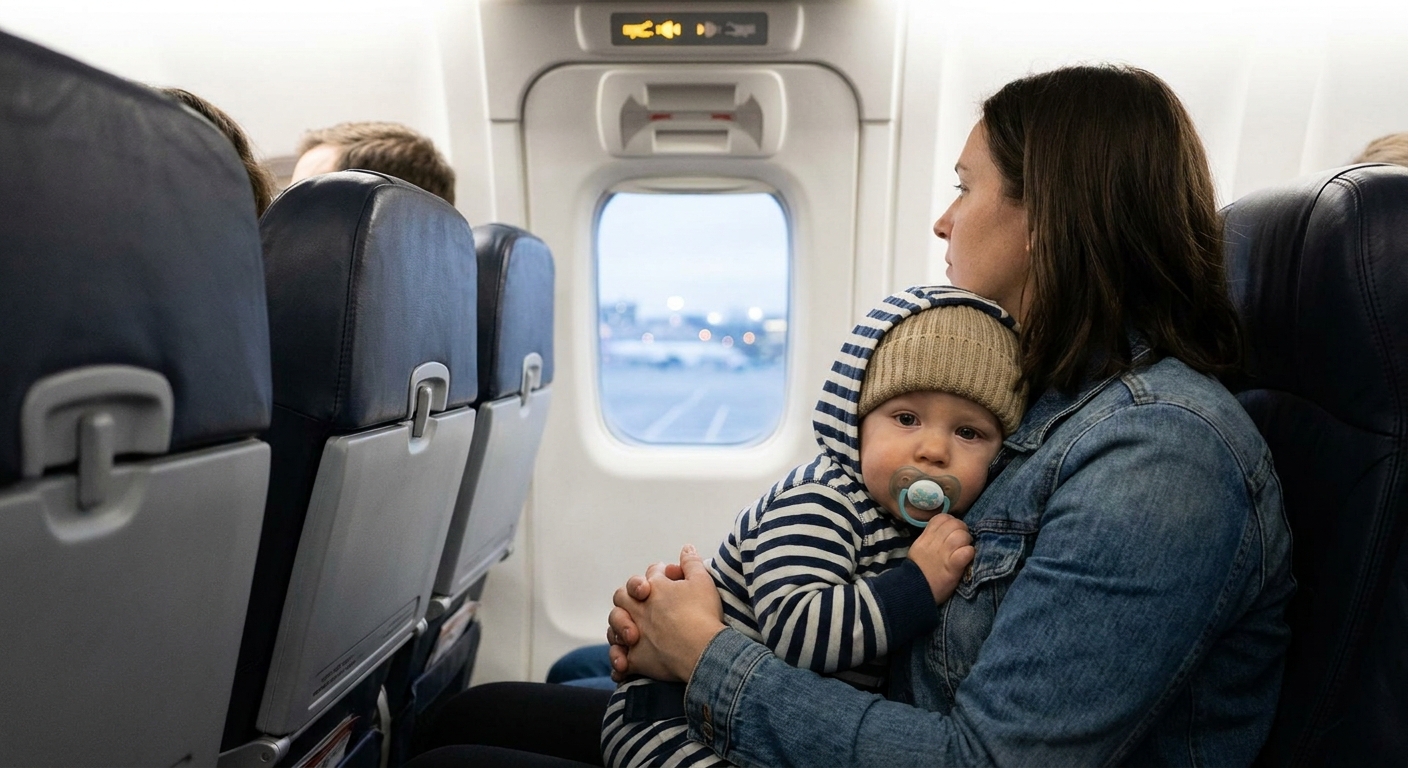
Why pressure hurts, what to do during takeoff and descent (nursing, pacifier, sips), safe OTC pain relief timing, what to do if they are already crying, and ...
Should You Fly if Your Child Has an Ear Infection?

Sarah Mitchell
Sarah Mitchell is a Registered Pediatric Nurse and a mother of three who has spent over a decade helping families navigate the beautiful, chaotic early years of childhood. She combines evidence-based medical knowledge with real-world parenting experience to offer practical, compassionate advice. At Awesome Parent, Sarah's mission is to help exhausted parents find solutions, trust their instincts, and finally get some sleep.
I’ll never forget the mom who called our pediatric triage line from an airport bathroom. Her toddler had been tugging at his ear all night, and now they were boarding in 40 minutes. She whispered, “Is this going to hurt him? Am I being dramatic?”
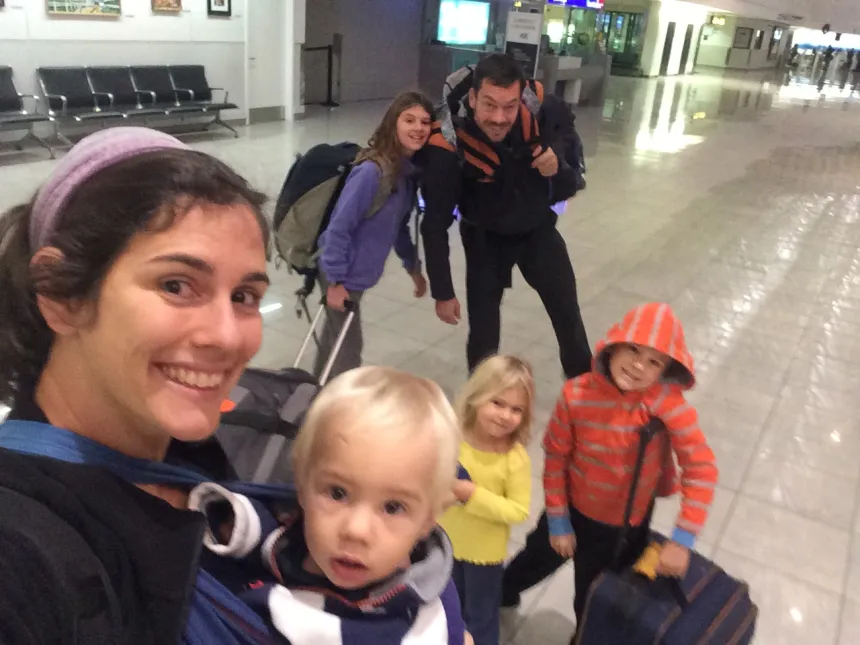
You’re not being dramatic. Cabin pressure changes can turn an already-inflamed middle ear into a miserable, sometimes tearful flight for everyone involved. The good news is that many kids can fly with an ear infection, but there are specific situations where I would strongly consider delaying travel or getting medical advice first.
Why flying can hurt more with an ear infection
Most middle-ear infections (acute otitis media) involve fluid and inflammation behind the eardrum. Normally, the Eustachian tube (the tiny passage connecting the middle ear to the back of the nose and throat) helps equalize pressure.
On a plane, pressure changes most during descent. If the Eustachian tube is swollen or blocked from infection or congestion, pressure can’t equalize well. That can cause:
- Sharp ear pain or intense pressure
- More crying and irritability (especially in toddlers who cannot “pop” their ears on purpose)
- Temporary hearing changes (muffled hearing)
- Rarely, worsening inflammation and a higher chance of eardrum injury if the pressure difference is severe
Important reassurance: a child’s eardrum rupture from an ear infection usually happens because pressure builds up from infected fluid, not because of flying alone. But flight pressure can absolutely add to discomfort and may aggravate a vulnerable ear.
Quick answer: should you board the flight?
If your child has a mild to moderate ear infection, is otherwise acting reasonably well, and you have a pain-control plan, flying is often possible. But if any of the “delay” situations below apply, it’s worth reconsidering, calling your pediatrician, or seeking urgent evaluation depending on severity and timing.
Usually okay to fly (with a plan)
- Your child has an ear infection diagnosis but is improving on treatment
- No significant fever (or only a low-grade fever that is responding to medication)
- No new ear drainage
- No severe ear pain that is uncontrolled
- No recent ear surgery unless your ENT has cleared travel
Consider delaying or calling first
- Severe ear pain that is not improving with appropriate dosing of acetaminophen or ibuprofen
- High fever (especially 102.2°F / 39°C or higher) or a child who looks quite ill
- New ear drainage (fluid or pus coming from the ear canal)
- Recent eardrum rupture or suspected rupture (sudden relief of pain followed by drainage, or visible drainage after a period of intense pain)
- Significant swelling behind the ear, ear pushed forward, or severe tenderness (needs urgent evaluation)
- Infants under 6 months with possible ear infection symptoms (they should be evaluated promptly)
When ear drainage should change your plans
Drainage is a big decision point. If fluid, pus, or bloody discharge is coming out of the ear, it can mean:
- The eardrum has a small tear (perforation) from pressure and infection fluid
- Your child has an outer ear infection (swimmer’s ear), which can be extremely painful and sensitive to pressure changes
- Your child has ear tubes and the drainage is from the middle ear (common, but still worth a check if the child is uncomfortable or febrile)
Bottom line: If drainage is new and you have not spoken with a clinician yet, I would delay travel if you can and get your child assessed. If you cannot delay, call your pediatrician or an urgent care line before boarding so you have a specific plan and know what to watch for.
Fever: when it’s a no
Air travel itself does not automatically make an ear infection dangerous. The concern with fever is what it can signal: a more significant infection, dehydration risk, and a child who may deteriorate mid-flight without easy access to care.
Consider postponing if:
- Your child has a fever 102.2°F / 39°C or higher
- Your child is lethargic, difficult to wake, or refusing fluids
- Fever is paired with neck stiffness, severe headache, new rash, trouble breathing, or persistent vomiting
If your child is fever-free for 24 hours (without fever-reducing meds) and acting more like themselves, travel is typically much more comfortable and predictable.
Recent eardrum rupture: delay if you can
A recent eardrum rupture sounds scary, but many heal well with proper guidance. Still, timing matters.
If you suspect a rupture or you were told your child has a perforated eardrum, it’s wise to delay flying until you have medical guidance. Reasons include:
- They may need prescription ear drops or antibiotics depending on the situation
- They may need instructions about keeping the ear dry
- Pain patterns can change quickly, and you want a clear plan for worsening symptoms
If your child has ear tubes, pressure equalizes more easily through the tube, and many kids actually have less airplane ear pain. But drainage plus fever or significant pain still deserves a clinician call.
If you must fly: what to focus on
I’m intentionally not going to rehash the usual “chew, swallow, sip” advice meant for healthy ears. With an active ear infection, the goal is different: reduce inflammation and keep pain controlled, and make sure you are not missing something that needs treatment.
1) Get a same-day opinion when possible
If you have more than a few hours before takeoff and your child’s symptoms are new or worsening, a quick exam can clarify whether this is truly a middle-ear infection, fluid from a cold, or something else (like swimmer’s ear).
2) Have a pain plan that is safe
For most children over 6 months, clinicians often recommend either acetaminophen or ibuprofen for ear pain. Use the dosing guidance your pediatrician has given you, or ask specifically for weight-based dosing if you are unsure. Avoid aspirin in children.
3) Think about congestion, but do not improvise
Nasal swelling can worsen Eustachian tube blockage. Some children may benefit from clinician-approved congestion management. This is especially true for older kids with significant stuffiness.
Please do not start decongestants for young children without medical advice. Many are not recommended for little kids and can cause side effects.
4) Pack for comfort
- A small soft heat pack (or ask the flight attendant for a warm compress option)
- Extra wipes and tissues (ear drainage happens at the worst times)
- A simple distraction kit that does not require much focus (stickers, a small new toy, a favorite show)
Red flags: do not fly
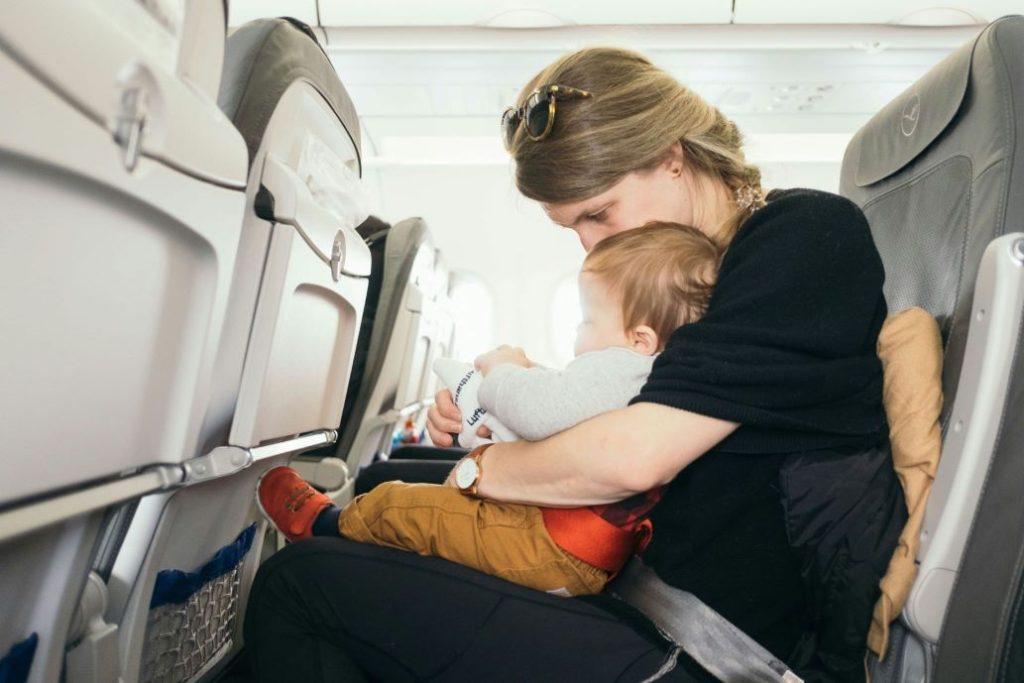
If you see any of these, your child needs prompt evaluation. I would not board a flight unless a clinician who has examined your child tells you it is safe.
- Swelling, redness, or bulging behind the ear, or the ear appears pushed forward
- Stiff neck, severe headache, confusion, unusual sleepiness
- Difficulty breathing or bluish lips
- Dehydration (very dry mouth, no tears when crying, significantly fewer wet diapers)
- Severe pain with a child who cannot be comforted
- New weakness of the face (rare but urgent)
After antibiotics: when is flying easier?
This is one of the most common questions I hear.
Many kids start feeling noticeably better within 24 to 48 hours after starting antibiotics when antibiotics are needed (not all ear infections require them). Pain can also improve with good pain control even before the infection fully clears.
From a comfort standpoint, if your child’s ear pain is improving and fever is gone, travel tends to be smoother. From an infection-control standpoint, remember that ear infections often follow a viral cold, and your child may still be contagious with the virus even if the ear is improving.
If your flight is optional and your child is miserable, waiting an extra day or two can make a night-and-day difference.
FAQ
Can flying make an ear infection worse?
It can make symptoms feel worse, especially pain during descent, because pressure equalization is harder when the middle ear is inflamed. It does not typically “spread” the infection, but severe discomfort and rare complications are possible if the pressure difference is significant.
What if my child had ear pain recently but no confirmed infection?
Recent ear pain can be from fluid after a cold, not necessarily infection. If the pain is improving and there is no fever or drainage, many kids do fine. If pain is intense, one-sided, or paired with fever, a quick exam before flying is ideal.
What about recurring ear infections?
Frequent ear infections do not automatically mean no flying. It does mean you should be quicker to get an exam when symptoms flare, because you already know your child’s pattern and how quickly things can escalate.
Is it safer to fly with ear tubes?
Often, yes for pressure-related pain, because tubes help equalize pressure. But tubes do not prevent infections, and new drainage, fever, or significant pain still warrants a clinician call.
The calm takeaway
If your child has an ear infection and you are deciding whether to fly, focus on three questions:
- Is my child stable and reasonably comfortable with medication?
- Is there ear drainage, a high fever, or a suspected recent eardrum rupture?
- Do I have time to get an exam or at least a quick call with our pediatrician?
If your gut says, “My kid is not okay,” trust that. As a pediatric nurse and a mom, I can tell you that postponing a trip is inconvenient. Flying with a child in significant ear pain is a different kind of hard.
When in doubt, call your child’s pediatrician or nurse line before you leave for the airport and ask for a clear, travel-specific plan: what to give for pain, what symptoms mean you should not fly, and what would warrant urgent care after you land.
Sarah Mitchell
Sarah Mitchell is a Registered Pediatric Nurse and a mother of three who has spent over a decade helping families navigate the beautiful, chaotic early years of childhood. She combines evidence-based medical knowledge with real-world parenting experience to offer practical, compassionate advice. At Awesome Parent, Sarah's mission is to help exhausted parents find solutions, trust their instincts, and finally get some sleep.