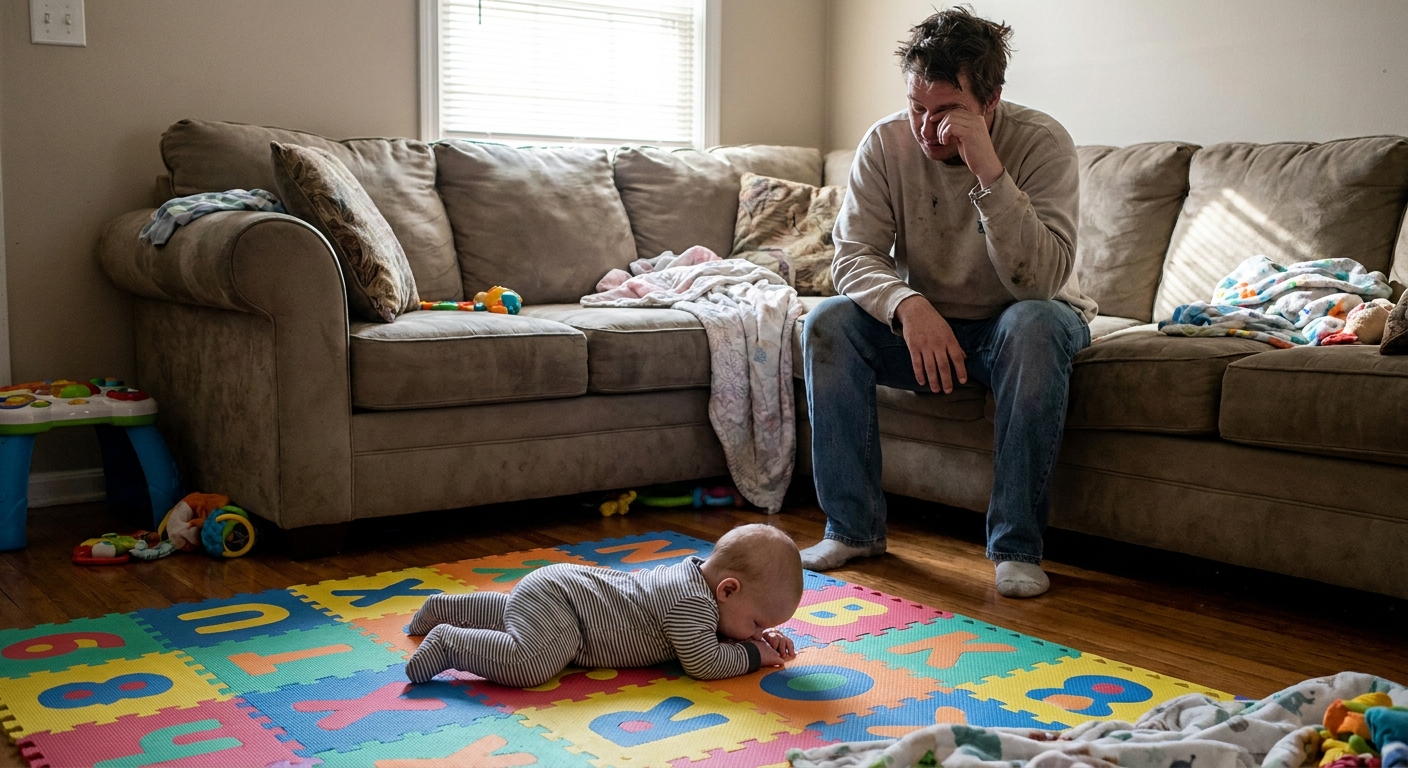
These brief, clustered movements can be easy to miss and urgent to evaluate. Here’s what infantile spasms can look like, what they are not, and when to seek ...
Shuddering Attacks in Infants

Sarah Mitchell
Sarah Mitchell is a Registered Pediatric Nurse and a mother of three who has spent over a decade helping families navigate the beautiful, chaotic early years of childhood. She combines evidence-based medical knowledge with real-world parenting experience to offer practical, compassionate advice. At Awesome Parent, Sarah's mission is to help exhausted parents find solutions, trust their instincts, and finally get some sleep.
The first time a parent shows me a video of a baby doing a quick, jittery shiver while wide awake, I can almost feel the adrenaline through the screen. It is unsettling. It can look neurologic. And it often happens right when you are already running on fumes.
The good news is that many of these brief “shiver spells” are shuddering attacks, a generally benign, nonepileptic phenomenon in infancy. That said, there are a few look-alikes that do need urgent evaluation, so the goal is not to self-diagnose. The goal is to know what details matter, what to capture on video, and when to call.

What are shuddering attacks?
Shuddering attacks are brief episodes where an infant (or young child) has a rapid shiver-like movement, often involving the head, neck, shoulders, and upper body. Parents describe it as a “vibration,” “chill,” or “like they are shivering but not cold.”
These episodes are typically:
- Very short: often a few seconds.
- In an awake baby: many happen during play, feeding, or excitement.
- With awareness preserved: babies often keep looking at you, keep holding a toy, or immediately go back to what they were doing.
- Not followed by sleepiness: there is typically no post-episode crash.
Shuddering attacks are generally considered nonepileptic (not seizures). In other words, they can look dramatic but do not typically reflect abnormal electrical seizure activity in the brain.
What shuddering attacks can look like
Parents report a few common patterns:
- Head and shoulder shiver with a quick tightening of the arms or hands.
- Facial change like a brief grimace, jaw tightness, or a “strained” look for a second.
- Body tremble while sitting in a high chair or on the floor.
- Clusters: several episodes in a day, then none for days or weeks.
Importantly, many babies remain upright and controlled. They do not typically slump, drop their head suddenly, or lose interaction.

Common triggers parents notice
Shuddering attacks often show up during everyday moments that bring big stimulation or strong emotion for a baby:
- Excitement (new toy, favorite song, seeing a familiar face)
- Feeding (bottle or breast, starting solids)
- Frustration (toy out of reach, being buckled into a seat)
- Transitions (waking up, getting changed)
- Concentration (staring at hands, practicing a new skill)
These triggers do not “prove” anything medically, but they fit the overall theme: the baby is awake, stimulated, and responsive.
Why they are usually nonepileptic
In clinic, what tends to support shuddering attacks (rather than epileptic events) is the combination of very brief duration, often preserved awareness, and typically no post-episode change. Many infants with shuddering attacks keep breathing normally, maintain their color, and may go right back to what they were doing.
Some parents also notice that a baby can be distracted out of it or interrupted with voice or touch. That can be a helpful clue, but it is not a definitive rule because some seizures can look subtle and brief, too.
Families also commonly report normal development and normal behavior between episodes.
That said, because seizures can be subtle in infants, video matters. The “usually benign” part is real, but it belongs alongside a careful history and, when needed, a clinician’s exam.
Shuddering attacks vs infantile spasms
Infantile spasms are a specific seizure type in babies that require urgent medical attention. They can be easy to miss because they are often brief and can look like a startle, a crunch, or a tiny body jerk.
They most commonly start in the 3 to 8 month range, but they can happen outside that window. They also do not always look dramatic. Sometimes it is a subtle chin tuck, eye widening, or a small head drop.
More typical for shuddering attacks
- Baby is awake and interactive during the event.
- Movements look like a rapid tremble or shiver rather than a repeated “crunch.”
- No consistent pattern around sleep, or it happens during play or feeding.
- No developmental concerns and baby goes right back to normal.
More concerning for infantile spasms
- Clusters of repeated events over several minutes, especially with similar spacing.
- Events often happen on waking or when drowsy (not always, but commonly).
- A movement that looks like a brief jackknife: head drops forward, arms fling out or stiffen, and the body crunches.
- A brief pause, irritability, or “something is off” afterward.
- Developmental plateau or regression: loss of skills, fewer smiles, less eye contact, new concerns about tracking, head control, or interaction.
If your video shows a repeated, rhythmic pattern or a clear “crunching” motion in clusters, that is not a watch-and-wait situation. Call your pediatrician the same day. If you cannot get a same-day assessment, especially for a young infant or suspected spasms, the emergency department is often the safest place to be evaluated quickly.
Shuddering attacks vs reflux posturing
Another common look-alike is reflux-related posturing. Sandifer syndrome is a specific pattern of dystonic (twisting or arching) posturing associated with reflux, and it can mimic seizures. If you are unsure, it still deserves medical evaluation.
Clues it may be reflux-related
- Episodes occur during or after feeding and are linked to spit-up, gulping, or discomfort.
- You see back arching, neck extension, or turning to one side more than a rapid shiver.
- Baby may cry, grimace, or seem uncomfortable, and symptoms can improve with burping or changing position.
- There may be poor weight gain, frequent vomiting, blood in stool, chronic cough, or feeding refusal (those deserve a clinician either way).
Reflux behaviors can look neurologic, but they are typically driven by discomfort. A good video taken during a typical feed can help your clinician separate “pain posture” from true neurologic events.

Shuddering attacks vs startle reflex
The newborn startle reflex (Moro reflex) is a normal reflex in young infants, especially in the first months.
Clues it is the startle reflex
- It happens when baby is startled by sound, movement, or being set down.
- Arms often fling outward then come back in, sometimes with a brief cry.
- It is most prominent in the newborn period and fades as babies get older.
Shuddering attacks are usually more of a quick trembly vibration than a single big startle response.
What to film
As a former triage nurse, I can tell you this: a clear 10-second clip can save you a lot of back-and-forth. If you can safely do so, try to capture:
- Your baby’s whole body, not just the face. Prop your phone so we can see head, arms, and torso.
- Before, during, and after. Start recording as soon as you suspect it is coming, and keep rolling for 10 to 20 seconds after it stops.
- Eyes and responsiveness. Say their name, clap softly, or offer a toy. Record whether they track you.
- Breathing and color. Make sure the video shows their lips and overall color if possible.
- Context. Mention out loud what was happening: “We are eating,” “just woke up,” “in the car seat,” “after a spit-up.”
- Frequency. If there are multiple episodes, record a couple separate ones rather than one long chaotic clip.
Do not do anything that delays urgent care in an emergency. If your baby is turning blue, struggling to breathe, or unresponsive, call emergency services.
What your clinician will want to know
Even with a great video, these details help your pediatrician decide next steps:
- Age when it started
- How often it happens and whether it is increasing
- How long each episode lasts
- State: awake, drowsy, falling asleep, waking up
- Triggers: feeding, excitement, frustration, bathing, diaper changes
- Interruptibility: do they respond to voice or a toy during it?
- After-effects: sleepiness, crying, confusion, weakness
- Development: new skills gained, any loss of skills, concerns about interaction
- Medical history: prematurity, NICU stay, known reflux, fevers, recent illness
When to get checked quickly
I am firmly in the “trust your gut” camp. If something feels off, get eyes on your baby. In particular, contact your pediatrician promptly (same day if possible) if you notice:
- Clusters of repeated events, especially around waking or with a consistent pattern
- Loss of responsiveness, staring that you cannot break, or limpness
- Color change (blue, gray, very pale) or breathing trouble
- Rhythmic jerking of one side of the body, or one arm or leg repeatedly twitching
- Eye deviation (eyes consistently rolling up or pulling to one side with events)
- New developmental concerns or any regression
- Fever in a young infant or your baby is difficult to wake
- Injury risk or episodes happening during sleep
If your baby is having trouble breathing, is unresponsive, has a prolonged episode, or you are worried you are seeing infantile spasms and cannot get rapid same-day care, seek emergency care.
What happens at the visit
Depending on what your clinician sees in the video and history, they may:
- Do a thorough exam and reassure you that the pattern fits shuddering attacks.
- Ask you to keep a short log of timing and triggers.
- Recommend referral to pediatric neurology if the story is unclear or concerning.
- Order testing such as an EEG if there are features that raise concern for seizures.
Often, if a baby has a normal exam, typical development, and a classic video, families are told to monitor and keep filming if anything changes. If there are mixed signals, an EEG or neurology input can be helpful for sorting it out.
Outlook
For many children, shuddering attacks are a phase that often improves over time. Families commonly see them fade over months or early childhood. In the medical literature, they are generally not linked to later epilepsy when the history, exam, and development are otherwise typical, but your clinician will still want to make sure the pattern truly fits.
FAQ
Can shuddering attacks happen many times a day?
Yes. Some babies have multiple episodes in a day, then none for a while. Frequency alone is not the only factor. The quality of the episode, your baby’s awareness, and whether there are clusters with a repeated pattern matter a lot.
Do shuddering attacks hurt my baby?
They do not typically appear painful. Many babies seem unbothered and resume play immediately. If your baby seems uncomfortable or the episodes consistently occur with feeding, talk with your pediatrician about reflux or other causes.
Is it related to being cold?
Parents often ask this because it looks like a chill. Sometimes babies do shiver briefly when undressed or after a bath, but true shuddering attacks are not simply “they are cold.” If it only happens when your baby is chilly and stops when warmed, that is a different pattern.
Can teething cause it?
Teething can make babies fussy and disrupt sleep, but it is not a strong explanation for recurrent shuddering episodes. If you suspect teething, treat discomfort appropriately, but still show the video to your clinician.
Should I try to stop the movement?
No need to physically restrain. If your baby is safe, observe and gently try to get their attention with your voice or a toy. Their response can be useful information for your clinician, but it does not rule seizures in or out by itself.
A final reassurance
If you are staring at your camera roll at 2 AM replaying a three-second shiver, you are not overreacting. You are being a good parent. Most of the time, these awake, brief shuddering episodes end up being nonepileptic and benign, but your video and your instincts are an important part of making sure we do not miss the rare but urgent look-alikes.
If you are unsure, send the clip to your pediatrician’s portal or bring it to your next visit. And if anything about your baby’s breathing, color, responsiveness, or development worries you, get seen.

Sarah Mitchell
Sarah Mitchell is a Registered Pediatric Nurse and a mother of three who has spent over a decade helping families navigate the beautiful, chaotic early years of childhood. She combines evidence-based medical knowledge with real-world parenting experience to offer practical, compassionate advice. At Awesome Parent, Sarah's mission is to help exhausted parents find solutions, trust their instincts, and finally get some sleep.