A calm, step-by-step guide for household chemical and medication ingestions: do and do not, when to call Poison Control, what info to have ready, plus button...
Toddler Ate a Silica Gel Packet: What to Do

Sarah Mitchell
Sarah Mitchell is a Registered Pediatric Nurse and a mother of three who has spent over a decade helping families navigate the beautiful, chaotic early years of childhood. She combines evidence-based medical knowledge with real-world parenting experience to offer practical, compassionate advice. At Awesome Parent, Sarah's mission is to help exhausted parents find solutions, trust their instincts, and finally get some sleep.
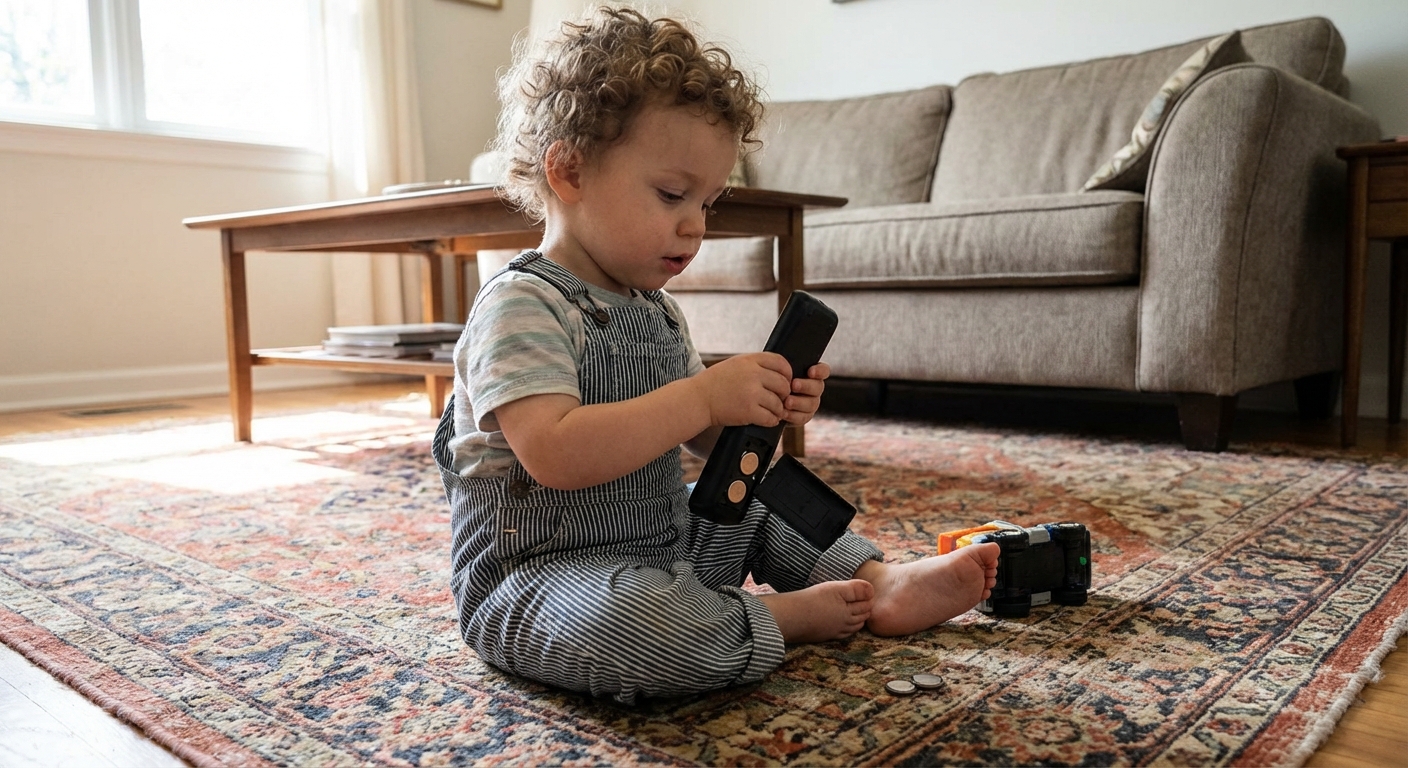
If you are reading this with your heart racing, I get it. I worked triage in a pediatric clinic for years, and I have also had that awful parenting moment where you turn your head for two seconds and your toddler is suddenly chewing on something that definitely did not come from the toy bin.
The good news: most silica gel beads are generally low toxicity (often considered non-toxic) when swallowed in small amounts. The bigger immediate concern is the packet acting like a choking hazard or causing irritation if it got stuck. One quick caveat I always give families: some packets are not plain silica gel (for example, indicator or scented types, or they may be an oxygen absorber), so if you are not sure what it was, Poison Control can tell you exactly what to watch for.
First, do a quick safety check
Before you do anything else, take 30 seconds to answer these questions:
- Is your child breathing comfortably? Look for steady breathing, normal color, and the ability to cry or talk.
- Are they coughing hard or gagging? A strong cough is the body trying to clear something. Trouble breathing is different and needs emergency help.
- Do you know what was swallowed? Just beads? The whole packet? Part of the packet? Was it the type that says “Do Not Eat” or one that says “oxygen absorber”?
If your toddler is choking (cannot breathe, cannot cry, turning blue, or making high-pitched struggling sounds), call 911 right away and start age-appropriate choking first aid.
Are silica gel packets toxic?
Most packets labeled “silica gel” contain silicon dioxide beads that act as a drying agent to keep products from getting damp. In most consumer products, silica gel is considered low toxicity when accidentally swallowed in small amounts.
What usually happens if a toddler swallows the beads:
- Nothing at all, especially if only a few beads were swallowed.
- Mild mouth or throat irritation if they chewed the packet.
- Upset stomach like brief nausea or one episode of vomiting, especially if they swallowed the packet material.
- Constipation is possible but uncommon with the small amounts found in most packets.
One important nuance: sometimes people say “silica packet” but the packet is actually an oxygen absorber (often found in jerky, seaweed snacks, pill bottles, or packaged foods). Oxygen absorbers can contain different ingredients (commonly iron powder). Iron can be harmful in significant amounts, so it is worth a call to Poison Control for advice that fits the specific packet and your child’s size.
Why the packet is the bigger risk
In pediatrics, we worry less about the “chemical” and more about the shape and size of what went in.
The packet can be a problem because:
- Choking risk: A packet can block the airway, especially if it was swallowed whole.
- Gagging and coughing: Toddlers may inhale it briefly and then cough hard to clear it.
- Esophagus irritation: The paper or fabric-like material can scrape or irritate the throat.
- Rare blockage risk: If the whole packet was swallowed, it usually passes, but any persistent vomiting or belly pain needs evaluation.

What not to do
- Do not force vomiting. It can increase choking or aspiration risk.
- Do not give laxatives unless a clinician or Poison Control tells you to.
- Do not try to “sweep” the throat with your fingers unless you can clearly see the packet and can easily remove it. Blind finger sweeps can push items deeper.
- Do not assume it is silica gel if you did not see the packet. If it came from a food package, it might be an oxygen absorber.
What to do at home
If your toddler is breathing normally and seems fine:
- Remove any remaining packet or beads from reach.
- Wipe out the mouth with a damp cloth if they chewed it and have residue.
- Offer sips of water. If they are over 1 year old and want milk, that is fine too.
- Save the packet (or take a clear photo of both sides) so you can read the label if you need Poison Control or urgent care.
- Watch closely for the next several hours (at least 2 to 4) for coughing, repeated vomiting, drooling, or trouble swallowing.
- Check the poop over the next few days if you believe the packet was swallowed whole. Most pass without drama.
If the beads were scattered and you are unsure how much was swallowed, Poison Control can help you decide what level of monitoring is appropriate.
Call earlier (even if your child looks okay) if your child has higher risk, like a history of swallowing problems, airway anomalies, neuromuscular conditions, significant prematurity, or you have been told they are prone to aspiration.
Call Poison Control
In the US, you can reach Poison Control at 1-800-222-1222. If you can, have the packet nearby when you call so you can read what it says.
They will usually ask for:
- Your child’s age and weight
- Whether your child is having any symptoms right now
- What exactly was swallowed: silica gel beads, the whole packet, or a torn packet
- The time it happened
- The product it came from (shoes, vitamins, seaweed snacks, jerky, etc.)
- Whether it was labeled silica gel or oxygen absorber
- Any relevant medical history (swallowing problems, GI issues, airway problems)
My triage-nurse tip: when you call, lead with the two big items that change the plan fast: “My toddler swallowed the whole packet” versus “just a few beads”, and “they are coughing/drooling/vomiting” versus “acting totally normal.”
When to go to the ER
This is the part parents really want spelled out clearly, so here it is in plain language.
Go to the ER now (or call 911) if you notice:
- Any trouble breathing, noisy breathing, or lips/face turning blue or gray
- Choking, inability to cry/speak, or severe coughing that does not let up
- Working hard to breathe, like ribs pulling in (retractions), nostrils flaring, or your child cannot speak or cry normally
- Drooling that is new and persistent, especially with trouble swallowing
- Repeated vomiting or vomiting with inability to keep fluids down
- Chest pain, significant throat pain, or your child is refusing to swallow
- Wheezing or persistent coughing after the incident (concern for aspiration)
- Severe belly pain, a swollen belly, or no stool or gas with ongoing vomiting
- You suspect the packet is stuck or your child swallowed a large piece of packaging
Call your pediatrician or Poison Control urgently if:
- Your child has mild coughing that comes and goes but is otherwise breathing fine
- Your child has one episode of vomiting but then perks up
- Your child seems unusually fussy and you cannot tell whether something is irritating their throat
If you are on the fence, trust your gut. I have never once been annoyed by a parent who came in because they were worried about breathing or swallowing. Those are the right instincts to listen to.

If it went into the lungs
If a toddler inhales beads or a packet fragment, symptoms tend to be respiratory, not stomach-related. Watch for:
- Sudden coughing fit that started during the incident
- Wheezing or noisy breathing
- Fast breathing or working hard to breathe
- Persistent cough over the next several hours
If your child had a choking episode and then develops persistent cough, wheeze, noisy breathing, or increased work of breathing, they should be evaluated the same day.
Common questions
Will silica gel beads expand like water beads?
No. Silica gel beads are not the same as water beads. They do not typically expand dramatically inside the body the way water beads can.
Can silica gel cause poisoning?
Most consumer silica gel is considered low toxicity. The main risks are choking, irritation, and rarely a blockage if the packet is swallowed whole. If the packet is an oxygen absorber (or you are not sure what type it was), call Poison Control so you get guidance that matches the ingredients.
Should I give food to “push it down”?
If your toddler is swallowing normally and wants to eat, a regular snack is fine. Do not force food if they are drooling, gagging, vomiting, or refusing to swallow.
How long until it passes?
If the packet was swallowed and it makes it to the stomach, it often passes within 1 to 3 days, sometimes longer. Persistent vomiting, belly pain, or inability to stool should be checked.
How to prevent it next time
Silica packets sneak into shoe boxes, snack bags, vitamin bottles, and new toys. In my house, my best defense is a simple routine: trash sweep first.
- When you open a package, remove the packet immediately and throw it away before you set the item down.
- Do a quick floor scan after unboxing anything new.
- Keep purses, backpacks, and shopping bags up and zipped. Kids find the weirdest treasures in there.
If this happened today, you did not fail. Toddlers are basically tiny, determined laboratory scientists with no safety training. You handled it by getting information and staying calm, and that is exactly what an awesome parent does.
Sarah Mitchell
Sarah Mitchell is a Registered Pediatric Nurse and a mother of three who has spent over a decade helping families navigate the beautiful, chaotic early years of childhood. She combines evidence-based medical knowledge with real-world parenting experience to offer practical, compassionate advice. At Awesome Parent, Sarah's mission is to help exhausted parents find solutions, trust their instincts, and finally get some sleep.