A calm, parent-friendly guide to newborn jaundice: what causes it, how to check for yellowing, what’s normal vs concerning, and when to seek urgent care.
Newborn Bilirubin Levels Chart: When Does Jaundice Need Treatment?

Sarah Mitchell
Sarah Mitchell is a Registered Pediatric Nurse and a mother of three who has spent over a decade helping families navigate the beautiful, chaotic early years of childhood. She combines evidence-based medical knowledge with real-world parenting experience to offer practical, compassionate advice. At Awesome Parent, Sarah's mission is to help exhausted parents find solutions, trust their instincts, and finally get some sleep.
In the pediatric clinic where I worked triage, “What does this bilirubin number mean?” was one of the most common newborn questions. And I get it. You have a tiny baby, you are running on fumes, and someone drops a number on you like it’s supposed to be self-explanatory.
This article will help you understand how bilirubin is measured, why your baby’s age in hours matters, and what factors shift the treatment line.
I’ll also share the best questions to ask your clinician so you can feel calm and informed. Your baby’s care team should always make the actual treatment decision for your specific situation.
What bilirubin is and why it builds up
Bilirubin is a yellow pigment created when the body breaks down old red blood cells. Newborns make a lot of bilirubin for a few reasons:
- They have more red blood cells than adults, and those cells turn over quickly.
- Their liver is still learning to process and clear bilirubin efficiently.
- They may not be taking in large volumes of milk yet, which can slow poop output. Bilirubin leaves the body mostly through stool.
A mild rise in bilirubin is incredibly common. That is why jaundice, the yellowing of skin and eyes, shows up in many healthy babies in the first week. The key is identifying when bilirubin is high enough, or rising fast enough, to need treatment to prevent complications.
How bilirubin is measured
You will usually hear bilirubin reported as mg/dL in the US (or µmol/L in many other countries). There are two main ways to measure it.
Transcutaneous bilirubin (TcB)
This is the quick “scanner” reading done on the skin (forehead or chest). It is painless and fast, which makes it great for screening.
- Pros: No needle stick, immediate results, helpful for trending over time.
- Limits: It is an estimate. It can be less accurate at higher bilirubin levels, and accuracy can vary based on skin tone, gestational age, and the device used.
Clinicians often use TcB to decide whether a baby needs a confirmatory blood test.
Total serum bilirubin (TSB)
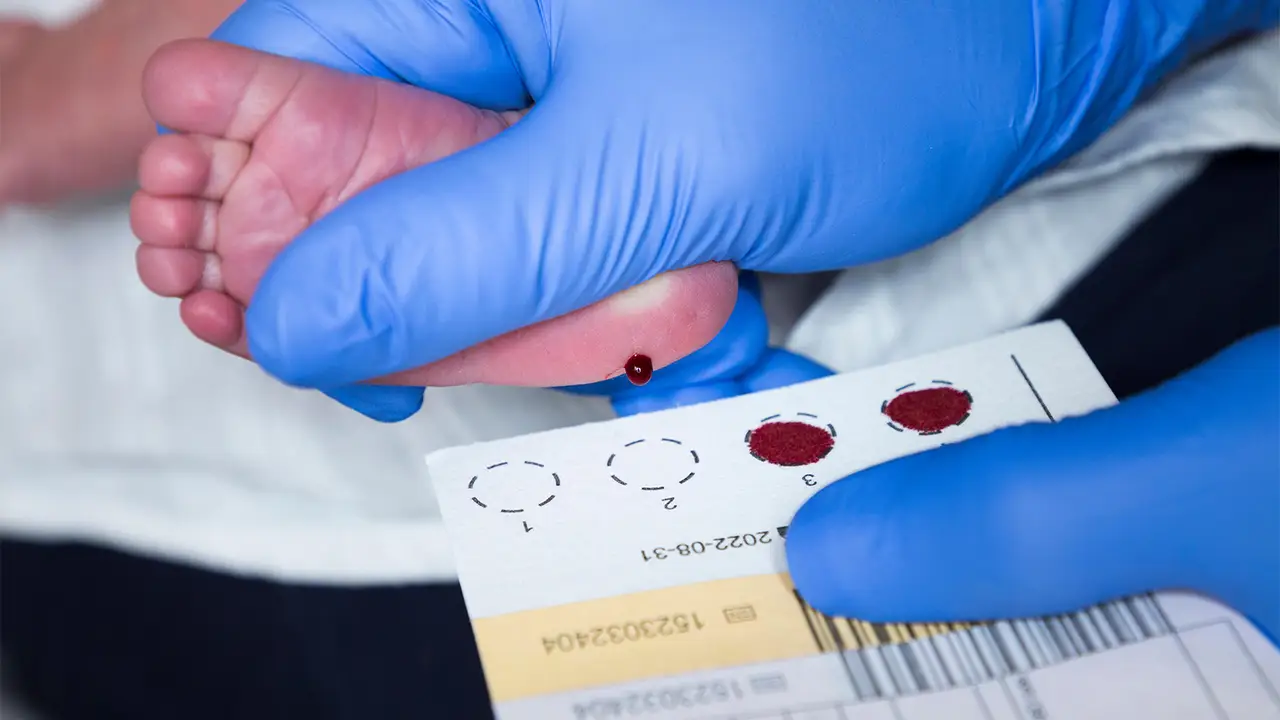
This is the “gold standard” blood test, often taken from a heel stick in newborns.
- Pros: More accurate and the number used for most formal treatment decisions.
- Limits: It is a blood draw, and results may take a bit longer depending on the setting.
If you are trying to interpret a “bilirubin chart,” ask whether the number you are looking at is TcB or TSB. It matters.
Why age in hours matters
This part surprises many parents: bilirubin is not interpreted by “day of life” alone. It is interpreted by the baby’s age in hours, because bilirubin usually rises and peaks on a predictable curve in the first days after birth.
That means a bilirubin of 12 mg/dL can be:
- Expected for one baby at a certain age
- Concerning for another baby who is much younger, especially if the level rose quickly
Here is a simple way to make it stick: 12 mg/dL at 24 hours is a very different conversation than 12 mg/dL at 96 hours.
When clinicians talk about a “bilirubin chart,” they are usually referring to a graph or calculator that plots:
- Bilirubin level (mg/dL or µmol/L)
- Age in hours since birth
- Gestational age (how many weeks pregnant you were at delivery)
- Risk factors that shift treatment thresholds
If you only remember one practical takeaway, make it this: always pair the number with your baby’s exact age in hours.
What the chart is showing
Most charts parents see online are simplified versions of clinical tools used to decide when to monitor closely, when to start phototherapy, and when to consider more urgent interventions. Modern guidelines use specific age and gestational-age curves, and thresholds shift when certain neurotoxicity risk factors are present.
Instead of focusing on one universal “normal range,” clinicians focus on whether your baby is:
- Below the treatment threshold
- Close to the threshold (may need repeat testing sooner)
- At or above the threshold (treatment recommended)
This is also why you might hear, “We’re going to recheck in 6 to 12 hours.” The trend matters, not just the single snapshot.
What changes treatment thresholds
Two babies can have the same bilirubin number at the same age and get different recommendations. That is not inconsistency. It is individualized medicine.
Gestational age
In general, babies born earlier have a lower threshold for treatment because their brains are more vulnerable and their bilirubin processing is less mature. A 37-week baby and a 41-week baby are not assessed the same way.
Risk factors that lower the line
Your clinician may treat sooner, monitor more closely, or recheck more frequently if your baby has certain risk factors, such as:
- Signs of hemolysis (breaking down red blood cells faster than normal), including blood group incompatibility or a positive direct antiglobulin test (DAT, sometimes called Coombs)
- Jaundice appearing in the first 24 hours after birth
- Rapid rise in bilirubin over time
- Significant bruising or a cephalohematoma (blood collection under the scalp from delivery), which can increase bilirubin load
- Previous sibling who required phototherapy
- Feeding challenges with low intake and fewer wet or dirty diapers
Some medical conditions, infections, or dehydration can also raise concern. Your clinician is looking at the whole picture.
When jaundice needs treatment
Jaundice needs treatment when the bilirubin level is high enough, for that baby’s age in hours and risk category, that the benefits of lowering it outweigh the downsides of treatment.
Phototherapy
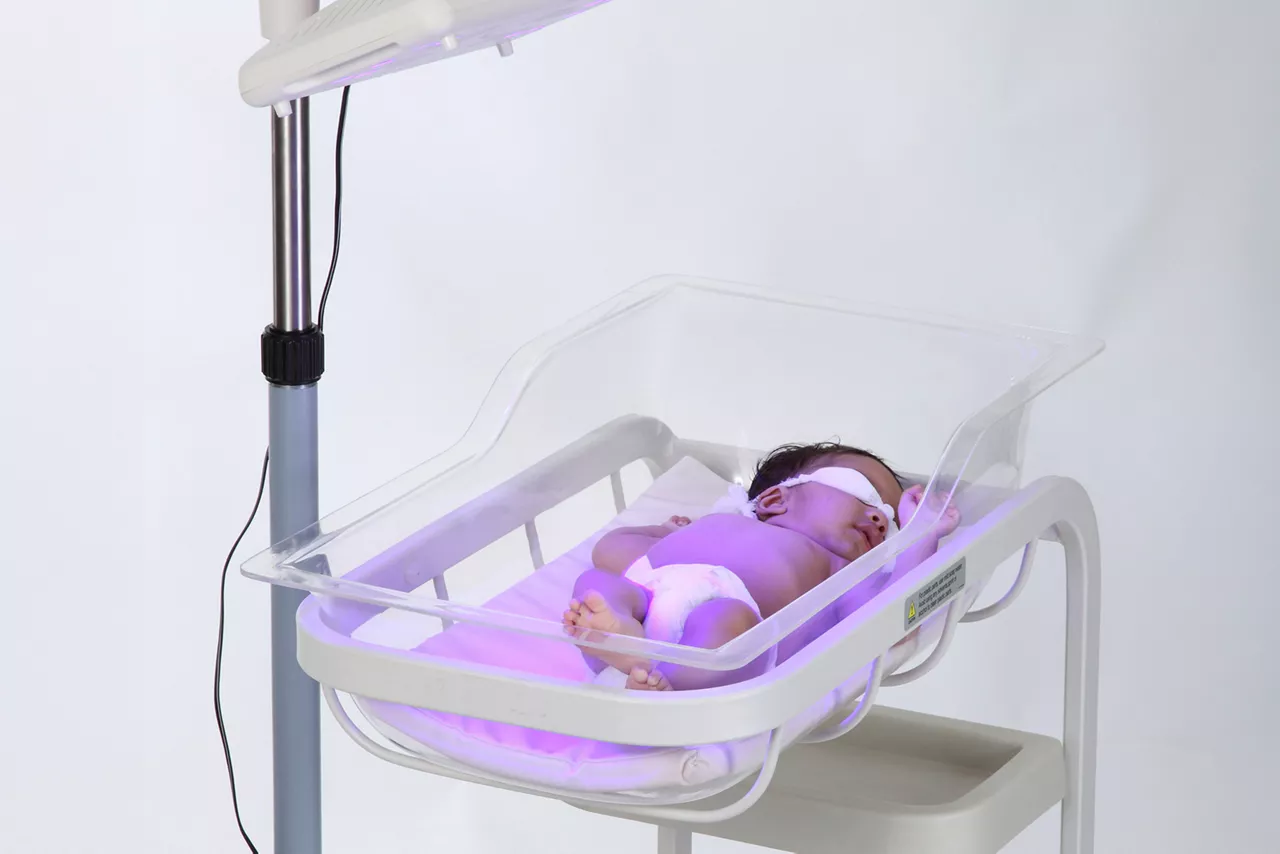
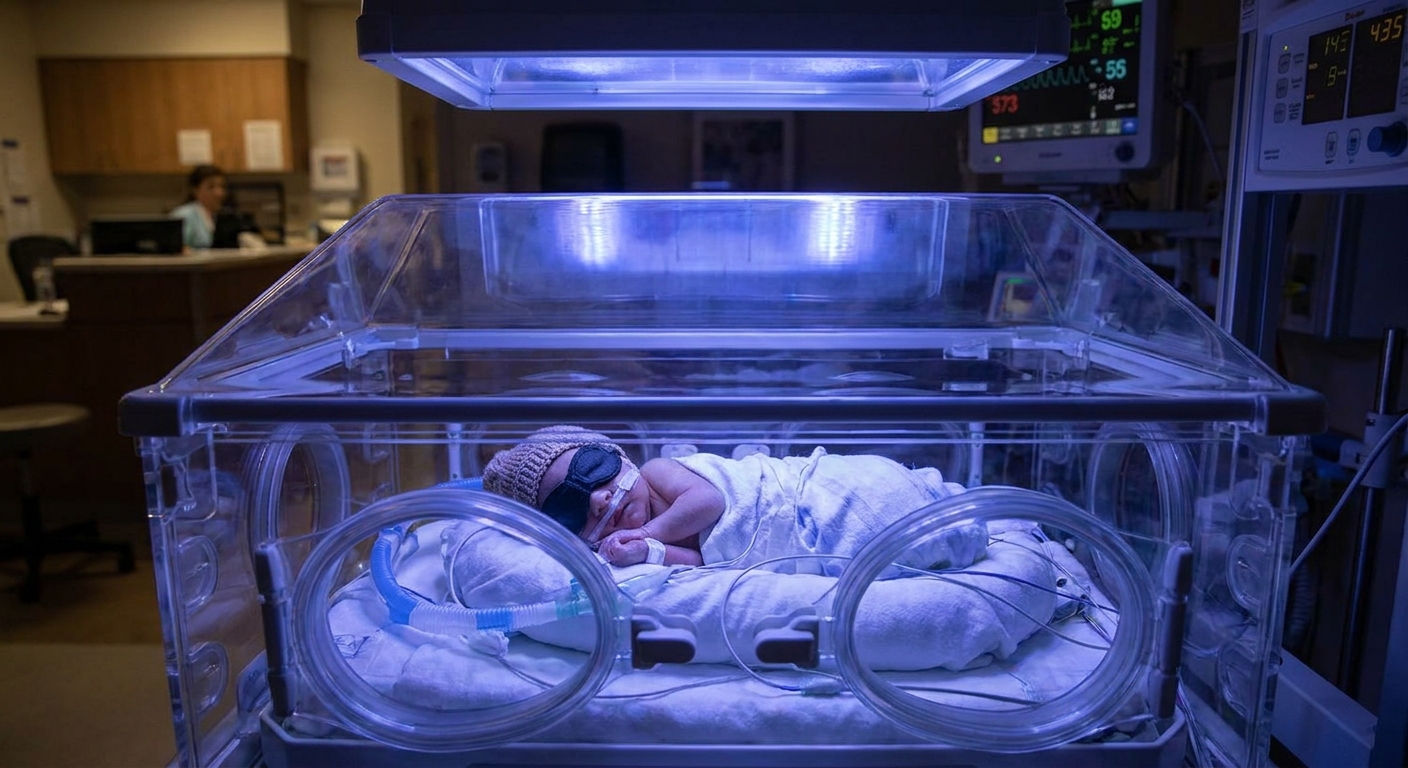
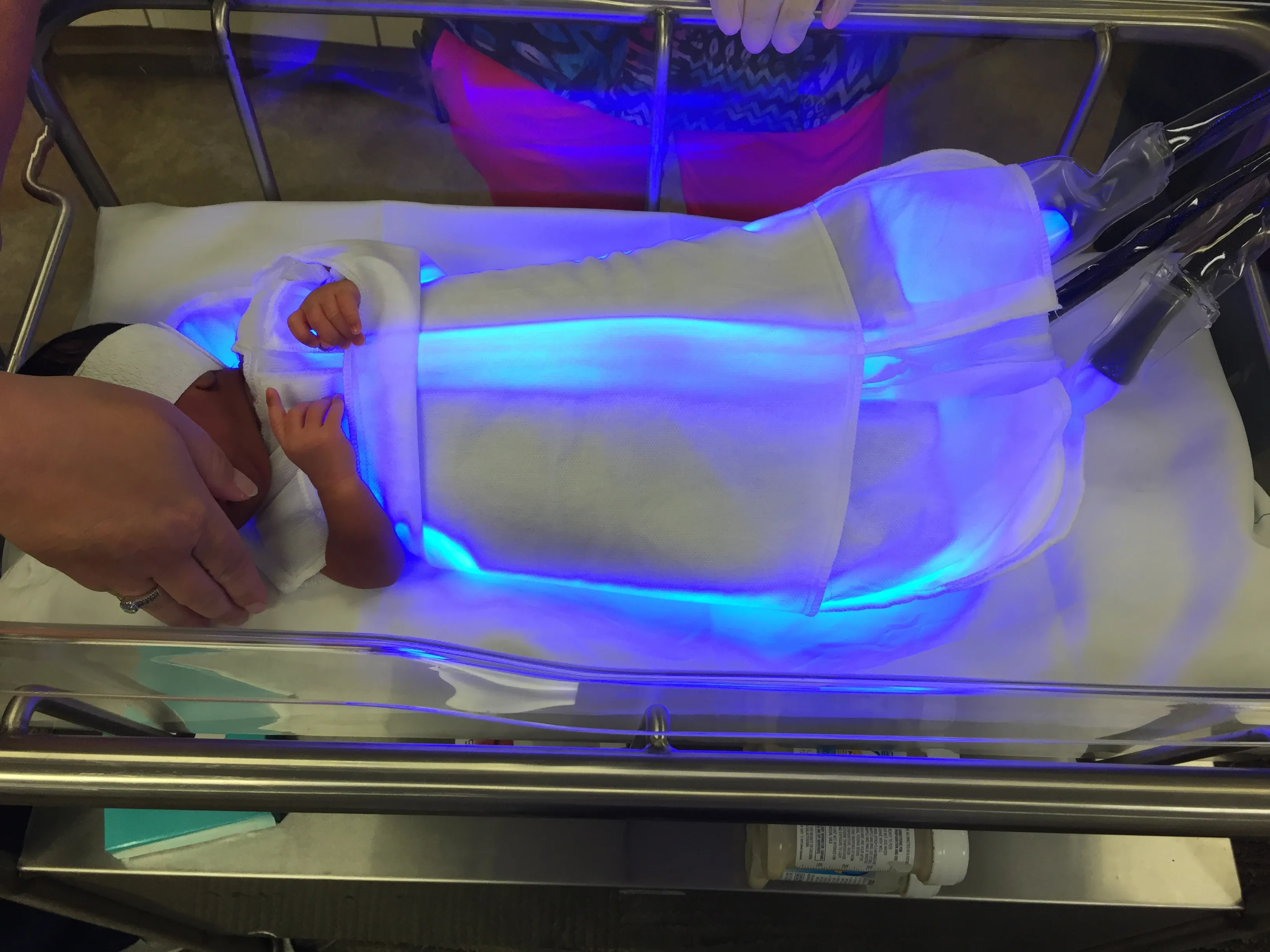
If your baby is near or above the phototherapy line, your clinician may recommend special blue lights (overhead lights or a bili-blanket). Phototherapy changes bilirubin into forms that are more water soluble, so the body can clear it more easily through urine and stool.
Other treatments (less common)
In some situations, clinicians may consider additional steps when bilirubin is very high or rising despite phototherapy. Depending on the cause, that can include treatments like IVIG for certain hemolytic conditions or, rarely, an exchange transfusion. These are not common in healthy term infants with routine jaundice, but they are one reason teams take rising numbers seriously.
Feeding support
Many newborns with jaundice also need a plan to improve intake. That might mean:
- More frequent feeds
- Lactation support
- Supplementation when medically appropriate
This is not about “failing” breastfeeding. It is about hydration, calories, and getting bilirubin out.
Total vs direct bilirubin
Most of the time, when people talk about “bilirubin” in the first days of life, they mean total bilirubin (TSB). There is also direct (conjugated) bilirubin, which is interpreted differently. If a baby has jaundice that lasts longer than expected, looks unusual, or comes with other symptoms, clinicians may order tests that include a direct bilirubin level to evaluate for less common problems.
Please contact your baby’s clinician promptly if you notice very pale or chalky stools or dark urine, especially with ongoing jaundice. Those are not typical “physiologic” jaundice signs and should be checked.
What to ask about the number
When you are tired and worried, it helps to have a script. Here are questions I love because they get you the information that actually matters:
- Is this number TcB (skin scan) or TSB (blood test)?
- How old is my baby in hours for this result? (If you are in the hospital, ask them to say the hours out loud.)
- Where is this value relative to the treatment threshold for my baby? (Below it, close to it, or above it.)
- How quickly has it risen since the last check?
- What risk factors does my baby have, if any? (Gestational age, DAT/Coombs status, bruising, feeding concerns.)
- When is the next bilirubin check, and why that timing?
- What feeding plan do you want us to follow until the next check? Ask for specifics you can do at home: frequency, supplementation plan if needed, and what diaper counts you expect.
- What signs should make us call right away or go in?
If you are being discharged, I also recommend asking: “What is our follow-up plan in writing?” That should include timing, location, and whether you need a repeat bilirubin level.
Red flags
Please contact your baby’s clinician urgently, or seek emergency care, if your newborn has jaundice plus any of the following:
- Hard to wake, very sleepy, or too weak to feed
- Refusing feeds repeatedly
- High-pitched or unusual crying
- Arched back or stiffness
- Fewer wet diapers than expected for age, or signs of dehydration (very dry mouth, no tears later on)
- Jaundice that seems to spread quickly to the belly, arms, or legs, especially in a very young baby
- Any jaundice that appears in the first 24 hours of life
Trust your instincts. If something feels off, it is worth being seen.
Common confusion points
“The lab flagged it high, but they said no treatment.”
Some lab printouts use adult reference ranges or a general newborn range that does not account for age in hours. Clinicians treat based on age-specific thresholds, not a generic “high” flag.
“It went up after we went home. Is that normal?”
Often, yes. Bilirubin commonly rises for the first few days and in many term newborns peaks around days 3 to 5. In preterm babies, or when feeding is still being established, peaks can happen later. Your clinician will decide whether the rise is within the expected curve or high enough to treat.
“Can sunlight treat jaundice?”
Sunlight exposure is not a safe substitute for medical phototherapy. Phototherapy uses a controlled wavelength and intensity, and it is delivered in a way that is monitored. Direct sun has risks for newborns, including overheating and sunburn. If you are wondering whether your baby needs light treatment, that is a clinician decision based on the bilirubin level and age in hours.
Bottom line
A bilirubin number is only meaningful when you know how it was measured (TcB vs TSB), your baby’s age in hours, and your baby’s gestational age and risk factors. Treatment thresholds are not one-size-fits-all, and that is a good thing.
If you are staring at lab results at 2 a.m., take a breath. Write down the number, the time it was taken, and your baby’s feeding and diaper output, then call your baby’s clinician for guidance. You are not expected to make this decision alone.
Quick FAQ
What bilirubin level is “too high”?
There is no single cutoff that applies to every baby. “Too high” depends on age in hours, gestational age, and risk factors. Your clinician compares your baby’s value to an age-based treatment threshold.
Is a skin bilirubin reading accurate?
Transcutaneous readings are very useful for screening and trending, but they are estimates. If the TcB is near the treatment threshold, clinicians often confirm with a blood total serum bilirubin.
Does breastfeeding cause jaundice?
Breastfed babies can be more likely to have jaundice in the first days, often because milk transfer is still getting established. That does not mean breastfeeding is the problem or should be stopped. The goal is to support feeding and follow your clinician’s plan.
When does newborn jaundice go away?
Many babies improve over 1 to 2 weeks. Mild jaundice can last longer in some breastfed babies and still be completely normal, but talk with your clinician if jaundice seems to be worsening, if your baby is not feeding well, or if jaundice lasts beyond about 2 weeks in a term baby (or longer than expected for your baby’s situation).
Sarah Mitchell
Sarah Mitchell is a Registered Pediatric Nurse and a mother of three who has spent over a decade helping families navigate the beautiful, chaotic early years of childhood. She combines evidence-based medical knowledge with real-world parenting experience to offer practical, compassionate advice. At Awesome Parent, Sarah's mission is to help exhausted parents find solutions, trust their instincts, and finally get some sleep.