Worried about a rash and sore throat? Learn how scarlet fever relates to strep, what the rash can look and feel like, how long kids are contagious, and when ...
Sandpaper Rash After a Negative Rapid Strep Test

Sarah Mitchell
Sarah Mitchell is a Registered Pediatric Nurse and a mother of three who has spent over a decade helping families navigate the beautiful, chaotic early years of childhood. She combines evidence-based medical knowledge with real-world parenting experience to offer practical, compassionate advice. At Awesome Parent, Sarah's mission is to help exhausted parents find solutions, trust their instincts, and finally get some sleep.
As a pediatric triage nurse, I lost count of how many times a parent called with some version of: “My kid’s test was negative… but this rash feels like sandpaper. Now what?”
You are not being dramatic. A classic “sandpaper” rash can still be related to strep even when a rapid strep test is negative. And because some look-alike rashes require very different care, this is one of those moments where a clinician’s eyes and a backup test can really matter.

What a “sandpaper” rash means
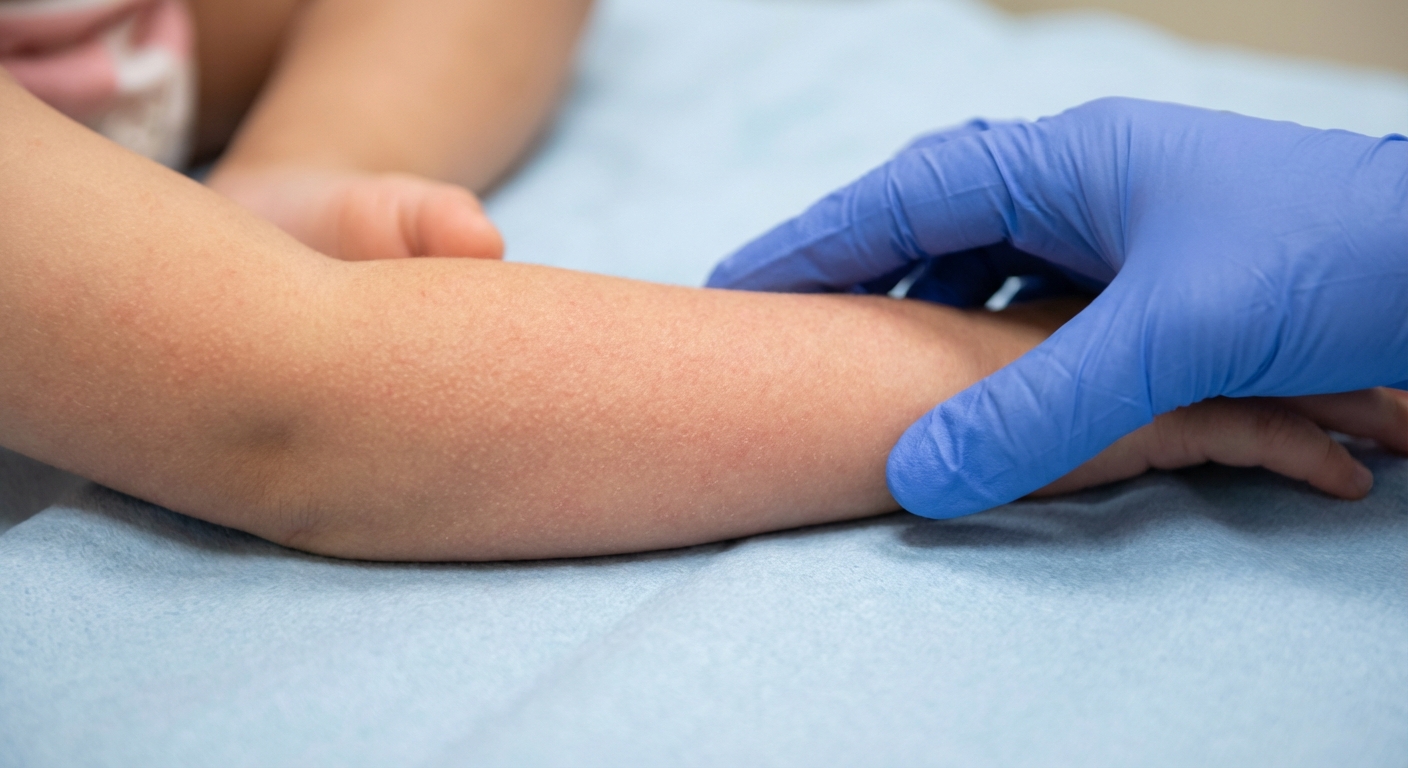
Parents describe it perfectly: the skin looks flushed or pink-red and feels rough, like very fine sandpaper. In scarlet fever, the rash often:
- Starts on the chest, neck, or underarms and spreads outward
- Feels rougher than it looks, especially on the torso
- May be stronger in skin folds (elbows, groin), sometimes with deeper redness there
- Can come with a sore throat, fever, headache, belly pain, or vomiting
- May be followed days later by peeling skin, often on fingertips and toes, and sometimes more broadly
That pattern points us toward Group A Strep (the strep bacteria that causes strep throat). But it is not the only possibility, which is why testing and a careful exam matter.
Why a rapid strep can be negative
Rapid antigen strep tests are helpful because they are fast. They are also not perfect. A negative rapid test does not always rule out strep, especially in kids.
Common reasons for a false negative
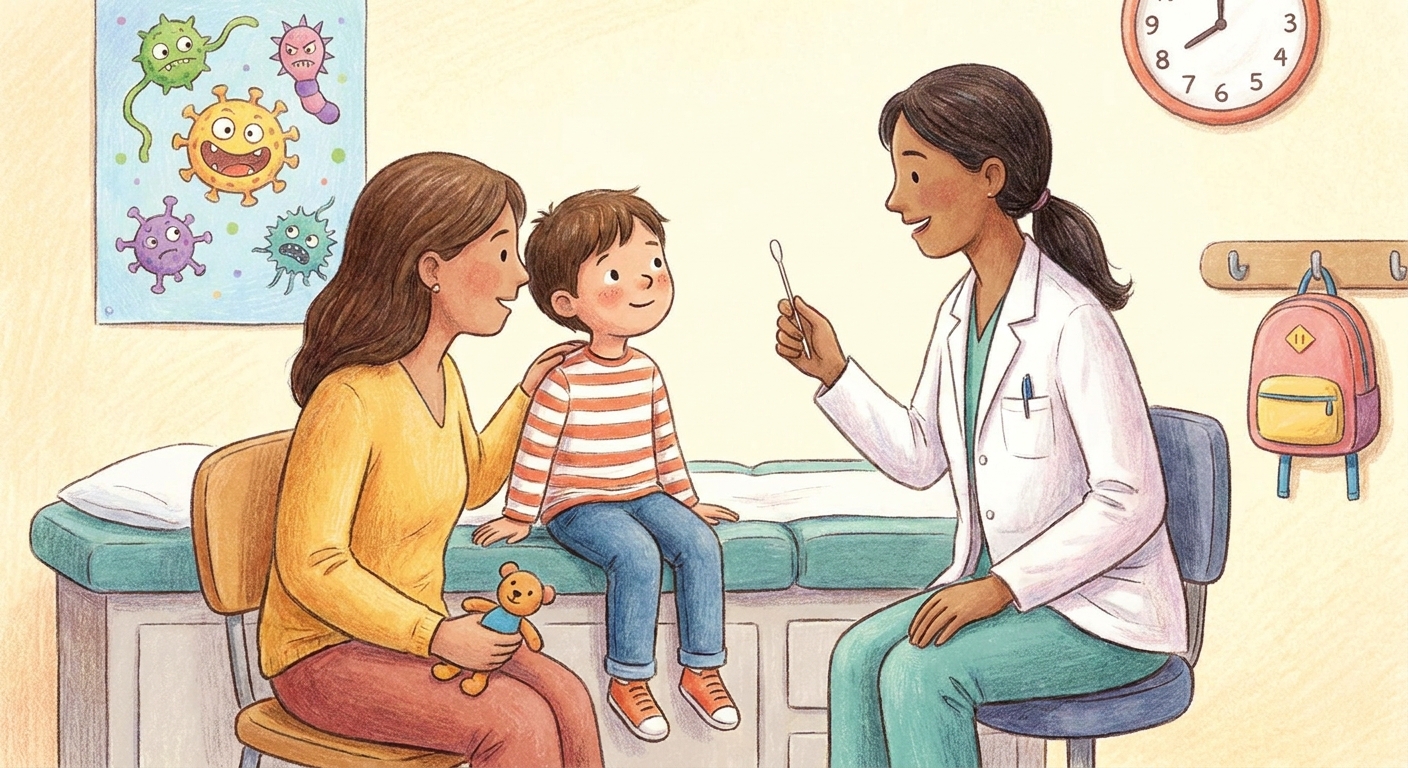
- Not enough bacteria on the swab. Swabbing a squirmy child is an Olympic sport. If the swab does not get good contact with the tonsils and back of the throat, the test can miss it.
- Early illness. If symptoms just started, there may not be as much detectable strep in the throat yet.
- Test sensitivity limits. Rapid tests trade speed for some loss of sensitivity. Some true infections simply do not register on the rapid test.
Bottom line: if the story and exam look like strep with a scarlatiniform, sandpapery rash, clinicians often do not stop at a negative rapid test.
Backup testing: culture and PCR
When the rapid test is negative but the clinician still suspects strep, there are a couple common “next step” tests.
Throat culture
A throat culture is the classic backup test many clinics send for children. The swab goes to a lab where bacteria have time to grow.
What it adds:
- Higher sensitivity. Cultures can catch infections that rapid tests miss.
- Clarity when the rash is convincing. If your child has a rough, widespread rash plus sore throat and fever, a culture helps confirm whether strep is the driver.
- Better confidence about antibiotics. When it is truly strep, antibiotics can shorten contagiousness and help prevent complications such as rheumatic fever. When it is not strep, antibiotics are not helpful and can cause side effects.
Timing notes parents should know:
- Results often take 24 to 72 hours, depending on the lab.
- If your child worsens while waiting, you do not wait it out at home. Call your clinician or triage line, or seek urgent care.
Strep NAAT or PCR
Some clinics use a NAAT or PCR strep test instead of (or in addition to) culture. These tests are often more sensitive than rapid antigen tests and can be faster than culture, depending on the setup. If your clinic offers it, it can be a helpful middle ground when the rapid test is negative but suspicion is still high.
Other rashes that look similar
Here are common look-alikes I see families worry about. Some are harmless and some need prompt evaluation.
Viral rashes
Many viruses cause pink, widespread rashes that can feel slightly rough, especially if skin is dry or irritated. Viral rashes often come with cough, runny nose, hoarseness, or diarrhea and less often with the classic strep throat picture.
Contact dermatitis or irritant rash
New detergent, bubble bath, sunscreen, tight sports gear, scratchy costume fabric, or even a heavily chlorinated pool can trigger a rough, red rash. These often:
- Itch a lot
- Follow a pattern of contact (neckline, waistband, swimsuit lines, sports gear edges)
- Improve when the trigger is removed
Eczema flare
Eczema can feel very rough and look red or inflamed, especially in the winter or after frequent handwashing. The pattern is often chronic or recurrent and tends to favor cheeks, elbow creases, behind knees, wrists, and ankles.
Hand, foot, and mouth disease
This can start with fever and sore throat, then progress to mouth sores and a rash on hands and feet. Some kids also get a more widespread rash. Mouth pain and decreased drinking are big clues here.
Kawasaki disease
Kawasaki can cause fever and a rough, red rash, plus other findings like red eyes (without discharge), red cracked lips, “strawberry tongue,” swollen hands or feet, and swollen neck lymph nodes. The key feature is usually fever that lasts 5 days or more (or a clinician concern for “incomplete” Kawasaki). This needs urgent evaluation.
Measles
Measles typically comes with high fever, cough, runny nose, and red eyes, then a spreading rash. Some children also develop tiny white mouth spots (Koplik spots) before the rash. If there is known exposure or your child is not fully immunized, call your clinician for instructions before walking into a waiting room so they can protect other patients.
Allergic reaction or hives
Hives are usually raised and very itchy, coming and going in patches. But early allergic reactions can look like widespread redness before the classic welts appear. Swelling of lips or face, vomiting, wheezing, or trouble breathing are emergency signs.
When to call again after a negative rapid
If your child has a sandpapery rash and the rapid test was negative, I would still want them assessed (or reassessed) if any of the following are true:
- Fever plus sore throat, especially with tender neck glands or no cough
- Rash pattern fits scarlet fever (rough, widespread, stronger in skin folds)
- Symptoms are escalating (higher fever, worsening throat pain, new belly pain or vomiting)
- There is known strep exposure in the household, classroom, or close contacts
- The child is under 3 and looks unwell (strep is less common, but we worry more about dehydration and breathing issues in toddlers)
In these situations, clinicians commonly consider a backup throat culture, a NAAT or PCR test, or repeat testing if the first swab was difficult or very early in illness.
Same-day care signs
Here is my triage-nurse list of “do not wait” symptoms. If you see these, seek same-day care. If severe, go to the ER.
Go to the ER now
- Struggling to breathe, ribs pulling in with breaths, or very rapid breathing
- Noisy breathing (stridor), persistent grunting, or lips or face looking bluish or gray
- Drooling with trouble swallowing or a muffled “hot potato” voice
- Swelling of lips or face with wheezing, vomiting, or trouble breathing
- Rash with purple spots that do not blanch (do not fade when pressed), especially with fever or a very sick child
Urgent care or same-day clinic visit
- Concern for dehydration: very dry mouth, no tears, fewer wet diapers or pees than usual
- No pee for 8 to 12 hours (sooner for babies and young toddlers)
- Unable to keep fluids down, or refusing to drink because swallowing hurts
- Marked sleepiness, dizziness, or “this is not my kid” behavior
- Blistering, early peeling skin, or a rash that is painful
What to do at home
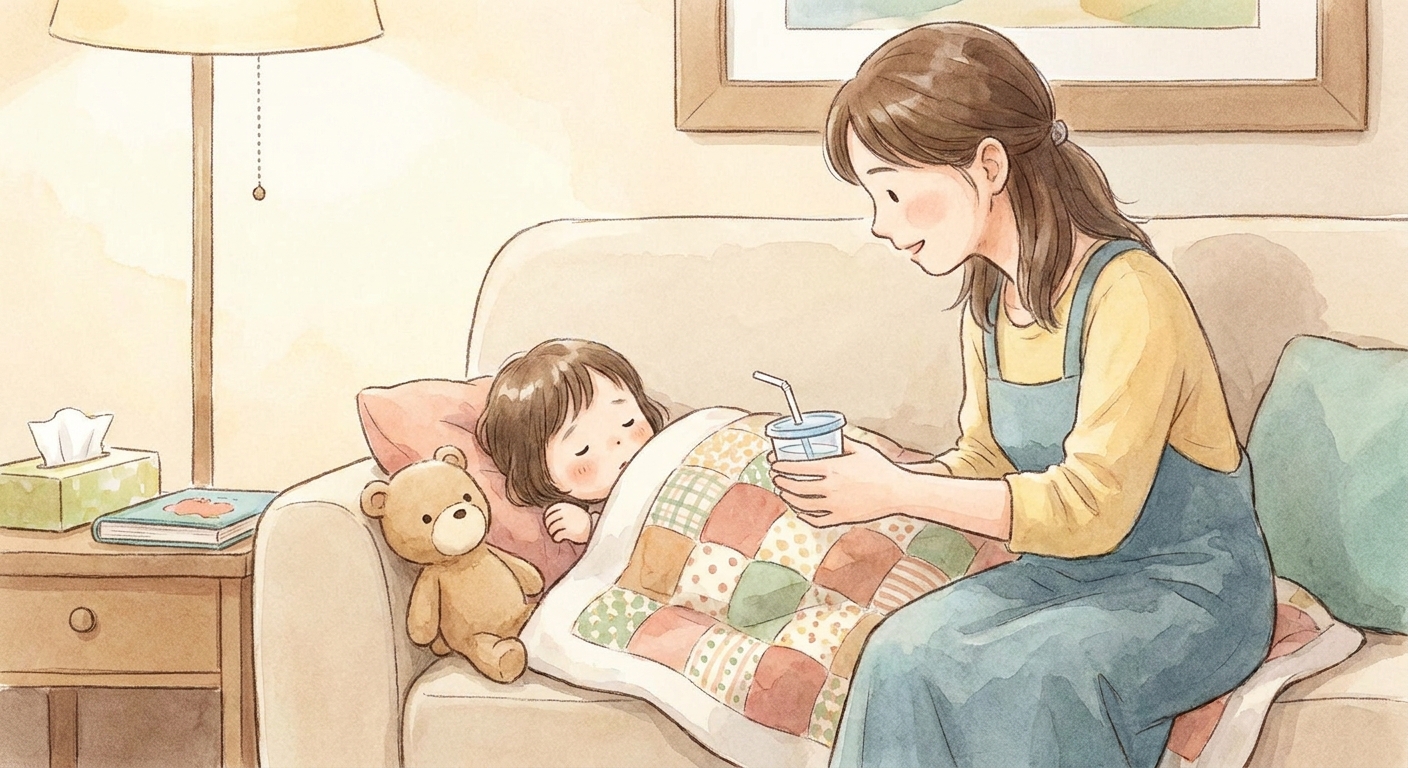
No matter the cause, supportive care can make a huge difference while you are waiting on a culture, PCR, or a call back.
- Focus on fluids. Think small and frequent sips. Popsicles, oral rehydration solutions, diluted juice, and broth count.
- Keep the skin comfortable. Lukewarm baths, fragrance-free moisturizer, and loose cotton pajamas help a lot with rough, irritated skin.
- Avoid new products. Skip new lotions, fragranced soaps, or new detergents until the rash settles.
- Track the timeline. Write down when fever started, when the rash appeared, and any new symptoms. This helps your clinician decide what to do next.
If your child is in school or daycare, ask your clinician about return guidelines, especially if there is fever or suspicion of strep.
What to expect at follow-up
If you return to the clinic, the clinician will usually:
- Re-check throat and tonsils, lymph nodes, and hydration status
- Look closely at the rash distribution, texture, and whether it blanches
- Ask about exposures, new products, and vaccination status
- Consider a throat culture or a NAAT or PCR test (and sometimes other tests depending on symptoms)
If testing later comes back positive, your clinician will give treatment instructions. If it is negative, they will pivot to the most likely alternative cause and advise what to watch for.
FAQ
Can my child have scarlet fever with a negative rapid strep test?
Yes. A negative rapid test can be a false negative. If the rash and symptoms fit, clinicians often send a backup throat culture or use a more sensitive test like NAAT or PCR.
Should my child be treated “just in case”?
This is a clinician call that depends on exam findings, risk factors, and testing. In many practices, the standard approach in kids is to confirm with a throat culture (or another sensitive test) when the rapid test is negative but suspicion remains.
What if the rash is there but there is no sore throat?
That makes classic strep less likely, but it does not rule it out. Viral rashes, contact dermatitis, eczema, and other conditions may be higher on the list. If the rash is rough and widespread, your child has fever, or your parent gut says they look “off,” get them checked.
Is my child contagious if the rapid test is negative?
If the illness is viral, yes, many viruses spread easily. If it is strep that was missed on the rapid test, strep also spreads. Good handwashing, not sharing cups or utensils, and staying home with fever are still smart while you are sorting it out.
When can my child go back to school if it is strep?
Many schools follow the common rule of returning after your child is improving, fever-free, and has had about 24 hours of antibiotics, but policies vary. Your clinician can help you match local guidance.
A final word from one tired parent to another
If you are staring at a sandpaper rash after a negative rapid strep test, you are not stuck. The next step is usually simple: a careful re-check and, when appropriate, a backup test like a throat culture or PCR. Trust your instincts, take photos of the rash in good light, and do not hesitate to seek same-day care if breathing or hydration starts to slip.
Sarah Mitchell
Sarah Mitchell is a Registered Pediatric Nurse and a mother of three who has spent over a decade helping families navigate the beautiful, chaotic early years of childhood. She combines evidence-based medical knowledge with real-world parenting experience to offer practical, compassionate advice. At Awesome Parent, Sarah's mission is to help exhausted parents find solutions, trust their instincts, and finally get some sleep.