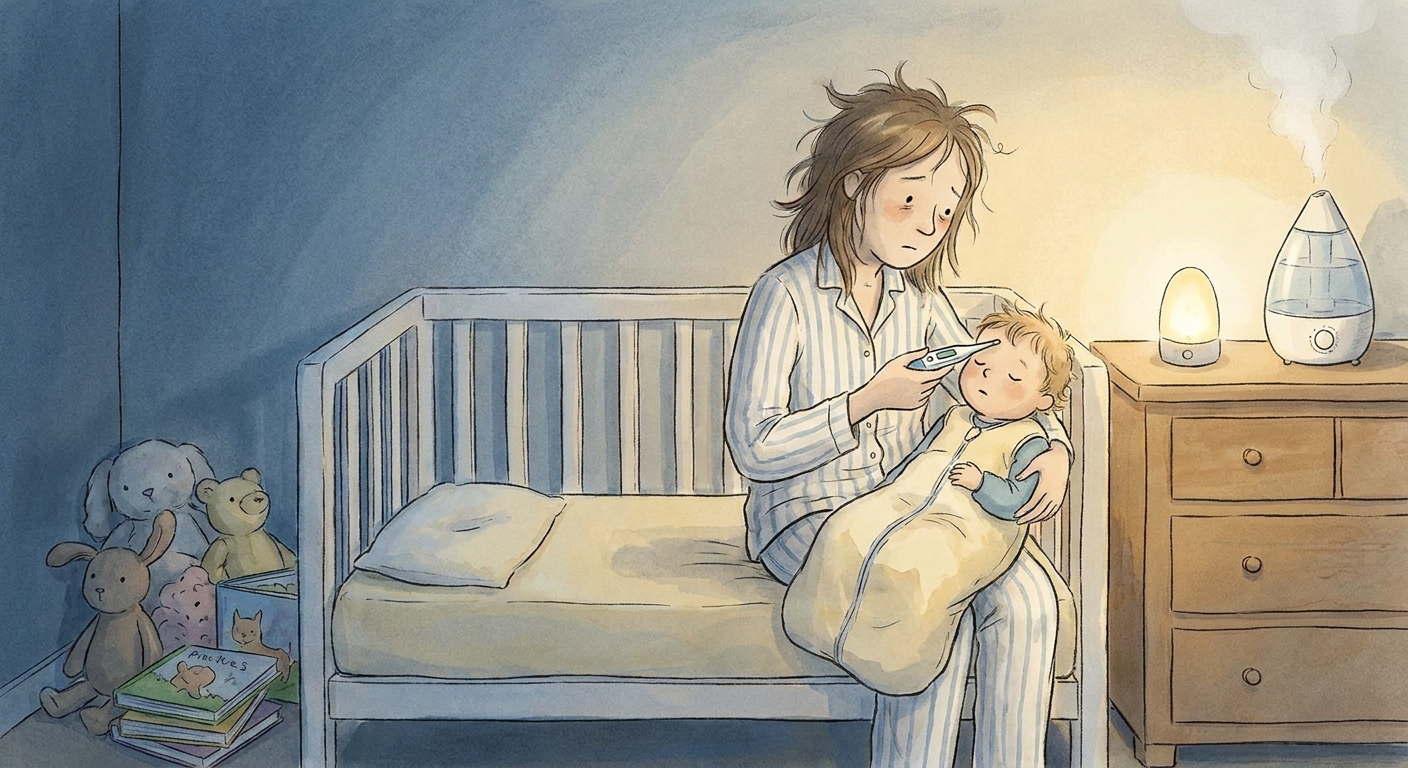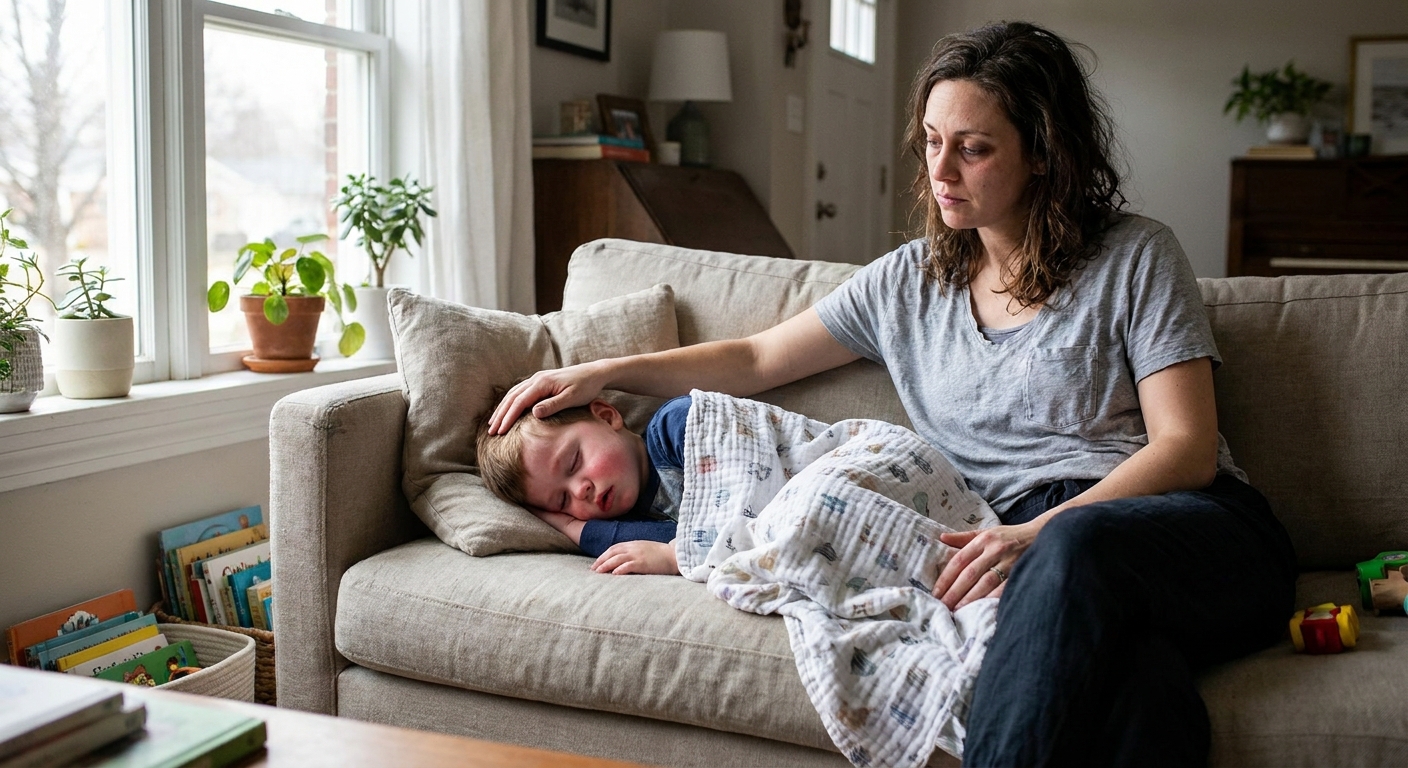
A calm, practical overview for parents on measles symptoms, rash progression, contagious timeline, isolation basics, vaccine protection, and what to do after...
Fever and Rash 1 to 2 Weeks After the MMR Shot

Sarah Mitchell
Sarah Mitchell is a Registered Pediatric Nurse and a mother of three who has spent over a decade helping families navigate the beautiful, chaotic early years of childhood. She combines evidence-based medical knowledge with real-world parenting experience to offer practical, compassionate advice. At Awesome Parent, Sarah's mission is to help exhausted parents find solutions, trust their instincts, and finally get some sleep.
I still remember the first time a parent called me in triage and said, “My child got the MMR shot last week and now they have a fever and a rash. Is this measles?” You could hear the fear through the phone.
Take a breath. A delayed fever and a measles-like rash about 1 to 2 weeks after the MMR vaccine can be a normal, expected reaction for some kids. It looks scary because it imitates the illness the vaccine protects against, but the timing and the overall pattern are usually very different from true measles infection.
This article will walk you through what’s normal, what isn’t, why your child usually does not need measles isolation for this, and the symptoms that still deserve a same-day call.
Why MMR reactions can show up late
The MMR vaccine is a live attenuated vaccine. That means it uses weakened forms of the viruses so the immune system can learn to recognize them.
Because those weakened viruses can replicate a little in the body, the immune response builds over time instead of instantly. That’s why some reactions show up later, most often around 7 to 12 days after the shot (and sometimes a bit earlier or later).
That delayed timing is one of the biggest clues that what you’re seeing is a vaccine reaction rather than a same-day vaccine side effect like a sore arm.
What’s typical 7 to 14 days after MMR
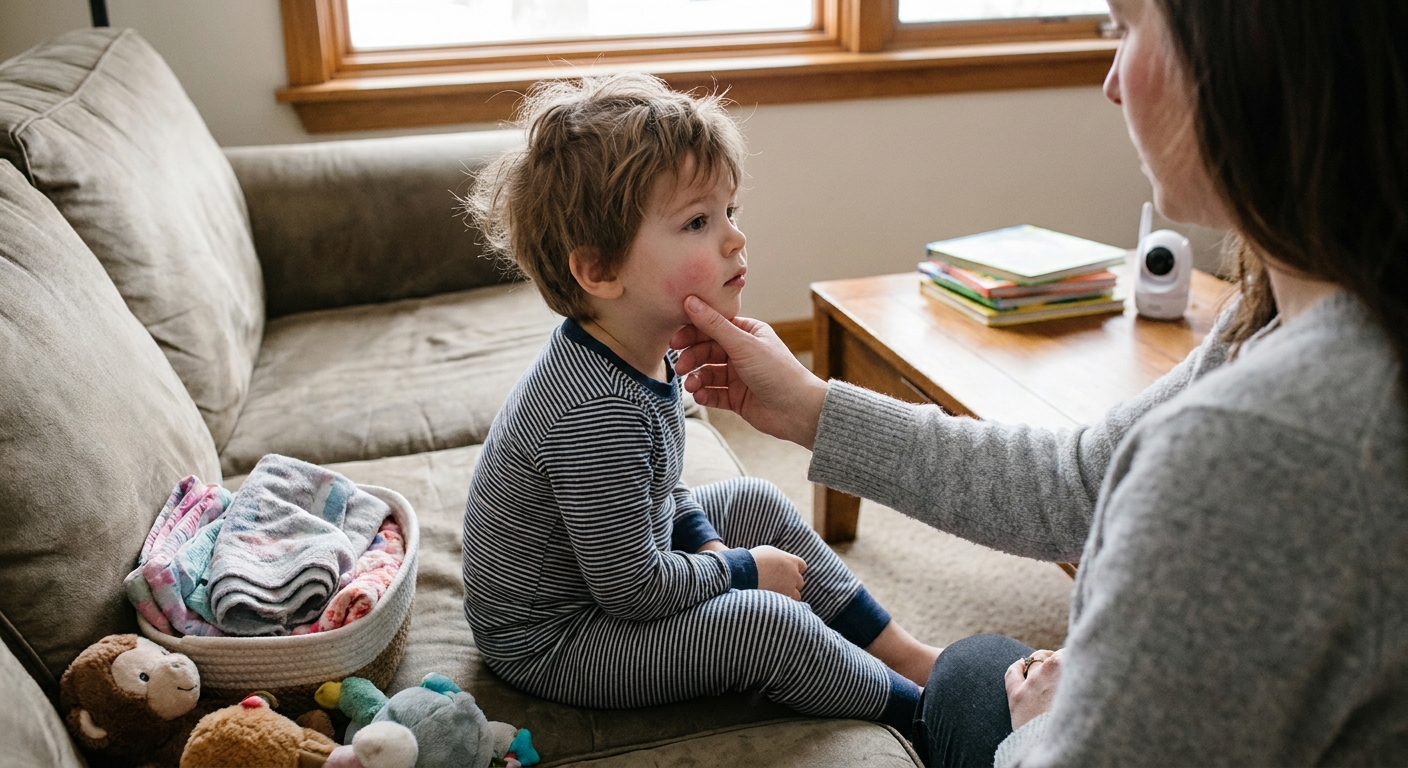
Not every child gets these symptoms, but when they happen, they are usually mild and brief. Most commonly, the fever shows up in the 7 to 12 day window, and a mild rash often shows up around that same general timeframe.
Common delayed MMR reactions
- Fever (often low-grade to moderate) starting about a week after the vaccine
- Measles-like rash, usually pink or red and mild
- General crankiness or lower energy for a day or two
- Reduced appetite
The rash can vary in where it starts. It may show up on the trunk first, but it can also appear more generally. It is usually not itchy and typically fades on its own in a few days.
How high can the fever be?
Some kids can spike a higher fever with this delayed reaction. As a triage nurse, what mattered most was not just the number, but the whole picture: hydration, breathing, alertness, and whether the fever responds to comfort measures.
For many kids, supportive care at home is enough, but there are a few scenarios where I want you calling the same day. We will get to those below.

How this differs from early side effects
MMR can cause more immediate, local side effects too, but those typically happen within the first 24 to 48 hours.
Same-day or next-day reactions
- Sore leg or arm where the shot was given
- Mild swelling or redness at the injection site
- Fussiness
- Low-grade fever soon after vaccination
So if your child had a tender leg the day of the shot, then nothing, then a week later develops a fever and rash, that split timing actually fits a very classic MMR pattern: local soreness early, immune-system symptoms later.
Is my child contagious?
This is the part that keeps parents up at night, and I get it.
In healthy children, a mild fever and rash after MMR is generally not considered contagious like wild-type measles. Also, it usually does not mean your child has measles.
There is an important nuance: if your child has had a true measles exposure, if there is an active outbreak, or if there are high-risk contacts in the home (like someone who is immunocompromised or an infant too young to be vaccinated), you should call your pediatrician for guidance. In clinic, when there is a real exposure concern, we treat it differently and we take extra precautions right away.
Do we need measles isolation?
A typical post-MMR rash and fever usually does not require measles isolation without a known exposure. That said, always follow your clinician’s advice and your local public health guidance, and be aware that some schools or daycares may have their own rules about returning until a child is evaluated.
What true measles can look like
Parents deserve an honest comparison without fear-mongering.
In classic measles, kids often have:
- High fever that can be persistent
- Cough, runny nose, and red eyes (the “3 C’s” are often taught, but the key is the combination of significant respiratory symptoms and overall illness)
- A rash that often starts on the face or hairline and then spreads downward
- Marked fatigue and appearing quite ill
Another classic clue is Koplik spots, tiny white spots that can show up inside the mouth. Most parents will not be checking for these, but if a clinician mentions them, that’s why.
Vaccine-related rashes are typically milder, and many children do not have the intense cough and eye redness picture that comes with measles.
If your child looks truly unwell, trust your gut and call.
When it might not be the vaccine
Sometimes the timing is a clue that this is not the typical delayed MMR reaction.
- Hives, facial swelling, or trouble breathing soon after the shot can be an allergic reaction and needs urgent evaluation.
- Rash with mouth sores, severe sore throat, or a child who refuses fluids can point to another illness.
- New medication (including antibiotics) plus a new rash is worth a same-day call so your clinic can help sort out what’s going on.
What you can do at home
For typical mild delayed reactions, think comfort and hydration.
Supportive care that actually helps
- Fluids first: Offer water, breast milk, formula, or oral rehydration solution. Small sips count.
- Dress lightly: A single layer is usually best for fever comfort.
- Rest: Quiet activities and early bedtime are perfect “medicine.”
- Fever meds if needed: Use acetaminophen or ibuprofen if your child is uncomfortable and if age-appropriate per your pediatrician’s guidance. As a general safety rule, avoid ibuprofen under 6 months unless your clinician tells you to use it. And for babies under 12 weeks, any fever needs a call before you give fever medicine.
What to avoid
- Aspirin in children and teens
- New lotions or fragranced products on a rash that is not bothering your child, since irritation can make it look worse
- Overheating with heavy blankets during fever
When to call the doctor today
Most delayed MMR rashes and fevers are mild. But some symptoms should never be brushed off. Call your pediatrician the same day (or your clinic’s nurse line) if any of the following apply:
- Your child has a known measles exposure or there is a current exposure notification from daycare, school, or public health.
- Your child is under 3 months with any fever, or your child is under 2 years and you have been given age-based fever rules by your clinic. Follow those rules over anything you read online.
- Fever is high or persistent, especially if it lasts more than 72 hours, or your child seems to be getting worse instead of better.
- Your child looks very ill: unusually sleepy and hard to wake, weak, or not making eye contact like usual.
- Signs of dehydration: very dry mouth, no tears when crying, peeing much less than usual (for many kids, fewer than 3 wet diapers in 24 hours is a red flag), or dizziness in older kids.
- Breathing concerns: fast breathing, working hard to breathe, wheezing, or bluish lips.
- The rash is purple, bruising-looking, or does not blanch (does not lighten when you press on it).
- The rash is painful, rapidly spreading, or associated with swelling of the face or lips.
- Your child has a weakened immune system or takes immune-suppressing medications.
- You are worried. You do not need to justify this. A good clinic would rather talk to you early.
If your child has severe trouble breathing, a seizure, is difficult to wake, has a stiff neck with severe headache, or you feel something is seriously wrong, seek emergency care.
One more note from triage: MMR-related fevers can happen in the age range where febrile seizures also happen. They are frightening, but many children do well. If your child has any seizure, call emergency services right away and then let your pediatrician know.
Will it happen again next dose?
Not necessarily. Some kids have a delayed fever or rash after one dose and not the other. Others never have this reaction at all.
If your child had a significant reaction, mention it before the next vaccine visit so your pediatrician can advise you on what to expect and how to manage symptoms.
FAQ
How long does the MMR rash last?
Often a few days. Many families report it fading within 2 to 3 days, though it can vary.
Can my child go to daycare or school with a post-MMR rash?
If your child is otherwise well, has no known measles exposure, and the rash and fever fit the typical post-vaccine window, many children can attend once they are fever-free per daycare or school rules. If there is any doubt, check with your pediatrician and your childcare policy, especially during outbreaks.
Does a rash mean the vaccine gave my child measles?
No. A mild measles-like rash after MMR is an immune response, not the same as having wild-type measles infection. If there has been a true exposure or your child is very ill, your doctor may want to evaluate and, in some cases, test.
What if the rash shows up earlier than a week?
If it’s within the first day or two, it’s less likely to be the classic delayed MMR reaction and more likely to be something else, like a common virus, irritation, a medication reaction, or an allergy. It still may be harmless, but it’s a good reason to call your clinic, especially if your child also has fever or seems uncomfortable.
The bottom line
A fever and a measles-like rash about 1 to 2 weeks after the MMR shot can be a normal vaccine reaction, with the most common window falling around 7 to 12 days. The delayed timing is part of the story, and it is very different from same-day sore leg symptoms.
In healthy children, this post-vaccine rash is generally not considered contagious like measles, and it usually does not mean your child needs measles isolation unless there was a real exposure. But if there is an outbreak, a known exposure, or high-risk contacts at home, follow your clinician and health department guidance.
If your child looks very sick, the fever is persistent or high, the rash is unusual (purple, bruising-looking, non-blanching), breathing becomes difficult, or there is any known exposure, call your pediatrician the same day. And if your parent gut is waving a red flag at 3 AM, I want you to listen to it.
Sarah Mitchell
Sarah Mitchell is a Registered Pediatric Nurse and a mother of three who has spent over a decade helping families navigate the beautiful, chaotic early years of childhood. She combines evidence-based medical knowledge with real-world parenting experience to offer practical, compassionate advice. At Awesome Parent, Sarah's mission is to help exhausted parents find solutions, trust their instincts, and finally get some sleep.